REVIEW · FOOD
Jaipur: Guided History Walking Tour with Food Tasting
Book on GetYourGuide →Operated by Multi Tours India · Bookable on GetYourGuide
A few streets in Jaipur can tell the whole story. This guided history walk in the Pink City mixes old architecture, everyday customs, and food stops so you actually understand the city while you eat. I love the handpicked Rajasthani bites (from pyaaz kachori to sweets) and the way guides point out what you would otherwise miss in the alleys. One possible drawback: it is not for everyone—this is a walking tour, and people with food allergies shouldn’t join.
You’ll start at New Gate, then move through old markets and courtyards with a guide who explains local life, spiritual beliefs, and the meaning behind the buildings. Based on past guides like Rajesh, Krishna, and Ali Irfan, the tone is friendly and not salesy, with a strong focus on stories and tasting. Bring comfortable shoes and expect sun and street-level crowds along the way.
In This Review
- Key things to know before you go
- Why this Pink City walking tour feels different than a sightseeing loop
- Price and value: what $13 buys you (and what it doesn’t)
- Starting at New Gate: the best way to get your bearings fast
- Chaura Rasta: tea first, then street food and first stories
- Badi Chaupar: big-square views and snack pauses
- Tripolia Bazar: markets for photos, plus cultural context
- Choti Chaupar and the Flower Market finish: the route closes the loop
- The tour’s history style: havelis, stepwells, and spiritual beliefs—explained for real streets
- What you’ll likely eat: Jaipur street favorites in guided tasting form
- Guide quality is the secret ingredient (Rajesh, Krishna, Ali Irfan as examples)
- Practical tips so you enjoy it (instead of rushing through it)
- Who should book this tour—and who might want a different plan
- Should you book it?
- FAQ
- How long is the Jaipur guided history walking tour?
- Where does the tour start?
- Is the group private?
- What languages are available for the live tour guide?
- What food and drinks are included?
- Which Jaipur street foods and sweets might I taste?
- Do I need to pay extra for snacks during the tour?
- Is this tour wheelchair accessible?
- Can people with food allergies join?
- What should I bring, and what’s not allowed?
- Is there a cancellation window or reserve-and-pay-later option?
Key things to know before you go
- Short 3-hour route that stays in the older part of Jaipur instead of riding past it
- Food tasting built in with multiple savory bites plus sweets and chai at local tea shops
- Local guide stories about royal dynasties, customs, and how Jaipur’s layout evolved
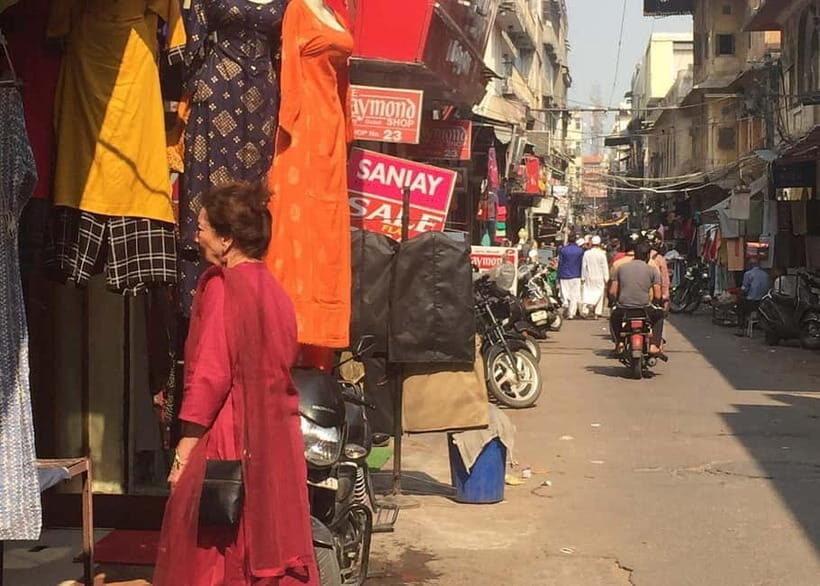
- Old-street walking through bazaars, havelis, stepwells, courtyards, and temple areas
- Family and artisan moments where you may meet potters, jewelers, miniature painters, or spice sellers at work
- Private group feel, with guidance available in several languages (English, Spanish, Russian, German, Japanese, Chinese, French)
Why this Pink City walking tour feels different than a sightseeing loop
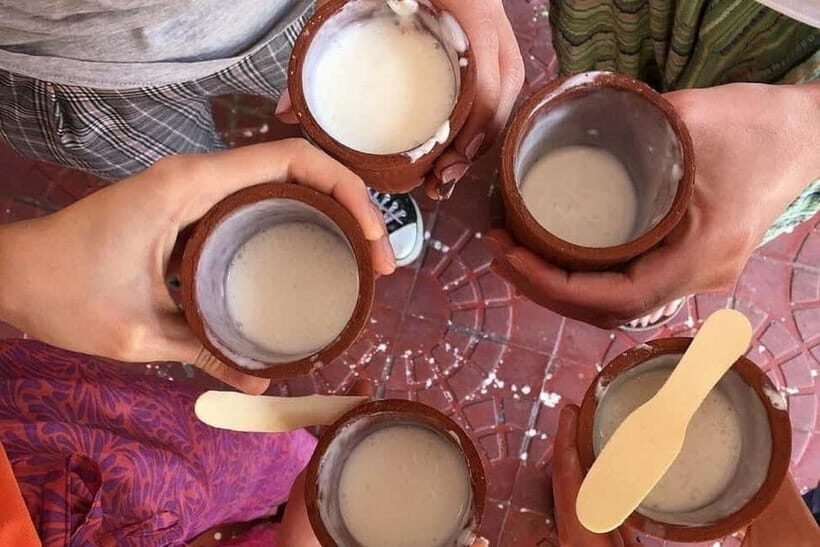
Jaipur can look straightforward from a distance: forts, gates, and the famous pink buildings. This tour is different because it makes you pay attention at street level, where people live, shop, pray, and craft. You’re not trying to memorize monuments. You’re learning how the city works.
The biggest win is the combo of history + food + small details. You’ll see traditional houses (havelis), temple areas, and stepwells as real parts of the neighborhood, not just photo stops. And when you stop to eat, the guide connects flavors and habits to local routines and culture.
Another plus is the pacing. Three hours is long enough to feel like you’ve gone somewhere, but short enough that you won’t hate your feet by the end. If you want Jaipur without a day-long commitment, this format fits well.
You can also read our reviews of more walking tours in Jaipur


Price and value: what $13 buys you (and what it doesn’t)
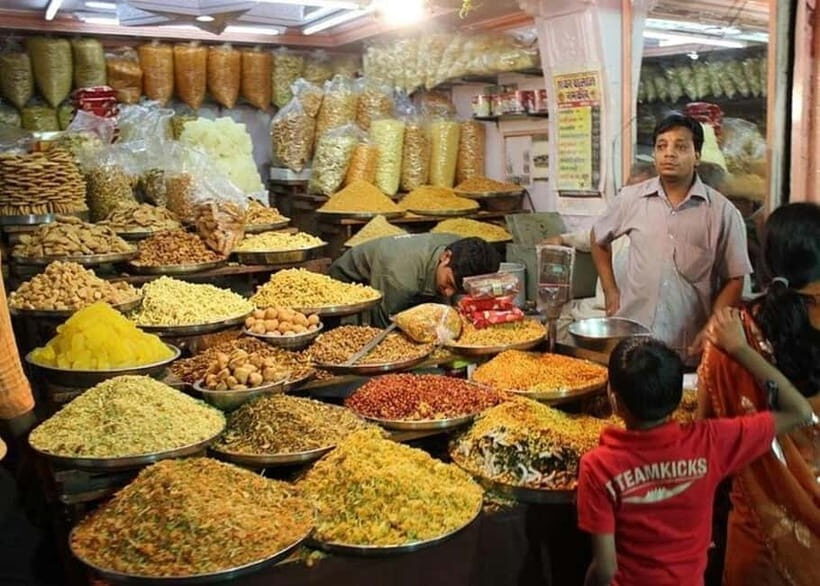
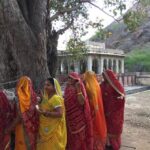
At $13 per person for about 3 hours, you’re paying for a local guide plus a structured food tasting experience. That matters because tasting in India can be great, but it can also be random. Here, the food stops are built into the plan, and you get bottled water, masala chai at local tea shops, and a traditional dessert.
What you do not get is unlimited extra eating or shopping. You’re covered for the foods that are part of the tasting, and personal purchases beyond that are on you.
For value, I like that the guide work is the core product. Past guides such as Rajesh have been praised for showing interesting places without pressure to buy. That’s a big quality marker for a food-and-walk style tour.
Starting at New Gate: the best way to get your bearings fast
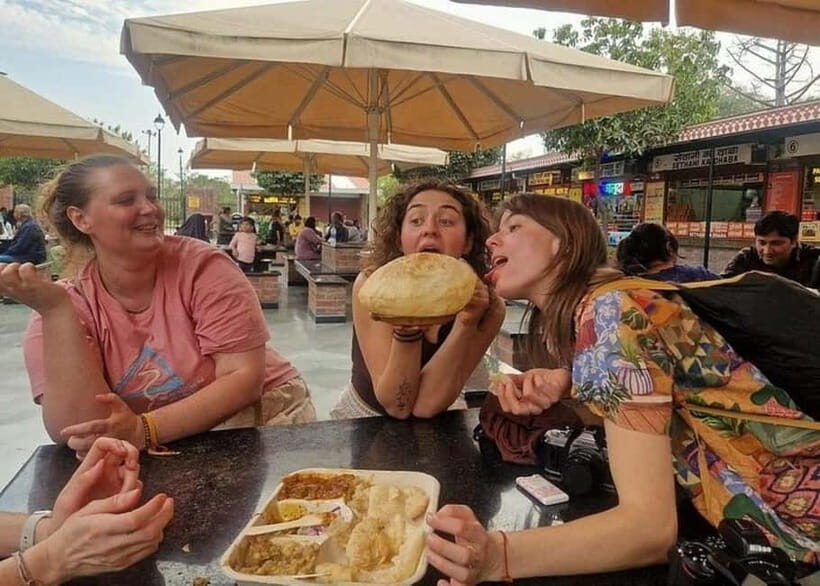
You’ll begin at New Gate, which is the kind of starting point that helps you understand Jaipur as a lived-in city. From here, the tour shifts quickly from broad impressions to the stuff you’d normally pass by: narrow lanes, busy market edges, and neighborhood corners.
This is where you set your expectations. You’re going to walk, stop, snack, and walk again. Bring a camera and be ready for quick photo moments, especially around the gates and older street segments.
If you’re the type who likes to know why a place is important, you’ll enjoy the early context. The guide usually sets the story up before the route really gets into bazaars.
Chaura Rasta: tea first, then street food and first stories
The route takes you to Chaura Rasta, where you’ll have a photo stop and a mix of tea and street food. This is a smart early stop because it wakes up your senses right away and gives you a baseline for Jaipur flavors.
Expect guided walking through the market lanes, with stops that feel practical rather than staged. You’ll also get the kind of orientation that makes later stops click—how locals think about space, daily routines, and the role of markets in the city.
If you’re sensitive to crowds, keep in mind that market areas can feel tight. Plan to move with the group and don’t expect slow, open sidewalks here.
Badi Chaupar: big-square views and snack pauses
Next comes Badi Chaupar, where you get guided history on the way and more food tasting along the route. Squares and crossroads like this are useful because they show how people move and gather. The guide’s explanation helps you connect the geometry of the city to social life—where trade happens, where people pause, and how neighborhoods connect.
This stop also includes local snacks and a short window for you to take in the views on the way. You’re not just eating; you’re learning how the area became what it is.
A practical consideration: with more people and more stopping, you may feel a bit rushed if you tend to linger. I recommend you do your longer photo work at the designated photo stops, then stay with the flow during the snack moments.
You can also read our reviews of more food & drink experiences in Jaipur





Tripolia Bazar: markets for photos, plus cultural context
At Tripolia Bazar, you’ll get another photo stop and guided walking through market space. Bazaars are not just places to buy things. They’re where language, customs, and daily shopping habits show up.
The guide’s role becomes extra valuable here because markets change constantly, and it’s easy to feel lost. With guidance, you’ll understand what you’re seeing—traditional neighborhood rhythm, how shops and streets fit together, and why certain areas became known over time.
If you love photographing street life, this is one of the parts where you’ll likely want to slow down briefly—just keep safety in mind and stay aware of foot traffic.
Choti Chaupar and the Flower Market finish: the route closes the loop
The tour includes Choti Chaupar, with street food and local snacks plus food tasting. Then you move toward the Flower Market at Choti Chaupar, which acts like both a visual reset and a fitting ending.
Flowers might sound like a soft finish compared to forts and palaces, but it actually makes sense. Markets show daily life, and flower sellers connect to routines tied to worship and celebrations. Ending around the flower area gives you a final, sensory memory of the Pink City that doesn’t rely on monuments alone.
You’ll end your walk at the Flower Market (Choti Chaupar) area. Plan for a final burst of photos and last sips if you’re still thirsty after the tastings.
The tour’s history style: havelis, stepwells, and spiritual beliefs—explained for real streets
One of the best things about this experience is the way history is delivered. Instead of launching into lecture-mode, the guide points out architectural elements and ties them to customs and beliefs you can recognize while walking.
You may see and learn about:
- Havelis (traditional houses) and their design clues
- Stepwells and what they meant for daily life
- Temples or temple areas, with explanations of spiritual beliefs and rituals
- Courtyards and how they shape family and community spaces
- Notes on attire and language nuances that help you understand what you’re hearing in the lanes
This matters because Jaipur isn’t only a collection of landmarks. It’s a city where people have lived through centuries, and the old structures still influence how neighborhoods feel today.
Also, depending on the exact route and timing, you might meet artisans at work—like potters, jewelers, miniature painters, or spice vendors. When it happens, it turns the walk from sightseeing into something more human. You see craft as a living practice, not a museum display.
What you’ll likely eat: Jaipur street favorites in guided tasting form
Food is a core part of this tour. You’ll sample a variety of Rajasthani and Jaipur-specific dishes, with a mix of savory bites and sweets. The tour can include items such as:
- Pyaaz Kachori
- Aloo Tikki or Chaat
- Samosa
- Mirchi Bada
- Lassi or Masala Chai
- Ghewar or Rabri (traditional sweets)
- Kulfi or other regional desserts
The guide also typically handles the pacing, so you’re not stuck with the hard choice of which snack to prioritize. That’s a big deal in Jaipur, where menus can be long and some places serve multiple variations.
One more quality point from past experiences with guides like Krishna and Ali Irfan: the tastings tend to be chosen with care, and the experience stays focused on the variety of flavors instead of turning into an eating marathon.
If you’re sensitive to spice, go in with a calm attitude. The tour offers street food items, which can vary in heat level. You can also tell your guide your preferences before tasting starts.
Guide quality is the secret ingredient (Rajesh, Krishna, Ali Irfan as examples)
This kind of walking-food tour rises or falls on the guide. The strongest praise I’ve seen is about guides who make the route feel personal and story-led, with no push to buy extras.
Examples from past guides include:
- Rajesh, credited for showing interesting places and not forcing purchases
- Krishna, praised for deep knowledge and a genuinely joyful way of sharing Jaipur
- Ali Irfan, noted for helping people discover the culture and the alleyways, with very good tastings
Your guide is also part of the language coverage. Tours are offered with live guides in English, Spanish, Russian, German, Japanese, Chinese, and French, which is excellent if you want explanations and not just a route.
Practical tips so you enjoy it (instead of rushing through it)
This is a walking tour, and the basics matter. Here’s what I’d do to make it comfortable:
What to bring
- Comfortable shoes (you’ll be on foot for the whole experience)
- Hat and sunscreen for daytime glare
- Water (the tour includes bottled water, but bring extra if you know you sweat)
- Camera for quick photo moments at stops
What to skip
- Smoking is not allowed on the tour.
Food limits
- The tour is not suitable for people with food allergies. If you have any serious allergy, don’t guess. Choose a different option where ingredient control is guaranteed.
Also, the tour isn’t listed as wheelchair-friendly. If mobility is a concern, treat this as a walking experience first, with food as the reward.
Who should book this tour—and who might want a different plan
This is a great fit if you:
- want to understand Jaipur beyond the biggest-name monuments
- like walking + learning in small, manageable doses
- enjoy street food, but prefer a guided tasting that keeps it organized
- want a private group feel without the pressure of a full-day tour
It may not be your best match if you:
- have food allergies
- need a wheelchair-friendly route
- prefer a mostly seated experience or large-vehicle sightseeing
If you’re in Jaipur for a short time and want a fast, meaningful intro, this 3-hour walk is one of the most efficient ways to get oriented.
Should you book it?
If your goal is to see the Pink City with context and to eat well without overthinking, I’d book this. The value is strong because you get a live guide, bottled water, masala chai, multiple tastings, and a dessert within a short walking window.
My decision point is simple: I like tours where the guide can explain what you’re seeing, and where the food is part of the plan rather than random stops. With guides like Rajesh, Krishna, and Ali Irfan highlighted for their knowledgeable, friendly approach and for not pushing purchases, this looks like the type of experience where you’ll feel taken care of.
FAQ
How long is the Jaipur guided history walking tour?
The tour lasts 3 hours.
Where does the tour start?
The starting location is New Gate.
Is the group private?
Yes, it’s a private group.
What languages are available for the live tour guide?
The tour is offered with a live guide in English, Spanish, Russian, German, Japanese, Chinese, and French.
What food and drinks are included?
You’ll get food tasting, bottled water, traditional dessert, and masala chai at local tea shops.
Which Jaipur street foods and sweets might I taste?
Depending on the tour, you might taste pyaaz kachori, aloo tikki or chaat, samosa, mirchi bada, lassi or masala chai, and sweets like ghewar or rabri, plus kulfi or other regional desserts.
Do I need to pay extra for snacks during the tour?
The tour includes the tastings and items listed as included. Personal purchases or extra food items not part of the tour are not included.
Is this tour wheelchair accessible?
No, it is not suitable for wheelchair users.
Can people with food allergies join?
No, it is not suitable for people with food allergies.
What should I bring, and what’s not allowed?
Bring comfortable shoes, a hat, camera, sunscreen, and water. Smoking is not allowed.
Is there a cancellation window or reserve-and-pay-later option?
You can cancel up to 24 hours in advance for a full refund, and you can reserve now and pay later.
If you want, tell me your travel dates and whether you prefer spicy or mild food, and I’ll suggest how to pace your tastings during the 3-hour walk.