Jaipur feels like a story you can walk. This 3–4 hour heritage route pairs a morning or evening stroll with an e-rickshaw glide through the Pink City, and I really like the flower-market start and the sweet lassi tastings along the way. You get an English-speaking guide, plus hotel pickup and drop-off, so the day stays easy even when Old Jaipur traffic gets chaotic.
One possible drawback: you’ll do a fair chunk on foot before the e-rickshaw time, so plan for comfort and steady shoes. If you’re coming right after a long flight or you’re nursing sore knees, you may want to pace yourself from the start.
In This Review
- Key things to know before you go
- Morning flower colors or evening golden light?
- Hawa Mahal and Isarlat Tower: why these stops feel special
- Hawa Mahal, Palace of Breeze
- Isarlat (Tower)
- Tripolia Gate, Jalebi Chowk, and the City Palace area
- Tripolia Gate
- Jalebi Chowk
- Govind Devji Temple and the chai Q&A moment
- Pink City on an e-rickshaw: faster views, less fatigue
- Albert Hall Museum: a clean photo finish
- Food tastings: built in, not an afterthought
- Price and value: what $11.18 buys you
- Who this fits best (and who should choose a different plan)
- Guide quality: when names matter
- Should you book this Jaipur heritage walk with rickshaw ride?
- FAQ
- How long is the Jaipur Heritage Walk with rickshaw ride?
- Is pickup included?
- What does the e-rickshaw ride cover?
- Are food tastings included?
- Are admission tickets included for the stops?
- What is the meeting point and where does it end?
- Is it a private tour?
- Can I cancel for a full refund?
Key things to know before you go
- Street-food tastings are built in: tea/coffee, sweet lassi, and snacks
- Hawa Mahal stop includes the famous pink façade and its many windows
- Isarlat Tower is part of the route, and you’ll get time to go up
- You see the story through gates and courtyards, not just postcard spots
- E-rickshaw time helps you cover the old streets without constant stop-and-walk
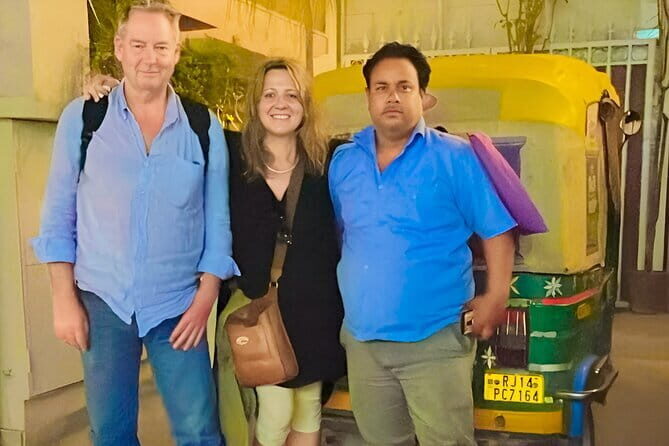
- Guides like Sayyed, Ali, or Nameera tend to make the explanations feel practical and personal
Morning flower colors or evening golden light?
This tour runs either in the morning or in the evening, and that choice changes the vibe more than you might expect. In the morning, you start at Jaipur’s flower market. Expect close-up sights of vendors working with fresh blooms and the sensory overload you get when color and scent are the main event. It’s a great way to get oriented fast, because it puts you in the real rhythm of the city before you move into the monuments.
In the evening, you’re looking at the old city with softer light. That matters around Jaipur’s iconic façades and painted gates, since the colors can look different once the sun starts to lower. If you care about photos, I’d pick the time of day that matches your energy. Morning is for people who like to move early. Evening is for people who like a slower pulse and golden-hour color.
Either way, you’ll have a guide who keeps the walk from turning into a list of buildings. The pacing is designed to mix short landmark stops with enough narration to make them make sense.
You can also read our reviews of more walking tours in Jaipur


Hawa Mahal and Isarlat Tower: why these stops feel special
After the flower market, the route shifts into architecture mode.
Hawa Mahal, Palace of Breeze
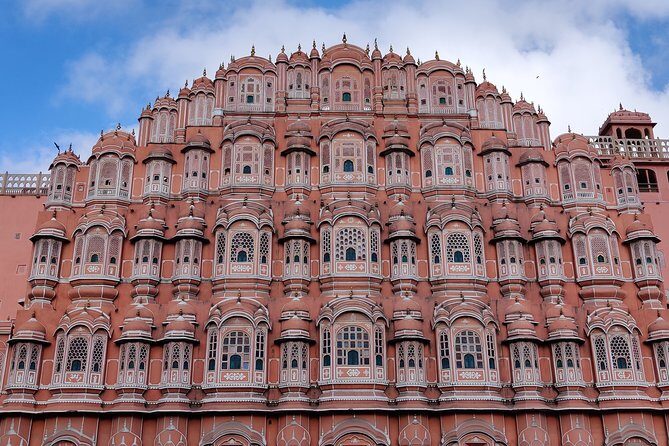
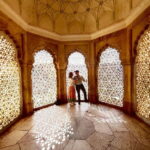
You’ll see Hawa Mahal, the pink sandstone façade known for the latticework and the large number of small windows—over 900. That detail isn’t just trivia. It’s the key to understanding why the building looks the way it does. In plain terms, the windows connect the exterior beauty to a social purpose inside the palace world.
This is a good stop if you like visual patterns and history that shows up in the design. It also helps you understand Jaipur’s “layering,” where you can’t fully separate politics, households, and street life.
A small practical note: it’s a busy landmark area by nature. Give your guide a moment to position you for the best views and photos.
Isarlat (Tower)
Next comes Isarlat Tower, an 18th-century monument. You’ll have time to climb up and take in the surrounding architecture from above. When a tour includes a vertical element like this, it usually changes the whole feel of the city, because you stop seeing everything flat and start understanding how the neighborhoods connect.
The upside: the view helps you connect earlier streets to later stops. The tradeoff: you’ll want to be comfortable with stairs. If you’re unsure, just decide on the spot how much you want to climb and keep it realistic.
Tripolia Gate, Jalebi Chowk, and the City Palace area
After the tower, you head to Tripolia Gate and then toward the City Palace area.
You can also read our reviews of more historical tours in Jaipur





Tripolia Gate
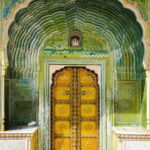
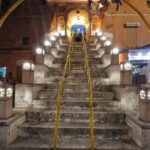
Tripolia Gate has a royal-family backstory and was once a private entrance. Now it’s part of the public path, and the painted gateway makes it easy to appreciate it as both an artwork and a threshold. I like this stop because it explains gates as more than decor. They’re the city’s control points—who enters, who moves, and how power shows up in everyday routes.
You’ll get a shorter visit here, so use that time to look closely. The painted surfaces and the gate structure reward slow attention.
Jalebi Chowk
Then you reach Jalebi Chowk, a square area connected to the City Palace grounds and the serpentine road that links east and west. The name itself comes from that winding design. This is one of those stops that sounds small, but it helps you understand how Jaipur’s planning influences street shape—so when you later ride through Old Jaipur, the streets won’t feel random.
If you like street-level design details, this is where you get them.
Govind Devji Temple and the chai Q&A moment
The route continues to Govind Devji Temple, dedicated to Lord Krishna. This is the spiritual anchor of the walk, and it also changes the mood. Temples often do that: you feel the shift from monuments-as-sightseeing to places that are actively used.
You’ll also wrap this section with a Q&A session at a nearby chai shop. I think that part is underrated. You’re not just collecting photos; you’re getting space to ask questions about what you saw—temple life, city design, palace stories, and why the old layout exists. If you like context, that Q&A turns the walk into something you can actually remember.
Tip: keep your questions simple. Even one good question can turn a stop you thought you understood into something you truly get.
Pink City on an e-rickshaw: faster views, less fatigue
Once you reach the Pink City streets, the tour switches gears. You’ll take an e-rickshaw ride through the old neighborhoods and markets. The point here isn’t speed. It’s getting you through the dense parts of the city with less physical strain, so you can pay attention instead of constantly managing long distances on foot.
This is where you’ll likely feel the difference between seeing Jaipur as a set of landmarks versus seeing it as a lived-in city. You’ll pass colorful shops and bazaars while still having a guide call out what matters.
Here’s what I like about this design for your comfort: you get enough walking to feel connected, but you also get a ride that prevents the day from turning into a marathon. If your legs are tired after the temple and gates, the rickshaw helps you keep enjoying the experience without forcing endurance.
Albert Hall Museum: a clean photo finish
At the end, you visit Albert Hall Museum. The time here is focused—think architecture from the outside and photos rather than a full museum day. The building’s Indo-Saracenic design is the big highlight, and even from outside you can appreciate why it’s one of Jaipur’s most recognizable structures.
This is a good “wrap” stop because it gives you a strong visual finale after hours of smaller details—windows, gates, street geometry, and temple shapes. If you’re the type who likes to end a tour with something photogenic, you’ll likely enjoy this.
Food tastings: built in, not an afterthought
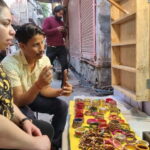
Food is part of the tour flow, and it’s not random. You’ll have street food tastings during the walk: tea or coffee, sweet lassi, and snacks.
For value, this matters. Too many sightseeing tours say food is included, but then it’s vague. Here, you can plan around it. You’ll know you’re getting a drink and something sweet, plus snacks, so you’re less likely to spend your budget on last-minute street purchases just to keep your energy up.
If you’re picky or have dietary concerns, you’ll still want to check with your guide on the spot. The tour data lists tastings, not a full meal, so it’s smart to treat this as a boost, not a substitute for dinner.
Price and value: what $11.18 buys you
At about $11.18 per person, this tour is priced like a budget-friendly way to see Old Jaipur without needing a car, a big ticket, or a long day. For that cost, you get a professional English-speaking guide, hotel pickup and drop-off, multiple landmark stops, an e-rickshaw ride, and included tastings.
Two details make the price feel even better:
- Many of the stops show admission tickets as free within the tour flow, so you’re not layering on extra entry costs.
- The structure lasts 3 to 4 hours, which means you’re buying a concentrated snapshot of key areas rather than a whole day of transport and wandering.
Also, note the practical side: the tour is booked about 13 days in advance on average. That tells me it’s popular enough that you shouldn’t wait until the last minute if your schedule is tight.
One thing to remember: tips and personal expenses aren’t included, and meals aren’t included. Since tastings are included, you can usually stay light on spending during the walk, but plan for your main meal separately.
Who this fits best (and who should choose a different plan)
This tour is a good match if you want:
- A guided walk that connects landmarks to street layout
- A mix of monument time and city-life time
- Comfort support from hotel pickup and a later e-rickshaw ride
- Included tastings (tea/coffee, sweet lassi, snacks)
It’s especially solid for first-timers in Jaipur who don’t want to juggle directions on their own.
It may feel less ideal if:
- You dislike walking and prefer mostly seated touring
- You want an all-day museum-and-fort itinerary (this is shorter and focused)
- You have mobility limits that make stair climbs a challenge (Isarlat Tower includes climbing)
Guide quality: when names matter
One reason this tour gets strong feedback is the human factor—guides who can explain without turning everything into a lecture. You might be matched with guides like Sayyed, Ali, or Nameera, and the theme across those names is clear communication and attention to what the group needs.
In real life, some guides also adjust the experience when there’s time or special interest. For example, you could be offered an extra stop such as Amber Fort, depending on the flow of the day. That flexibility can be a big value add if you’ve already got your sightseeing priorities.
Should you book this Jaipur heritage walk with rickshaw ride?
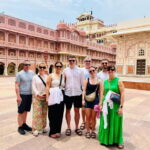
I’d book it if you want a well-structured Old Jaipur introduction that mixes monuments, gates, temple atmosphere, and real street segments, without turning your day into a long slog. The price is low enough that you’re not taking a big risk, and the included e-rickshaw plus tastings make it feel more complete than a standard walking tour.
Skip it or switch to a different option if you’re only interested in indoor ticket attractions, or if you know you can’t manage the on-foot portion plus the tower climb.
If your goal is to get your bearings fast and leave with the city’s story in your head, this one is a solid bet.
FAQ
How long is the Jaipur Heritage Walk with rickshaw ride?
It runs about 3 to 4 hours.
Is pickup included?
Yes. Hotel pickup and drop-off are included.
What does the e-rickshaw ride cover?
You’ll ride through the heritage city, including the Pink City area and old streets.
Are food tastings included?
Yes. Tastings include tea or coffee, sweet lassi, and snacks.
Are admission tickets included for the stops?
The itinerary lists admission tickets as free for the stops.
What is the meeting point and where does it end?
It starts at Hawa Mahal Rd, Badi Choupad, J.D.A. Market, Kanwar Nagar, Jaipur, Rajasthan 302002, India, and it ends back at the meeting point.
Is it a private tour?
Yes. It’s described as private, with only your group participating.
Can I cancel for a full refund?
Yes. You can cancel up to 24 hours in advance of the start time for a full refund.