REVIEW · JAIPUR CITY SIGHTSEEING TOURS
Private Full Day Jaipur Sightseeing Tour By Tuk Tuk
Book on Viator →Operated by Namaste Jaipur Tours · Bookable on Viator
Jaipur moves fast, and so does this ride. This private tuk-tuk day lets you cover the big sights without playing traffic roulette all day. I love that pickup and drop-off are built in from where you are, and I also love the way the day is paced so you actually get time at each landmark. One thing to keep in mind: monument entrances can add up, and you might encounter optional workshop stops depending on your driver.
The best version of this tour comes down to the person steering. In the stories I read, guides such as Khalid and Shabir were praised for clear explanations and for adjusting the schedule to your interests. A common caution also shows up: some drivers may try to include textile or jewelry shops on commission, so decide your boundaries early.
At a price that looks budget-level, you’re mostly paying for speed, comfort, and the convenience of not negotiating rides all day. Just plan for the extra site fees, and you’ll get a smart, efficient introduction to Jaipur.
In This Review
- Key things I’d focus on before you go
- Speed and control in a private Jaipur tuk-tuk
- A full-day flow that actually makes sense
- Amer and Amber Fort: the big start (and the payoff)
- Panna Meena ka Kund: a stepwell that rewards close looking
- Jal Mahal: the Water Palace, but don’t over-plan the time
- City Palace: royal architecture without losing the plot
- Jantar Mantar: when science is built to be seen
- Hawa Mahal: the façade is the show
- Gaitore Ki Chhatriyan: reflective, not just scenic
- Price and value: what $5.14 really buys you
- Logistics that make the day easier
- Choosing your driver: where the day rises or falls
- What to wear and bring (so Jaipur doesn’t win)
- Who should book this Jaipur tuk-tuk tour
- Should you book this tuk-tuk day?
- FAQ
- What’s the duration of the Jaipur private tuk-tuk tour?
- Are hotel pick-up and drop-off included?
- Is the tour fully private?
- Do I have to pay monument entrance fees?
- Are fuel and parking fees covered?
- Is bottled water provided?
- What’s the cancellation policy?
Key things I’d focus on before you go
- Private tuk-tuk, private pace: you control the day and move quickly through traffic.
- Pickup and drop-off where you choose: hotel, airport, or station are included.
- Amber Fort plus the royal sights: you hit the must-see trio of Amer, City Palace, and Jantar Mantar.
- Entrance fees likely extra: the tour price doesn’t cover all monument tickets (budget about $21 per person).
- Watch for shopping pressure: some days may include textile/jewelry stops; stay firm if you prefer sightseeing.
- Water included: bottled water is provided, helpful for a long day in the sun.
Speed and control in a private Jaipur tuk-tuk
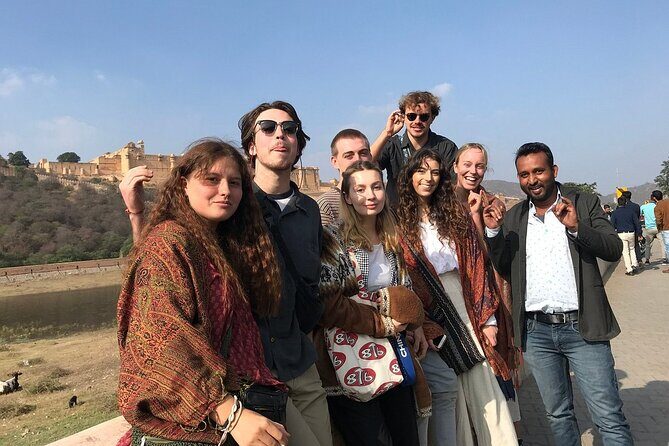
This tour is built around one idea: seeing Jaipur efficiently without the headache. Instead of hunting for taxis or bargaining with autorickshaw drivers all day, you get a driver and a vehicle dedicated to your group.
The private part matters. You’re not stuck waiting for strangers to finish photos, and you can spend a little longer where you’re interested. One of the nicest practical touches is that fuel, parking, tolls, and taxes are included, so the ride feels more straightforward from start to finish.
You should still expect real Jaipur traffic. A tuk-tuk is perfect for squeezing through tight roads, but it’s not a quiet, cushy car experience. If you want air conditioning, pay attention—one comment specifically warned that this type of ride may not have it.
You can also read our reviews of more private tours in Jaipur



A full-day flow that actually makes sense
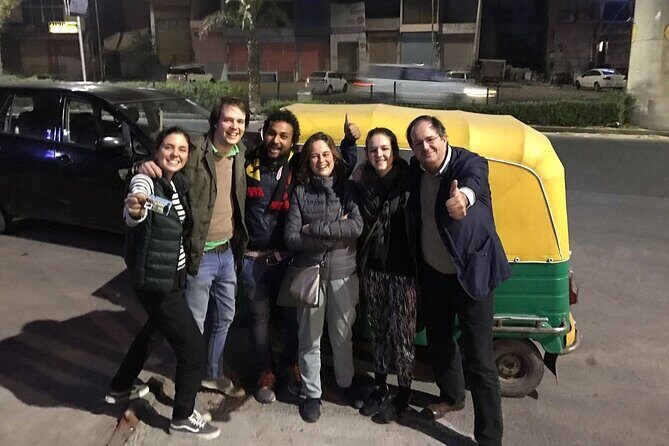
The tour starts in the morning, around 9:30 am, with your driver meeting you at your hotel in Jaipur. Then the day is a logical march through the city, from the Amer area to the royal core and finally to viewpoints and cremation cenotaphs.
Here’s the key timing idea: you get long enough stops at the major sights to feel satisfied, and shorter stops for the places that work best as quick visits. That helps on days when Jaipur’s heat and crowds can drain your energy.
Also, this is a solid option for first-timers because it hits the big “wow” factors in one go: Amber Fort’s fort-town setting, City Palace’s architecture blend, Jantar Mantar’s monumental astronomy, Hawa Mahal’s façade, and the quieter, more reflective Gaitore Ki Chhatriyan.
Amer and Amber Fort: the big start (and the payoff)
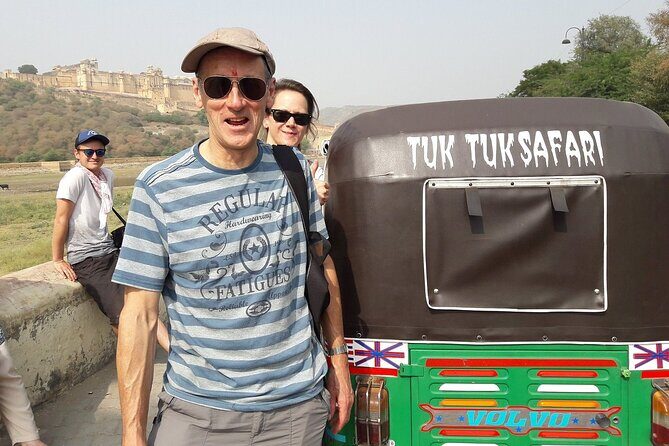
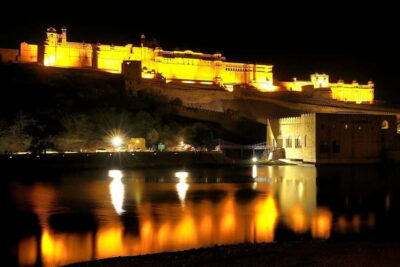
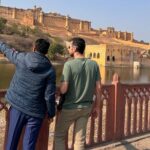
Your first major stop is Amer, home to Amber Fort. You’re given about two hours here, which is the right amount for a place of this size. You’re not rushed straight through, and you’re not left with nothing to do either.
Why this stop is worth making first: Amber Fort sits in a dramatic hill setting and helps you understand Jaipur’s power. Even if you know little about the dynasties, the scale of the fort complex tells the story quickly.
Practical tip: two hours can be just enough if you’re taking photos and looking carefully. If you’re a fast walker, great. If you like to stop, read, and photograph, plan to move smartly and choose a route instead of trying to see everything at once.
Panna Meena ka Kund: a stepwell that rewards close looking
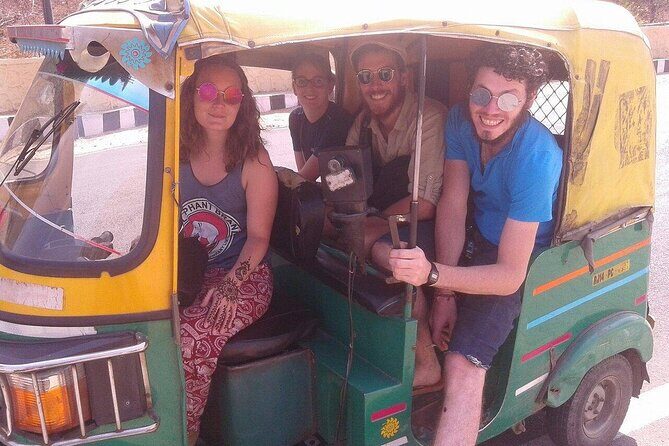
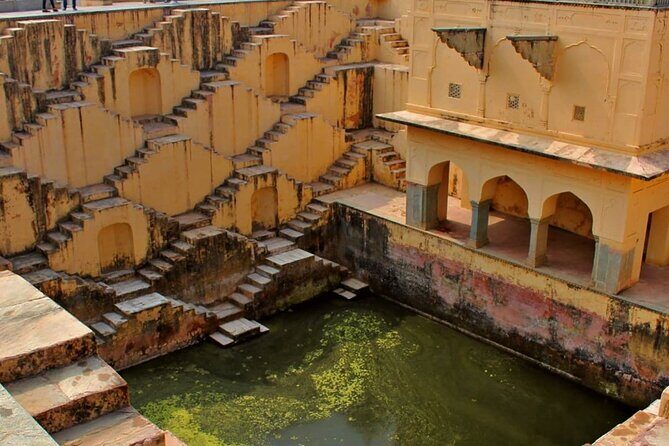
Next comes Panna Meena ka Kund, an eight-story stepwell with deep geometric stairs. You get about 30 minutes, which is exactly the right window for something like this.
What I like about stepwells is that they show engineering as culture. This one is famous for its symmetrical design, so even a short visit can feel satisfying if you slow down for a few good views of the structure.
If you’re sensitive to sun and heat, remember that stepwells can be cooler in parts but still involve outdoor walking. Bring a hat and water, and take the shade breaks seriously.
Jal Mahal: the Water Palace, but don’t over-plan the time
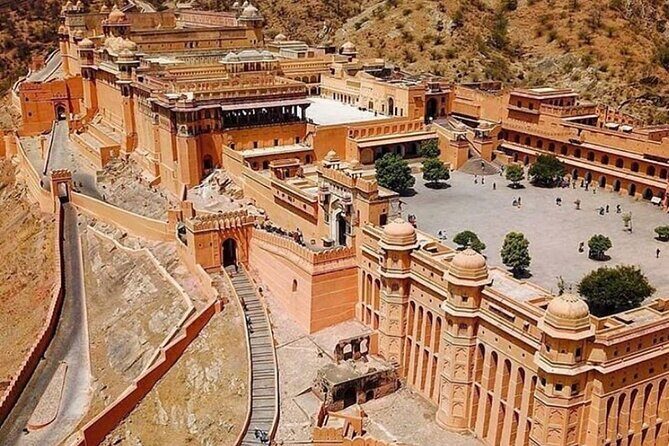
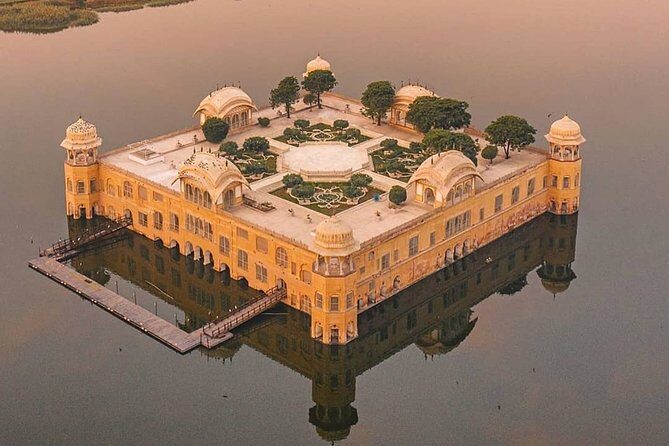
Then you go to Jal Mahal, also called the Water Palace, sitting in Man Sagar Lake. The stop is about 30 minutes.
This is one of those places where your expectations help. Jal Mahal often looks best from the right angles and viewpoints, and it’s mostly about the exterior and the setting. If you go in expecting a long, inside-style museum visit, you may feel shortchanged—but if you go for the look and the lake setting, you’ll likely enjoy the stop.
Also, this kind of photo stop is exactly where a tuk-tuk day shines. You’re not stuck waiting for transport during a gap. You move on, and you don’t lose the day’s momentum.
You can also read our reviews of more tours and experiences in Jaipur
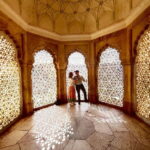



City Palace: royal architecture without losing the plot
After that, you head into the old city for City Palace of Jaipur. You’ll have about two hours here, and this stop is one of the day’s core anchors.
The City Palace is known for the blend of Rajasthani and Mughal styles. That matters because it helps you understand Jaipur as a city that’s always been a crossroads—politics, art, and design all mixed together.
One practical note: the tour schedule marks this stop as not included for admission. Translation: you should expect to pay monument ticket costs here unless the operator tells you otherwise on the day.
Jantar Mantar: when science is built to be seen
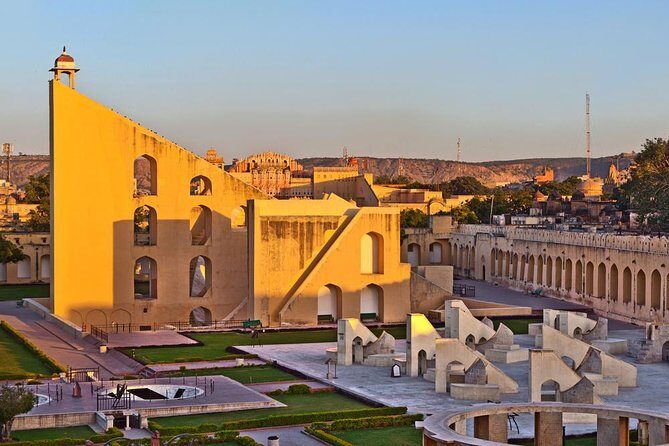
Next is Jantar Mantar, the monumental observatory in Jaipur. You get about one hour.
This is one of my favorite types of sightseeing: places where the architecture is also the instrument. The key idea is that you’re not just looking at old buildings. You’re seeing how fixed instruments were used to measure time and the sky.
Plan to spend your hour actively. Don’t just walk in. Pause for the main instruments, read what you can, and ask your driver questions if your guide can explain it clearly. In the day-by-day accounts I saw, guides such as Khalid and Shabir were praised for making these sites easier to understand.
Hawa Mahal: the façade is the show
Then comes Hawa Mahal, the Palace of Wind. You’ll have about one hour.
Hawa Mahal is famous for the façade and those many-windowed viewpoints designed so royal women could observe street processions without being seen. Even if you only spend an hour, you can still appreciate why the design became iconic.
This is also a good place to slow down for photos. The face is meant to be viewed from certain angles, and Jaipur’s street-level energy helps the photo story feel real.
Like City Palace, admission for this stop is marked as not included on the schedule, so budget for ticket costs.
Gaitore Ki Chhatriyan: reflective, not just scenic
Finally, you visit Gaitore Ki Chhatriyan, the royal crematorium grounds. The stop is about one hour, and the schedule notes admission ticket included here.
This is the kind of stop people sometimes skip when they chase only the biggest headlines. I like it because it shifts the mood. You get a different side of royal legacy—less about power in the moment, more about how rulers were remembered.
Even if this isn’t your favorite style of sightseeing, it’s a nice balance after the more visually loud monuments. And it often feels less crowded, which makes the time feel more relaxed.
Price and value: what $5.14 really buys you
The stated price is about $5.14 per person, which sounds almost too good. Here’s the honest way to think about value: you’re not paying for monument tickets; you’re paying for vehicle + driver logistics + pickup/drop-off + convenience.
The tour includes bottled water, and it also includes fuel and parking. That saves you from the usual expense and confusion of figuring out how you’ll get between places.
The trade-off is monument entrances. The tour data estimates entrance fees around $21 per person. So a realistic budget for the whole day is closer to about $26 per person, before meals. If you already planned to pay for tickets anyway, this setup still often works out as a good deal because you’re getting the dedicated tuk-tuk for the full day.
One more value point: group discounts are mentioned. If you’re traveling with a friend or two, that can help bring the total down per person.
Logistics that make the day easier
This is the kind of tour that removes friction. Pickup and drop-off are included from your chosen location. That means you don’t have to coordinate separate rides to the fort area, then back into the city, then back to where you’re staying.
You also get a mobile ticket, which is helpful if you’d rather not juggle paper.
The day is scheduled for about 8.5 hours, so it’s long enough to feel like a full day, but not so long that you’re touring until your brain shuts off. That balance matters in Jaipur, where heat and crowds can wear you down fast.
Choosing your driver: where the day rises or falls
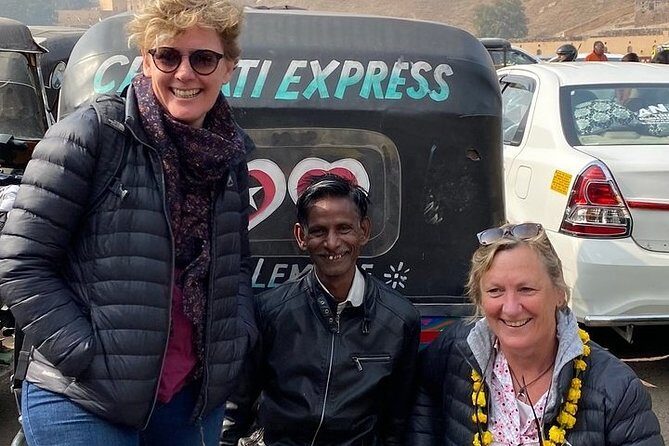
The most consistent theme in the positive stories is not the vehicle. It’s the driver-guide.
If you end up with someone like Shabir, Khalid, Shabbir, Babloo, Mohsin, or Anis Ahmed, you’re likely to get smoother navigation through traffic and better explanations at the stops. Several comments praised English clarity and the way drivers adjusted to interests, whether that meant street food plans, extra time at a monument, or focusing on what you care about most.
However, there’s a caution you should take seriously. One account warned about commission-based detours to textile and jewelry shops. Another person noted that a visit to textile and jewelry places still felt interesting. So the truth is probably this: shop stops may happen, and your experience depends on how your driver frames it and how firm you are.
My advice: message preferences ahead of time and set boundaries clearly. If you want monuments only, say that. If you’re okay with one short workshop stop, give a time limit and stick to it.
For Tuk Tuk in Jaipur, see Jaipur Guides.
What to wear and bring (so Jaipur doesn’t win)
A full-day tuk-tuk tour means you’ll be outside a lot. Bring sunscreen and a hat. Wear comfortable shoes that can handle uneven ground around forts and stepwell areas.
Carry water even though bottled water is provided. Heat can sneak up on you, especially on the Amer side and around midday gaps between sights.
If you care about photos, plan for quick bursts. Your vehicle makes it easy to relocate, but Jaipur’s best photo moments happen in short windows—especially at façades and lake-adjacent viewpoints.
Who should book this Jaipur tuk-tuk tour
This fits best if you want:
- A practical first-time Jaipur introduction with the top sights in one day
- A flexible schedule where you can slow down or speed up
- Solo travelers or couples who prefer private logistics over group buses
- People who like motion and don’t mind traffic chaos because it’s part of the city’s energy
It may be less ideal if:
- You strongly prefer air-conditioned transport
- You hate shopping stops entirely and don’t want any workshop detours (you’ll need to set boundaries)
- You want an all-day museum-style deep interior experience instead of a highlights-focused route
Should you book this tuk-tuk day?
If you’re short on time in Jaipur and you want the main monuments without the stress of arranging rides, I think this is a smart booking. The dedicated tuk-tuk, hotel pickup/drop-off, and included driving costs make the day feel organized and easier than piecing transport together yourself.
Just go in with two expectations set: budget for monument entrances (around $21 per person), and be ready to steer the day if shopping detours show up. If you do that, you’ll likely end the day feeling like you really got your bearings fast—and you’ll see why Jaipur’s royal sights are so memorable.
FAQ
What’s the duration of the Jaipur private tuk-tuk tour?
It runs for about 8 hours 30 minutes.
Are hotel pick-up and drop-off included?
Yes. Pick-up and drop-off are included from your hotel, airport, or railway station.
Is the tour fully private?
Yes. It’s a private tour/activity, and only your group participates.
Do I have to pay monument entrance fees?
Entrance fees are not included. The estimated monument entrance cost is about $21 per person. Some stops are marked as ticket-free on the schedule, and Gaitore Ki Chhatriyan is marked as included.
Are fuel and parking fees covered?
Yes. Fuel, parking charges, toll taxes, and interstate taxes are included.
Is bottled water provided?
Yes. Bottled water is included.
What’s the cancellation policy?
You can cancel for free up to 24 hours in advance for a full refund. If you cancel less than 24 hours before the start time, the amount paid is not refunded.