REVIEW · 1-DAY TOURS
Jaipur: Ajmer & Pushkar Day Trip with Lunch & Camel ride
Book on GetYourGuide →Operated by NamasteJaipurTours · Bookable on GetYourGuide
Two holy cities, one long day of stories. You’ll move from Ajmer’s Sufi hush at Ajmer Sharif Dargah to Pushkar’s ritual lakeside calm, with historic Indo-Islamic architecture at Adhai Din Ka Jhonpra along the way. I like how the itinerary mixes two very different spiritual moods instead of repeating the same kind of sightseeing. I also like the rarity factor of visiting the Brahma Temple, which most people usually miss on Rajasthan trips. The main drawback: it’s a long day with lots of driving, so if you don’t get good explanations, the stops can feel rushed.
A private, air-conditioned car keeps things comfortable when the heat and crowds hit, and the trip seems to run smoothly when you have a steady driver like shah rukh or Manoj. Still, you should expect crowds at the most popular sites, and religious spaces require a bit of patience and modesty. Plan your walking shoes carefully because you’ll cover several short strolls in multiple locations.
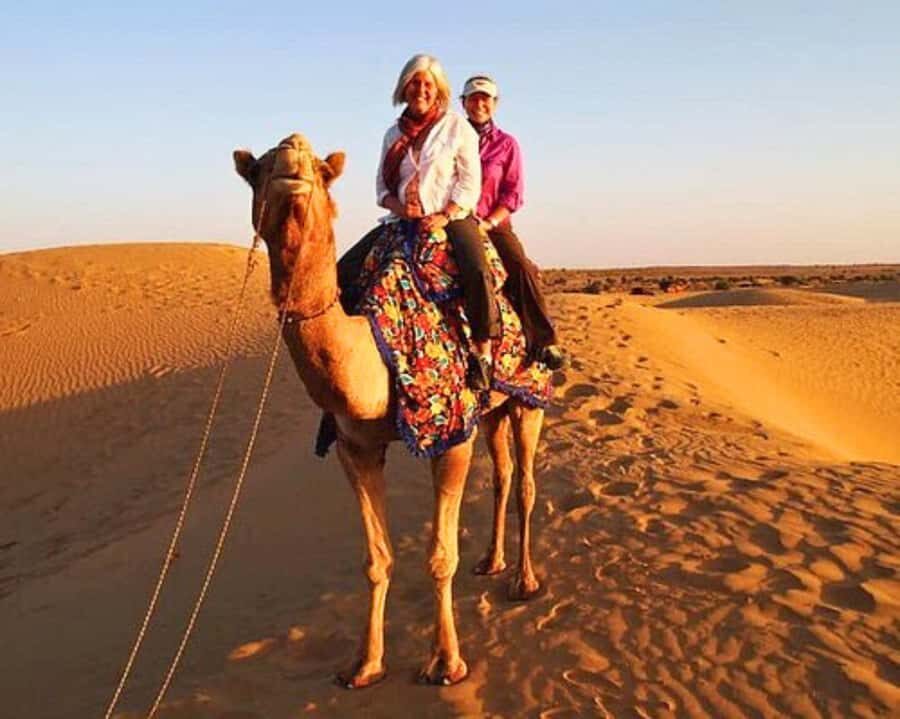
Before you go, I’d also flag one practical thing: your tour title says camel ride, but the schedule details I’m working from don’t spell out a camel-ride stop. So it’s worth confirming with the operator what’s included on your exact pickup time.
In This Review
- Key moments that make this day trip worth it
- Why Ajmer and Pushkar in one day works (and when it doesn’t)
- 8:00 AM pickup and the Aravalli drive toward Ajmer
- Ajmer Sharif Dargah: Khwaja Moinuddin Chishti and Mughal-era spirituality
- Adhai Din Ka Jhonpra: a mosque built in two and a half days
- The push to Pushkar: short drive, big change in mood
- Lunch in Pushkar: vegetarian by default, pay as you go
- Brahma Temple: one of the few dedicated to Lord Brahma
- Pushkar Lake and the 52 ghats: where rituals and calm coexist
- Pushkar Bazaar: handicrafts and souvenirs with a time limit
- Price and logistics: the real value question at $30
- What to pack and how to handle crowds
- Who this day trip suits best (and who should skip it)
- Should you book this Ajmer and Pushkar day trip?
- FAQ
- What time does the day trip start from Jaipur?
- How long does it take to reach Ajmer and then Pushkar?
- Are meals included in the price?
- Which sites are included in Ajmer and Pushkar?
- Is there a camel ride on this trip?
- What should I wear or bring for the religious sites?
Key moments that make this day trip worth it
- Ajmer Sharif Dargah with Khwaja Moinuddin Chishti: Sufi spirituality and Mughal-era grandeur in one hour.
- Adhai Din Ka Jhonpra: A mosque built in two and a half days, famous for carved pillars and domes.
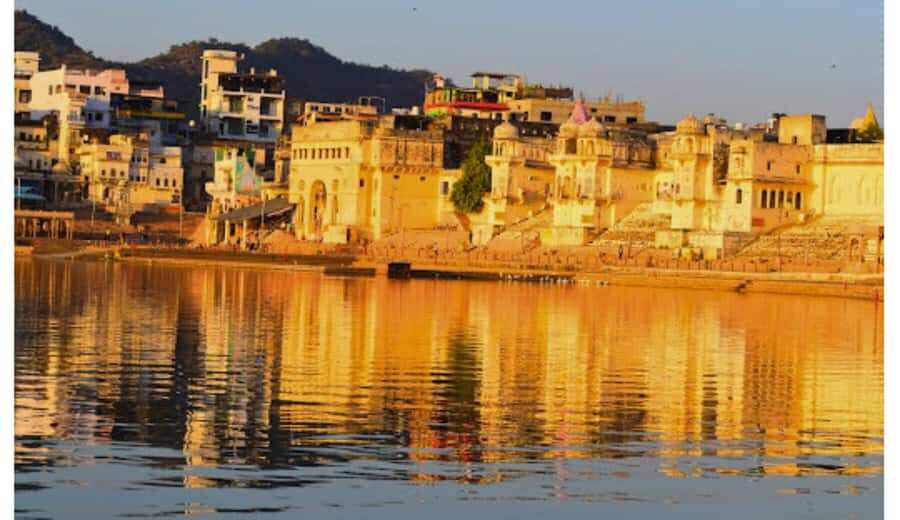
- Pushkar Lake ghats: Sacred waterfront with rituals and photo-friendly calm.
- Brahma Temple: A rare stop dedicated to Lord Brahma (and a nice change from the usual temples).
- Pushkar bazaar time: A focused window for handicrafts, jewelry, and souvenirs.
- Private AC vehicle door-to-door: You lose less time wrangling transport in a busy region.
Why Ajmer and Pushkar in one day works (and when it doesn’t)
If you only have a day and you want both Muslim Sufi heritage and Hindu pilgrimage culture, this route is efficient. Ajmer gives you the Ajmer Sharif Dargah and Adhai Din Ka Jhonpra, two sites where you feel the past in stone and routine. Pushkar, especially the lake ghats, gives you that everyday sacred energy—people coming for worship, prayers, and ritual baths.
What makes this day trip work for you is the pacing: you get one solid chunk in Ajmer, then a clear hop to Pushkar with time for lunch, temples, lake time, and a little shopping. What can trip you up is the same thing that makes it efficient: you’re fitting several major landmarks into a single day. If you hate long travel days, or if you’re hoping for slow, deep exploration, you might feel squeezed.
I also think this trip performs best when you’re the kind of traveler who enjoys atmosphere and symbolism, not just checking off buildings. The Dargah and the ghats are about being in the place—watching how people move, why they pause, and what they’re offering—so it helps to go in with the right mindset.
You can also read our reviews of more tours and experiences in Jaipur


8:00 AM pickup and the Aravalli drive toward Ajmer
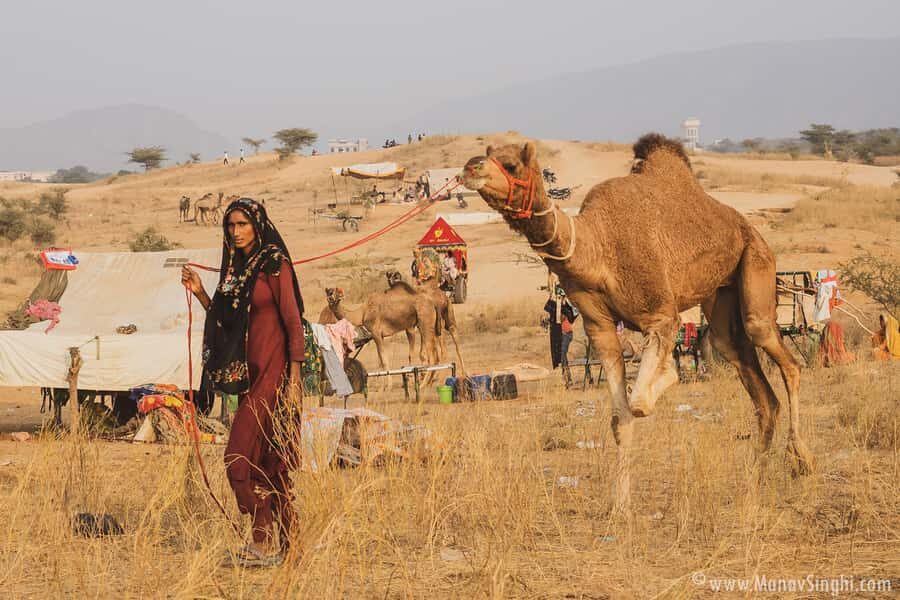
You start around 8:00 AM with pickup from Jaipur in a private air-conditioned vehicle. The ride to Ajmer is about two hours, and the scenery shifts as you leave the city behind. Even if you only treat the drive as getting from A to B, you’ll still get those Aravalli views en route, which helps the day feel like more than a checklist.
A private car matters here. This area can be traffic-heavy, and having a driver already handling routing and parking saves you mental energy. Just remember: a morning departure is great for getting to Ajmer before the thickest peak crowds, but you’ll still want to keep your day flexible with religious-site security lines and packed areas nearby.
If you’re traveling with someone who gets car-sick, bring what you need—this isn’t the shortest day-trip drive. And if you’re hoping to add extra stops on your own, you’ll have limited room to do it without pressing the schedule.
Ajmer Sharif Dargah: Khwaja Moinuddin Chishti and Mughal-era spirituality
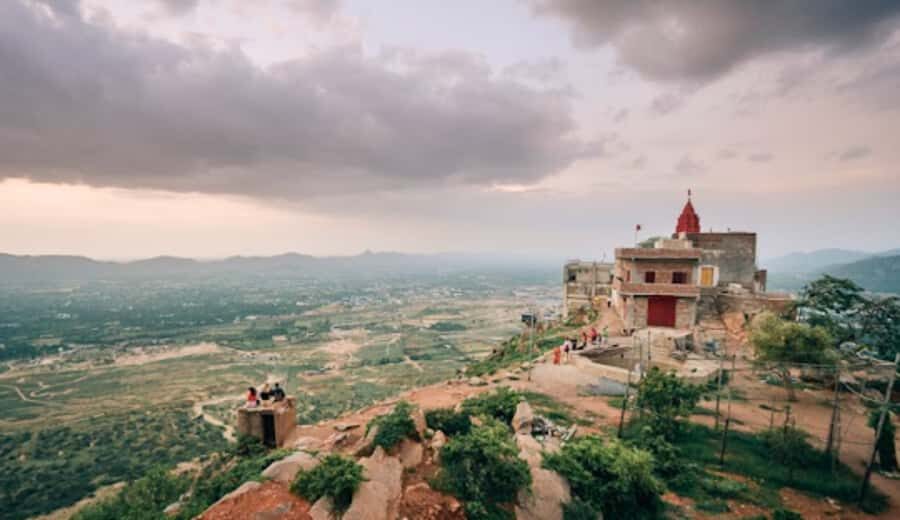
You’ll reach Ajmer around 10:00 AM, then the tour’s first major moment is Ajmer Sharif Dargah, the revered shrine of Khwaja Moinuddin Chishti. You’ll spend about one hour here, which is a good window: long enough to take in the courtyard atmosphere, the flow of devotees, and the architectural details, without feeling like you’re stuck for half your day.
This stop isn’t just about photos. It’s about the rhythm: people arriving, finding their space, making offerings or prayers, and then moving on. If you’re sensitive to crowds, go with calm expectations. If you’re comfortable in busy sacred spaces, this will likely be one of the strongest parts of your day because the shrine isn’t trying to entertain you—it’s operating as a living place of devotion.
Practical tip: dress modestly. You’ll be in a religious environment where clothing rules are taken seriously, and you’ll feel more relaxed if you’re dressed appropriately from the start. Comfortable shoes also help, because you may spend time standing, walking slightly slower, and weaving through other visitors.
Adhai Din Ka Jhonpra: a mosque built in two and a half days
Right after the Dargah, the trip moves to Adhai Din Ka Jhonpra, with about 30 minutes to explore. This is one of those places that makes you pause because it tells a story through architecture. The structure is known as a historic mosque built in two and a half days, and you can see the Indo-Islamic artistry in the carved pillars, domes, and stonework.
This is a quick stop, so I’d go in with one goal: look closely at details. When you only have 30 minutes, you want to focus on craftsmanship—where the designs repeat, where the carvings catch the light, and how the building’s layout feels. If you treat it like a slow museum visit, you’ll still enjoy it, but you’ll need to accept that your time here is meant to be a snapshot.
Also, don’t expect this to feel like a typical modern temple site. It’s more architectural and historical in tone. If the Dargah feels emotional and communal, the Jhonpra often feels cerebral—proof that culture can blend and still create something visually powerful.
The push to Pushkar: short drive, big change in mood
After Ajmer, you’ll travel about 30 minutes to Pushkar. The schedule suggests arriving around 1:00 PM, which is typically right when energy levels start to drop and hunger kicks in.
This is a good moment to reset. The shift from Ajmer’s shrine-focused rhythm to Pushkar’s lake-and-pilgrimage landscape is dramatic enough that you’ll feel it immediately when you step into the Pushkar area.
If you’re prone to getting tired in transit, pack a small water habit. It’s included in your personal supplies list, and it matters in Rajasthan where sun and dehydration can sneak up fast.
You can also read our reviews of more tours and experiences in Jaipur



Lunch in Pushkar: vegetarian by default, pay as you go
Lunch is planned in Pushkar, and the good news is the town is vegetarian. That makes it easier to eat without hunting for options. The schedule also includes a meal stop at your own cost, and meals/drinks are listed as not included.
So here’s how I’d approach lunch: don’t over-plan it. Use the time as a chance to eat something simple—Rajasthani vegetarian dishes are part of the idea—and then get back to your next stop. If you’re hungry and you wait until you’re starving, you lose time and you might end up with a less enjoyable meal.
It can also help to use lunch as a cultural filter. Pushkar food and the way people eat there often feels more relaxed and local than tourist-heavy quick bites. If you want authentic flavor without spending time researching restaurants, this is one of the strengths of choosing lunch inside the destination rather than on the road.
Brahma Temple: one of the few dedicated to Lord Brahma
After lunch, you’ll head to the Brahma Temple. You’ll have about 30 minutes, which means you should focus on what makes it distinct: it’s one of the few temples dedicated to Lord Brahma.
This is a nice counterbalance to the earlier stops. Instead of Sufi shrine spirituality and Indo-Islamic architecture, you get a more focused Hindu devotional experience. Even if you’re not deep into temple mythology, it’s the rarity that makes it interesting. Most Rajasthan itineraries highlight other major deity temples. Brahma is less common, and that gives your day an element of surprise.
One caution: with only 30 minutes, don’t waste time lingering at the edges while crowds flow past. If you want good viewing angles or quiet moments, pick your time carefully—arrive, take your bearings, then spend your time inside the core area before the next wave arrives.
Pushkar Lake and the 52 ghats: where rituals and calm coexist
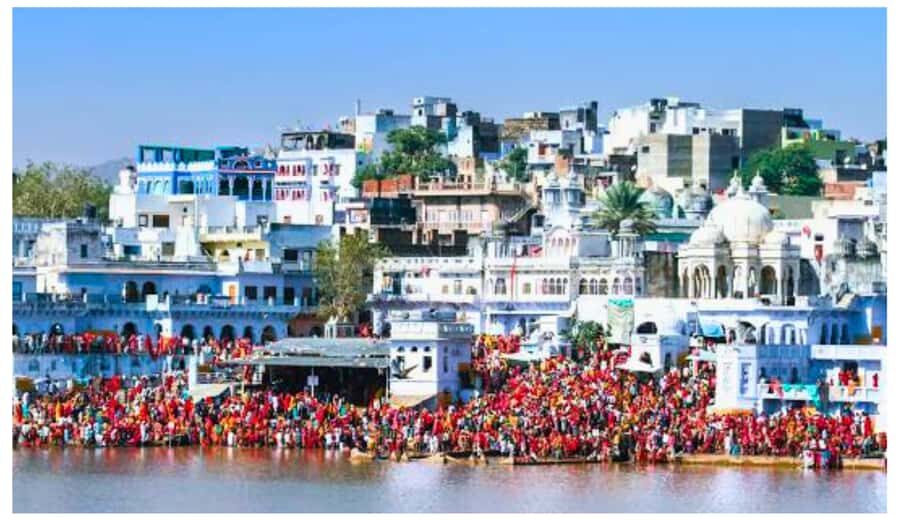
The schedule then takes you to Pushkar Lake, with about 45 minutes at the water and ghats. Pushkar Lake is sacred and has 52 ghats, where pilgrims perform rituals. This is the kind of stop where the best moments often happen while you’re simply walking slowly and watching what people are doing.
What I like about this segment is the balance. It’s not all loud spectacle. There’s also a quieter side—sun on stone, reflections on the water, and the sense that the ghats have an everyday function beyond sightseeing.
Try not to treat this as a single photo point. Instead, think of it as a short circuit. Take a few minutes to notice how pilgrims move along the steps, then pause near a cluster of ghats for longer than you think you need. If you rush, you’ll just skim the atmosphere. If you slow down, you’ll remember the place more than the landmark.
Pushkar Bazaar: handicrafts and souvenirs with a time limit
After the lake, you’ll explore Pushkar Bazaar for about 30 minutes, with a focus on handicrafts, jewelry, and souvenirs. This is your chance to grab something small and local without turning the day into a shopping marathon.
I’d go into the bazaar with two rules:
- Set a mental budget before you enter.
- Decide in advance whether you’re buying today or just browsing.
Because your time here is limited, impulse buying can happen fast. A better approach is to look for quality you can quickly recognize—materials, finishing, and the way pieces are made. If it’s more about negotiating fun than acquiring something specific, then enjoy the browsing and treat purchases as optional.
Also, carry cash. The tour info explicitly suggests carrying cash for shopping in local markets.
Price and logistics: the real value question at $30
At $30 per person, the value is mainly about convenience and transportation: private air-conditioned pickup/drop, fuel, tolls/parking, and a structured day of visits. You’re paying to remove the hassle of figuring out transport between Jaipur, Ajmer, and Pushkar on your own.
But the price question has a catch: this trip is long, and it depends on how you experience the sites. One negative experience shared that the driver wasn’t properly informed about which tour was booked, so there was less explanation than expected. That traveler also felt the sights weren’t worth the long drive unless you have a guide or you pair the day with a taxi option for less money.
So here’s how I’d judge whether it’s worth it for you:
- If you want a low-stress, door-to-door day with minimal planning, this price can be fair—especially when you get a good driver who communicates well.
- If you prefer to self-navigate and you don’t care about interpretation, a taxi and your own route planning might be cheaper.
- If camel ride is a must-have for you, confirm inclusion ahead of time. The details provided here don’t spell it out.
In practice, this is a tour where the “human factor” matters. Experiences with drivers like shah rukh and Manoj sound like they made people feel comfortable and enjoy the long ride. That comfort can be the difference between a long day feeling like a win—or feeling like a chore.
What to pack and how to handle crowds
You’ll be moving between religious and sacred spaces, plus bazaar time. That means your comfort plan matters.
Bring:
- Comfortable shoes (you’ll walk in and around sites)
- Water (heat + long day)
- Sunscreen and a hat
- A camera if you want to capture the Dargah, architecture, and lake ghats
Dress:
- Modest clothing for the religious stops is the key requirement.
On-site behavior:
- Expect crowds at popular attractions.
- No smoking in the areas covered by the tour.
And one more practical thought: start with a calm pace at Ajmer. If you try to sprint through sacred spaces, you’ll feel drained fast.
Who this day trip suits best (and who should skip it)
This tour is a good fit if you:
- Want a full-day taste of Ajmer and Pushkar without planning transport.
- Like spiritual sites and religious architecture.
- Enjoy a mix of Sufi, Indo-Islamic, and Hindu pilgrimage settings.
- Are fine with a schedule that moves from stop to stop with limited time at each.
It’s less ideal if you:
- Hate long car time or feel quickly worn out by driving.
- Want a slow, detailed deep-dive at each site.
- Need wheelchair access. The tour info lists it as not suitable for wheelchair users.
If you’re traveling with family or friends, this style of day trip can still work, but agree ahead of time on expectations: it’s not a leisurely hangout. It’s structured sightseeing with spiritual stops.
Should you book this Ajmer and Pushkar day trip?
Yes, if your goal is a straightforward, door-to-door day that covers the big spiritual highlights with some time for lunch and bazaar browsing. The combination of Ajmer Sharif Dargah, Adhai Din Ka Jhonpra, and Pushkar Lake ghats is a solid one-two cultural punch. And the best versions of this trip seem to shine when the driver communicates well—people have specifically praised comfort during the long ride with drivers like shah rukh and Manoj.
Hold off or confirm details first if camel ride is a must for you, because the provided schedule doesn’t clearly show it as a stop. Also, if you’re worried about long-drive value, consider making sure you’ll have enough guidance or explanation once you’re on the ground; the downside of the long day shows up when you don’t get that context.
If you go in with realistic expectations and come prepared with modest dress and sturdy shoes, this is a worthwhile day trip that can feel meaningful, not just busy.
FAQ
What time does the day trip start from Jaipur?
The tour starts around 8:00 AM with pickup from Jaipur.
How long does it take to reach Ajmer and then Pushkar?
The drive from Jaipur to Ajmer takes about 2 hours, and Pushkar is about a 30-minute drive from Ajmer.
Are meals included in the price?
Meals and drinks are not included. Lunch break happens in Pushkar, and the meal stop is at your own cost.
Which sites are included in Ajmer and Pushkar?
You’ll visit Ajmer Sharif Dargah and Adhai Din Ka Jhonpra in Ajmer, then the Brahma Temple and Pushkar Lake and ghats in Pushkar.
Is there a camel ride on this trip?
Your trip title mentions a camel ride, but the details provided here do not list it as a specific stop. I recommend confirming with the operator what’s included.
What should I wear or bring for the religious sites?
You should dress modestly at religious sites and bring comfortable shoes, a hat, sunscreen, camera, and water.