REVIEW · CITY PALACE TOURS
Jaipur: City Palace Museum – Direct Official Ticket
Book on GetYourGuide →Operated by City Palace Museum, Jaipur · Bookable on GetYourGuide
Jaipur’s City Palace feels like a maze with purpose. This direct official ticket gets you into a palace complex that once ran the Jaipur state’s administration, then later morphed into museum spaces across seven connected courtyards. You’ll also hit the MSMS II Museum areas, where four of those courtyards are grouped with heritage buildings and artifacts.
Two things I especially like: first, you’re not buying a vague ticket to one building. You’re getting access to a palace layout with multiple ceremonial and administrative spaces, linked like a planned city. Second, the mix of what you see is strong—ceremonial courts, then specific collections like textiles, arms and armor, historical photos, and royal transport.
One drawback to keep in mind: the experience quality can be inconsistent. I saw a low-rating report about an issue with a ticket not working and the palace being in rough shape with rubbish left around. That’s not enough data to declare it always happens, but it’s a smart reason to arrive ready to sort problems quickly.
In This Review
- Key highlights you’ll actually care about
- A one-day pass to Jaipur’s City Palace complex
- Finding the ticket counter near Baradari Restaurant
- Start at Pritam Niwas Chowk: the palace’s gateway mood
- Sarvato Bhadra / Diwan-e-Khas: where celebrations took center stage
- Sabha Niwas / Diwan-e-Aam: the public-facing court
- Mubarak Mahal (1902): textiles and guest-house history
- Sileh-Khana: arms and armor with real focus
- Painting & Photography Gallery: maps, paintings, and historic photos
- Rath-Khana: royal transports across three centuries
- MSMS II Museum areas inside the palace layout
- What the official ticket includes (and what it doesn’t)
- Practical tips for a smoother visit
- Price and value: is $16 worth your time?
- Who should book this City Palace ticket?
- Should you book this official City Palace museum ticket?
- FAQ
- How long is the City Palace Jaipur ticket valid?
- Where do I enter to get my ticket?
- What is included with this ticket?
- What parts of the palace will I see?
- Can I take photos?
- Are professional cameras allowed?
- Are pets allowed?
- Is there anything I should bring or wear?
Key highlights you’ll actually care about
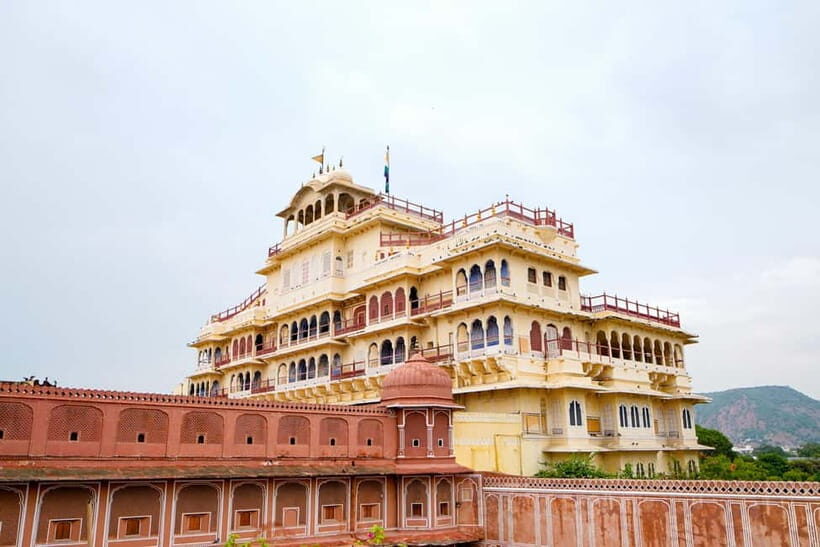
- Seven interconnected courtyards: plan to walk, but you get a real sense of how space functioned.
- Pritam Niwas Chowk: start at a gateway square with four deities represented in the decorated deories.
- Gangajalis: don’t miss the two huge silver urns when you enter Sarvato Bhadra.
- Diwan-e-Aam and Diwan-e-Khas: ceremonial spaces tied to public hearings and court celebrations.
- Sileh-Khana arms gallery: a focused stop if you want material culture beyond paintings.
- Rath-Khana transport display: royal vehicles spanning three centuries, some tied to city festivals.
A one-day pass to Jaipur’s City Palace complex
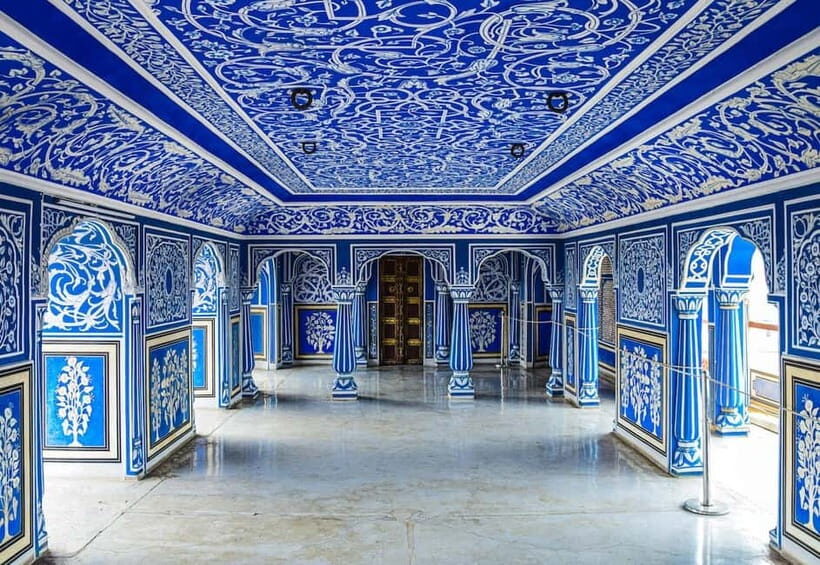
This is the kind of site where you’ll feel your attention shift as the day goes on. At first, it’s architecture and layout—chowks, gates, courtyards that connect in a deliberate way. Then the objects take over: textiles, weapons, maps and photographs, and even royal transportation, displayed in a way that matches their original ceremonial purpose.
The City Palace of Jaipur wasn’t built for one single use. It served as the former administrative headquarters of the rulers of the erstwhile Jaipur State. The Kachwaha rulers of Amber and Jaipur collected and commissioned heritage buildings and artifacts over centuries. That long timeline matters when you walk through, because the palace doesn’t feel like one era pretending to be another.
The ticket you’re using is a direct official one, issued by the City Palace. For me, that’s a practical plus. It usually means fewer handoffs and fewer reasons for confusion when you reach the entrance.
You can also read our reviews of more tours and experiences in Jaipur



Finding the ticket counter near Baradari Restaurant
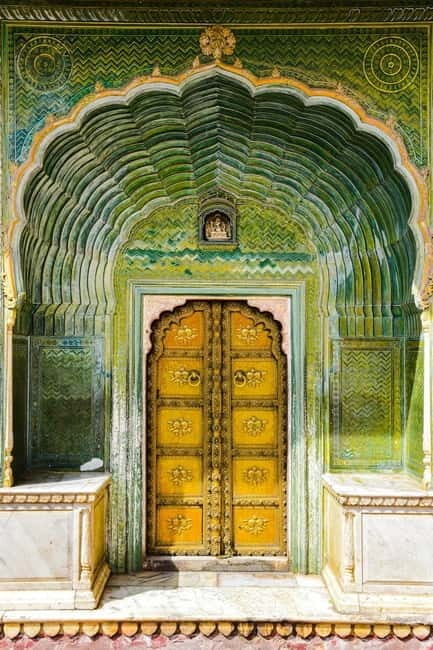
Your meeting point is simple: enter the gate to the ticketing counter near Baradari Restaurant. That matters because the City Palace is big. If you show up already stressed, you’ll spend your best energy searching for the right gate instead of seeing courtyards.
I’d treat this like a warm-up step, not a chore. Go in, confirm your entry, then give yourself a buffer. Once you’re inside, you’ll be moving from one courtyard to the next, and the day can disappear faster than you think.
Tip that helps: wear shoes you can walk in all day. The official guidance here is clear—there will be a lot of walking, and you’ll want your feet to survive the heat and stone.
Start at Pritam Niwas Chowk: the palace’s gateway mood
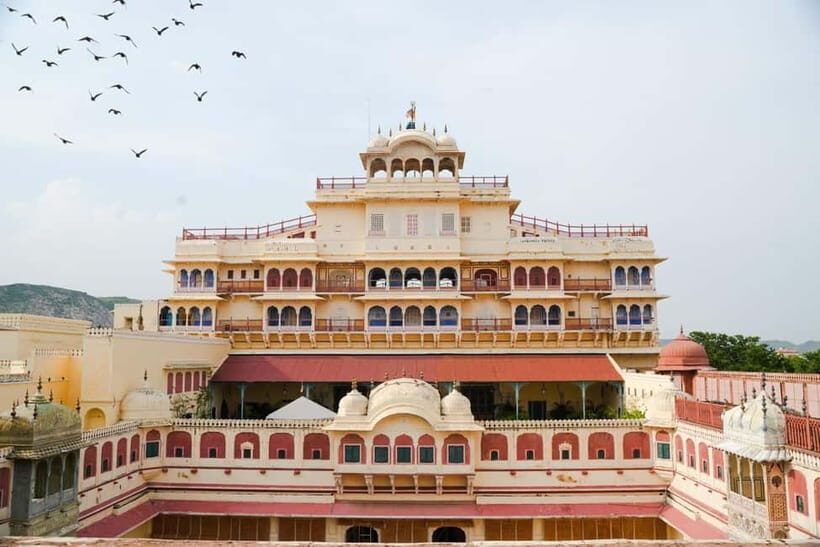
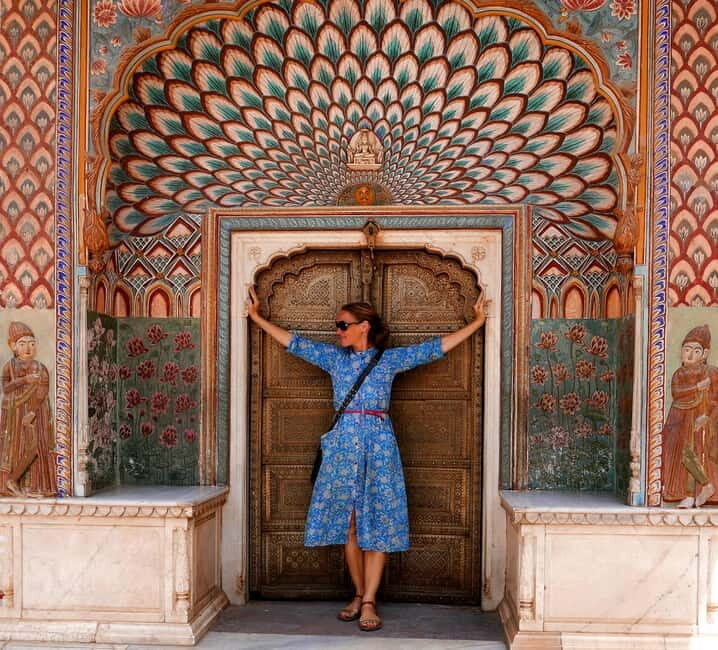
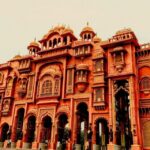
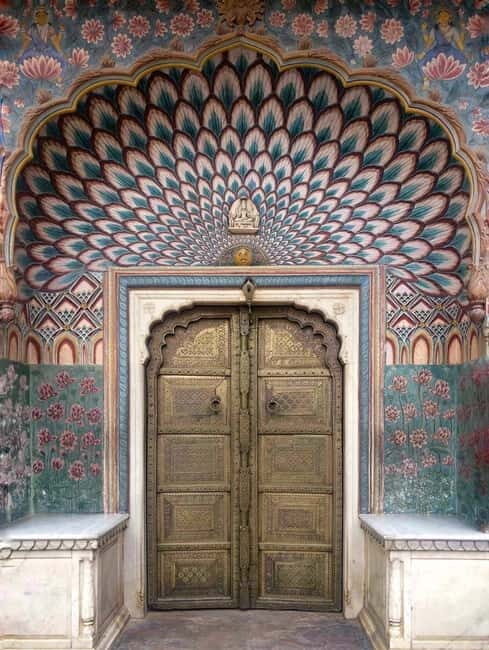
The tour begins at Pritam Niwas Chowk. This space is built around decorated gates or deories, and you’ll see four of them, each depicting four deities. It’s a good first stop because it sets the tone immediately: this wasn’t only a place to govern; it was also a place designed for religious and ceremonial meaning.
I like this kind of start. Instead of starting with museum labels, you start with symbols and entrances. You get your bearings fast, and later, when you hit Diwan-e-Khas or Diwan-e-Aam, the spaces feel less random.
If you’re the type who photographs architecture, this is a strong opening. Just remember: photography is allowed, but flash photography may be restricted in certain areas. Keep your phone or camera ready, but don’t plan on using flash.
Sarvato Bhadra / Diwan-e-Khas: where celebrations took center stage
Next comes Sarvato Bhadra, also known as Diwan-e-Khas. This courtyard played host to religious and cultural celebrations. Think of it as a more intimate, ceremonial tier of palace life—still public enough to matter, but not the most open hall.
One specific detail I’d never skip here: Gangajalis, two gigantic silver urns. You encounter them when entering this courtyard. They’re the kind of object that makes you slow down, because your eyes register the scale before you even process what you’re looking at.
This stop is also a good moment to notice how the palace routes you. The interconnected courtyards aren’t just sightseeing—they’re how movement and ceremony used to flow through the state’s power center.
Sabha Niwas / Diwan-e-Aam: the public-facing court
Then you head to Sabha Niwas, also known as Diwan-e-Aam. This is the hall where the Maharaja would hear from the public and greet foreign dignitaries. It’s a shift in function. You’re moving from court celebration space into a more outward-facing political role.
What makes this part valuable is the context. Even without a guide, you can understand what it means: the palace wasn’t only for rituals inside a closed world. It was also a stage for public interaction and international attention.
If you like history that connects to real civic life, this is one of your best moments in the complex. It helps you interpret why other courtyards exist—because the palace had to serve multiple audiences.
You can also read our reviews of more city tours in Jaipur



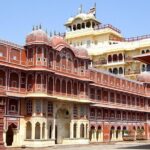
Mubarak Mahal (1902): textiles and guest-house history
Next is Mubarak Mahal. It was built in 1902 as a guest house for foreign dignitaries. Today, it houses the textile collection.
This stop is a nice reminder that palaces aren’t only stone and thrones. Clothing and fabrics were status, identity, and diplomacy, all rolled into one. If you’re interested in design and craftsmanship, the textile collection can feel like a break from the heavy visual language of weapons and silverwork.
Also, this is where I’d take a slower pause. The switch from ceremonial courts to curated material culture makes the day more balanced, especially if you tend to rush through museum spaces.
Sileh-Khana: arms and armor with real focus
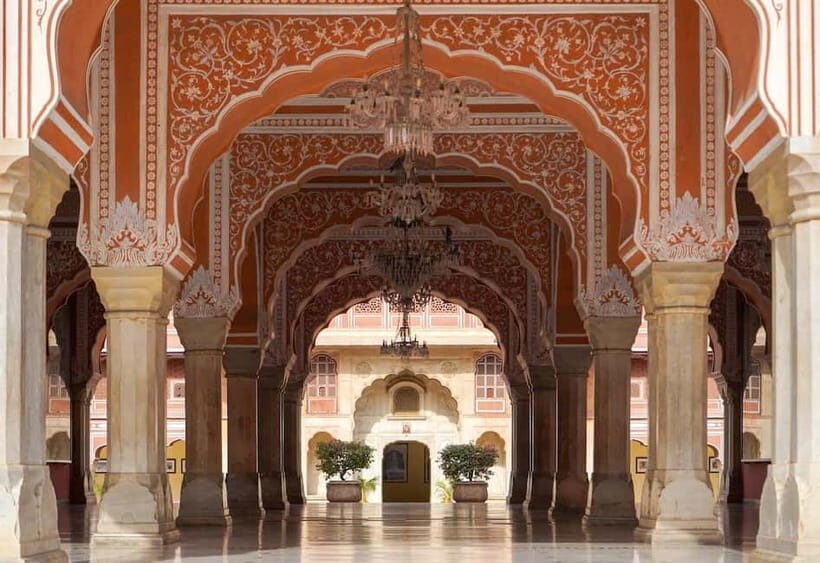
Sileh-Khana is a gallery that houses a vast collection of arms and armor. This is not a quick glance kind of room. If you have even a moderate interest in historical weaponry, you’ll likely spend time reading the shapes, materials, and how they were made to intimidate, protect, and signal power.
I appreciate that this gallery exists as a distinct stop. It prevents the palace from feeling like one long corridor of similar rooms. It’s also useful if you want your visit to match your interests rather than just following the flow.
Photography rules apply here too—no flash in certain areas. Keep that in mind if you plan to shoot close-up details.
Painting & Photography Gallery: maps, paintings, and historic photos
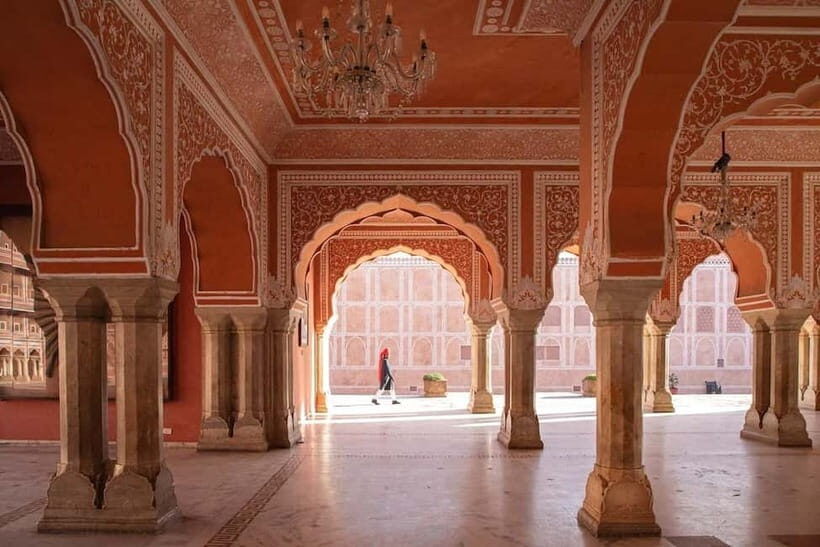
The Painting & Photography Gallery brings together paintings, maps, and historic photographs. This mix matters because it expands what museum objects can teach you. Maps show how places were understood. Photographs show how the world looked at the moment someone recorded it. Paintings add interpretation—often more emotional or symbolic than a map.
If you’re the type who likes to understand how a ruler’s world was imagined, this gallery can be a strong intellectual break from the physical power objects like arms and ceremonial silver.
One practical caution: if professional cameras are not allowed, assume that rules may be stricter in galleries like this. If you’re carrying equipment beyond a standard phone/camera, follow the site rules and don’t try to outsmart them.
Rath-Khana: royal transports across three centuries
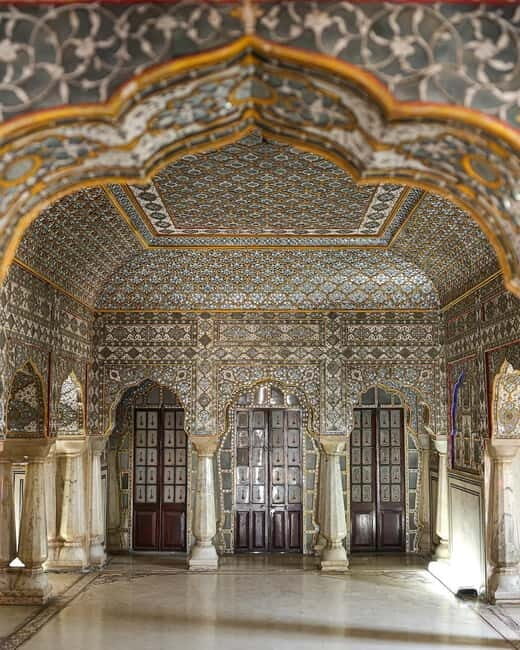
Finally, you’ll see the Rath-Khana, a display of some of the most important royal transports spanning three centuries. This category sounds niche, but it’s surprisingly informative. Transportation is politics you can ride in. It’s how ceremonies moved through the city. It’s how power traveled.
Here’s a detail I like: these objects were intended for ceremonies, and some of the displays are still part of annual festivals of the city. That means the palace isn’t trapped in the past. Even when the vehicles are displayed as artifacts, they connect to living traditions.
If your day in Jaipur includes festival schedules, this stop can tie it together nicely.
MSMS II Museum areas inside the palace layout
The ticket includes access to the City Palace courtyards and galleries, and the MSMS II Museum is central to the visit. The key point is that MSMS II Museum is home to four of the seven courtyards.
So, for your planning, think of the visit in two layers:
1) the interconnected courtyards that create the palace’s spatial story, and
2) the museum grouping where some of those courtyards are housed under the MSMS II umbrella.
This matters because you’ll likely feel a thematic rhythm. When you enter a courtyard, you’re stepping into one kind of function. When you move through the MSMS II museum areas, you’re also moving through interpretive spaces designed to help you understand the artifacts and buildings.
What the official ticket includes (and what it doesn’t)
What you get with this direct official ticket is access to City Palace courtyards and galleries, including the MSMS II Museum areas. It also includes platform booking fees as part of the price.
What you’re not getting is a guarantee of a guided experience, because this is presented as an official ticket product rather than a tour with a named guide. That’s not a deal-breaker—these rooms are arranged in a way that works even if you’re self-guided—but it does mean you should bring your curiosity and slow down where the big named spaces and collections are.
The overall structure—courtyards first, galleries second—works well if you like to understand the physical setting before jumping into objects.
Practical tips for a smoother visit
This is a walking-heavy palace. Plan for comfort and heat.
- Bring water. The guidance recommends it, especially in hot weather.
- Wear comfortable shoes. Stone floors plus long distances will get old fast.
- Keep flash off. Flash photography may be restricted in certain areas, even though photography is generally allowed.
- Don’t bring professional camera gear if you can’t use it. The rules say professional cameras are not allowed.
- Leave pets at home. Assistance dogs are allowed.
One more practical idea: treat each named courtyard or gallery like a mini-mission. If you try to soak everything in at once, you’ll miss the details that make the palace interesting—like the Gangajalis silver urns or the way Diwan-e-Aam shifts the story from court to public life.
Price and value: is $16 worth your time?
At about $16 per person, this ticket can feel like strong value if your goal is to cover major parts of the City Palace in a single day. You’re paying for access to multiple courtyards and several focused galleries, not just one room or one building.
The value is strongest if you’re into:
- ceremonial architecture (courtyards, halls, gateways),
- material culture (textiles, arms and armor),
- and collection types that show how rulers preserved identity (paintings, maps, historic photographs, and transports).
If you want a deep narrative or translation-heavy experience, a ticket-only setup might feel a bit flat. But if you like walking, looking, and connecting the pieces yourself, this is a solid way to spend your day in Jaipur.
One note of caution: a very low rating report mentioned a ticket not working and the palace condition being poor with rubbish left around. That’s a real consideration when you’re evaluating value. Since your ticket is direct official, your odds of problems should be lower than with informal vendors—but problems can still happen. Arrive early, keep your booking details accessible, and if anything seems wrong, address it at the ticketing counter near Baradari Restaurant.
Who should book this City Palace ticket?
Book this if you want:
- a full, self-paced day inside the City Palace complex,
- access to multiple courtyards plus MSMS II Museum areas,
- and a lineup that includes both ceremonial spaces and museum collections.
Skip it if you:
- hate walking through large palace compounds,
- expect only modern-style museum comfort,
- or are looking for a specific guided narrative with set explanations (because this is essentially an official entry product).
Should you book this official City Palace museum ticket?
My take: it’s a good booking if you want the broad sweep of Jaipur’s City Palace in one day and you’re comfortable navigating on your own. The named spaces—Pritam Niwas Chowk, Diwan-e-Khas with the Gangajalis, Diwan-e-Aam, Mubarak Mahal’s textiles, Sileh-Khana’s arms, the Painting & Photography Gallery, and the Rath-Khana transports—give you a structured path that feels meaningful, not random.
I’d still go in with realistic expectations. Palace museums can vary in maintenance, and there’s at least one report of a bad experience tied to ticket function and cleanliness. That doesn’t mean it will happen to you, but it’s enough to justify arriving prepared and staying flexible.
If you’re in Jaipur for a tight schedule, this ticket is an efficient way to see the heart of the palace complex without hopping between different entry schemes.
FAQ
How long is the City Palace Jaipur ticket valid?
This ticket is valid for 1 day.
Where do I enter to get my ticket?
Enter the gate to the ticketing counter near Baradari Restaurant.
What is included with this ticket?
It includes access to City Palace courtyards and galleries, including the MSMS II Museum areas, plus platform booking fees.
What parts of the palace will I see?
You’ll explore the seven interconnected courtyards and related galleries. The MSMS II Museum is home to four of those courtyards.
Can I take photos?
Photography is allowed, but flash photography may be restricted in certain areas.
Are professional cameras allowed?
No. Professional cameras are not allowed.
Are pets allowed?
Pets are not allowed. Assistance dogs are allowed.
Is there anything I should bring or wear?
Wear comfortable shoes because there will be a lot of walking. It’s also recommended to carry water, especially during hot weather.