REVIEW · CITY TOURS
Jaipur Heritage Evening Walk – The Twilight Magic of Pink City
Book on Viator →Operated by LE TOUR DE INDIA · Bookable on Viator
Jaipur turns magical after dark. This 3-hour small-group evening walk is a smart way to see Jaipur’s main sights when the streets cool off—lit monuments, old-city lanes, and food breaks included—without worrying about getting turned around.
What I like most is the mix of practical guidance and actual atmosphere: you’ll hit famous stops like Ajmeri Gate and Hawa Mahal, then slow down in neighborhoods where night is when the city really starts speaking. The other big win is the food focus, from snacks and hot drinks to a dedicated walk through Johri Bazaar. One thing to keep in mind: there’s no hotel transfer, and the battery rickshaw segment is listed as not included in the itinerary—so plan to reach the meeting point on time and budget a little extra if you decide to ride at the end.
In This Review
- Key Highlights You’ll Feel Right Away
- Why Jaipur at Twilight Changes Everything
- Meeting Point: Get Oriented Near Panch Batti
- Stop 1: Ajmeri Gate at the Start of Night
- Stop 2: Pink City Artisan Lanes and Craft at Work
- Stop 3: Kishanpole Bazar Road and the Glow of Dusk
- Stop 4: Tripolia Gate Markets for Sarees and Wedding Finery
- Stop 5: Hawa Mahal Area Rooftop Tea Break
- Stop 6: Johri Bazaar Food Exploration in Narrow Lanes
- Stop 7: Battery Rickshaw Ride and Ending at Albert Hall Museum
- Price and Value: What $35 Buys You in Real Terms
- What Makes the Guides Matter Here
- Weather and Pace: How to Prepare Like a Pro
- Should You Book the Jaipur Heritage Evening Walk?
- FAQ
- How long is the Jaipur Heritage Evening Walk?
- What’s included in the price?
- Is hotel pickup or transfer included?
- Where do I meet and where does the tour end?
- Is the battery rickshaw ride included?
- What happens if the weather is bad?
Key Highlights You’ll Feel Right Away
- Starts at 4:00 PM with golden-hour timing so you’re not rushing in full dark
- Old-city artisan lanes for real craft watching (over three centuries of practice)
- Street lighting at Kishanpole Bazar Road—temples and entrances glow as dusk falls
- Rooftop tea break near Hawa Mahal for a slow night-view moment
- Johri Bazaar food time with stops in narrow lanes where people actually eat
- End at Albert Hall Museum with shifting lights as you finish your walk
Why Jaipur at Twilight Changes Everything
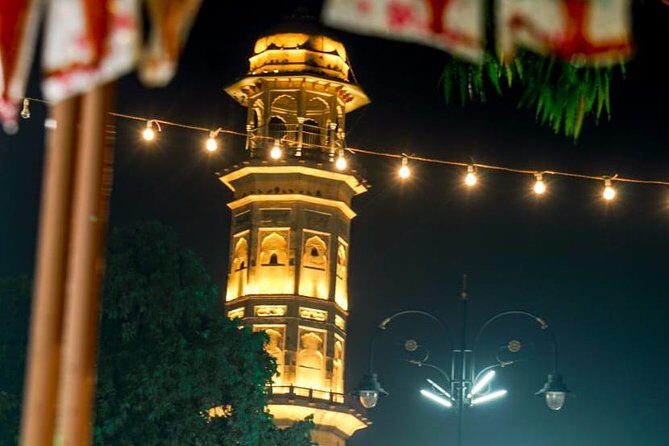
Daytime in Jaipur is impressive, no question. But nighttime adds a different layer—cool air, softer light, and that feeling that you’re seeing how locals move through the city. This tour is built around that timing. You start at 4:00 PM, when the sun is dropping, and you gradually shift from gates and courtyards to market streets and rooftop views.
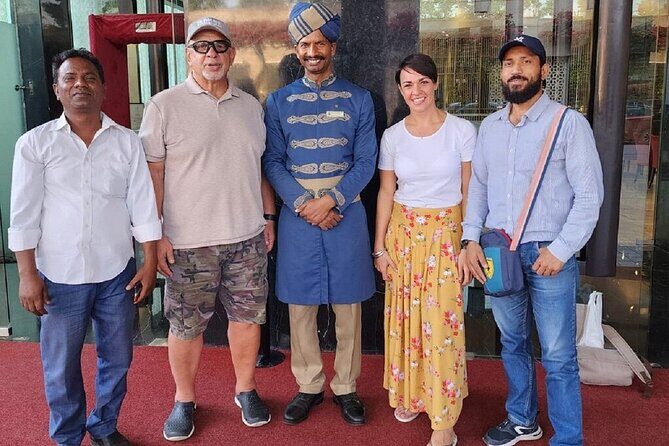
The big practical advantage: you’re not trying to “figure it out” after dark. The route is arranged so you can walk with an Explorer-style local guide who explains what you’re seeing as you go, including religious history, mythology, and everyday life in Jaipur. That’s the difference between looking at monuments and understanding why they matter.
Also, the group size is capped at 10 people. That means fewer bottlenecks at narrow lanes and more chances to ask questions without shouting over traffic and crowds.
You can also read our reviews of more walking tours in Jaipur


Meeting Point: Get Oriented Near Panch Batti
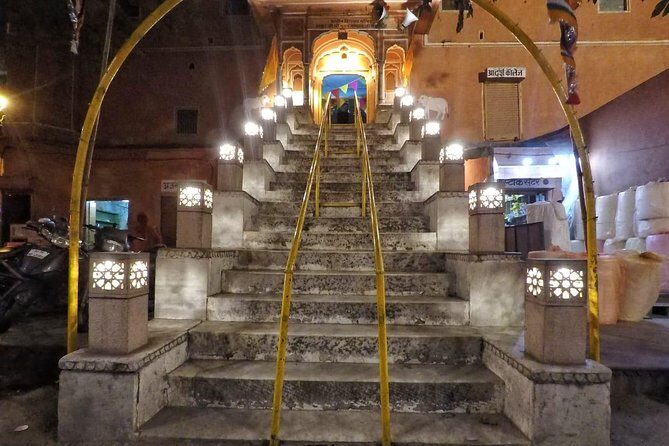
You’ll meet at Le Tour De India, 14-B near Mirza Ismail Road, Panch Batti, by Jayanti Market in New Colony, Jaipur. The tour ends at Albert Hall Museum, Ram Niwas Garden, Ashok Nagar.
Because transfers from your hotel aren’t included, I recommend you plan your arrival so you’re not sprinting 10 minutes before start. This is especially true for an evening walk: if you show up late, you miss the timing that makes the route work.
Good news: it’s listed as near public transportation, so you have options if you don’t want to rely on a taxi from far away.
Stop 1: Ajmeri Gate at the Start of Night
Your evening begins around 4:00 PM at Ajmeri Gate. This first stop is about setting your bearings fast. You’ll get a quick overview, and then you transition into the old-city walking rhythm.
Ajmeri Gate matters because it’s the kind of place where Jaipur’s lanes and movement start to feel real. You’re not just looking at architecture—you’re entering the flow of the city. It’s a good first introduction point before you get pulled into smaller streets.
Time here is about 20 minutes, and the admission noted for this stop is free, so you’re not waiting around for tickets at the start.
Stop 2: Pink City Artisan Lanes and Craft at Work
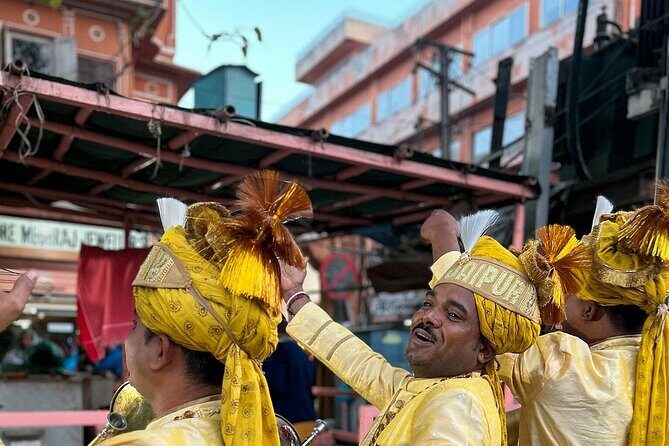
Next you move into the heart of the old city, often described as the Pink City. This part runs about 1 hour, and the focus is on artisan lanes—where skilled craftspeople have practiced for over three centuries.
This is one of the most praised elements of the whole experience. In the reviews, people highlighted the feeling of meeting artisans and even getting a chance to participate in making some art, not just watching from the curb. Even if you don’t get a hands-on moment every time, the key is the proximity. You see process, tools, and the patience behind the work.
Why I think this is worth your evening: Jaipur’s landmarks are famous, but artisans explain the day-to-day logic behind the city’s visual identity. The craftsmanship connects the dots between gates, facades, markets, and the colors you see later lit up at dusk.
Stop 3: Kishanpole Bazar Road and the Glow of Dusk
Around 5:30 PM, the tour shifts gears. At Kishanpole Bazar Road, it’s specifically about what happens as sunlight fades: yellow lighting appears on temples, windows, gazebos, and historic entrances.
This is a short stop—about 30 minutes—but it’s timed for impact. The point isn’t a long museum-style stop. It’s that few moments when the city changes mood and light turns architecture into something almost dramatic.
If you’re the kind of traveler who likes photos but doesn’t want to spend an hour fighting for the right angle, this stop hits a sweet spot. You’ll get the glow without getting stuck in a long wait.
You can also read our reviews of more city tours in Jaipur
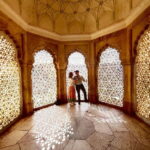

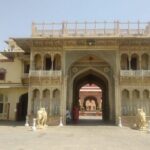



Stop 4: Tripolia Gate Markets for Sarees and Wedding Finery
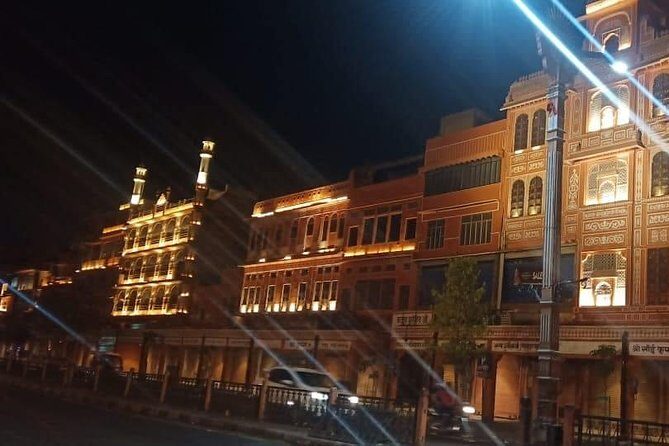
At 6:00 PM, you head toward Tripolia Gate for local markets and cultural experiences. This is about shopping energy, especially around Indian textiles and ceremonial clothing—sarees, wedding attire, and accessories.
This stop is around 20 minutes. That’s enough time to browse, ask a few questions, and notice what people are buying and wearing, without turning the whole walk into a shopping excursion.
One practical note: markets are narrow and busy by nature, and you’ll be walking at night. Wear shoes you can handle on uneven pavement. If you’re traveling with kids, keep in mind one review called out that a tour like this can be better suited for grown-ups than younger children (they found it less ideal with kids around 10). The route is engaging, but it’s still an evening walk through dense streets.
Stop 5: Hawa Mahal Area Rooftop Tea Break
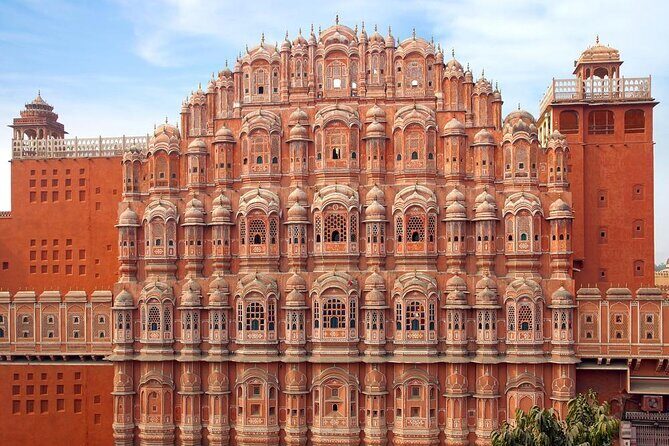
Around 6:30 PM, you reach the Hawa Mahal – Palace of Wind area for a short pause: a rooftop tea break of about 15 minutes.
This is where the evening becomes less about marching and more about breathing. Jaipur’s pink-tinted walls and nearby corridors look different in the evening, and the tea break gives you a moment to watch without hurrying.
Even if Hawa Mahal is on your must-see list in daylight, this rooftop timing changes the feel. You’re not dealing with midday glare, and you get a sense of how the city looks from slightly elevated ground—an angle you can’t replicate easily on your own.
Stop 6: Johri Bazaar Food Exploration in Narrow Lanes
By 6:45 PM, the tour turns into your culinary exploration phase at Johri Bazaar. This stop lasts about 30 minutes, and it’s focused on local eateries and the narrow lanes that feed the old city’s evening life.
You’ll already have snacks, bottled water, and coffee and/or tea included, so you’re not starting this segment empty-handed. But Johri Bazaar is the part where you can decide what kind of eater you want to be: quick bites, spicier tastes, or just the smells and street-level observations.
A key value here: you’re guided to where people actually eat, rather than randomly following your nose and ending up at the wrong street corner. This is one of those times when having someone local matters, because the best stalls are often the hardest to spot from a distance.
Stop 7: Battery Rickshaw Ride and Ending at Albert Hall Museum
Near the end, around 7:15 PM, you’ll do a battery rickshaw ride and then finish at Albert Hall Museum.
Albert Hall is a strong ending because museum lighting shifts as the evening progresses, and you get a clean “wrap-up” point where the walk makes sense. It’s also a relief if your legs were working hard through gates and lanes.
Here’s the practical catch: the itinerary notes the battery rickshaw ride is not included. At the same time, the tour description says they cover maximum distance in a battery-operated rickshaw. I’d treat this as a “could vary by date/route” item. My advice: when you book, ask whether the rickshaw portion in your exact running order is included or if it’s a separate small add-on. That way you avoid surprises at the end when you’re tired.
Price and Value: What $35 Buys You in Real Terms
The tour costs $35.00 per person and runs about 3 to 4 hours (around 3 hours in practice). For Jaipur, evening time is not the cheap part of the week—so the value is in what’s bundled.
You’re getting:
- Snacks, bottled water, and coffee/tea
- Private transportation between key stretches
- Old-city walking coverage with battery rickshaw use over longer distances
- A local Explorer who shares context on religious history, mythology, and daily life
Compared to piecing together a bunch of separate tickets, taxi hops, and food stops, this is a simpler deal. You also reduce risk. Getting lost at night in narrow old-city lanes is not the romantic kind of lost.
If you’re worried about “am I paying for just walking,” don’t. The stops are timed to light changes, and the guide’s explanations add weight—especially around artisans and the cultural meaning behind what you see.
What Makes the Guides Matter Here
One reason this tour earns a strong score is how much the guide shapes the evening. Reviews mention guides including Rajov, Archit (sometimes referred to as Archie), Himmad, and Khush. People praised them for taking good care of the group, moving smoothly through streets, and making the city feel like a story you can follow.
That guide relationship is also why the tour feels less like a checklist. You’re hearing why gates and monuments are positioned the way they are, and you’re seeing how crafts and markets connect to daily culture.
If you’re the type who likes asking questions—about symbolism, family life, festivals, or what things mean—this tour is set up for that.
Weather and Pace: How to Prepare Like a Pro
This experience is marked as weather dependent. If poor weather cancels it, you’ll be offered another date or a full refund. That’s worth paying attention to because evening walks in rain can be harder than you expect.
On pace: this is a walking tour, but it’s small-group and organized around timed stops. Most travelers can participate, which tells me it’s not an all-day endurance event. Still, you’ll be on your feet for a few hours in old-city streets, so comfortable shoes are non-negotiable.
If you’re traveling with kids: the tour is described as suitable for most travelers, but one review specifically advised against bringing younger kids around age 10. I’d treat that as a hint to choose a different format if you’re looking for a lighter, shorter, stroller-friendly evening.
Should You Book the Jaipur Heritage Evening Walk?
I’d book it if you want:
- A safe, guided route through old Jaipur at night
- A night that mixes monuments + markets + food
- Time for a rooftop tea pause near Hawa Mahal
- A small group experience capped at 10 people
I might skip or switch to another option if:
- You expect hotel pickup, because transfers aren’t included
- You hate walking in dense streets after dark
- You need everything to be fully included end-to-end, since the battery rickshaw portion is listed as not included
If you’re on a first trip to Jaipur and want a night that feels practical, guided, and genuinely “Jaipur,” this is a strong pick.
FAQ
How long is the Jaipur Heritage Evening Walk?
It runs for about 3 to 4 hours, with the tour starting at 4:00 PM and ending at Albert Hall Museum.
What’s included in the price?
The price includes snacks, bottled water, coffee and/or tea, and private transportation. The route uses battery-operated rickshaw for maximum distance in the old city, and you’ll have an Explorer guide who shares context about Jaipur.
Is hotel pickup or transfer included?
No. Transfers from the hotel to the start point and from the endpoint back are not included in the tour cost.
Where do I meet and where does the tour end?
You meet at Le Tour De India near Mirza Ismail Road, Panch Batti (Jayanti Market area). The tour ends at Albert Hall Museum, Ram Niwas Garden, Ashok Nagar.
Is the battery rickshaw ride included?
The itinerary lists a battery rickshaw ride near the end as not included. The tour also mentions battery-operated rickshaw use for maximum distance in the old city, so it’s smart to confirm how your date handles the final ride.
What happens if the weather is bad?
This experience requires good weather. If it’s canceled due to poor weather, you’ll be offered a different date or a full refund.