REVIEW · HISTORICAL TOURS
Private Full-Day Sightseeing Tour of Jaipur’s Heritage by Car
Book on Viator →Operated by Raj Tours Jaipur · Bookable on Viator
Jaipur can feel like a maze. This private heritage day keeps it simple: you get an AC car, an English-speaking driver, and a plan that hits the big sights (plus a few calmer stops) in about 8 hours.
I especially like the skip-the-crowds setup. It’s just your group, with front-door pickup and drop-off, so you’re not stuck juggling other people’s arrival times. I also like how the route balances famous landmarks with quieter Jaipur stops, which makes the day feel like more than a checklist, from Hawa Mahal to Royal Gaitor.
The one thing to plan for is cost creep on the ground. Monument entrance fees and lunch aren’t included, and you’ll do real sightseeing time at forts and viewpoints—so bring water and pace yourself, especially in warmer months.
In This Review
- Quick hits before you go
- Why this Jaipur heritage day feels easier than solo hopping
- Timing and comfort: the real meaning of an 8-hour private tour
- Hawa Mahal (Palace of Winds): seeing the iconic facade from street level
- City Palace of Jaipur: where styles overlap in one royal complex
- Jantar Mantar: turning Jaipur’s skyline into an astronomy lesson
- Royal Gaitor Tumbas: the memorial side of royal Jaipur
- Jal Mahal: quick lake views that work as a break in the day
- Amer area (Amer/Fort town): spending time where the views make sense
- Panna Meena ka Kund: the stepwell with perfect symmetry
- Ramgarhmode block print factory: watching hand printing in action
- Price and what’s included: where the $12 really lands
- Guide and driver quality: the difference between seeing and understanding
- Who should book this Jaipur heritage tour
- Should you book it?
- FAQ
- How long is the Private Full-Day Sightseeing Tour of Jaipur’s Heritage?
- Is hotel pickup and drop-off included?
- Is the tour private or shared with others?
- Is there an English-speaking driver, and is a guide included?
- Are entrance fees included for the monuments?
- Is lunch included, and can I request a vegetarian option?
- Which sites are typically included in the day?
Quick hits before you go
- Private AC car with an English-speaking driver keeps transfers comfortable all day.
- Front-door pickup and drop-off saves time in busy Jaipur streets.
- Big-hitters in one loop: Hawa Mahal, City Palace, Jantar Mantar.
- The quieter side of Jaipur includes Royal Gaitor’s cenotaphs and photo-friendly stops.
- Amer + stepwell pairing adds variety without wasting time.
- Optional Ramgarhmode block-print stop if there’s room in the schedule.
Why this Jaipur heritage day feels easier than solo hopping
A full-day tour sounds like a lot—until you see how it’s organized. Here, the value is in reducing friction: you’re not coordinating rides, hunting entrances, or figuring out which sights actually fit together in a single day.
I like that the day is built around the core “Pink City” highlights, but you also get side stops that give Jaipur texture. Instead of bouncing only between the headline monuments, you’ll get a mix of royal architecture, astronomy in stone, and memorial architecture at Royal Gaitor, plus a classic lake-area photo stop at Jal Mahal.
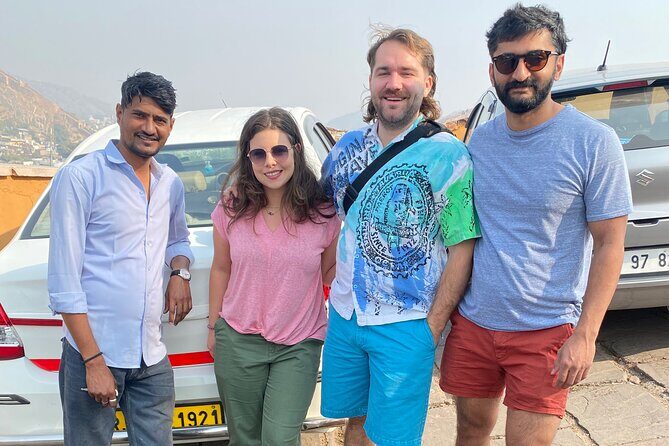
And because it’s private, you can ask the guide to slow down at the parts you care about—fort details, palace courtyards, or how to read the city from viewpoints. In past similar tours run by guides such as Akram, Shakaeer (often spelled Shakeer), Raj, and Mahesh, the common thread is straightforward explanations and a relaxed rhythm, not a rushed script.
You can also read our reviews of more private tours in Jaipur



Timing and comfort: the real meaning of an 8-hour private tour
On paper it’s about 8 hours. In real life, that matters because Jaipur’s traffic and walking time can quietly steal your day. The tour’s structure helps you avoid the usual trap: you don’t just “see places,” you also spend less time traveling between them than if you’re doing everything yourself.
You’ll ride in a private AC vehicle, with fuel, parking, and taxes handled. Bottled water is included, which sounds small until you’re standing in sun-warmed courtyards.
A practical note: the tour calls for moderate physical fitness. That doesn’t mean you need to be an athlete, but you should be comfortable with outdoor walking and uneven terrain around forts and steps, especially at Amer and at the stepwell area.
Hawa Mahal (Palace of Winds): seeing the iconic facade from street level
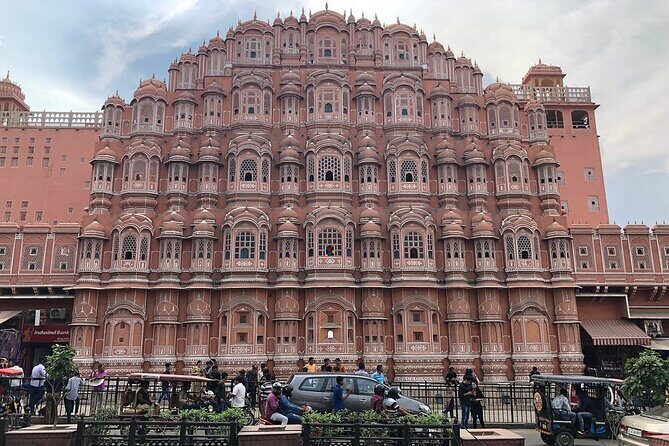
Hawa Mahal is one of those Jaipur landmarks that you think you know—until you see how it works as architecture. You’ll have around 45 minutes here, and you’ll spend that time absorbing the famous beehive facade made for the royal household.
The idea behind the Palace of Winds is simple and clever. It was designed for royal observation of city life without being directly seen. When you look at the structure closely, the small openings feel like a purpose-built viewing system rather than decorative detail.
Two practical tips for this stop:
- Don’t treat it like a quick photo moment—use your time to look up and notice the repetition and scale.
- If you’re sensitive to heat, plan your viewing around shaded angles when possible.
Entrance tickets aren’t included, so check the cost on the day and carry some cash just in case.
City Palace of Jaipur: where styles overlap in one royal complex
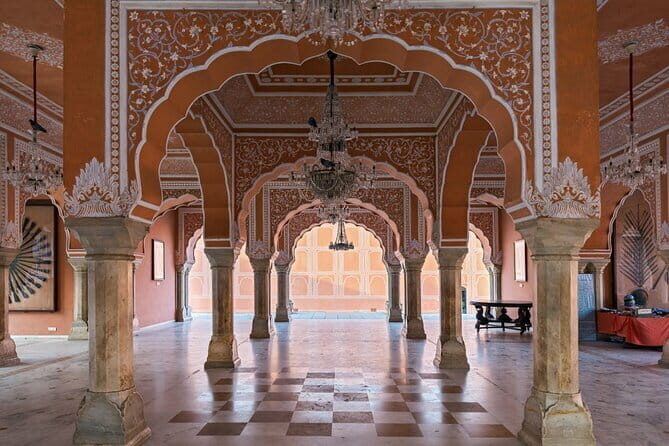
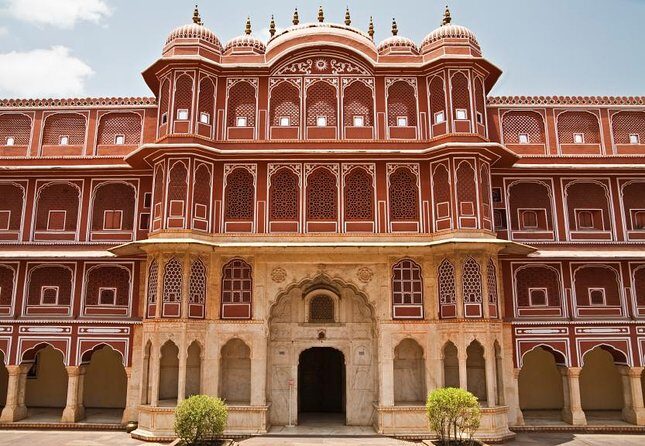
City Palace is where Jaipur starts talking in “design language.” You’ll get about 2 hours at the complex, which is enough to move through main areas and understand how the Maharaja’s residence evolved over time.
The palace is known for blending Rajput and Mughal influences, plus European styling. That mix isn’t just trivia—it explains why some parts feel airy and ceremonial, while others feel more formal and structured.
This is also a stop where a good guide makes your time faster. You can stand in the same courtyard and get totally different meaning depending on whether someone points out what you’re looking at: courtyards, motifs, the logic of rooms connected for royal life.
Again, entrance fees aren’t included, so treat this like a major add-on cost. Still, it’s one of the highest value stops on the itinerary because it ties the rest of the day together: this is the royal context behind the sights you see next.
Jantar Mantar: turning Jaipur’s skyline into an astronomy lesson
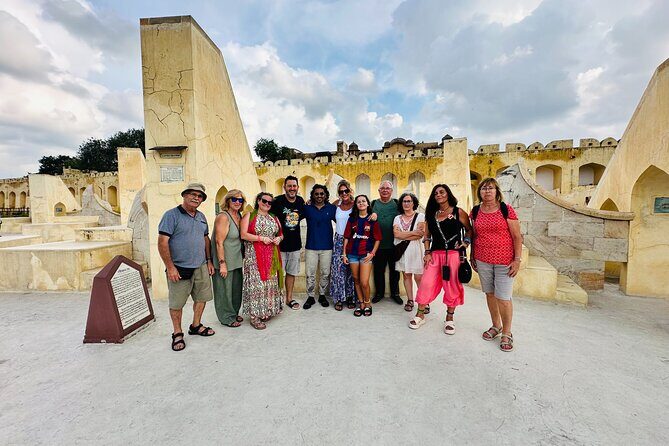
Jantar Mantar is the “wait, that’s science?” stop. You’ll have about 45 minutes here, and the highlight is the collection of stone astronomical instruments created under Rajput king Sawai Jai Singh.
What’s most useful for first-timers is realizing these aren’t random monuments. They’re working-in-design instruments built to measure time and celestial positions. Even if you don’t remember every term, you’ll feel the scale and purpose.
The world’s largest stone sundial is part of the complex, and it helps you understand how this place was built for observation in a world before electronics. When you stand near the instruments, you can see how the angles and shapes would align with the sun’s movement.
Entrance tickets aren’t included, so factor that into your spending plan. This is also a great stop for photos, but give yourself time to look slowly—not just straight at the main highlight.
You can also read our reviews of more historical tours in Jaipur




Royal Gaitor Tumbas: the memorial side of royal Jaipur
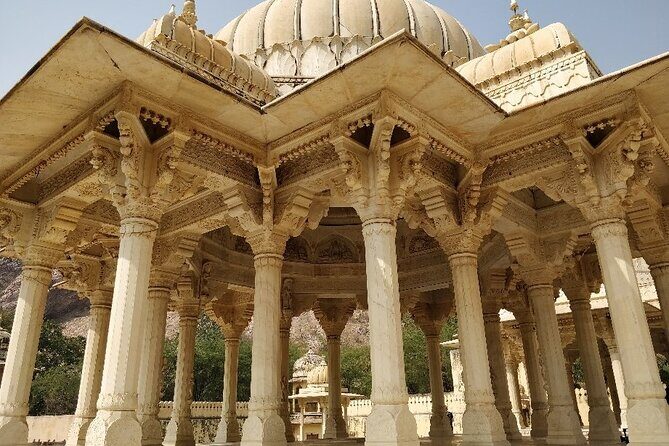
Royal Gaitor is one of those stops that feels calmer and more intimate than the big-ticket monuments. You’ll have about 45 minutes, and it’s known as a resting place for past rulers.
The key feature here is the set of chhatris—cenotaphs—each dedicated to Maharajas and decorated with intricate carvings. In person, the carvings are the point. It’s not a site built for grand modern crowds; it’s built to honor and remember.
Practical takeaway: plan this as your “slow your mind down” stop. If you’re the kind of person who likes details, you’ll enjoy the time you spend reading the shapes and ornamentation. If you’re short on patience, keep your eyes on the main chhatri structures and let the guide point out how the space is laid out.
Jal Mahal: quick lake views that work as a break in the day
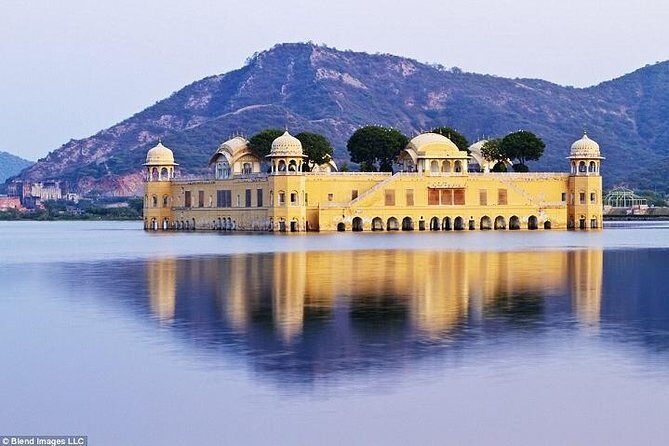
Jal Mahal is a short stop—about 15 minutes—and it’s mostly for views. It sits in the heart of Man Sagar Lake, so the setting is the whole story: water, reflections, and the palace form rising out of the lake scene.
You won’t spend long here, but that’s the point. It’s a mental reset between bigger, more time-consuming stops. The itinerary also lists this stop as free, which makes it a low-stress add-on.
If you’re hoping for lots of close-up exploring, you might be disappointed by the short time. But for classic “Jaipur at the water” photos, it’s a worthwhile pause.
Amer area (Amer/Fort town): spending time where the views make sense
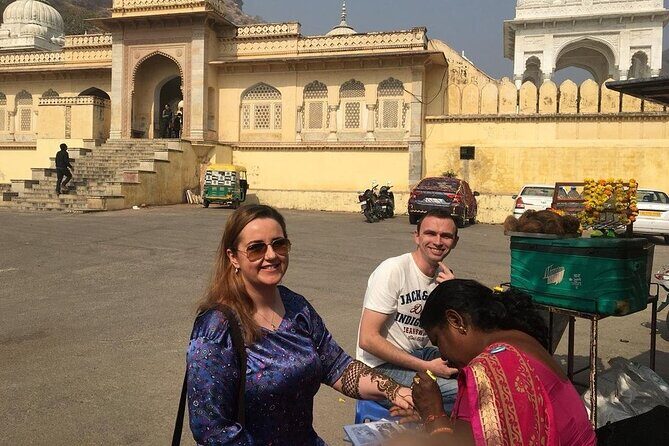
Amer gets about 2 hours. It’s located roughly 11 km from Jaipur, and it’s often the part of the day where the architecture starts feeling like it belongs to the terrain.
The tour lists Amer as a picturesque town with Rajpur Palace and Fort, plus vibrant courtyards (the exact details you experience depend on what areas are open). The main advantage of including Amer in a heritage loop is that it changes your perspective from city monuments to hilltop fort life.
One thing I advise: don’t rush the viewpoint moments. The fort areas are made for seeing Jaipur’s geography, not just taking pictures. If your guide is attentive (and guides like Akram and Raj have a reputation for being relaxed and easy to talk with), you’ll get better context for why the fort is placed where it is.
Amer entrance tickets aren’t included, so plan for that. Also keep an eye on the weather—this experience is described as requiring good weather, and that matters when you’re viewing from outdoor areas.
Panna Meena ka Kund: the stepwell with perfect symmetry
After Amer, the tour includes Panna Meena ka Kund, a historic stepwell, for about 30 minutes. This stop is listed as free, which is great value if you’re watching your ticket budget.
The standout is the symmetrical stairways and the idea of a rainwater catchment structure. You can think of it as functional architecture that also became visually iconic—geometry and repetition carved into stone.
Because this is a stepwell, comfortable shoes help. You don’t need hiking gear, but you do want footwear with grip for steps and uneven ground. The time is short, so treat it like a photo-and-feel stop: look down, notice the symmetry, then move on.
Ramgarhmode block print factory: watching hand printing in action
If time allows, the itinerary includes Ramgarhmode and a block print factory visit for about 30 minutes, also listed as free. Even if you don’t plan to buy anything, it’s a useful look at craft behind the souvenirs.
The process is hand block printing, so you’ll get to observe artisans working and see how design transfers from carved blocks to fabric. It’s one of the best places on the day to slow down and learn what goes into the patterns you’ll see later in markets.
I like this stop because it breaks the day into something sensory and human-scale after heavy architecture sightseeing. If you’re picky about where your money goes, ask the guide questions before you shop. In past experiences on this route, drivers like Shakaeer/Shakeer have been helpful for finding genuine shopping spots rather than random souvenir traps.
Price and what’s included: where the $12 really lands
At $12 per person, this tour is budget-friendly for a full private day. The value isn’t the headline price—it’s what you get without extra hassle: hotel/airport/railway pickup and drop-off, bottled water, and a private AC vehicle with an English-speaking driver.
Fuel charge, parking, and taxes are also included, so you’re not constantly negotiating small extras during the day. That matters when you’re paying up-front and want the day to run smoothly.
What isn’t included is equally important. Monument entrance fees are not included, and lunch isn’t included either. Alcoholic drinks are available to purchase separately, and tips are recommended.
If you’re trying to keep costs predictable, I suggest you estimate entrance fees for Hawa Mahal, City Palace, and Jantar Mantar (and Amer if you’re entering the fort areas). Then add a separate lunch budget. Once you do that, this tour still tends to feel like a strong deal for the amount of sightseeing packed into one day.
Guide and driver quality: the difference between seeing and understanding
This tour can include a professional guide if that option is selected. Even without a guide, you’ll have an English-speaking driver, and a good driver often becomes your practical storyteller—explaining where to stand for photos and how to navigate without stress.
The names that show up in the guide/driver experience here include Akram, Shakaeer (and the spelling Shakeer), Raj, and Mahesh. Across these examples, the common praise points are punctuality, friendliness, and safe driving in traffic. One extra bonus mentioned is that some drivers are also strong at photography, which helps if you’re traveling with a camera or just want better angles than your phone’s default.
If you care about learning as you go, I’d choose the option with a professional guide. If your goal is mainly logistics and comfort, the private car plus driver can still make the day easy.
Who should book this Jaipur heritage tour
This is a great fit if:
- You’re short on time and want a first-day overview of Jaipur’s must-see heritage sights.
- You want a private car so your pace is your own.
- You like mixing big landmarks with calmer architectural stops like Royal Gaitor and the stepwell.
- You prefer comfortable transfers in AC, especially during hot hours.
You might choose something else if:
- You hate paying entrance fees on top of the tour price.
- You want a long, relaxed lunch break (this itinerary doesn’t include lunch).
- You’re not comfortable with walking in fort/town areas and stair-heavy locations.
Should you book it?
Yes—if you want a smart, well-paced full-day that covers Jaipur’s key heritage hits without making you wrestle with transportation. The biggest reason to book is the “togetherness” of the day: palace, astronomy, royal memorials, and Amer in one loop, with AC comfort and pickup handled for you.
Just budget for entrance tickets and lunch, and plan footwear that works for steps. If you do that, this tour is a strong way to get your bearings fast and see why Jaipur’s architecture isn’t just pretty—it’s built to function, observe, and remember.
FAQ
How long is the Private Full-Day Sightseeing Tour of Jaipur’s Heritage?
It runs for about 8 hours, approximately.
Is hotel pickup and drop-off included?
Yes. Pickup and drop-off are included from your hotel (and also from the airport or railway station).
Is the tour private or shared with others?
It’s private. Only your group participates.
Is there an English-speaking driver, and is a guide included?
You get a private AC vehicle with an English-speaking driver. A professional guide is included if you select the option that includes one.
Are entrance fees included for the monuments?
No. Monument entrance fees are not included.
Is lunch included, and can I request a vegetarian option?
Lunch is not included. A vegetarian option is available if you advise at the time of booking.
Which sites are typically included in the day?
You’ll see Hawa Mahal, City Palace, Jantar Mantar, Royal Gaitor Tumbas, Jal Mahal, Amer, Panna Meena ka Kund, and (if time allows) Ramgarhmode for a block print factory visit.