REVIEW · HERITAGE WALKING TOURS
Jaipur Heritage Walking Tour – Local life, Havelis and Temples
Book on Viator →Operated by Bagheera Adventure · Bookable on Viator
Jaipur feels real fast on foot. This heritage walking tour pairs a local guide with market sights, a temple ceremony, and time for street snacks, so the Pink City isn’t just photos. I especially like how the route mixes official landmarks (Hawa Mahal, Govind Devji) with the everyday work of flower and vegetable traders.
One thing to plan for: you only see Hawa Mahal from the outside, and its admission ticket isn’t included.
In This Review
- Key highlights at a glance
- A 3-Hour Walk That Helps Jaipur Make Sense
- Where You Start, How You Move, and What the Ticket Covers
- Stop 1: Hawa Mahal Exterior and Why 1799 Still Matters
- Stop 2: City Palace Lanes, Old Havelis, and Courtyards
- Stop 3: Pink City Markets and the Wholesale Flower/Vegetable Trade
- Stop 4: Govind Devji Temple and the Aarti Ceremony Moment
- Stop 5: Tripolia Bazar Craft Demos You Can Actually Watch
- Street Snacks, Coffee or Tea, and the Refresh Break That Matters
- Price and Value: Why $16 Can Work in Jaipur
- Who This Walking Tour Fits Best
- Should You Book This Jaipur Heritage Walk?
- FAQ
- How long is the Jaipur Heritage Walking Tour?
- What does the tour cost?
- Is the tour a small group or private?
- What is included in the price?
- What is not included?
- Do I need to buy tickets for Hawa Mahal?
- Which stops does the tour include?
- Is the Govind Devji ceremony timing important?
- Where does the tour start and end?
- What happens if weather is bad?
- Is there free cancellation?
Key highlights at a glance

- A true small-group pace that keeps the walk from feeling like a sprint
- Market life you can watch, including Jaipur’s wholesale flower and vegetable trade
- Govind Devji temple timing, with advice to catch the morning aarti ceremony
- Tripolia Bazar craft demonstrations, from lac bangle making to marble carving and brass utensil work
- Food and refreshment included, with snacks plus free bottled water and coffee or tea
- A guide who adjusts for kids, with past tours noted as family-friendly
A 3-Hour Walk That Helps Jaipur Make Sense
Jaipur can look like a set of big sights from the outside. This tour works better if you want the city to feel like a place where people actually live, shop, and pray. In about three hours, you get a walk through narrow lanes, market corners, and a major temple setting—plus enough time to stop for snacks without turning the whole day into logistics.
I like that the tour stays compact. You are not bouncing between far-flung stops with long transfers. Instead, you stay focused on what you can see and hear as you move through the Pink City. Also, it is built around real local stops: a wholesale flower/vegetable market, a bazar known for craft demonstrations, and a temple ceremony that you can witness in motion.
The price is also easy to think about in context. At $16 per person, you are paying for a guided route, included refreshments, and guided access to places where you’d otherwise wander without a clear plan. It is the kind of deal that makes sense for first-time visitors who want value and direction.
You can also read our reviews of more walking tours in Jaipur


Where You Start, How You Move, and What the Ticket Covers
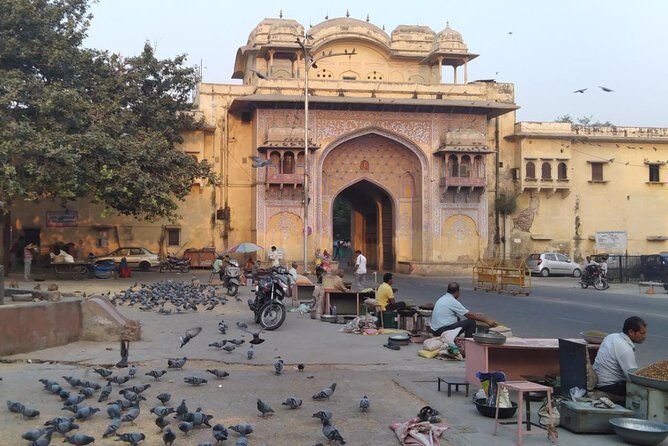
The walk starts at Hawa Mahal Road in the Pink City area (near the J.D.A. Market area) and ends back at the same meeting point. That matters more than it sounds: when you return to your starting point, you do not spend the last hour trying to find your way or reorganize plans.
You’ll have a mobile ticket, so you can keep things simple on your phone. The tour is also described as small-group and private for your group, meaning it is not a giant herd. In practice, this tends to make the walk feel flexible—good if you want to pause for photos or ask questions without a constant time squeeze.
Since this is a walking tour, wear shoes that can handle uneven, busy lanes. You are in India’s Old City environment, so expect dust, crowds around markets, and lots of pedestrian movement. Also, the tour notes that it depends on good weather, and there is mention of cancellation/rebooking if conditions are poor. If you are traveling in a season known for sudden showers, you’ll want a plan for backup.
Stop 1: Hawa Mahal Exterior and Why 1799 Still Matters
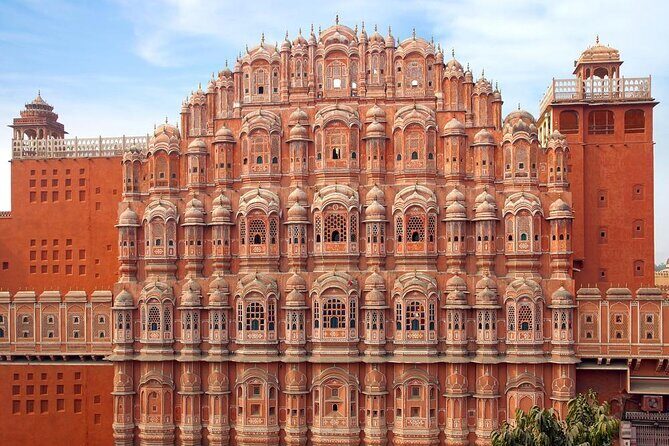
Hawa Mahal, also called the Palace of Wind, is the most recognizable name on the route. Here you get the structure from the outside—an effective move, because it keeps the pace moving and avoids turning the walk into a single-site visit.
The key context: the building was built in 1799 by King Sawai Pratap Singh. The purpose was practical, too. It was designed so ladies of the royal court could watch processions in the markets below. That detail changes how you look at it. Instead of treating the façade like a backdrop, you can think of it as a viewing instrument built into the city’s street life.
Important planning point: the Hawa Mahal admission ticket isn’t included. So if you were hoping to go inside, this tour may not fully satisfy that wish. If you just want the famous exterior, architecture cues, and a short explanation that makes it click, this stop does what it needs to do.
Tip for your photos: aim for angles that show the façade pattern and the relationship to the street below. Even without entering, you can still capture why the building earned its nickname.
Stop 2: City Palace Lanes, Old Havelis, and Courtyards
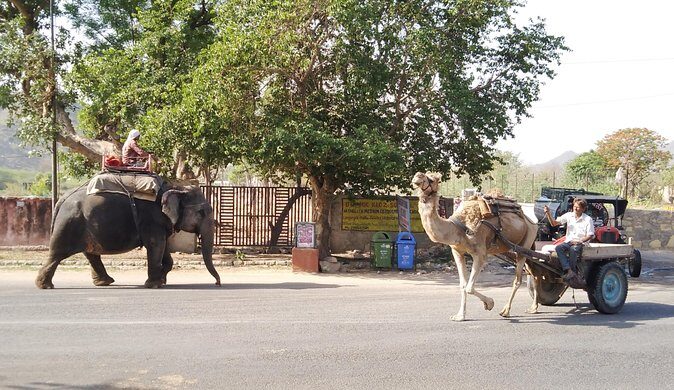
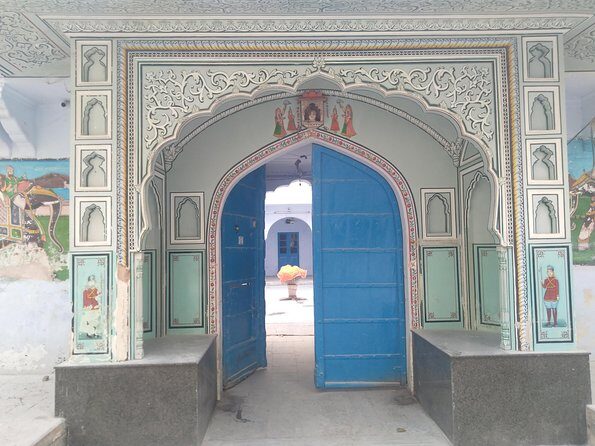
After the first landmark, you step into the quieter, more intimate scale of the Old City. This part is about havelis—traditional private mansions—and the way Jaipur’s history still shows up in courtyards and painted details.
You’ll walk through narrow lanes where the architecture is close enough to notice frescoes and the layout of interior courtyards (without turning it into a museum stop). The tour also highlights the kinds of places people used to live and host guests from within, not just admire from the outside.
The benefit here is simple: it gives you human scale. Big palaces can overwhelm you if they all happen back-to-back. Havelis break that rhythm with smaller visuals—textures, doorways, and the practical planning of space. You start to see Jaipur as a city of craftsmanship and domestic design, not only royal monuments.
The draw: this is still a walking segment, so you’ll want to keep an eye on where you are in the lane network. It is easy to lose your sense of direction in tight Pink City streets, especially around market traffic. A guided pace helps, and you’ll get that route rhythm as part of the walk.
Stop 3: Pink City Markets and the Wholesale Flower/Vegetable Trade
Now you hit the heart of everyday commerce. The tour includes the colorful flower and vegetable wholesale market, described as the only wholesale flower and vegetable market in Jaipur. That is a specific kind of local insight. It tells you you are not just seeing flowers anywhere—you’re seeing the supply chain side of the city.
This segment is especially good for your senses. You can watch transactions, see how vendors organize goods, and notice how the market shapes the day. Even if you do not buy anything, you learn how the city moves: what people trade, how they present products, and how buyers and sellers interact.
If you are picky about crowds, know that markets can get active quickly. This is also where your guide’s timing helps. A well-paced guide helps you see without getting stuck in one congested corner for too long.
A practical takeaway: if you have questions about what you’re seeing, this is the moment to ask. Flower and vegetable wholesale work has its own rhythm, and a local guide can translate the chaos into something you can understand in minutes.
You can also read our reviews of more historical tours in Jaipur





Stop 4: Govind Devji Temple and the Aarti Ceremony Moment
This stop is spiritual, but it is also practical. You’re going to an ancient holy site and catching one of the temple’s daily ceremonies, specifically an aarti (with the note that it follows a program of multiple ceremonies).
The tour is very direct about timing advice: it recommends assisting the morning ceremony. That’s because temple rhythms matter. In the morning, you’re more likely to see the full flow of the ceremony and feel the setting at its clearest, without the end-of-day crowd and fatigue.
Govind Devji is described as an 18th-century Hindu temple, and the ceremony is framed as something you can watch as part of the walking tour experience. If you are respectful and quiet during worship, this can be a moving stop rather than a quick photo break.
One consideration: temples are still active places of prayer. Dress modestly, keep your voice down, and follow any guidance from your guide and the temple staff. If you’re unsure how to behave, just watch what others do, and lean on your guide for the basics.
Stop 5: Tripolia Bazar Craft Demos You Can Actually Watch
This is the long stop on the route—around 1.5 hours—and it is one of the most memorable parts because you can see artisans work rather than just read about art afterward.
Tripolia Bazar is where the tour connects you with traditional crafts through live demonstrations, including:
- lac bangle making
- marble carving
- brass utensil crafting
This kind of demonstration is valuable because it helps you understand process. You see how materials are handled, how tools are used, and how the final product gets its shape. It also gives you a chance to ask questions about what you’re looking at, like how long a step takes or why a technique matters.
There’s also a practical reason this stop works on a walking tour: people can enter and exit at their own pace. You can linger near one craft without derailing the whole group. If you are the type who likes details, this is a strong payoff.
If you are not interested in crafts or shopping, you can still enjoy it as a cultural window. But keep your attention on the demo work, not on sales pressure. Let the pace be your filter.
Street Snacks, Coffee or Tea, and the Refresh Break That Matters
This tour is not marketed as a food tour, but it does give you a real chance to taste local street snacks. You’ll get snacks, free bottled water, and coffee and/or tea included. That may sound small until you’re walking in warm weather with a full day of sightseeing ahead.
The smarter part is that the snacks are handled through reliable vendors (so you’re not left choosing blindly on busy streets). You still need common sense—go with what looks fresh and eat at a sensible pace—but guided snack stops take the guesswork out.
One tip: treat the included refreshment as part of your strategy. Drink water before you feel thirsty, and use the coffee or tea break to reset. Jaipur walking days can feel longer than you expect, especially when markets are active.
If you have dietary restrictions, the tour data doesn’t list specific options. It’s worth asking your guide what’s available on the day, since snack menus can vary.
Price and Value: Why $16 Can Work in Jaipur
At $16 per person for about three hours, this is priced like a practical city introduction, not a luxury tour. The value comes from what’s included.
You get:
- guided walking time through multiple major and everyday stops
- snacks
- bottled water
- coffee or tea
In a place where even short taxi rides add up fast, you also save on transport by keeping the route walkable. And because the group is small and the tour is private for your group, you’re not paying for an experience that feels like a factory line.
The main thing to compare is your goal. If your goal is to see everything inside every monument, this won’t be enough. But if your goal is to understand Jaipur’s street-level life—markets, temple ritual, craft work—this is a strong deal.
Who This Walking Tour Fits Best
This tour is a great match if you:
- want an organized first look at Jaipur’s Pink City
- like seeing how people shop and make things
- prefer walking with context over hopping between disconnected stops
- travel with kids and want a guide who can adapt to the group’s pace
It is also a solid option if you feel overwhelmed by how many monuments Jaipur offers. You’ll leave with a clearer mental map of where the city’s activity happens, not just a list of famous buildings.
Who should consider a different option: if you want lots of monument entrances and interiors, remember that Hawa Mahal admission isn’t included, and the key sightseeing approach here is outside views plus market and temple participation.
Should You Book This Jaipur Heritage Walk?
I’d book it if you want a short, well-structured introduction that mixes landmark context with real local life. The craft demos at Tripolia Bazar, the wholesale market stop, and the temple aarti timing are the kind of pieces that make a first Jaipur visit feel personal instead of generic.
If your travel style is more “I want to go inside everything,” then you may find the Hawa Mahal exterior-only format frustrating. But you can treat this as the walking version of a city orientation: you’ll get your bearings fast, and you can decide later what to enter on your own.
FAQ
How long is the Jaipur Heritage Walking Tour?
The tour is about 3 hours.
What does the tour cost?
The price is $16.00 per person.
Is the tour a small group or private?
It is private for your group, with small-group size that supports personal attention from the guide.
What is included in the price?
Snacks, bottled water, and coffee and/or tea are included.
What is not included?
Private transportation is not included. Admission is also not included for the Hawa Mahal stop.
Do I need to buy tickets for Hawa Mahal?
The Hawa Mahal admission ticket is not included, so you would need to plan for that separately if you want to enter.
Which stops does the tour include?
The tour covers Hawa Mahal (outside view), the City Palace area with old havelis, the wholesale flower and vegetable market in the Pink City, Govind Devji Temple for an aarti ceremony, and Tripolia Bazar with craft demonstrations.
Is the Govind Devji ceremony timing important?
The tour specifically advises assisting the morning aarti ceremony as part of the walking tour program.
Where does the tour start and end?
It starts on Hawa Mahal Road near the J.D.A. Market area in the Pink City, and it ends back at the meeting point.
What happens if weather is bad?
The tour requires good weather. If it’s canceled due to poor weather, you’ll be offered a different date or a full refund.
Is there free cancellation?
Yes. You can cancel up to 24 hours in advance for a full refund. Within 24 hours, there is no refund.