REVIEW · HERITAGE WALKING TOURS
Jaipur Heritage Walking Tour
Book on Viator →Operated by Backpack India · Bookable on Viator
Jaipur’s old streets teach fast. This small-group walking tour (max 10) focuses on local landmarks you’ll actually recognize—starting at Ajmeri Gate—and you’ll get the city explained by architecture students who look at buildings the way you’d look at puzzles. I especially love how the group stays intimate, so you can ask follow-up questions instead of getting swept along.
What I also really like is the combo of a Rajasthani breakfast plus complimentary digital photos. One possible drawback: a couple of reports point to operational hiccups when a guide doesn’t show up at the meeting spot and messages don’t get answered quickly, so it’s smart to plan with a little backup time buffer.
In This Review
- Key things to know before you go
- Price and what you get for $16 (and GST is extra)
- A 2–4 hour heritage walk that makes the city make sense
- Small group energy: why a cap at 10 matters in Jaipur
- Breakfast first: Rajasthani food as part of the story
- Stop-by-stop: from Ajmeri Gate to Govind Devji Temple
- 1) Ajmeri Gate: the city’s busy gateway and how transport changed
- 2) Isarlat Sargasooli: architecture you can see, not just read about
- 3) Tripolia Bazar and Tripolia Gate: royal access and painted power
- 4) Hawa Mahal: 900 windows and the engineering behind the breeze
- 5) Jalebi Chowk: City Palace context and a named geometry of streets
- 6) Govind Devji Temple: ending the story over chai and Q&A
- What your guide actually does (and why it feels different)
- Digital photos: a low-effort souvenir that still feels personal
- Getting there and timing: how to avoid a stressful start
- Who this tour is best for (and who should skip it)
- Should you book Jaipur Heritage Walking Tour?
- FAQ
- How long is the Jaipur Heritage Walking Tour?
- What’s included in the tour price?
- Is hotel pickup or drop-off included?
- What’s the group size?
- Where does the tour start and end?
- Are there any admission fees during the walk?
- What time does the tour run?
- Is the tour dependent on weather?
- Can I cancel and get a full refund?
- Can I bring a service animal?
Key things to know before you go
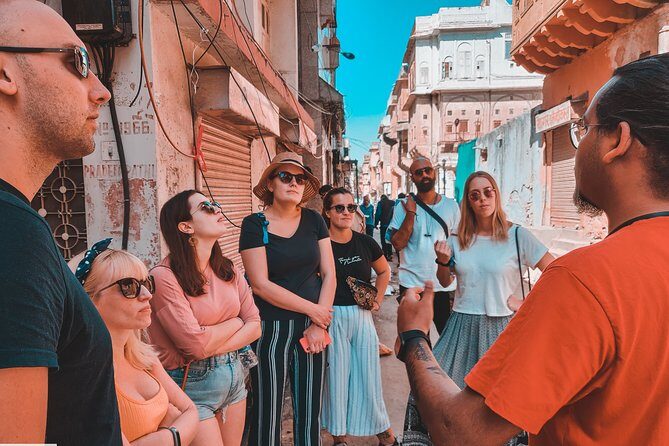
- Max 10 people keeps the walk conversational and easier to manage on narrow old-city streets
- Architecture-student perspective means you’ll focus on design choices, not just dates and names
- Rajasthani breakfast included so you’re fueled early rather than hunting for food mid-walk
- Complimentary digital photos are a nice souvenir without you juggling your camera all morning
- Stops are icon-to-local, from Hawa Mahal’s 900 windows to quieter heritage corners
Price and what you get for $16 (and GST is extra)
At around $16, this tour is priced like a budget-friendly way to see Jaipur without paying big-carriage, big-hotel-tour energy. The value comes from three things that add up fast: you get an English-speaking guide, a Rajasthani breakfast, and a package of guided storytelling that connects landmarks to architecture and daily life.
Two small cost notes: GST isn’t included, and there’s no hotel pickup/drop-off. In plain terms, you’re paying for the walk, the guide, and breakfast—not for transport logistics.
You can also read our reviews of more walking tours in Jaipur



A 2–4 hour heritage walk that makes the city make sense
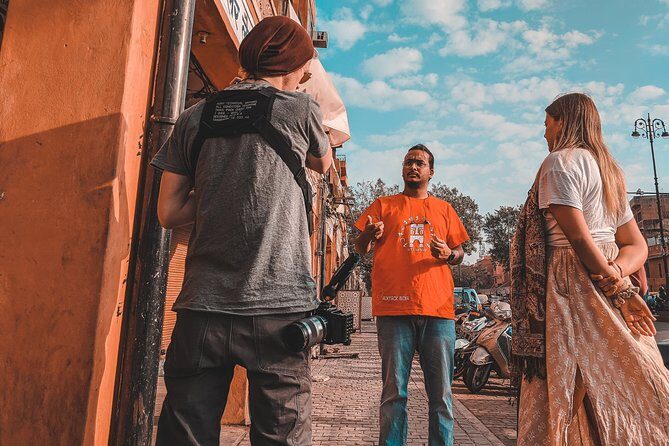
The timing works well if you’re visiting Jaipur for the first time and want orientation. Expect about 2 to 4 hours, with a 3 km walk pace through central heritage zones. The stops are spaced so you can look closely, listen, and then move before you get tired.
This is also a smart “morning start” style tour. You’ll begin when streets are active but you’re still in that window where sightseeing feels manageable—especially with breakfast handled on the way.
Small group energy: why a cap at 10 matters in Jaipur
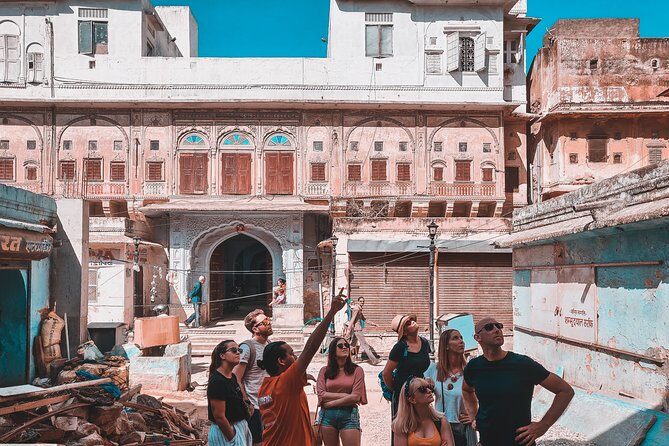
A max group size of 10 travelers sounds like marketing, but here it changes how the experience feels. Jaipur’s old-city lanes can be tight, and that’s exactly where you want a guide who can adjust on the fly.
In a larger group, you’d be stuck at the back watching everyone else’s view. With this size, you can:
- ask about why a facade looks the way it does
- get clearer explanations of street-to-building context
- pause for pictures without losing the whole pace
Breakfast first: Rajasthani food as part of the story
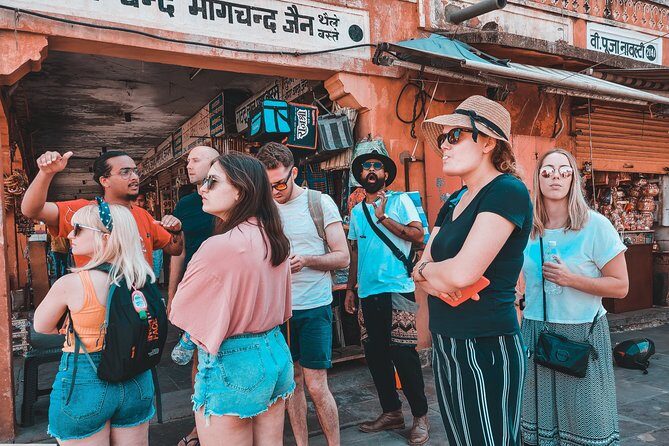
You’re not just shown buildings—you start the morning with food. The tour includes a lip-smacking breakfast (Rajasthani), which matters because it anchors the day in local rhythm rather than treating the city like an outdoor museum.
Food also buys you patience. Once you’ve eaten, you’ll be less rushed at iconic stops like Hawa Mahal, where you’ll want a few minutes to actually study the structure.
Stop-by-stop: from Ajmeri Gate to Govind Devji Temple

You can also read our reviews of more historical tours in Jaipur





1) Ajmeri Gate: the city’s busy gateway and how transport changed
You kick off at Ajmeri Gate, and the focus isn’t only the gate itself. You’ll hear about its history and use, why it mattered for the city, and how transport conditions in the old city have evolved over time.
This is a strong opening stop because it sets your mental map. Gates aren’t just decorative. They’re part of how people moved, traded, and lived—so when you later see the palaces and markets, you’ll understand the street logic behind it.
Tip for you: keep an eye on the streets around the gate. Your guide’s explanation about transport helps you read the surrounding layout faster than if you wander alone.
2) Isarlat Sargasooli: architecture you can see, not just read about
Next comes Isarlat Sargasooli, where you’ll stop to discuss the architecture and the thoughts behind its construction. The value here is the method: you’ll learn how to look at details and form your own questions.
You might notice that this stop is shorter on the time list than the big-name icons—but that’s often where the best education happens. Small stops like this train your eye.
3) Tripolia Bazar and Tripolia Gate: royal access and painted power
You’ll then reach Tripolia Bazar, tied to Tripolia Gate, described as a magnificent and private entrance connected to the royal family. You’ll get the story of when it was opened to the general public—once—during a political moment involving a former king of Jaipur.
This stop adds human drama to architecture. You’re seeing a gate as a piece of governance, not just stonework.
One caution: gates and bazaars can be crowded and lively depending on the day, so keep your bag secure and your phone ready for pictures when your guide gives the cue.
4) Hawa Mahal: 900 windows and the engineering behind the breeze
Then comes the star: Hawa Mahal (Palace of Wind). You’ll hear why Jaipur’s wind palace is treated as an icon, even more so than other famous sights. The guide points out its over 900 windows and talks through the engineering logic behind it.
Here’s why this matters for your experience: a lot of people take photos quickly and move on. With this tour, you’ll get enough time to connect the windows to purpose—how design can help control comfort, light, and airflow.
Expect a “look longer than you think” moment. After your guide explains the science, the facade stops being just pretty and starts being functional.
5) Jalebi Chowk: City Palace context and a named geometry of streets
You’ll visit Jalebi Chowk, described as a square in the backyard of City Palace, the official residence of Jaipur’s crown. The name is tied to the serpentine road connecting east-west routes.
This stop is a reminder that Jaipur’s layout is part of the culture. Streets curve for reasons, entrances connect in patterns, and place names often preserve that history.
Practical note: because this is a palace-adjacent area, you’ll benefit from watching how people move. Your guide’s explanation of connections between roads helps you understand where you are without needing to constantly check maps.
6) Govind Devji Temple: ending the story over chai and Q&A
The tour ends at Govind Devji Temple, described as a famous Krishna temple. After wrapping up the architectural story, you’ll head to a chai shop for Q&A.
This ending is useful because it gives you a chance to turn “I saw it” into “I understand it.” Ask what you missed, ask what to see next, and ask how the pieces connect.
What your guide actually does (and why it feels different)

The guides are English speaking, and they’re described as architecture students trained to explain the city’s built form. That matters because the explanations aren’t just trivia. You’ll get:
- stories spanning centuries
- facts about architecture and heritage
- context for street-level life around major monuments
Instead of only hearing dates, you’ll learn what design choices meant to the people who commissioned and used them.
Digital photos: a low-effort souvenir that still feels personal
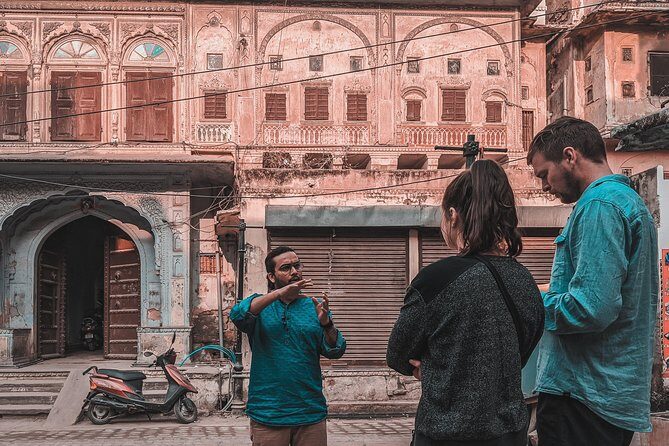
You’ll receive complimentary digital photos from the tour guide. This is a great perk if you want to enjoy the moment without constantly switching between sightseeing mode and camera mode.
Just keep expectations realistic: the photos are a souvenir from the walk, not an all-day professional shoot. Still, it’s a nice way to leave with images that were taken at the right angles and during the best stop moments.
Getting there and timing: how to avoid a stressful start
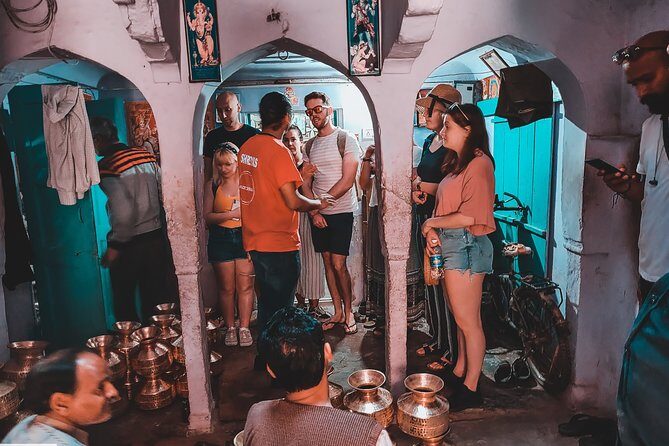
The tour runs Monday–Sunday with the listed hours 8:00 AM – 12:00 PM. It ends in a different location, so don’t plan an immediate appointment right at the finish.
It’s also marked as near public transportation, and there’s no hotel pickup. If you’re staying in a place that’s hard to reach on foot, you’ll want to give yourself time to locate the actual meeting spot before your start window.
And because there have been reports of guide no-shows and slow responsiveness, I strongly suggest you:
- arrive early enough to settle in
- have a backup plan for breakfast if the meet-up gets delayed
Who this tour is best for (and who should skip it)
This tour is a good match if you:
- want a structured way to see top Jaipur landmarks in a short window
- enjoy architecture and want to understand why things were built
- prefer small-group walks where you can ask questions
- like the idea of a breakfast + sightseeing combo
You might want to skip or adjust expectations if you:
- need strict control over meeting logistics and can’t handle any operational uncertainty
- want a very long, slow, museum-style day rather than a 2–4 hour walk
Should you book Jaipur Heritage Walking Tour?
If you’re looking for value, this tour is hard to ignore. For about $16, you get a guided walk through major heritage stops, a Rajasthani breakfast, an architecture-focused explanation, and complimentary digital photos—all in a max 10-person group. That combination makes it one of the more practical ways to understand Jaipur quickly.
My one hesitation is the operational risk. Because there are real reports of guides not showing and poor responsiveness, I’d book only if you can arrive early and handle minor hiccups without losing your whole schedule.
If you can be flexible and you like learning the city through design and street context, I’d say go for it—and use the chai-shop Q&A to map your next moves in Jaipur.
FAQ
How long is the Jaipur Heritage Walking Tour?
It runs for about 2 to 4 hours.
What’s included in the tour price?
The tour includes a water bottle, Rajasthani breakfast, an English speaking guide, and digital photos shared from the tour.
Is hotel pickup or drop-off included?
No. Hotel pickup and drop-off are not included.
What’s the group size?
The experience has a maximum of 10 travelers.
Where does the tour start and end?
You’ll start at the listed meeting point details, and the activity ends in a different location. It’s also noted as near public transportation.
Are there any admission fees during the walk?
Some stops list admission as free and others as not included. The tour also explicitly notes that admission tickets may not be included for certain sights.
What time does the tour run?
It lists opening hours from 8:00 AM to 12:00 PM, Monday through Sunday.
Is the tour dependent on weather?
Yes. It requires good weather and may be offered on a different date or refunded if canceled due to poor weather.
Can I cancel and get a full refund?
Yes. It offers free cancellation, with a full refund if canceled at least 24 hours in advance.
Can I bring a service animal?
Yes. Service animals are allowed.