REVIEW · HERITAGE WALKING TOURS
Heritage Culture and History Walking Tour in Jaipur
Book on Viator →Operated by RICH walk ( heritage, culture, history walk ) · Bookable on Viator
Jaipur changes when you walk it, not rush it. This Heritage Culture and History walk builds the day around Jantar Mantar and Raja Sawai Jai Singh II, then threads you into palaces, temples, and local markets.
I really like two things about this tour. First, it puts the astronomy site right up front, so the stories have context instead of feeling like random sightseeing. Second, you get a mix of temple time (including aarti at Govind Devji) and market wandering, with a guide who will answer your questions and shape the pace to what you care about. The main thing to plan for is cost: several stops list extra entry fees, and City Palace is the big one.
In This Review
- Key highlights you’ll actually feel during the walk
- Why this Jaipur heritage walk beats stacking monuments
- Price and what you’ll likely pay at the gates
- Jantar Mantar: starting with the science that shaped Jaipur
- City Palace: royal power in a walk-through format
- Govind Devji Temple and the aarti moment
- Temples in between: Ram Chandra Ji and Shree Laxminarayan Ji
- Hawa Mahal from the outside: pretty, practical, and fast
- Markets at Chandi Ki Taksal, Johri Bazar, and Katla Purohit Ji Ka
- Isarlat Sargasooli: your payoff tower view to end the day
- How to make the most of 2 hours and 25 minutes
- Should you book this Jaipur heritage culture and history walk?
- FAQ
- Where does the tour start and where does it end?
- How long is the walking tour?
- What is included in the $20 price?
- Which attractions have extra ticket costs?
- Is this tour private or group-based?
- What languages do you get for the guide?
- Can I cancel and get a full refund?
Key highlights you’ll actually feel during the walk

- Jantar Mantar first, with explanations tied to Raja Sawai Jai Singh II’s vision
- Temple rituals included, including the chance to see an aarti ceremony at Govind Devji
- You’ll see major facades without pressure to enter everything, like Hawa Mahal from the outside
- Private tour for your group, so the guide can slow down when needed
- A practical finish at Isarlat Sargasooli, built in the 18th century for city views and photos
- Small included extras: water bottle and an English/Spanish written guide
Why this Jaipur heritage walk beats stacking monuments

This is a straight-up walking plan: you move temple-to-palace-to-market in a way that helps you connect themes. Jaipur can feel like a list of famous places. On this route, the guide keeps re-pointing the story back to how the city worked—science, royal power, devotion, and everyday commerce—all in one day.
One practical perk: you’re not stuck waiting around for “the group” to catch up. It’s a private setup, meaning your group stays together and you can ask questions on the spot. In the past, guides have been described as friendly and able to answer follow-ups, even when people came in with specific interests.
The walking time matters too. At roughly 2 hours 25 minutes, you get enough stops to feel like you covered Jaipur’s main ideas, but not so much that you’re exhausted before you reach the best view spot.
You can also read our reviews of more walking tours in Jaipur



Price and what you’ll likely pay at the gates
The tour price is $20, and you’ll also get a water bottle plus an English and Spanish written guide. There are also group discounts mentioned, which can be worth checking if you’re traveling with friends or family.
That said, several stops have admission tickets not included, and the prices are listed for some of them:
- Jantar Mantar: 200 INR
- City Palace: 1000 INR
- Hawa Mahal: 200 INR
- Isarlat Sargasooli: 200 INR
Other stops clearly say admission ticket not included, but no exact amount is listed in the details you have. So build a buffer in your budget. The big takeaway: the $20 covers the guide and the walk, while the paid monuments are on you.
If you’re watching your spending, City Palace is the one to think about first. It costs far more than the others, so decide ahead of time whether you want that deeper royal-site experience for the added fee. If the answer is yes, this tour is a nice way to make that ticket feel worthwhile, because you’ll get guidance on what you’re looking at.
Jantar Mantar: starting with the science that shaped Jaipur

You begin at Jantar Mantar, meeting the guide near the ticket counter. From the start, the focus is on astronomy and the thinking behind it—specifically the vision of Raja Sawai Jai Singh II.
What I like about this opening is that it sets the tone. Jaipur isn’t only palaces and temples. It also shows how rulers cared about measuring the sky. When you understand that, the rest of the day makes more sense. You notice patterns in architecture and planning, and you stop treating monuments like separate postcards.
Timing is tight here—about 20 minutes, and the listed ticket cost is 200 INR. That’s enough to see the main instruments and understand the purpose, but not so long that you’ll feel stuck. If you know you want a longer look, you might choose to arrive early or stay after the tour ends (but the tour route itself keeps it moving).
Practical note: you’ll likely be outside, so bring water or rely on the included bottle and plan for sun.
City Palace: royal power in a walk-through format
Next you head to the City Palace of Jaipur for about 20 minutes. The ticket is listed at 1000 INR and is not included in the tour price. This is the stop that most affects your budget, so it’s smart to go in with the right expectation: you’re getting orientation and story, not a full day inside.
What you get is a guided path through the complex with explanations about the royal family and the architectural beauty. Even in a short window, the guide’s job is to point you toward what to look for—so you leave feeling like you learned something, not just collected photos.
A small caution: 20 minutes can feel quick if you want to wander at your own pace. The value is in the context. If you’re the type who reads every wall plaque and wants long pauses, you may want to pair this with extra time at the palace on another day. If you like highlights, you’ll probably be happy with this structure.
Govind Devji Temple and the aarti moment
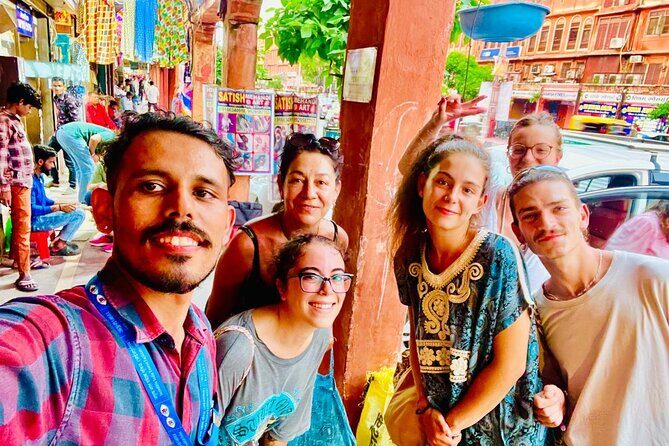
After the palace, the tour moves into devotion at Govind Devji Temple, with about 20 minutes on site. This is where the experience can turn from sightseeing to something more sensory. The details you have highlight the chance to witness the aarti ceremony and the calm mood of the sacred space.
This stop is “short and meaningful.” You won’t have hours to sit and observe, but you’ll have a guide to explain what’s happening so it doesn’t just look like a performance. For many people, this is the part that makes the day feel real—because religious practice in India is not something you only read about.
The details also indicate admission ticket not included here, though no exact price is listed. So again, keep a budget buffer.
You can also read our reviews of more historical tours in Jaipur





Temples in between: Ram Chandra Ji and Shree Laxminarayan Ji

Two of the temple stops are listed as free:
- Mandir Shri Ram Chandra Ji (about 20 minutes, admission ticket free)
- Mandir Shree Laxminarayan ji (about 25 minutes, admission ticket free)
These are valuable because they shift the day from royal spaces into everyday spirituality. The names alone tell you the focus: Lord Rama for Ram Chandra Ji, and Lord Vishnu with Goddess Laxmi for Shree Laxminarayan ji. You also get time to take in the atmosphere and architecture, plus guidance on the significance within Hindu culture.
If you’re traveling with kids, this part tends to land well. It’s not just history talk. You get a change of pace, a place to slow down, and clear ways to ask questions like: who is being worshipped here, and what do symbols mean?
Also, these are free-entry stops, which helps balance the cost of the paid monuments earlier.
Hawa Mahal from the outside: pretty, practical, and fast
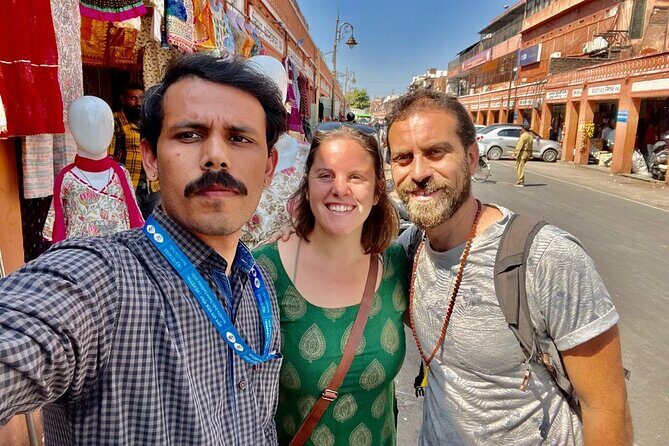
You’ll then walk by Hawa Mahal – Palace of Wind. The details specifically note that you won’t go inside. Instead, you admire the facade and hear its history and architectural design.
The listed time is around 15 minutes, and the ticket is 200 INR not included. Even if you’re not entering, it’s one of those Jaipur icons that benefits from interpretation. The guide’s job here is to help you understand what you’re looking at and why it was designed the way it was.
A consideration: if you’re expecting an indoor visit, you might feel slightly unfinished. But if your goal is to see the sight plus keep moving, this stop fits the flow well.
Markets at Chandi Ki Taksal, Johri Bazar, and Katla Purohit Ji Ka
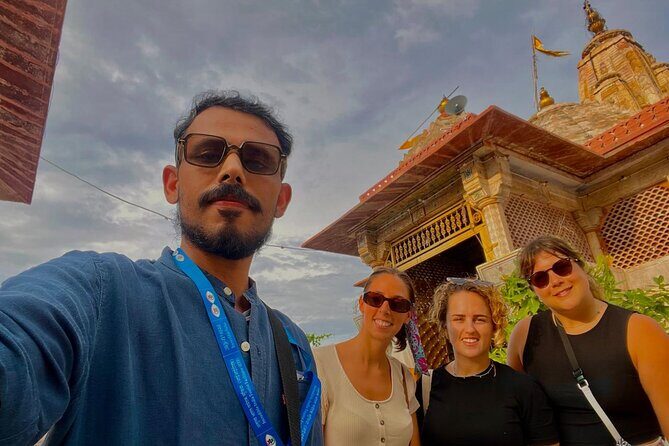
From the temple section, the tour turns toward street life. First comes Chandi Ki Taksal, described as a local bazaar existing since the 17th century. The important detail is the tone: the guide does not push buying, but you can explore at your own discretion.
Then you continue through areas like Johri Bazar, known for jewelry and handicrafts, and later the narrow streets of Katla Purohit Ji Ka, described as a historic market area with charm and energy.
I like this part for two reasons:
1) You get a break from sacred sites without losing cultural context.
2) Markets are where Jaipur’s identity shows up in daily routines, not just ceremonial ones.
One caution: markets can mean crowds and foot traffic. Wear comfortable shoes and keep an eye on your step, especially if you’re not used to walking in tight lanes.
Isarlat Sargasooli: your payoff tower view to end the day
The tour finishes at Isarlat Sargasooli, a historic tower built in the 18th century. You get about 10 minutes, and the details list a 200 INR admission ticket not included.
Why end here? Because it gives you a clean mental wrap-up: the panoramic views help you see how the city’s layout connects all those earlier stops. It’s also a strong photo stop if you want a final visual anchor before you head back out.
The end point is at Isarlat Sargasooli (the details even include a Google Maps pin), so you’re not stuck searching for your ride in the middle of nowhere.
How to make the most of 2 hours and 25 minutes
This tour is built like a “greatest hits with meaning” route. To get the most out of it, I’d do a bit of prep so you can use the guide’s time well.
- Ask a question early. The details you have suggest your guide may ask what subjects interest you, and then tailor the stories. If you tell them what you care about—architecture, religion, or history—they can steer examples in that direction.
- Keep entry fees in mind before you start. Jantar Mantar, City Palace, Hawa Mahal, and Isarlat Sargasooli each list separate ticket prices. Budget for them so you don’t get surprised mid-walk.
- Wear shoes you trust. This is a walking tour across multiple stops, including market streets.
- Use the included water bottle. It sounds basic, but it’s the simplest way to stay comfortable during outdoor time.
- Bring your phone for mobile ticket use. Mobile ticket is listed as a feature, and that’s usually the smoothest way to handle check-in.
Also, the tour notes that it’s near public transportation and that most people can participate. Still, if you have mobility limits, you’ll want to consider how walking between stops will feel for you.
Should you book this Jaipur heritage culture and history walk?
I’d book it if you want a focused, high-signal Jaipur overview without spending your whole trip “hunting” each site on your own. This route does a good job of connecting science (Jantar Mantar), royal context (City Palace), devotion (temples and aarti at Govind Devji), and daily culture (markets).
I’d skip—or at least think twice—if you hate paying separate monument fees on top of the base price, because City Palace in particular is a meaningful add-on. Also, if you want lots of solo wandering inside every major site, the time per stop is designed for guidance and highlights, not a long independent visit.
If your ideal travel day is: walk, learn, see key places, and end with a view—this one fits.
FAQ
Where does the tour start and where does it end?
It starts at Jantar Mantar at Malve Nagar, J.D.A. Market, Kanwar Nagar, Jaipur, and it ends at Isarlat Sargasooli in Aatish Market, Gangori Bazaar, Jaipur. The tour details include a Google Maps link for the end point.
How long is the walking tour?
The duration is listed as approximately 2 hours 25 minutes.
What is included in the $20 price?
The price includes a water bottle and an English and Spanish written guide. The tour also notes a mobile ticket and group discounts.
Which attractions have extra ticket costs?
The details list these entry fees not included:
- Jantar Mantar: 200 INR
- City Palace of Jaipur: 1000 INR
- Hawa Mahal: 200 INR
- Isarlat Sargasooli: 200 INR
Some other stops say admission ticket not included, but no specific cost is listed in the information provided.
Is this tour private or group-based?
It’s listed as a private tour/activity, meaning only your group will participate.
What languages do you get for the guide?
You receive a written guide in English and Spanish.
Can I cancel and get a full refund?
Yes. The tour offers free cancellation and you can cancel up to 24 hours in advance for a full refund. If you cancel less than 24 hours before the start time, the amount paid is not refunded.