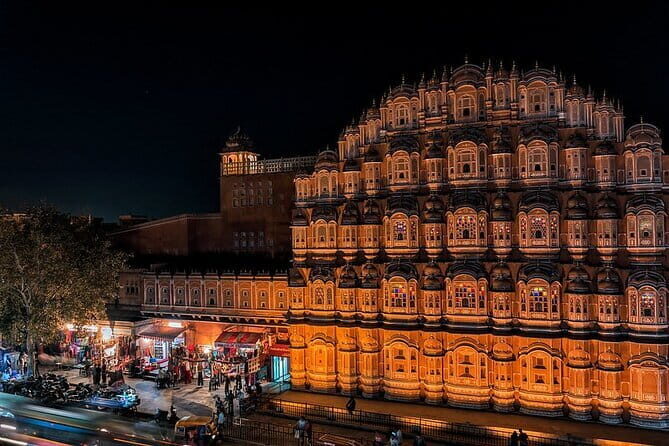
REVIEW · EVENING EXPERIENCES
Jaipur : Night Heritage Walk & Street Food Tasting in Jaipur
Book on GetYourGuide →Operated by North India Tour · Bookable on GetYourGuide
Jaipur at night tastes better than day. This heritage walk turns the Pink City lanes into a guided food story, with over 7 local delicacies and a friendly live storyteller/guide explaining what you’re eating and where you are. You get that useful mix of sights plus snacks, so the whole evening feels like one smooth plan instead of a random food hunt.
I also like how the route is built around major junctions and squares—Chaura Rasta, Badi Chaupar, Tripolia Bazar, and Choti Chaupar—so you’re not stuck wandering without direction. And if crowds bother you, you can follow the guided approach to keep things moving and time photo stops well. One thing to note: hotel pickup and drop-off aren’t included, so you’ll want to use the optional pickup or plan your meet point at Monuments.
In This Review
- Key things that make this night walk worth your time
- Why a night heritage walk fits Jaipur so well
- Street-food tasting: the main course of the evening
- Your guide makes the lanes make sense
- Chaura Rasta (45 minutes): old-market energy and first tastings
- Badi Chaupar photo stop (45 minutes): the square that anchors the route
- Tripolia Bazar (45 minutes): food, local texture, and more stops that feel purposeful
- Choti Chaupar (45 minutes): finish strong with atmosphere and guidance
- Masala chai, pudding, and the kind of spontaneous extras that you’ll remember
- Local lunch: included, with at least one meaningful hands-on moment
- Where you start and where you end: pickup and drop-off in real life
- Price and value: does $13 make sense for what you get?
- Who should book this night heritage walk in Jaipur
- Should you book? My decision guide
- FAQ
- How long is the Jaipur night heritage walk and street food tasting?
- What food and drinks are included?
- Is hotel pickup included?
- What languages is the guide available in?
- Is this a private tour, and is it wheelchair accessible?
- Where will I be dropped off at the end?
- Can I get a refund if my plans change?
Key things that make this night walk worth your time
- Over-7 tastings plus masala chai: street snacks are the main event, and chai is part of the rhythm.
- Guided stops at Chaura Rasta and the Chaupar squares: you’ll see the places that anchor local life.
- Storytelling that connects food to the street: guides like Najish (a historian) bring context while you walk.
- Photo stops built into the flow: Badi Chaupar, Tripolia Bazar, and Choti Chaupar give you natural breaks.
- Private group pacing: you can keep a comfortable pace without merging with big crowds.
- Multiple drop-off areas around Jaipur: end near places like Bani Park or Mansarovar.
Why a night heritage walk fits Jaipur so well
Daytime Jaipur can feel like a lot at once: forts, palaces, museums, traffic, heat. At night, the city changes mood. The streets become more about everyday life—shops staying open, locals moving through routines, and food stands doing what they do best.
This walk leans into that. You’re not just sightseeing with a camera. You’re tasting along the way. That matters because Jaipur’s food culture isn’t something you can only learn from menus—it shows up in how people order, how stalls prepare, and how neighborhoods keep their favorites.
Also, timing helps. The route uses a sequence of well-known local areas and squares, so you’re not chasing one food spot after another blindly. You get a plan, and you can still choose to slow down if something smells amazing.
You can also read our reviews of more walking tours in Jaipur



Street-food tasting: the main course of the evening
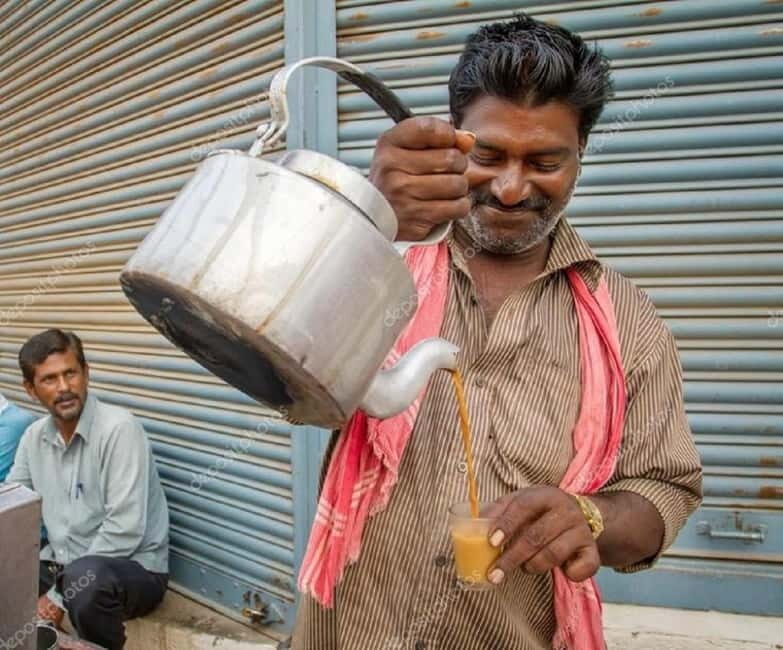
The core of this experience is the food. You’ll taste over 7 authentic local delicacies at handpicked food joints. The goal isn’t to push you through ten bites you don’t care about. It’s more like building a small lineup of flavors—savory, sweet, and comforting—so you leave with a clearer sense of what locals actually eat.
Masala chai is included, and it’s a smart inclusion on a walking tour. Spices and warmth help you reset between stops. It also gives you a familiar anchor flavor so everything you taste around it makes more sense.
One sweet detail from real experience: pudding showed up as a highlight for at least one group. If you like dessert-style snacks, keep an eye out for that moment.
Practical tip: come hungry, not starving. With over 7 tastes plus lunch, you want room for everything without feeling sick halfway through.
Your guide makes the lanes make sense
This is a guided tour with live interpretation in English and Hindi. That’s important in places where food names and street customs can be confusing fast. A good guide doesn’t just point. They connect. You should expect conversations, local tips, and stories that explain why certain dishes are popular in that exact neighborhood.
The tone seems to vary by guide, but one guide name came up clearly: Najish. He’s described as a historian, and that kind of mind-set helps on a food walk. Instead of treating snacks like random treats, you start noticing patterns: influences, habits, and how areas build a reputation over time.
You’ll also get practical recommendations you can use after the tour. That can be more valuable than knowing ten facts. If someone can help you find a great spot later, your evening pays off twice.
Chaura Rasta (45 minutes): old-market energy and first tastings

You start with Chaura Rasta, and it’s a strong choice for kicking off. This is a classic place to get oriented because it feels like the city’s everyday rhythm—shops, narrow lanes, and street-level food culture.
Expect a guided walk with scenic views along the way. The point of this first stop is to set expectations: what the tour tastes like, what the pace feels like, and how your guide will explain the food.
Why this works: arriving at a neighborhood already in motion helps you understand Jaipur as a living city, not a theme park. And because you start with a familiar lane and a guided intro, you’re less likely to feel lost later.
Possible drawback: if you’re very sensitive to noise or crowds, the opening minutes might be a bit intense. This tour is private, but market areas still have people and activity.
Badi Chaupar photo stop (45 minutes): the square that anchors the route
Next comes Badi Chaupar. You’ll have a photo stop plus a guided visit. Squares like this often act like crossroads for daily movement, which is why they’re useful on a walking route. You can step back for photos, then move forward with a clear sense of direction.
The value here is twofold. First, you get a visual landmark in the middle of the walk. Second, your guide’s storytelling can link what you see now to why that area matters for how people live and eat.
What to watch for: treat this like a brief reset. Take a couple of photos, but also listen. The best part of these “photo stop” blocks is that they break the walking into manageable segments.
You can also read our reviews of more food & drink experiences in Jaipur






Tripolia Bazar (45 minutes): food, local texture, and more stops that feel purposeful
Then you move to Tripolia Bazar for another photo stop, visit, guided tour, and walking time. This is where the walk starts to feel like a sequence of mini-chapters. You taste, you hear the story, you look around, and you keep moving.
Bazaars are where Jaipur’s street culture becomes obvious: what’s for sale, which stalls feel constant, and how locals shop and snack in the same environment.
Why this stop is so useful for you: it gives variety. Chaura Rasta may feel like the intro lane. Tripolia Bazar feels like the “okay, this is how the neighborhood actually works” section of your evening.
Possible consideration: if you’re picky about textures or very specific flavors, street tasting can be a challenge. The upside is that the guide experience includes great conversations and recommendations, and at least one group said the dishes were adjusted to personal preferences.
Choti Chaupar (45 minutes): finish strong with atmosphere and guidance
Choti Chaupar closes out the main sightseeing blocks with a similar structure: photo stop, visit, guided tour, and walking. By now you’re likely more comfortable with the rhythm. You know how your guide talks, where tastings happen, and how much time each segment needs.
This is also where the evening’s final impressions form. If you’ve had more than a few tastings already, you’ll start noticing what you liked most and what flavors kept repeating across stalls. That’s a helpful takeaway: you’ll remember the dishes, not just the location.
Practical tip: if you want photos, aim to take them during the photo-stop blocks, not while you’re walking quickly between stalls. Your feet will thank you later.
Masala chai, pudding, and the kind of spontaneous extras that you’ll remember
Some street food walks stay rigid. This one feels flexible. One group highlighted a spontaneous visit to a barber, which might sound unexpected until you realize what it really is: a peek into everyday life beyond food. It’s the kind of moment that makes a walking tour feel personal instead of scripted.
Another highlight from real experience: pudding stood out as a favorite sweet during the tastings. That’s exactly the kind of “small surprise” you hope for on a night food plan.
What you should take from this: don’t treat the tour as only about eating. Treat it as a guided way to see how different parts of daily life touch each other—food shops, local routines, and neighborhood culture.
Local lunch: included, with at least one meaningful hands-on moment
A local lunch is included, and masala chai is part of the included food plan too. That’s a key value point. For a night activity, you don’t want to feel like your energy crashes before the end.
One experience described making chapati during lunch with the host family. While you can’t assume it’s guaranteed for every departure, it’s a good sign that the meal isn’t only served. It can include moments of participation and learning—more connection, less just eat and go.
Also, at least one group said the family welcomed them warmly and adapted dishes for personal preferences. That suggests the tour can be mindful about what you like. If you have strong food preferences, it’s worth communicating them early to your guide.
Where you start and where you end: pickup and drop-off in real life
Your starting point depends on the selected option. Pickup is optional. If you use pickup, the driver picks you up from your location that you provide, and the guide meets you at Monuments.
At the end, you get five possible drop-off areas: Tripolia Gate, Kookas, Jaipur, Bani Park, and Mansarovar. That spread matters. Jaipur is large, and having multiple end points can help you avoid a long taxi ride after an already full evening.
If you’re planning your night, build in time to walk comfortably from your drop-off area to dinner or your hotel.
Price and value: does $13 make sense for what you get?
At around $13 per person, this tour looks like a budget-friendly way to do three things at once: food tasting, guided cultural context, and landmark photo stops.
Here’s why it feels like good value:
- You’re not paying only for walking. The included masala chai and local lunch are real added value, and the over-7 tastings are the heart of the experience.
- A trained storyteller guide is included, plus conversation and local tips. That matters in markets where you’d otherwise be guessing.
- Private group format suggests you’re not just paying for sights. You’re paying for a more personal pace and attention.
The potential downside is mostly logistical: hotel pickup isn’t included. If you’re far from central meeting points, you may spend more on taxis than you save on the tour price. If you’re close, or you can handle a meet-at-Monuments style start, the cost feels much easier to justify.
Who should book this night heritage walk in Jaipur
I’d steer you toward this tour if you want:
- A night activity that focuses on street food plus guidance, not just photos
- A manageable walking plan that covers several key local areas
- English or Hindi storytelling to help you understand what you’re tasting
- A private-group pace, especially if you prefer a smaller setting
It’s also a strong match for food-first travelers who still want cultural context. You get the tastes and the explanations, which makes your Jaipur food memories more than just “I ate something good.”
If you hate walking or you’re easily overwhelmed in markets, you might want a gentler option. The walk is time-based (3–7 hours depending on the schedule), and the neighborhoods you visit are active.
Should you book? My decision guide
Book this night heritage walk if you want a guided food evening with over 7 local tastings, masala chai, and a plan that takes you through Chaura Rasta, the Chaupar squares, and beyond. The inclusion of local lunch and the chance for moments like chapati-making or a spontaneous barber stop (in some departures) adds more than just snacks.
Hold off if you’re far from the meeting point and you strongly need full hotel pickup. Also think twice if you’re very sensitive to busy market energy. Otherwise, it’s the kind of activity that helps you understand Jaipur through what people actually eat at night—one stop, one story, one bite at a time.
FAQ
How long is the Jaipur night heritage walk and street food tasting?
The duration is listed as 3 to 7 hours, depending on the selected starting time.
What food and drinks are included?
Masala chai tea and a local lunch are included, along with tastings of over 7 local delicacies during the walk.
Is hotel pickup included?
Hotel pickup and drop-off are not included. Pickup is optional, and if you use it, the driver picks you up and the guide meets you at Monuments.
What languages is the guide available in?
The live tour guide offers English and Hindi.
Is this a private tour, and is it wheelchair accessible?
Yes, it’s a private group, and it’s listed as wheelchair accessible.
Where will I be dropped off at the end?
You’ll have drop-off options in Tripolia Gate, Kookas, Jaipur, Bani Park, and Mansarovar.
Can I get a refund if my plans change?
You can cancel up to 24 hours in advance for a full refund.