REVIEW · JAIPUR
Private Jaipur Tour for Solo Female Traveler with Female Guide
Book on Viator →Operated by Pashmina Tours · Bookable on Viator
Jaipur can feel big and a bit overwhelming at first, so a female guide changes the whole experience. I like the comfort of a private, air-conditioned pickup and the fact that lunch plus monument entrance fees are included, so you’re not doing extra ticket math all day. One thing to consider: the day is efficient, with several major stops in 5–8 hours, so it’s not the slow, wander-at-your-own-pace style.
This is built for solo female travelers who want local context and smoother logistics, without the stress of navigating on your own. You’ll cover major Jaipur highlights tied to Hindu and Mughal design, and the guide helps you connect the dots—from planning and astronomy to palaces and stepwells.
You’re also not stuck in a mixed group. It’s private, so your schedule and comfort come first, and you can ask questions as you go.
In This Review
- Key highlights you’ll actually feel during the day
- Jaipur, but made manageable: what the private female-guided format really gives you
- Amber Palace (Amer Fort) and Panna Meena ka Kund: the architecture-heavy opener
- What you should watch for at these two stops
- Jal Mahal and Royal Gaitor Tumbas: a scenic break with real cultural weight
- A balanced way to handle these two stops
- Hawa Mahal and City Palace: the Pink City’s most recognizable icons
- Why these two stops work well back-to-back
- Jantar Mantar: when you understand the observatory, the whole city clicks
- How to get the most from Jantar Mantar in one hour
- Price and value: what $115 covers (and what it doesn’t)
- Getting ready: practical tips for a smoother solo female day
- Should you book this solo Jaipur tour with a female guide?
- FAQ
- FAQ
- How long is the Jaipur private tour?
- Is hotel pickup and drop-off included?
- Is lunch included?
- Are entrance fees for monuments included?
- What happens if a female guide is not available?
- Is cancellation free?
Key highlights you’ll actually feel during the day
- Female-guided comfort for solo travelers with local context that makes the city feel less intimidating
- Private air-conditioned pickup and drop-off so your day starts clean and stays efficient
- Entrance fees and lunch included, which makes the $115 price easier to judge
- Amber Fort plus the stepwell Panna Meena ka Kund for strong architecture variety right away
- Hawa Mahal, City Palace, and Jantar Mantar in one loop for classic Jaipur coverage
Jaipur, but made manageable: what the private female-guided format really gives you
Jaipur is famous for a lot of big-picture sights, but solo travel turns “famous” into “busy,” especially when you’re trying to understand what you’re seeing. This tour is set up to reduce friction: you get a professional female guide, a private vehicle, and a plan that hits the core monuments without you guessing routes.
I especially like that the guide isn’t just pointing at buildings. The focus is on helping you understand why Jaipur looks the way it does—founded in 1727 by Maharaja Sawai Jai Singh and planned using the Shilp Shastra principles of architecture. When you know the logic behind the city’s design, places like the observatory and the palace layouts make more sense fast.
Another plus: you can feel more at ease asking questions in a way that fits your pace. Guides you might meet, like Ms. Neeru and Veena ji, are specifically mentioned as friendly and good at explaining Jaipur’s story clearly. That matters, because “great photos” and “understanding what you photographed” are not always the same thing on a first trip.
One practical note: if a female guide isn’t available, a male guide will be assigned. If having a female guide is the whole point for you, it’s worth booking with that in mind.
You can also read our reviews of more guided tours in Jaipur


Amber Palace (Amer Fort) and Panna Meena ka Kund: the architecture-heavy opener
You start at Amber Palace (Amer Fort), a world heritage site recognized since 2013. The fort was built in the 16th century by Hindu Rajput kings, and you’ll notice the blend of Hindu and Mughal architecture. That mix is one of Jaipur’s signature traits—different rulers, different aesthetics, same city.
You’ll have about 2 hours at Amber Palace, and that time window is realistic. You can see the main spaces without feeling rushed every ten minutes, and the guide can point out the design choices that make the fort so photogenic. If you care about photography, this is a strong start because the structures give you layers: courtyards, walls, and details that look different as the light changes.
Then you move to Panna Meena ka Kund, a stepwell built in the 16th century. It’s often described as an artistic place with steps that were used for religious gathering. It’s only about 15 minutes, so don’t treat it as an “extra stop.” This is the palate cleanser after the big fort—smaller, more textured, and very different in feel.
A common challenge in Jaipur is that the biggest attraction can “swallow” the day. Here, the stepwell is short but intentional: you get a change in scale, plus something tied to local ritual life rather than only royal power.
What you should watch for at these two stops
- If you’re photographing, be ready for brief shifts from indoor/outdoor lighting.
- Keep an eye on your energy level, because the rest of the day stays packed with landmarks.
- If you prefer depth over speed, you might want to take fewer photos and spend a bit longer asking your guide questions.
Jal Mahal and Royal Gaitor Tumbas: a scenic break with real cultural weight
After Amber and the stepwell, you’ll drive toward Jaipur and stop at Jal Mahal, the so-called Water Palace. It was built in 1799 AD and sits in the middle of water, so it has that postcard look people associate with Jaipur.
You’ll only have about 15 minutes here, and that’s appropriate. Jal Mahal is best treated as a quick, visual moment rather than a long museum-style stop. Use the time to enjoy the shape and setting, then let the guide handle the context so you don’t waste minutes scanning.
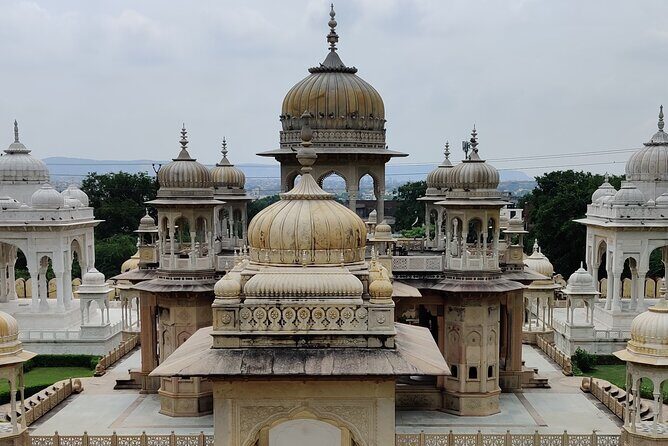
Next comes Royal Gaitor Tumbas, just a few kilometers from Jal Mahal. This is the royal crematorium, and it’s still being used by the royal family of Jaipur. You’ll spend about 1 hour here, and it’s one of those places where the architecture is interesting, but the atmosphere carries something more solemn.
This pairing makes sense. You go from a scenic water structure to a monument tied to death and tradition. It’s not the kind of stop you can skip if you want Jaipur to feel like a lived-in city rather than only a list of Instagram targets.
A balanced way to handle these two stops
Jal Mahal is easy to romanticize, while Royal Gaitor Tumbas demands a different mindset. If you like to travel thoughtfully, try doing this: take fewer photos at Gaitor, and focus on how the guide explains what the site represents. It’ll change how you remember the day.
You can also read our reviews of more private tours in Jaipur






Hawa Mahal and City Palace: the Pink City’s most recognizable icons
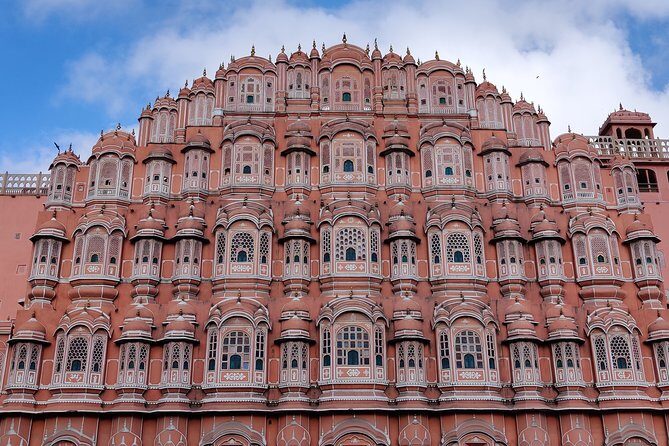
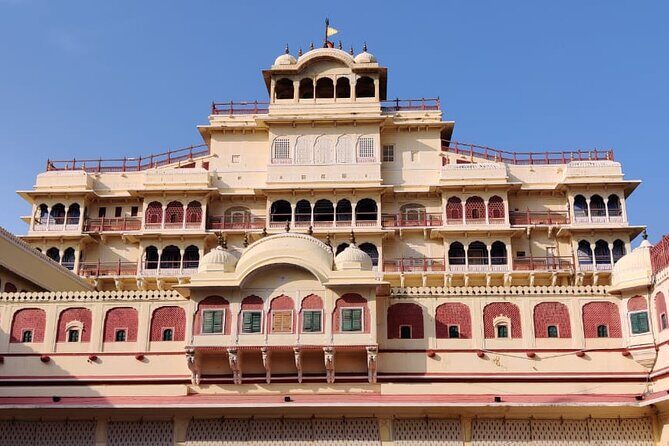
Then you reach Hawa Mahal, the Palace of Wind. It’s right in the middle of the pink city, built in 1799 AD. The front can look like a wall, but the details matter: it has 957 windows. Even if you’re not an architecture nerd, that number is the kind of fact that pulls you in.
Plan on about 10 minutes at Hawa Mahal. That short timing is normal because it’s not a long “walk-through” experience for everyone. Instead, it’s a quick stop to see the outside form and appreciate the design intent. If you’re into photography, this is a prime area to experiment—front angles, nearby streets, and the way the building blends into the city’s color.
A short drive brings you to the City Palace of Jaipur. This is connected to royal life and was the kings’ home related to the Amer town. The foundation is traced back to 1727 under Maharaja Sawai Jai Singh. You’ll have about 1 hour here, which is enough to grasp the layout and understand what you’re looking at without the fatigue that comes from a rushed stop.
Why these two stops work well back-to-back
Hawa Mahal gives you a dramatic silhouette. City Palace gives you the power and planning behind it. Together, they help you see Jaipur from two angles: the city as performance and the city as governance.
If you like to shop, this area is also where the day naturally supports browsing, because Jaipur’s “Pink City” identity shows up most strongly here.
Jantar Mantar: when you understand the observatory, the whole city clicks
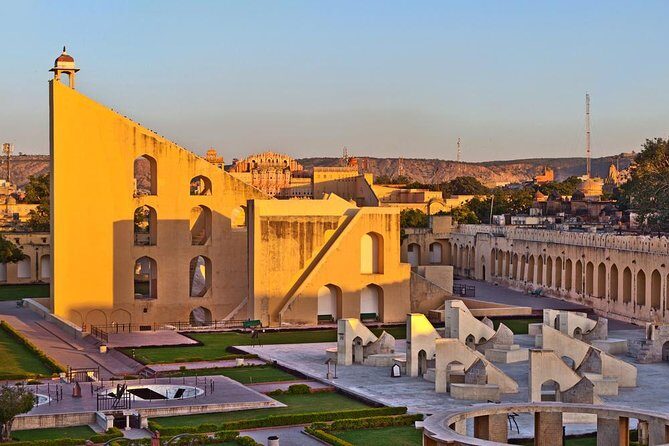
From City Palace, you’ll walk to Jantar Mantar, Jaipur’s observatory. It’s a world heritage site recognized since 2010, and it was built in the early 18th century by the founder of Jaipur, Sawai Jai Singh, who was also an astrologer and astronomer.
You’ll spend about 1 hour here. This stop is different from the palaces because it asks you to notice purpose. Once you understand that these structures were built for observation and measurement, they stop looking like random stone shapes and start looking like tools.
It’s the kind of place where your guide can make your visit smarter in minutes. You don’t need technical math—just a clear explanation of how the observatory fits into Jaipur’s planning and the ruler’s scientific interest.
How to get the most from Jantar Mantar in one hour
- Ask your guide what to look for first, then follow their order.
- Take a step back periodically. The big-picture view helps more than staring at details up close.
- If you’re sensitive to walking time, Jantar Mantar’s location near City Palace is still manageable because it’s planned right into the route.
Price and value: what $115 covers (and what it doesn’t)
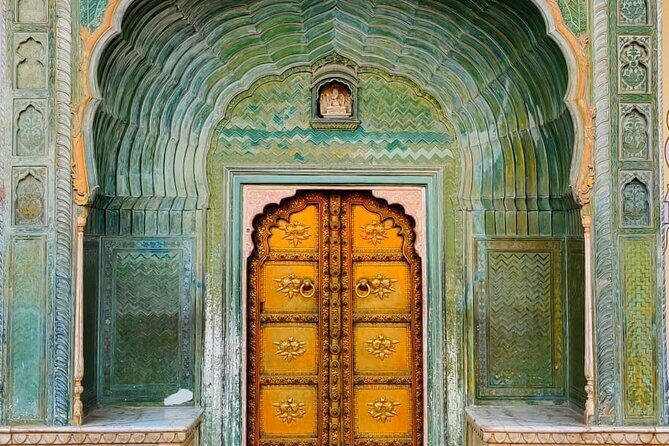
At $115 per person, this tour isn’t just a cheap sightseeing add-on. The value comes from what’s included: pickup and drop-off in a private air-conditioned vehicle, a professional female tour guide, lunch, and monuments entrance fees.
That matters in Jaipur because entry costs and transport time add up fast if you do it on your own. With entrance fees included, you also avoid the common stress of figuring out what tickets you need for each stop at the last minute. And lunch being included means you’re less likely to waste time hunting for food between monuments.
What’s not included is also clearly stated: alcoholic beverages and anything not listed in the inclusions. So if you’re counting on drinks or extra add-ons, plan for that separately.
The duration is 5 to 8 hours, which is a practical window for a high-impact city day. It’s long enough to cover the major landmarks without turning into a half-day scroll-and-stand-by situation.
One more subtle point: the tour is listed as private, meaning it’s just your group. That reduces the awkwardness of sharing a tight schedule with strangers, especially as a solo traveler.
Getting ready: practical tips for a smoother solo female day
Even with a private guide and vehicle, Jaipur can be intense if you don’t plan your basics. Here are the things that usually make the biggest difference:
- Wear comfortable shoes. Even if stops feel short, you’ll likely be moving between viewpoints and entrances.
- Bring sun protection. Jaipur can be bright and hot, especially during mid-day hours.
- Keep water handy. Water isn’t listed as included, so it’s smart to plan around hydration yourself.
- Use your guide’s pacing. A lot of the value here is not just “seeing,” but understanding. Ask questions at stops where it helps, not only when you’re tired.
If you’re traveling as a photographer, plan to shoot fewer “hero shots” and more “detail shots.” The fort details, the stepwell steps, and Jantar Mantar’s shapes all reward careful looking.
Should you book this solo Jaipur tour with a female guide?
If you’re a solo female traveler who wants major Jaipur sights with less stress, this is a strong match. The combination of private pickup and drop-off, a female guide, and entrance fees plus lunch included makes it feel like a complete package rather than a barebones tour.
I’d especially recommend booking if you care about understanding the city, not just checking landmarks. Jaipur’s story—planned by Sawai Jai Singh using Shilp Shastra principles, shaped by Hindu and Mughal influences, and tied to architecture and astronomy—comes through best when you have a guide to translate it on the spot.
You might hesitate if you want a slower rhythm or long “sit and soak it in” time at each monument. This route is designed to be efficient, so it’s best for travelers who like clear structure and a well-used day.
FAQ
FAQ
How long is the Jaipur private tour?
The tour runs for approximately 5 to 8 hours.
Is hotel pickup and drop-off included?
Yes. Pickup and drop-off are included in a private air-conditioned vehicle.
Is lunch included?
Yes. Lunch is included.
Are entrance fees for monuments included?
Yes. Monument entrance fees are included.
What happens if a female guide is not available?
The information states that a male tour guide will be assigned if a female tour guide is not available.
Is cancellation free?
Yes, free cancellation is offered up to 24 hours before the experience starts for a full refund.