REVIEW · CITY TOURS
Jaipur Full Day Heritage of Pink City Tour By Tuk Tuk With Chai
Book on Viator →Operated by Jaipur City Tuk Tuk Tours · Bookable on Viator
A tuk tuk route through Jaipur that makes sense. This full-day tour connects the big-name sights of the Pink City—Amber Palace, Hawa Mahal, City Palace, and Galta Ji—into one ride so you can spend less time figuring things out and more time looking up.
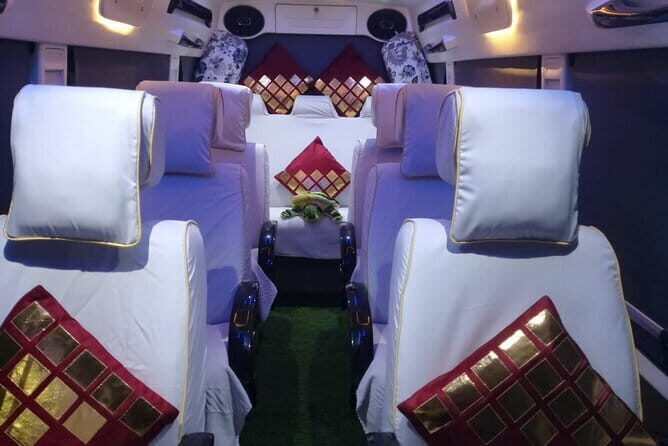
I especially like the private tuk-tuk setup. You’re not squeezed into a bus with strangers, and pickup/drop-off is handled for you, with bottled water included across the day.
One thing to plan for: the main monument entry costs (listed as ₹2,600 per person) are not included, and guide fees at monuments are also extra.
In This Review
- Key highlights you’ll actually feel during the day
- Riding Jaipur with a private tuk tuk: why this format works
- The morning start: pickup at 8:30 and how to prepare
- Hawa Mahal (Palace of Breeze): the façade you understand faster in person
- Amber Palace: courtyards, halls, and the Sheesh Mahal mirror work
- Panna Meena ka Kund: a stepwell with geometry worth your time
- Jagat Shiromani Ji Temple: a calm break near Amber Fort
- Jal Mahal on Man Sagar Lake: what floating really means here
- Royal Gaitor Tumbas: cenotaphs, marble carvings, and a quieter side of royal Jaipur
- City Palace: where Rajasthani and Mughal meet, plus artifacts and textiles
- Jantar Mantar and why the science stop fits the heritage theme
- Monkey Temple (Galta Ji): springs, monkeys, and a hilltop spiritual finish
- The best part: how the driver experience can make the day
- Price and value: cheap tuk tuk, plus the real cost of entry
- Who this tour suits best (and who should skip it)
- Should you book this Jaipur heritage tuk tuk tour?
- FAQ
- What time does pickup happen?
- How long is the tour?
- Is this tour private?
- What’s included in the price?
- Are monument entry fees included?
- Are meals included?
- Is a guide fee included?
- Is the tour operating all day?
- Can I cancel if plans change?
Key highlights you’ll actually feel during the day
- Private tuk-tuk for your group only, with hotel/airport/railway pickup and drop-off
- Bottled water included, so you’re not hunting for it between stops
- Amber Palace and the Sheesh Mahal mirror work, plus Rajput architecture details in the fort complex
- Panna Meena ka Kund stepwell with its geometric staircases and eight-story design—excellent for photos
- Jal Mahal on Man Sagar Lake, best appreciated from the shoreline
- Galta Ji (Monkey Temple) with natural springs and resident monkeys, for a spiritual finish up in the hills
Riding Jaipur with a private tuk tuk: why this format works
Jaipur can be surprisingly tricky for a one-day plan. Roads, traffic, and the distance between sights can make a “quick heritage day” feel slow. This tour keeps it practical: you start in the morning with pickup, then spend the day hopping between major landmarks by private tuk tuk.
The route is designed for seeing the classic highlights without you having to coordinate everything. You’ll hit the dramatic exterior icons first (like Hawa Mahal), then shift to the fort and palace areas, and end with a temple complex in the hills. That order matters. Early on, the views are easier to enjoy before the day gets heavy.
And yes, it’s called a heritage tour, but it doesn’t feel like a museum checklist. It feels like a smooth ride through the city’s most recognizable layers—Rajput and Mughal influences, royal spaces, and religious sites—all in one long day.
You can also read our reviews of more city tours in Jaipur

The morning start: pickup at 8:30 and how to prepare
Your day kicks off at 8:30 am, with the driver meeting you at your hotel. The tour also notes that pickup can be arranged from the airport or railway station, so you’re not stuck trying to get yourself across town first.
Because it runs about 8–9 hours, you’ll want to think in terms of comfort and stamina. You’ll spend time inside some sites (like City Palace) and in open-air viewing areas (like Jal Mahal from the shoreline). You’re also moving between places with different lighting conditions—especially at Hawa Mahal and Amber Palace.
Practical tip: keep a small bag ready for the changing conditions. This is the kind of day where you’ll want to grab water fast (and you do get bottled water during the tour), plus keep your entry-ready items on hand for when fees are required.
Hawa Mahal (Palace of Breeze): the façade you understand faster in person
Hawa Mahal is one of those places where the idea matters as much as the building. You’re looking at a façade built for royal women to observe city life from behind lattice windows. That detail gives the whole structure context. Up close, you can see why the design is all about viewing angles.
The pink sandstone façade is the obvious wow-factor, but what I like here is the story embedded in the architecture. It’s not just pretty from the outside—it explains how people in royal households interacted with the city. You get about 30 minutes, which is usually enough to take photos, walk a bit around the exterior viewing points, and actually read the building’s purpose.
One consideration: entrance is not included, so you’ll need to decide whether you want to pay for the site entry or just focus on the exterior view. (The itinerary notes admission ticket not included for this stop.)
Amber Palace: courtyards, halls, and the Sheesh Mahal mirror work
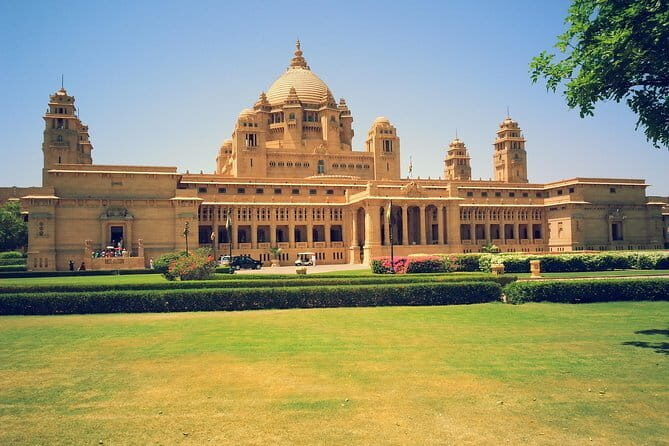
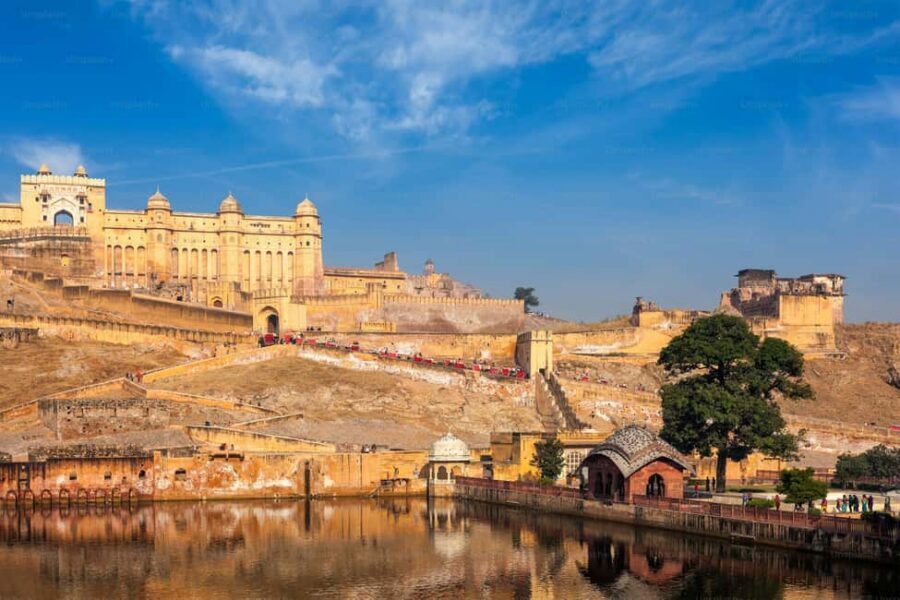
Amber Palace is the anchor stop for most Jaipur heritage days, and this plan gives it the time it deserves. You’ll spend about 1 hour 30 minutes exploring the fortress complex.
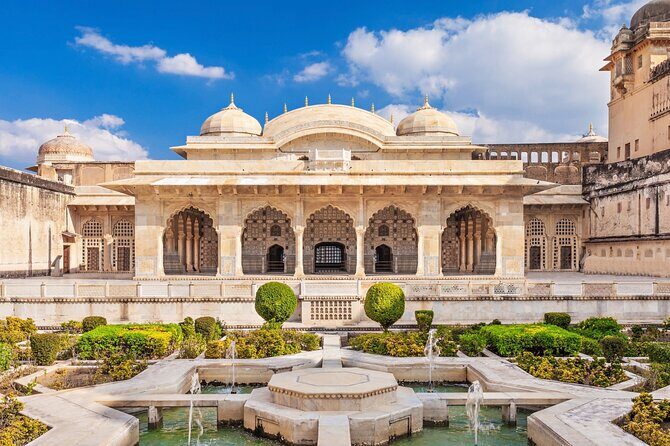
What you’ll get here is classic Rajput architecture in a setting that feels like a layered royal space—courtyards, ornate halls, and the Sheesh Mahal area known for mirror work. Those mirrors aren’t just decoration. They change the light in a way that makes the interiors feel more alive than plain stone alone.
Admission is not included for Amber Palace, so plan on paying the monument entry cost during the day (unless you already have tickets elsewhere). The stop is long enough that you won’t feel rushed, but not so long that the rest of the day suffers. That balance matters.
If you care about photo stops and interior details, this is one of your best moments to go slowly. The architecture rewards attention.
Panna Meena ka Kund: a stepwell with geometry worth your time
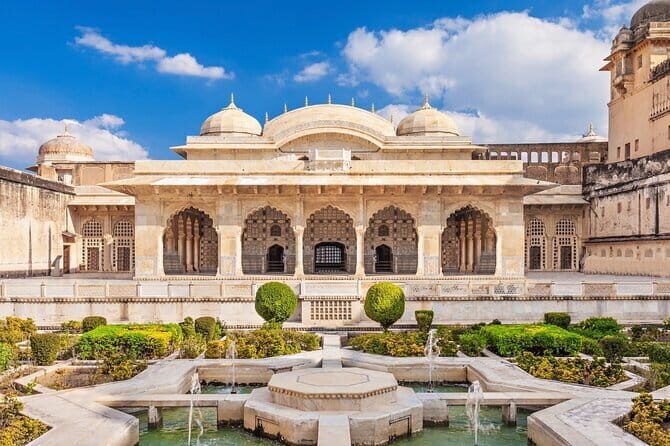
Next comes a sight that’s easy to underestimate until you’re standing in front of it. Panna Meena ka Kund is described as an ancient stepwell with geometric staircases and an eight-story design. Even if stepwells aren’t usually on your itinerary, this one is built for symmetry and structure.
You’ll get about 30 minutes, which is enough to look around, understand how the stair levels work, and take photos without turning it into a speed run. The itinerary specifically notes it’s an ideal spot for photos, and that tracks with how these stairways frame views as you move.
This stop also lists admission ticket as not included, so again you’ll be paying that monument entry cost while other sites are free.
You can also read our reviews of more historical tours in Jaipur




Jagat Shiromani Ji Temple: a calm break near Amber Fort
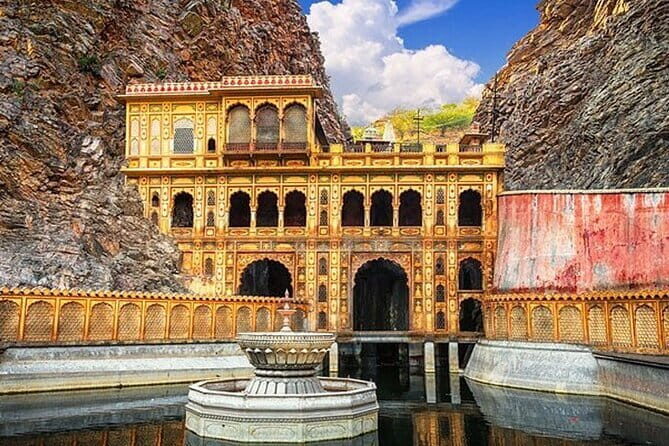
After the stepwell’s architecture focus, the Jagat Shiromani Ji Temple offers a different pace. It’s dedicated to Lord Krishna, and it’s known for intricate carvings and a serene atmosphere.
You only get about 20 minutes, and that’s actually a good fit. This is the kind of place where you’ll enjoy the carvings and the feeling of quiet without needing an hour-long stop. The itinerary also notes admission ticket free for this temple, which makes it a smart pause in the middle of the day.
This stop is valuable because it balances the “grand palace” energy with something more human-scale: carvings, devotion, and stillness.
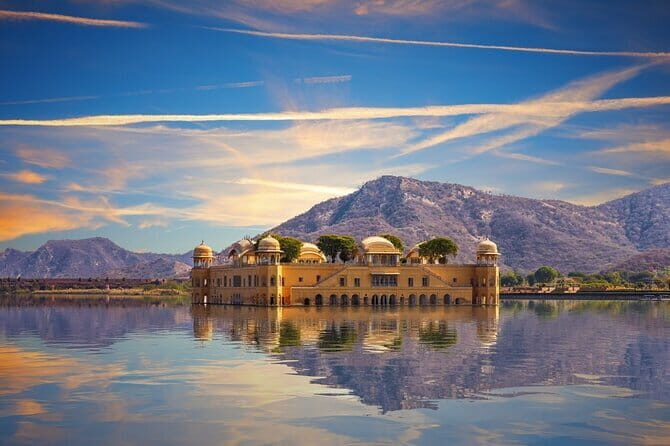
Jal Mahal on Man Sagar Lake: what floating really means here
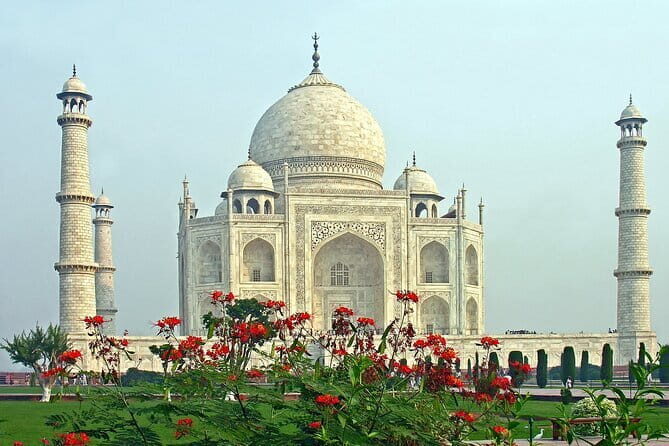
Then you get to Jal Mahal, the Water Palace, described as appearing to float on the waters of Man Sagar Lake. The key here is your viewing angle: the itinerary notes that it’s best appreciated from the shoreline.
You’ll get about 20 minutes, and that short window works because this stop is really about the view rather than long wandering. If you’re hoping for a perfect photo, arrive ready to adjust your angle quickly. Water and light can change fast.
Admission is listed as free at this stop, which also makes it a nice break. You can enjoy the scenery without adding another paid entry to the day’s total.
Royal Gaitor Tumbas: cenotaphs, marble carvings, and a quieter side of royal Jaipur
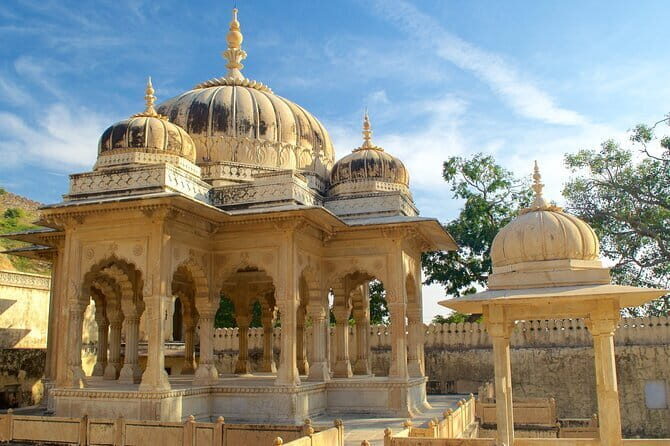
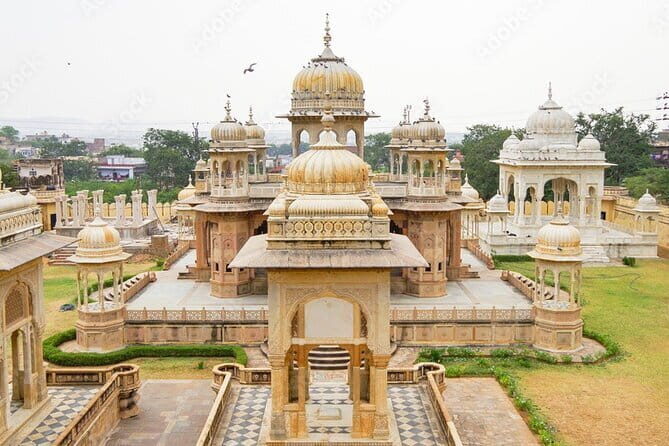
This next stop shifts from palaces and temples to memorial space. Royal Gaitor Tumbas are the royal cremation grounds of Jaipur’s Maharajas. The itinerary points out intricate marble carvings on the cenotaphs, plus peaceful surroundings.
You’ll get around 40 minutes here, which I appreciate because it gives time to slow down. These aren’t the kind of monuments you understand by looking for 5 minutes and moving on. The carvings are part of why it’s worth visiting.
Admission ticket is not included for this stop. So you’ll be budgeting for that monument fee as part of the “heritage package,” whether you love every site or not.
Still, as a day’s rhythm, it’s a good change. The memorial setting adds gravity that you don’t get from always viewing “happy” sights.
City Palace: where Rajasthani and Mughal meet, plus artifacts and textiles
In the old city, you’ll visit City Palace for about 1 hour 15 minutes. This is one of the bigger internal stops, and it’s described as a blend of Rajasthani and Mughal architecture.
What makes it more than an exterior visit is the collection inside: royal artifacts, textiles, and costumes are specifically mentioned. That matters if you’re the type who likes to see how power showed up in everyday-looking objects—fabric, uniforms, ceremonial pieces.
Admission is not included here, so it’s another place where you’ll likely pay the monument entry cost. Because it’s inside and includes collections, it’s also the stop where time can feel most “worth it.” You’re not just passing by.
If you want to remember Jaipur beyond façades and views, this is one of the places that helps.
Jantar Mantar and why the science stop fits the heritage theme
Your tour overview also includes Jantar Mantar, with its impressive astronomical instruments. Even if you don’t think of Jaipur as a science city, this is where you see how rulers used observation and measurement as part of their worldview.
The best part is the shift in tone. After architecture, stepwells, and palaces, it’s a reminder that “heritage” isn’t only art. It’s also how people tracked time, sky positions, and movement—tools built into the city landscape.
Even though the day is packed, this kind of stop tends to refresh your brain. It’s a different lens, and it helps the day feel less repetitive.
Monkey Temple (Galta Ji): springs, monkeys, and a hilltop spiritual finish
To close the day, you’ll visit Monkey Temple, also called Galta Ji. It’s described as a sacred Hindu pilgrimage site tucked between hills, known for natural springs and resident monkeys.
You’ll get about 40 minutes, and that timing is useful because this is a site where the “experience” happens as you move through the complex. Monkeys are part of the identity here, so expect to share space rather than have a quiet stroll.
Admission is listed as free. That’s a nice way to end the day without adding another cost, and it keeps the final stop feeling light compared to the paid monuments.
If you’re carrying anything edible, keep it secure. Resident monkeys can turn a thoughtful visit into a chase fast.
The best part: how the driver experience can make the day
Here’s the practical truth about tours like this: the route is set, but the day still lives or dies on execution.
In my notes from the tour’s standout experience, the driver Ali is specifically praised for being friendly and helpful, making sure the itinerary matches what you want to see and do. That’s not just politeness—it’s how you avoid the usual travel pain of feeling like you’re being rushed or forced through a script.
Ali is also mentioned as getting the group to do extra activities and taking the person to the train station afterward. That kind of follow-through is exactly what you want on a day that ends far from where you started.
So if you’re booking because you want a calm, well-managed day with someone who actually helps you, this tour has a strong track record.
Price and value: cheap tuk tuk, plus the real cost of entry
This tour is priced around $7.66 per person, which looks almost unreal for a full day with pickup/drop-off and a private tuk tuk. The catch is in the fine print: monument entry fees are not included, listed as ₹2,600 per person, and guide fees at monuments are also not included.
So what are you really paying for?
- You’re paying for logistics and transport: private tuk tuk, fuel/parking/tolls, bottled water, and government taxes are included.
- You’re not paying for entry: you’ll cover monument tickets at the paid stops.
That means it’s best value if you’re planning to visit several paid sites anyway. If you’re only interested in one or two landmarks, this type of tour can feel expensive once you add entry fees. But if you want the full arc—Amber, Hawa Mahal, City Palace, and the rest—this format can be a bargain compared to piecing everything together on your own.
Also note: some stops have free admission (like the temple and Jal Mahal, plus Monkey Temple). That helps balance the total.
Who this tour suits best (and who should skip it)
This works well if you want:
- A private full-day heritage plan with a dedicated tuk tuk
- A structured day that hits major sites in the right order
- Plenty of photo opportunities (Panna Meena ka Kund and Jal Mahal)
It may not be ideal if:
- You dislike paying monument entry fees on top of the base price
- You want a deep, slow pace with long time inside every site (your paid stops are timed, and some are only around 20–30 minutes)
If you’re short on time, moving between hotel and rail plans, or you just want someone to handle the driving, this is a strong match.
Should you book this Jaipur heritage tuk tuk tour?
I’d book it if your goal is a single-day highlights loop with minimal hassle. The private tuk tuk, hotel pickup/drop-off, included bottled water, and a driver who actually works with your preferences (like Ali) are the kind of details that make the day feel smooth.
I’d think twice if you hate extra ticket costs or you’re unsure you’ll want to go into multiple major monuments. In that case, you may be better off planning a smaller set of paid stops and building the rest around free sights.
If you’re going for the whole Jaipur snapshot—forts, palaces, stepwell geometry, skyline landmarks, and a hilltop temple finish—this one-day plan is a practical way to get it done.
FAQ
What time does pickup happen?
Pickup is listed for 8:30 am from your hotel.
How long is the tour?
The duration is about 8 to 9 hours.
Is this tour private?
Yes. It’s a private tour/activity, meaning only your group participates.
What’s included in the price?
Included are hotel/airport/railway station pickup and drop-off, a private tuk-tuk vehicle, fuel/parking/tolls, and complimentary bottled water. It also includes all government taxes (GST).
Are monument entry fees included?
No. The tour lists monument entry fees as ₹2,600 per person, and it also notes that some stops have admission ticket not included.
Are meals included?
No. Lunch, dinner, and additional snacks are not included (though you can arrange them).
Is a guide fee included?
No. Guide fees at monuments are not included.
Is the tour operating all day?
The opening hours are listed as 12:00 AM to 11:30 PM.
Can I cancel if plans change?
Yes, it offers free cancellation. You can cancel up to 24 hours in advance for a full refund.