REVIEW · FOOD
Guided Jaipur Heritage & Food Walk with Shopping
Book on Viator →Operated by India Guided Tours · Bookable on Viator
If you like food and old streets, Jaipur delivers. This short guided walk pairs heritage landmarks with classic Rajasthani bites, plus a rickshaw-style ride and time to browse local markets in between stops.
I especially like how the route mixes major sights with food you can’t easily copy on your own—sweet lassi, masala tea with snacks, and kulfi to end the day. You also get hotel pickup and drop-off, which matters in Jaipur, where crossing town on your own can eat up your time.
One possible drawback: with so many food stops packed into a half-day, you’ll want to come hungry and ready for a fast pace through busy market areas.
In This Review
- Key Highlights to Plan Around
- Jaipur Heritage and Food Walk: The Right Amount of Time
- Price and Value: Why It’s Worth the Low Cost
- Getting Picked Up and Using the Right Transport
- Raj Mandir Cinema: The Start Point With Storytelling Power
- Lassi at Lassiwala: Your First Real Taste of Jaipur
- Ajmeri Gate: First of the Southern Gate System
- Choti Chaupar: Squares, Flowers, and Quick Access
- Tripolia Gate: City Palace-Linked Entrance
- Tadkeshwar Mahadev Temple: A Temple With a Local Naming Story
- Sahu Tea Stall: Masala Tea and Snacks Pairing Time
- Badi Chaupar: Old Town Markets and Craft Browsing
- Wind View Cafe and Hawa Mahal Views: A Terrace Moment
- Hawa Mahal Road: Markets Near the Iconic Facade
- Pandit Kulfi: Cool Down With Indian Ice Cream
- Jal Mahal: The Lake-Side Palace Stop
- Albert Hall Museum: Indo-Saracenic Architecture Finish
- Shopping Time Without the Shopping Trap
- Who This Tour Suits Best (And Who Should Consider Another Option)
- Final Thoughts: Should You Book This Jaipur Heritage & Food Walk?
- FAQ
- FAQ
- How long is the Jaipur Heritage & Food Walk with Shopping?
- Is pickup and drop-off included?
- What food and drinks are included?
- Do I need to pay entry fees for the stops?
- What transport do you use during the tour?
- Is this a private tour or a shared group?
- What is the cancellation policy?
Key Highlights to Plan Around
- Street-food rhythm: Lassi, masala tea, and kulfi are built into the schedule, not left to chance
- Pink City gate storytelling: You walk past major gateways like Ajmeri Gate and Tripolia Gate with context
- Hawa Mahal time without rushing: You get terrace views, then a slower walk along Hawa Mahal Road
- A mix of royal and everyday Jaipur: City Palace-area gates, temple stops, and lake-side scenery
- Free entry at the listed stops: Each scheduled stop is marked as ticket-free in the tour plan
- Guide-led shopping windows: You’ll pause at market zones for crafts and snacks, not just photo stops
Jaipur Heritage and Food Walk: The Right Amount of Time
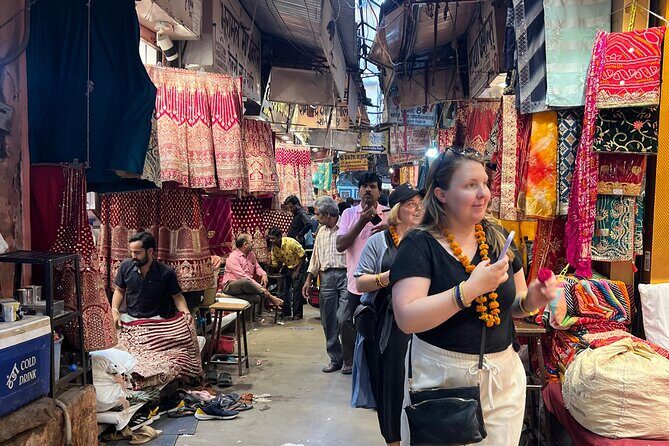
This is the kind of tour that helps you get oriented fast. In around 3 to 4 hours, you cover a cluster of Jaipur’s most recognizable old-city sights, then punctuate it all with food stops that taste like the city you came for.
The smart part is the balance: you’re not doing a museum day, and you’re not only doing food. Instead, you get guided walking and short rides that connect the architecture—gates, squares, temples—with the daily market life that surrounds them.
Also, the tour is set up for a private group. That means you’re not stuck in a slow-moving crowd, and your guide can adjust the pace if you want more time in shops or you’d rather keep moving.
You can also read our reviews of more walking tours in Jaipur


Price and Value: Why It’s Worth the Low Cost
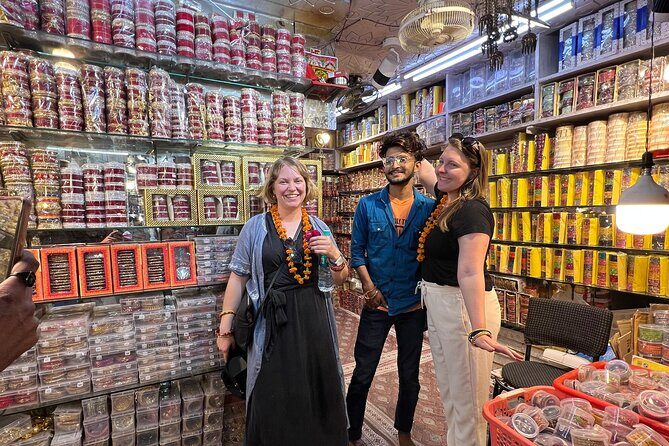
At $11.34 per person, this is priced like an efficient local experience rather than a big, high-margin sightseeing package. The value is strongest when you take the inclusions seriously: pickup and drop-off, multiple food stops, snacks, and bottled water are all part of the deal.
A few stops are marked with free entry (and the tour plan lists free admission tickets for each location). That matters because entry fees can quietly inflate costs when you add them up across multiple sights.
You’ll still want a little extra cash for optional shopping. The tour gives you market time, but it can’t turn purchases into “included” value.
Getting Picked Up and Using the Right Transport
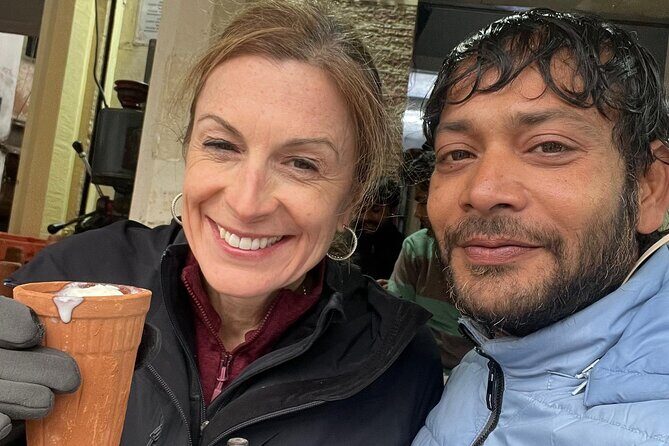
You’ll get pickup and drop-off from your hotel or a preferred location in Jaipur. That sounds basic, but it’s huge in a city where travel time can be unpredictable.
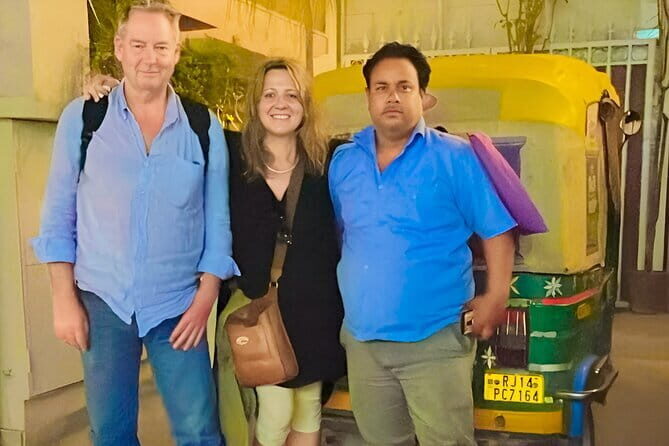
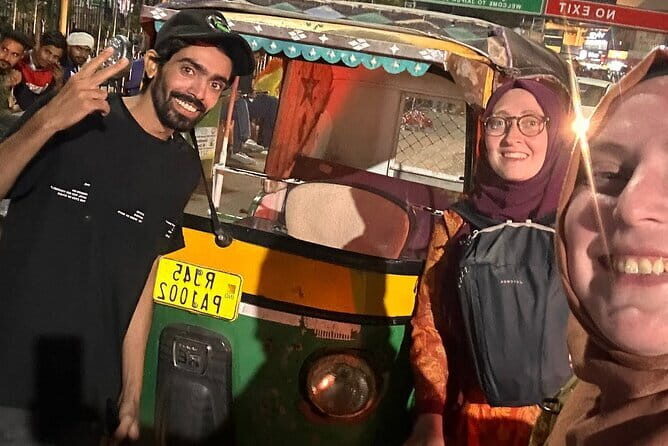
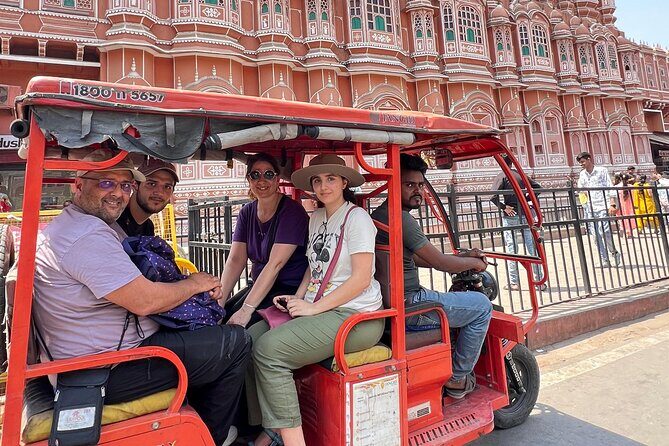
The tour also mentions private tuk-tuk or car based on your preference. Expect a mix of walking and short rides. Over the course of a few hours, this keeps you from spending the day stuck in transit, and it lets you reach different parts of the old city without wasting your energy.
If you’re choosing between tuk-tuk and car, think about your tolerance for driving and lane traffic: a car can feel calmer, while a tuk-tuk can feel more local. Either way, having a vehicle ready helps the schedule stay tight.
Raj Mandir Cinema: The Start Point With Storytelling Power
You begin at Raj Mandir Cinema, a landmark that opened in 1976 and is often called the Temple of Cinema. It’s a strong opener because it’s not only a building—it’s part of Jaipur’s modern identity layered onto older city life.
Even though the stop is short (about 15 minutes), it sets a tone: the tour isn’t only about temples and gates. It also shows you how Jaipur’s heritage exists in everyday public spaces, from entertainment to street markets.
If you’re visiting during hot months, arrive with a bottle of water (the tour includes bottled water, but you’ll still feel better rehydrated). Cinemas and indoor spaces can be cooler, and you’ll start with a brief indoor-friendly stop before walking.
Lassi at Lassiwala: Your First Real Taste of Jaipur

Next up is Lassiwala Kishan lal Govind Narain Agarwal for a famous sweet lassi. This is one of those stops that makes the rest of the tour click. You’re not just collecting photos—you’re training your taste buds for what Rajasthani comfort food feels like.
This is also a smart way to keep energy up at the start. Once you’re walking through markets and tea stalls, hunger can make everything feel stressful. A quick, local drink fixes that.
The stop is timed at around 15 minutes, so you can grab your lassi without feeling rushed. It’s also ticket-free in the plan, so there’s no surprise cost here.
You can also read our reviews of more food & drink experiences in Jaipur





Ajmeri Gate: First of the Southern Gate System
After lassi, you head into the old city at Ajmeri Gate, also known as Ajmeri Darwaza or Kishan Pole. The plan notes it as the first of the four southern gates, which is the kind of detail a good guide makes stick.
Why this matters: Jaipur’s “Pink City” shape isn’t random. Gates and walls define how people moved, shopped, and gathered. When you understand one gate, the others feel more connected.
This stop is about 10 minutes. It’s short on purpose, since the tour keeps momentum moving toward the squares and bazaars where the city feels alive.
Choti Chaupar: Squares, Flowers, and Quick Access
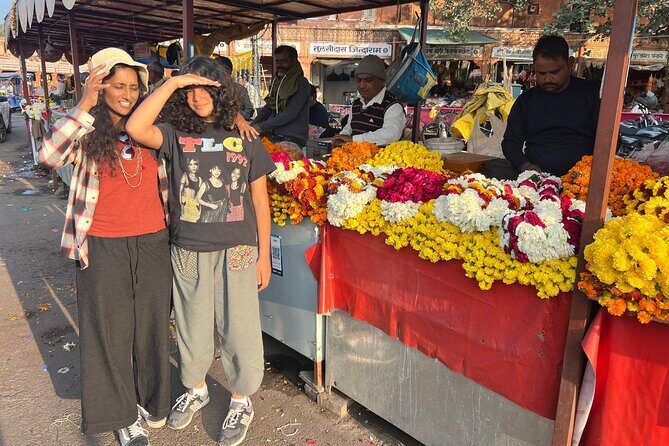
Choti Chaupar is a lively square tied to the city’s historical layout and market energy. The tour plan highlights it as a flower-market area and notes nearby access toward Nahargarh Fort (Tiger Fort).
Even if you’re not going up to the fort today, this stop helps you understand where important viewpoints and city edges connect. It’s a “map in real life” moment.
The duration is 15 minutes. That’s enough to orient and take in the atmosphere without turning into a long detour.
Tripolia Gate: City Palace-Linked Entrance

Then you move to Tripolia Gate, named for and located in Tripolia Bazaar. The plan also connects it to the Jaipur City Palace area, describing it as one of the two main entrances to the royal residence.
This is the kind of gate stop that can turn into just a photo—unless your guide adds the context. You’ll get that context here through the guided narrative of how royal spaces connected to public markets.
Expect about 30 minutes. That longer block helps if you want to slow down for a closer look or glance at what’s being sold in the bazaar zone.
Tadkeshwar Mahadev Temple: A Temple With a Local Naming Story
Next is Tadkeshwar Mahadev Temple, dedicated to Lord Shiva. The plan includes a local tradition: the temple is named after palm trees that once grew in the area.
That little naming detail is exactly why temple stops can be more interesting than you expect. You start noticing how stories explain the city’s geography.
Time here is around 15 minutes, and the focus feels like respectful sightseeing rather than a long religious experience. If you visit during prayer times, you may see people coming and going, so keep your shoulders covered and your tone low-key.
Sahu Tea Stall: Masala Tea and Snacks Pairing Time
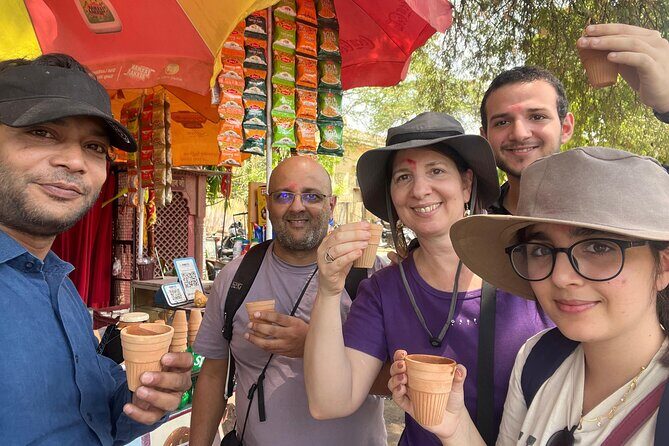
At Sahu tea, you get a warm break with flavorful masala tea, paired with local favorites like kachori and samosa. This is where the tour earns its food-walk label.
Why it works: tea isn’t just a drink. It’s part of the street rhythm—people stop, talk, and refuel. You’ll feel that break physically, which helps you keep going to the next stops without a mid-tour slump.
The stop is about 10 minutes. It’s short, so you’ll want to decide quickly what you’re ordering and then enjoy without overthinking. If you’re sensitive to spice, you can ask how spicy things are—nothing in the tour data says you can’t, and a guide can usually help translate.
Badi Chaupar: Old Town Markets and Craft Browsing
Badi Chaupar is described as lying at the heart of Jaipur’s old town, surrounded by markets for items like silver jewelry, handcrafted quilts, and traditional Rajasthani snacks. The plan also notes rose-hued sandstone buildings, which is the look you came for when you chose Jaipur.
This is one of the best stops for shopping time because it’s not a generic mall. You’re in the old city’s market flow, where you can browse what’s actually sold locally.
You’ll have around 15 minutes here. That’s enough to scan for what you like, not enough to negotiate a full wardrobe or redesign your entire luggage space. If shopping is your priority, move efficiently: pick your budget first, then look for quality consistency.
Wind View Cafe and Hawa Mahal Views: A Terrace Moment
Now comes one of the tour’s easiest wins: a stop at Wind View Cafe for a view of Hawa Mahal. You get time to relax on the terrace while enjoying international snacks and coffee.
That matters if you’re traveling with anyone who wants a breather. A terrace pause is also smart pacing after all the standing and walking.
This stop is around 15 minutes. It’s enough to take in the famous facade and reset, without letting the day fade. Bring your phone camera, but also take a few seconds without it—you’ll remember the scale and color more clearly that way.
Hawa Mahal Road: Markets Near the Iconic Facade
From there, the plan takes you into Hawa Mahal Road for a 30-minute stroll, plus nearby markets. This is your chance to see the area at street level and look for traditional Rajasthani goods and crafts.
This is a good place to shop if you want souvenirs that look locally rooted, not factory-printed. The tour plan points you toward what to look for, including crafts and market items near the palace road.
A simple tip: keep some small cash handy. Market purchases often move faster when you’re not scrambling for change.
Pandit Kulfi: Cool Down With Indian Ice Cream
Next is Pandit Kulfi, where you get Indian ice cream. A kulfi stop is perfect timing: it’s sweet, cold, and calming after tea, walking, and sun.
The tour plan gives about 15 minutes here, ticket-free. If you’re heat-sensitive, this is a good checkpoint. You’ll cool off while still staying with the group schedule.
If you’re choosing flavors, go with what sounds closest to classic Indian desserts rather than the weirdest-sounding experiment. Your goal is to taste Jaipur, not just sample everything.
Jal Mahal: The Lake-Side Palace Stop
After kulfi, you drive to Jal Mahal, a palace in the middle of Man Sagar Lake. Even without extra time for a boat ride, it’s a strong visual shift from old-city streets.
This stop is about 15 minutes, so don’t expect a long scenic linger. Think of it as a photo-and-reflection stop: you’re switching from dense markets to open water architecture.
If it’s sunny, bring sunglasses. Bright reflections around water can make photos tough, but they also make the setting feel crisp and real.
Albert Hall Museum: Indo-Saracenic Architecture Finish
The tour ends at Albert Hall Museum, one of Jaipur’s oldest and most impressive museums. The plan notes the Indo-Saracenic architecture and that the museum houses an extensive collection of artifacts.
This final stop is 30 minutes. That’s enough time to get the main idea, especially if you’re looking for a quick “big picture” museum finish rather than a full curatorial session.
If you’re the type who loves architecture, this is a great capstone. If museums aren’t your thing, you’ll still appreciate the building itself as a Jaipur landmark.
Shopping Time Without the Shopping Trap
This tour’s “shopping” component is not about dragging you through shops. It’s about building in market moments where you can browse what you actually care about: crafts, jewelry, quilts, and regional snacks.
Your best strategy: set a target item in your mind before each market stop. For example:
- Look for silver jewelry and small gifts at the old town market areas
- If you want textiles, focus on handcrafted quilts and ask about quality and size
- For easy souvenirs, prioritize items sold along the Hawa Mahal Road market zone
With only 3 to 4 hours total, you’ll get the most satisfaction if you keep shopping purposeful.
Who This Tour Suits Best (And Who Should Consider Another Option)
This is a great fit if you:
- Want a short, guided way to see Jaipur’s core sights without planning every turn
- Love street food and want it integrated into the route
- Prefer a light shopping window with local market feel
- Don’t want to spend the whole day in taxis
It might be less ideal if you:
- Hate eating lots of small bites in one sitting
- Want deep museum time (the schedule gives shorter, focused visits)
- Prefer slow, unstructured wandering with no set stops
The tour is also marked as working for most travelers, and it’s private to your group, which helps if you’re traveling as a couple or with friends who want shared pacing.
Final Thoughts: Should You Book This Jaipur Heritage & Food Walk?
Yes—if you want Jaipur’s highlights plus real flavors in half a day, this tour hits the sweet spot. The price-to-experience ratio is strong, and the route is built around practical stops you can’t easily stitch together without a guide.
Book it if you like a plan that still gives you freedom to adjust. And if you get a guide like Ali (a name that shows up with this tour style), expect a day that feels tailored, with lots of food and clear context for what you’re seeing.
Skip it only if you’re not interested in street food or you want a longer, slower sightseeing day with minimal eating.
FAQ
FAQ
How long is the Jaipur Heritage & Food Walk with Shopping?
The tour runs about 3 to 4 hours, depending on the pace and what you choose during the flexible route.
Is pickup and drop-off included?
Yes. You can get pickup from your hotel or a preferred location in Jaipur, and the tour includes drop-off as well.
What food and drinks are included?
The tour includes tea, coffee, snacks, and a variety of street foods, plus bottled water.
Do I need to pay entry fees for the stops?
In the tour plan, the listed stops are marked as free admission (ticket-free) for the time spent at each location.
What transport do you use during the tour?
The tour includes private tuk-tuk or car service based on your preference, with a mix of walking and short rides.
Is this a private tour or a shared group?
It’s a private tour/activity. Only your group participates.
What is the cancellation policy?
You can cancel for a full refund up to 24 hours before the experience starts. If you cancel less than 24 hours before, the amount is not refunded.