REVIEW · HERITAGE WALKING TOURS
Walking Tour Jaipur India
Book on Viator →Operated by pinkfoots travel · Bookable on Viator
That first glimpse of Jaipur’s old town hits fast. This guide-led walk strings together major landmarks with lively storytelling, so you leave with the why behind the sights, not just photos. I especially like the focus on getting your bearings quickly, plus the included comfort touches like tea with snacks and bottled water.
The only real catch is planning for monument entry fees. The base price is $20, but some sites may require extra payment if you want to go inside, and the tour depends on good weather.
In This Review
- Key things to know before you go
- Why this 2-hour old Jaipur walk is a smart move
- Meeting at Hawa Mahal Road and staying on pace
- Stop 1: Hawa Mahal, the Palace of Wind in 20 minutes
- Stop 2: City Palace Complex and the Rajput–Mughal blend
- Stop 3: Jantar Mantar and the 1734 astronomy story
- Stop 4: Isarlat (Sargasuli), 140 feet and bazaar connections
- Stop 5: The Crafts Bazaar time for textile shopping vibes
- Stop 6: Giriraj ji temple, a colorful pause outside central old town
- Price and logistics: what $20 really means for you
- Who this walk is best for
- How to make the most of the 2-hour experience
- Should you book this Jaipur walking tour?
- FAQ
- How long is the walking tour in Jaipur?
- How much does the Jaipur walking tour cost?
- Where does the tour start and end?
- Is a mobile ticket included?
- What is included in the tour price?
- Are monument entry tickets included?
- What stops are included on the walk?
- How many travelers are in a group?
- Is the tour affected by weather?
- What is the cancellation policy?
Key things to know before you go

- Six classic stops paced at about 20 minutes each, ideal for a short visit
- Mobile ticket makes check-in simpler
- Small group size (up to 20) keeps the walk from feeling chaotic
- Included tea with snacks plus bottled water, which helps on hot days
- Monument tickets not included (budget extra if you want interior access)
Why this 2-hour old Jaipur walk is a smart move
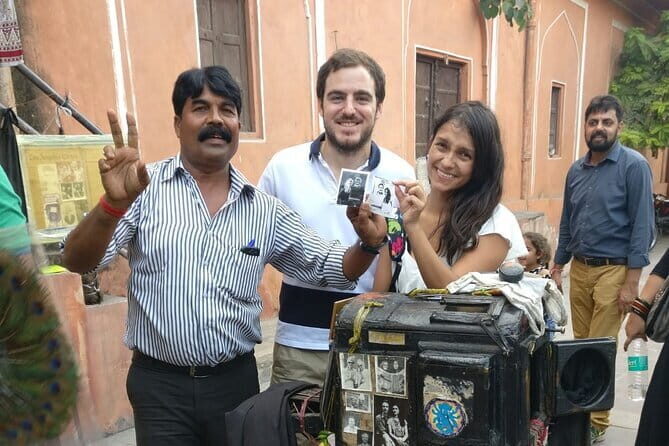
Jaipur can feel big at first. This tour cuts through that confusion by turning the old city into an easy, story-based route. You’re not just checking landmarks off a list—you’re learning what they mean and how they connect.
I also like that the tour leans on infotainment-style storytelling. You’ll get history and culture, but it’s delivered in a way that aims to keep the energy up, even if you don’t wake up craving museum facts. It’s designed as an introduction to the city: a fast way to understand what to do next.
A practical win: it’s only about 2 hours. That’s a comfortable length if you have jet lag, a tight itinerary, or you’re trying to balance Jaipur with other stops in Rajasthan.
You can also read our reviews of more walking tours in Jaipur



Meeting at Hawa Mahal Road and staying on pace
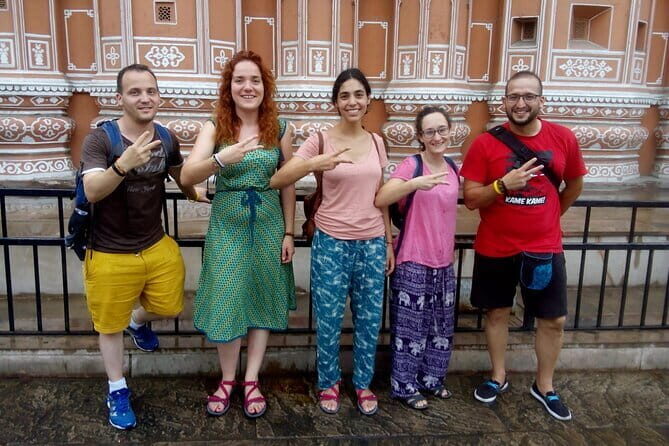
The walk starts at Hawa Mahal Road (Hawa Mahal Rd, Badi Choupad, J.D.A. Market, Pink City area, Jaipur). It ends back at the meeting point, so you’re not stuck figuring out logistics afterward.
The tour is also set up for convenience:
- It’s near public transportation, so getting there is easier than coordinating long rides.
- You’ll receive a confirmation at booking.
- The tour uses a mobile ticket, which typically means less fuss on the day.
Because the group max is 20 travelers, you can usually ask questions without shouting over everyone. It’s the sweet spot for a walking tour: small enough to feel personal, big enough that the pace stays smooth.
One note to plan around: the tour requires good weather. If conditions are bad, you’ll be offered a different date or a full refund. If your trip is tight, it’s still worth building flexibility into that day.
Stop 1: Hawa Mahal, the Palace of Wind in 20 minutes
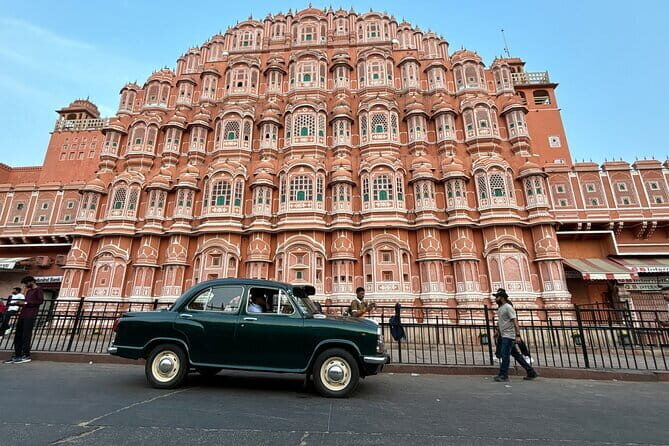
Your first stop is Hawa Mahal, the Palace of Wind. It’s built from red and pink sandstone and sits right on the edge of the City Palace area, extending toward the women’s chambers (the zenana).
Even with only about 20 minutes here, you can get a lot out of the stop if you go in with the right mindset. Focus on how the building connects to its surroundings. The fact that it’s tied to the women’s quarters makes the sight more than just a pretty façade—it’s part of a system of palace life.
If you’re the type who likes to understand symbolism, this is a good first anchor. It sets the tone for everything else: Jaipur’s architecture is never just decoration—it reflects social structure, power, and ingenuity.
Stop 2: City Palace Complex and the Rajput–Mughal blend
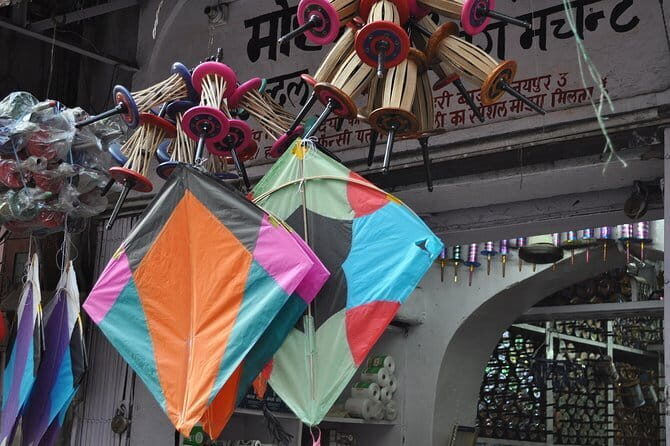
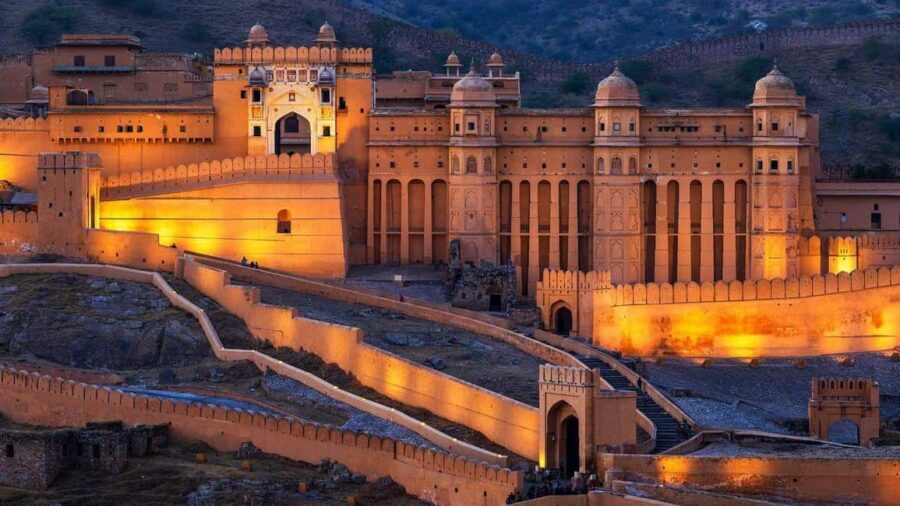
Next you’ll head to the City Palace of Jaipur complex. It was conceived and built by Maharaja Sawai Jai Singh II, the founder of Jaipur. The architecture is described as a fusion of Mughal and Rajput styles, and it’s still home to the last ruling royal family.
This stop is where you start seeing how Jaipur’s identity is shaped. The City Palace isn’t presented as a distant relic. Instead, it’s living space, tied to the ruling line and designed with that blend of cultural influence.
The watch-out here is simple: because monument entry tickets aren’t included, you’ll need to decide in advance whether you want interior access. If you do, plan extra time and budget for the ticket situation. If you don’t, you can still get a solid sense of the complex from the exterior viewpoint and storytelling.
Stop 3: Jantar Mantar and the 1734 astronomy story

Then comes Jantar Mantar, framed as proof of Rajput-era architectural and astronomical innovation. It was built by Sawai Jai Singh II and completed in 1734.
This is the kind of place that can either feel intimidating or oddly satisfying, depending on how it’s explained. The tour’s storytelling approach helps because it gives you a reason to look closely without turning the visit into a lecture. You’re not just standing in front of stone structures—you’re learning what they represent in terms of measurement and the era’s scientific thinking.
A practical tip: if you’re curious about the specific “how” and “why,” bring questions. This tour format is built for Q&A, and it helps you leave with a clearer takeaway than snapping photos and moving on.
As with other monumental stops, entry tickets are not included, so check your plans and budget before you arrive at this point.






Stop 4: Isarlat (Sargasuli), 140 feet and bazaar connections
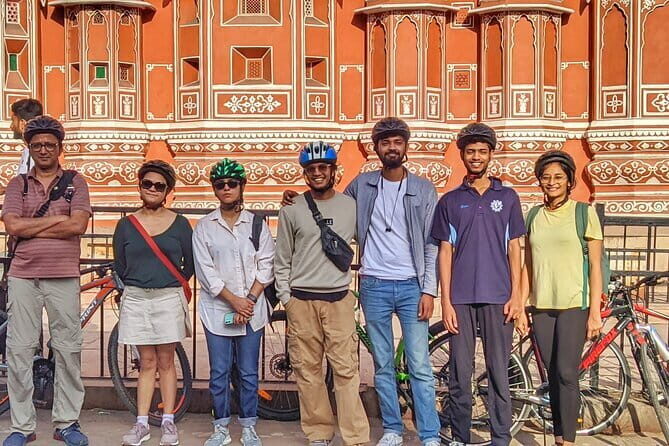
From there, you’ll visit Isarlat, also popularly known as Sargasuli, with a big clue in the name. Sargasuli literally means passage to heaven. It’s 140 ft high and sits at a key junction near Tripolia Bazaar and Gangori Bazaar, close to Chhoti Chaupar Chowk and Tripolia Gate.
This stop is one of those that’s easy to underestimate if you’re only thinking about famous monuments. But it helps you understand Jaipur’s layout: landmark buildings don’t exist in isolation. They connect to markets, foot traffic, and the movement of daily life.
The drawback to keep in mind: since it’s another ~20-minute stop, you won’t have long hours to linger at every angle. If you care about details, use the time to notice how the tower relates to the nearby bazaar streets and gates.
Stop 5: The Crafts Bazaar time for textile shopping vibes

Next up is Indian Crafts Bazaar Jaipur textile exports—in the description it’s linked with Sireh Deori Bazaar Jaipur. The idea here is that it’s a street-shopping spot, offering a straightforward view of what you’ll find for sale.
This is a useful change of pace after the big architecture stops. Instead of more stone and monuments, you get a chance to see everyday Jaipur in action through shopping culture. If you want a souvenir that feels connected to the city—especially something tied to textiles—this is the moment.
Because the pricing details indicate that some stops have entry included and monument tickets are generally not included, I’d treat shopping time as part of the experience rather than something you need to “solve” with extra paperwork. Your bigger cost decisions are really about whether you want paid monument access at certain sites.
Stop 6: Giriraj ji temple, a colorful pause outside central old town
Your final stop is Giriraj ji temple. It’s described as a bright, colorful temple located on the Agra-Jaipur Road, just east of Dausa.
This is a great closing choice because it shifts your focus from the “main postcard” sights to something that feels more local and devotional. With only about 20 minutes, you won’t be there long enough to turn it into a deep spiritual session—but you will get a quick visual reset and a different side of Jaipur.
If you’re the type who appreciates variety in a short day—palaces, instruments, towers, markets, then a colorful temple—this ending fits well.
Price and logistics: what $20 really means for you
The tour price is $20 and it runs for about 2 hours. That’s a reasonable budget for a walking tour when you factor in the essentials included: a guide, bottled water, and tea with snacks, plus the mobile ticket.
Here’s the part you need to plan for: monument entry tickets are not included. The info notes an extra cost (it mentions 10 USD extra if you want tickets) and also an entrance fee of ₹100 per person. Because entry requirements can vary depending on exactly what you choose to access, I’d treat this as a “maybe” budget line rather than a surprise.
What you’re getting for the $20:
- Guide service during the full walk
- Bottled water
- Tea with snacks
- A guided route through the key old-town stops
- Small group size up to 20 travelers
So, is it good value? For most people, yes—especially if this is your first time in Jaipur and you want an organized intro without spending a lot of time planning. The guide and storytelling component is what makes the low price feel meaningful.
Who this walk is best for
This tour fits especially well if:
- You want a short Jaipur introduction with minimal guesswork.
- You prefer walking with a plan, rather than wandering randomly for hours.
- You like seeing the big-name sights but also want the “what it is” explained in plain language.
If you’re deeply focused on visiting multiple interiors inside monuments, you may find the time at each stop a bit tight—because it’s built for pace (around 20 minutes each). In that case, make your ticket decisions strategically: pick the places you most want to enter.
How to make the most of the 2-hour experience
Since most stops are brief, the biggest way to improve your experience is by showing up ready.
I recommend you:
- Wear comfortable shoes. You’re walking the old city route and moving stop to stop.
- Bring sun protection and hydration. Bottled water is included, but Jaipur weather can still be intense.
- Decide early about tickets. Because monument entries aren’t part of the base price, your choices change how much time you’ll want at certain stops.
- Come with one or two questions. The tour’s “infotainment” style is designed to keep things fun, and questions help you get more out of each stop.
One more confidence boost: the tour operator behind this experience is associated with feedback that emphasizes comfort and safety, along with service that helps you feel settled in a new place. That matters on a walking tour, where small logistics (pace, meeting point clarity, whether you’re comfortable) can make or break the day.
Should you book this Jaipur walking tour?
I’d book it if you’re looking for an affordable, structured way to get oriented in Jaipur’s old town. The combination of six major stops, a live guide, and included tea with snacks makes it a strong “first afternoon” option, especially if you don’t want to plan your day block by block.
I’d hesitate only if you hate walking, can’t be flexible about weather, or you already know you want to spend long hours inside monuments. In those cases, you might prefer a slower plan or a ticket-focused schedule.
If you want a simple win—see the key sights, learn the basic connections, and finish with a clear sense of what to do next—this tour is an easy yes.
FAQ
How long is the walking tour in Jaipur?
The tour lasts about 2 hours.
How much does the Jaipur walking tour cost?
The price is $20.
Where does the tour start and end?
It starts at Hawa Mahal Road and ends back at the same meeting point.
Is a mobile ticket included?
Yes, the tour includes a mobile ticket.
What is included in the tour price?
Included items are the guide, bottled water, and tea with snacks.
Are monument entry tickets included?
No. Monument entry tickets are not included, and extra payment is required if you want tickets (the information also notes ₹100 per person).
What stops are included on the walk?
The walk includes Hawa Mahal, City Palace of Jaipur, Jantar Mantar, Isarlat, Indian Crafts Bazaar textile area, and Giriraj ji temple.
How many travelers are in a group?
The tour has a maximum of 20 travelers.
Is the tour affected by weather?
Yes. The experience requires good weather, and if it’s canceled due to poor weather you’ll be offered a different date or a full refund.
What is the cancellation policy?
Free cancellation is available. You can cancel up to 24 hours in advance for a full refund.