REVIEW · 4-DAY EXPERIENCES
Golden Triangle & Ranthambore: 4-Day Private Tour from Delhi
Book on Viator →Operated by Maria Tours · Bookable on Viator
Two UNESCO stops and a shot at tigers. This private 4-day route ties together Taj Mahal sunrise with Ranthambore safaris, plus the key sights of Delhi and Jaipur with a single air-conditioned car. One thing to plan for up front: monument entrance fees and lunch costs are not included, so you’ll want some extra cash or card ready.
I also like how the trip leans on strong local guidance. In Agra, names like Nasir, Arham, Sadiq, Maahi, and Amaan pop up in reviews for clear explanations and great photo suggestions, while Jaipur guides like Brajesh, Vigay, and others are praised for pacing and history that actually sticks. With a professional driver such as Balveer Singh often mentioned for smooth, safe timing, the whole thing feels built for people who want the highlights without the stress.
In This Review
- Key things I’d circle before you book
- Why this Golden Triangle + Ranthambore combo works in four days
- Delhi morning: peace, spice, mosques, and Mughal showpieces
- Gurudwara Bangla Sahib (free, and calm)
- Jama Masjid (big courtyard energy)
- Khari Baoli spice market lanes (and a tuk-tuk ride)
- Passing major imperial-and-government landmarks
- Humayun’s Tomb and the first UNESCO moment
- Where Day 1 can feel long
- Agra at sunrise: Taj Mahal, Agra Fort, and Baby Taj in real context
- Taj Mahal at the front of the day
- Agra Fort: a UNESCO fort with emperor-level history
- Itmad-ud-Daula (Baby Taj): the quieter masterpiece
- Transfer to Ranthambore
- Ranthambore safari: how the chance-at-tigers part really works
- Expect a guide, not a guarantee
- Safari timing can shift
- After the safari: Jaipur on the same day
- Jaipur arrival and Day 4 sights: fort power and the skyline of pink sandstone
- Day 3: check-in and a buffer to land well
- Day 4: Jaigarh first, then the big architecture set
- Lunch and the drive back to Delhi
- What you’re really paying for: $215 value breakdown without guesswork
- Room setup and a key cost detail
- Vehicle size depends on your group
- Guides and drivers: why this tour gets such high marks
- When the itinerary order shifts by starting day
- Should you book this tour?
Key things I’d circle before you book

- Taj Mahal early access-style timing with a sunrise visit that makes a big difference in crowds and photos
- Old Delhi morning hits: Gurudwara Bangla Sahib, Jama Masjid, Khari Baoli spice lanes, plus a tuk-tuk ride
- Agra’s three-musts: Taj Mahal, Agra Fort, and Itmad-ud-Daula (Baby Taj)
- Ranthambore safari with an English-speaking naturalist and a real chance at tiger sightings
- Jaipur power stops: Jaigarh Fort, City Palace, Jantar Mantar, and a quick Hawa Mahal photo window
- Private door-to-door transport from Delhi NCR with guides in Delhi, Agra, and Jaipur
Why this Golden Triangle + Ranthambore combo works in four days
The Golden Triangle (Delhi–Agra–Jaipur) is already packed. Add Ranthambore and you get a trip that’s intense in the best way: you’re not just ticking landmarks, you’re moving between very different worlds—Mughal monuments, a fort-city, and then wildlife.
This is also built around private transport and city-specific guides. That matters because you spend less time figuring out what’s where and more time understanding what you’re seeing. One review detail that keeps showing up is pacing: guides were praised for not rushing and for meeting you at a comfortable speed, even with kids in the group. If you prefer a steady plan over wandering, this format fits.
Value-wise, the price (listed at $215 per person) looks reasonable for what’s included: pick-up and drop-off around Delhi NCR, a private air-conditioned car, live guides in Delhi/Agra/Jaipur, and hotels with breakfast across the trip. The one catch is the thing you’d expect on any India monument-heavy route: you still pay for monument entrances separately, and lunch is not included.
You can also read our reviews of more private tours in Jaipur



Delhi morning: peace, spice, mosques, and Mughal showpieces
Day 1 is your Delhi “warm-up” before the long drive toward Agra. The route starts with a flexible pick-up from anywhere in Delhi NCR (Delhi, Noida, Gurugram, Faridabad, or Ghaziabad) between 7:00 AM and 11:00 AM. That flexibility helps if you’re arriving late the night before or you’re traveling in from another part of India.
Gurudwara Bangla Sahib (free, and calm)
You begin at Gurudwara Bangla Sahib, which is known for its golden dome and a serene water tank. It’s a great first stop because it’s quieter than the rest of Old Delhi, and it gives you a reset before the crowds, bargaining, and traffic later in the day.
Jama Masjid (big courtyard energy)
Next is Jama Masjid, built in the 17th century by Shah Jahan. The highlight here is the scale: huge courtyard space, strong Mughal geometry, and a sense of how central mosques were to public life in Delhi.
Khari Baoli spice market lanes (and a tuk-tuk ride)
After that, you hop onto a tuk-tuk for Old Delhi movement. Then you walk Khari Baoli, described as Asia’s largest wholesale spice market. You’ll see stacked turmeric, cardamom, red chilies, and other spices where the smells hit fast. Even if you don’t plan to buy anything, it’s a vivid way to understand how India’s daily food culture starts.
You can also read our reviews of more tours and experiences in Jaipur






Passing major imperial-and-government landmarks
You also pass by:
- Red Fort (built by Shah Jahan, 1639–1648)
- The Tomb of the Unknown Soldier (names of 13,300 Indian army servicemen marked for WWI)
- Parliament House and the President House (Rashtrapati Bhavan)
This part is less about ticketed entry and more about context. A good guide can connect how Delhi’s power centers have shifted over time.
Humayun’s Tomb and the first UNESCO moment
You finish Delhi with Humayun’s Tomb, a UNESCO World Heritage Site and often called the first garden-tomb of India. It’s a perfect lead-in to Agra later, because it helps you see how Mughal architecture evolved. Humayun’s Tomb gives you that “architecture language” you’ll recognize again at the Taj.
Where Day 1 can feel long
Day 1 ends with a drive toward Agra and an overnight stay there. The drive time is listed as around 3 hours, but Delhi traffic can stretch things. The upside is simple: you’re not still traveling late on Day 1, so you can do Agra sightseeing early the next morning.
Agra at sunrise: Taj Mahal, Agra Fort, and Baby Taj in real context
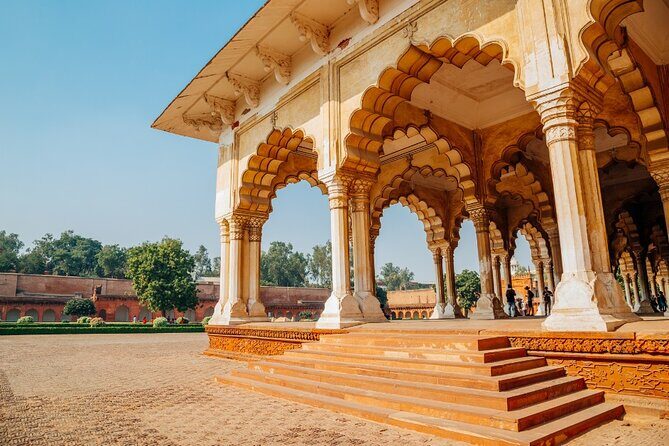
Day 2 is when Agra gets its spotlight. The big headline is a sunrise Taj Mahal visit, including a guided look inside the UNESCO site. If you care about photos, timing matters: sunrise light makes the marble look different, and the crowds are usually more manageable.
Taj Mahal at the front of the day
This isn’t just a walk-by. You get time with a guide inside the Taj Mahal, plus context around who built it and why it still hits so hard. Reviews often mention tour guides like Nasir and Arham for making the story clear and not overly complicated, with extra attention to photo angles.
Practical tip: wear something that lets you move comfortably. Early hours can still mean strong sun later, and you’ll be on your feet for parts of the visit.
Agra Fort: a UNESCO fort with emperor-level history
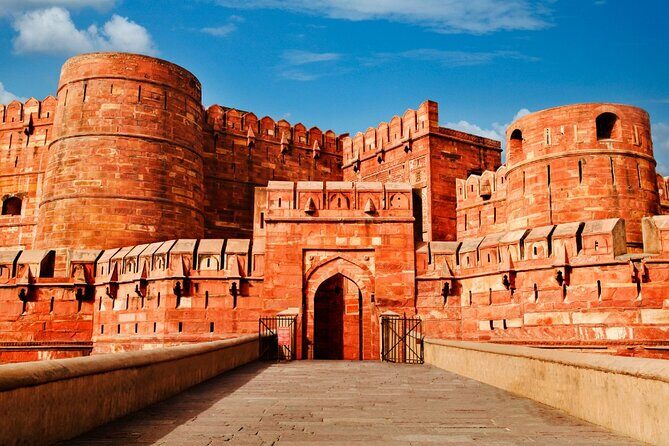
Next comes Agra Fort, another UNESCO World Heritage site, formerly part of the Mughal emperor’s residence. Where the Taj is about beauty and symbolism, Agra Fort shows power and defense. You’ll spend around an hour here, which is enough to understand the layout without feeling trapped in a museum-style marathon.
Itmad-ud-Daula (Baby Taj): the quieter masterpiece
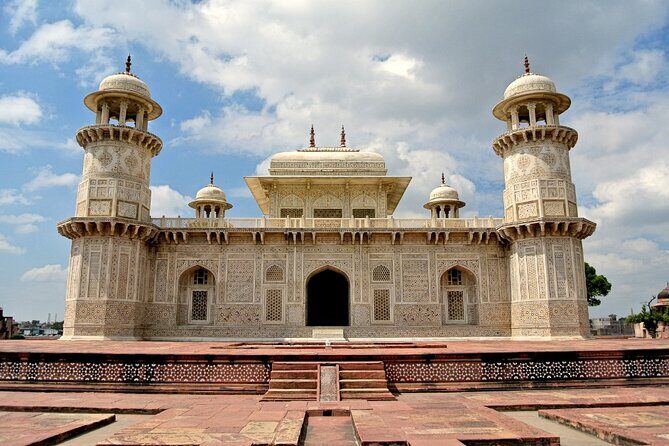
Finally, there’s Itmad-ud-Daula, often called the Baby Taj. This is where many people go “wait, I like this better.” The marble work and refined detail feel less overwhelming than the Taj, and it gives you a more intimate feel for Mughal design.
Reviews specifically call out how guides like Sadiq focused on both the Taj and Baby Taj, and how the sunrise visit can be a once-in-a-lifetime memory.
Transfer to Ranthambore
After Agra, you travel onward to Ranthambore. You check in at your chosen hotel and rest for the evening.
If you’re the type who gets restless in cars, that’s the moment to accept the rhythm: you’re trading late luxury for a morning safari later.
Ranthambore safari: how the chance-at-tigers part really works

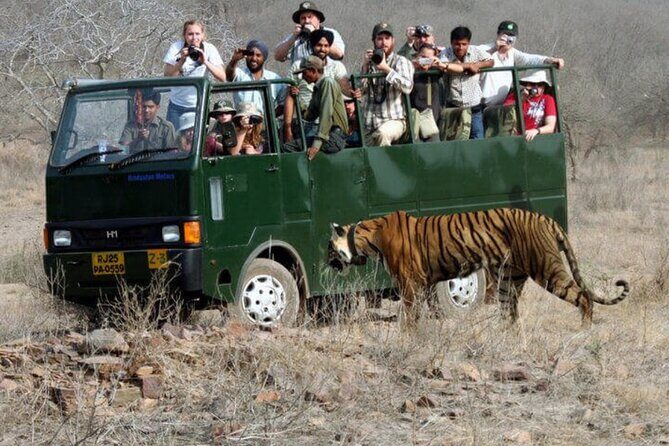
Day 3 starts with the main event: a jungle safari in Ranthambore National Park. The tour lists a shared canter (or shared jeep/canter format) with time in the park of about 2 to 3 hours, guided by a naturalist. The naturalist is listed as English-speaking.
Expect a guide, not a guarantee
This is wildlife. You should go in knowing this: tigers can be spotted, but it’s not something you can schedule. The tour information is clear that tigers may appear in any zone, and each zone offers a chance. That means you’re not picking the “right area” with certainty. You’re going where the day’s safari system places you.
What I’d like you to do is treat the safari as a full experience even if you don’t see a tiger. Ranthambore isn’t only about a photo moment. You’re there for the forest feel, birdlife, and the sense that you’re watching nature do its thing.
Safari timing can shift
One useful real-world note from reviews: sometimes safari timing changes depending on ticket availability. In at least one case, the company arranged an alternative safari plan so guests didn’t have to drive at night. Translation: the operator tries to solve the logistics problem, but the day-of timing can vary.
After the safari: Jaipur on the same day
Once safari time is done, the itinerary moves you toward Jaipur, where you check in and enjoy the rest of the day at leisure. That leisure time is valuable. After 3 days of early starts and driving, you don’t want every minute booked tight.
Jaipur arrival and Day 4 sights: fort power and the skyline of pink sandstone
Your Jaipur portion runs across Day 3 (arrival + downtime) and Day 4 (the full sightseeing list).
Day 3: check-in and a buffer to land well
On Day 3, you arrive in Jaipur and check in. The itinerary keeps the rest flexible so you can settle. This is the day to do practical things: recharge, buy water for the next day, and pick one evening activity near your hotel that doesn’t require a ticket marathon.
Day 4: Jaigarh first, then the big architecture set
Day 4 starts with Jaigarh Fort. It’s a hilltop fortress built in 1726 by Maharaja Jai Singh II to protect Amber Fort below. The highlight mentioned is the world’s largest wheeled cannon (Jai Ban cannon). This stop gives you views and context. Forts in Jaipur aren’t just walls; they’re built for control over the approaches.
Then you visit Jal Mahal, the palace in the middle of Man Sagar Lake. It’s short and scenic, and it helps break up the heavier fort-and-palace day.
Next is City Palace of Jaipur, established in 1721 and still tied to royal heritage through the museum it houses. Then you move to Jantar Mantar, an UNESCO World Heritage Site and an astronomical observatory built in 1734. If you like science that still looks like art, this is a great moment to slow down.
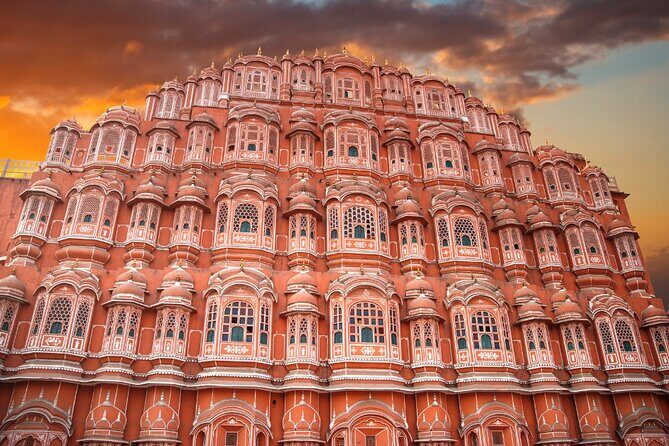
Finally comes Hawa Mahal (Palace of Wind). The stop is brief—about 15 minutes—so it’s mainly a photo and viewpoint moment. This is a good thing to know. If you want a longer walk inside, you may need to plan extra time outside the standard tour.
Lunch and the drive back to Delhi
There’s a lunch break on Day 4 described as a multicuisine restaurant stop, but lunch is listed as not included. After lunch, you begin the return drive to Delhi. The itinerary lists about 5 hours for the drive, but traffic can always change the feel of it.
What you’re really paying for: $215 value breakdown without guesswork

For a private 4-day plan like this, you’re paying for three things:
- Time saved (door-to-door transport and coordinated stops)
- Human guidance (separate guides in Delhi, Agra, Jaipur, plus an English-speaking naturalist in Ranthambore)
- Accommodation with breakfast across the route
The tour includes:
- Pickup and drop-off anywhere in Delhi NCR
- A private air-conditioned car
- Private live guides in Delhi, Agra, and Jaipur
- Naturalist guide in Ranthambore (English-speaking)
- Accommodation with breakfast
- Shared canter safari
- Parking, tolls, fuel, and taxes
- Mobile ticket
And you should budget extra for:
- Monument entrance fees (not included)
- Tips and gratuities
- Lunch (not included)
Room setup and a key cost detail
Rooms are generally twin-sharing. If there are 3 people, the default is triple-sharing. If 3 guests prefer to have two rooms, there’s an additional charge listed as USD 199 for the second room. That’s worth sorting early if you’re traveling as a trio.
Vehicle size depends on your group
The car style depends on group size:
- 1–2 people: four-seater sedan
- 3–5 people: six-seater wagon
- 6–12 people: twelve-seater van
- Larger groups: bus sized to adults
That matters because comfort affects fatigue. If you’re traveling with a lot of bags, a sedan can feel tighter than you expect. A wagon or van usually feels better.
Guides and drivers: why this tour gets such high marks
The strongest pattern across the reviews is simple: the human side. People praised guides for:
- Not rushing
- Explaining the Mughal story in a way that makes sense fast
- Helping with photo spots
- Being patient with children
- Staying helpful when someone gets tired from heat or travel
Names that come up repeatedly include:
- Nasir for Taj Mahal and Agra history
- Arham for pacing and information in Agra
- Sadiq for sunrise focus and Baby Taj value
- Maahi (female guide) for clear English and comfort
- Amaan for strong photo guidance in Agra
- Vimal for Delhi highlight routing and photo help
- Brajesh, Vigay, and other Jaipur guides for fort and city storytelling
- Junaid for Agra support
- Balveer Singh as a driver praised for professionalism, safety, and even water during rides
Even if you get a different guide than the ones above, the reviews suggest the operator takes matching and training seriously. In a trip this time-tight, that’s not a luxury. It’s the difference between memorizing facts and actually enjoying the day.
When the itinerary order shifts by starting day
The standard flow is:
- Day 1: Delhi sightseeing → overnight in Agra
- Day 2: Taj Mahal sunrise + Agra Fort/Baby Taj → arrive Ranthambore (overnight)
- Day 3: safari → arrive Jaipur (overnight)
- Day 4: Jaipur sights → drop off back in Delhi
There are schedule variations if you start on certain days. For example:
- If the tour starts on a Thursday, the order shifts so you may have Jaipur on Day 1 and Agra on Day 4.
- If it starts on a Monday during July, August, or September, Ranthambore safari can be on Day 4 morning with the return drive afterward.
So, when you book, confirm the exact overnight city list for your start date. That’s the one detail that affects what you pack and how you pace yourself.
Should you book this tour?
If you want a private, structured 4-day plan that hits Delhi, Agra, Jaipur, and Ranthambore without the hassle of arranging transport on your own, I think this is a strong choice. The best reasons to book are the combination of sunrise Taj Mahal timing, real safari time, and the fact that you’re not stuck doing monument chores alone.
Hold off if you dislike early starts, long car days, or you’re the type who wants unplanned meals and slow wandering. This tour is designed to move. Also remember that entrance fees and lunch are extra, and rooms are typically twin-sharing, so check how that works for your group before you commit.
If you’re traveling with kids, or you just want guides who can keep things clear and manageable, you’ll likely appreciate this setup. It’s the kind of trip where the big moments happen, but you still get a guide to explain why they matter.