REVIEW · GOLDEN TRIANGLE TOURS
3-Days Golden Triangle’s Private Tour
Book on Viator →Operated by India Tours Cabs · Bookable on Viator
A 3-day loop through India’s icons sounds packed for a reason. You get a private itinerary that strings together Delhi, Agra, and Jaipur without the grind of buses or trains. It also includes pickup and drop-off in Delhi, so you spend less time figuring things out and more time looking up at big monuments.
What I like most: the plan is built around private transportation and you can customize it for your needs. I also loved how the pacing gives you real time at major stops (like Taj Mahal and Amber Palace) instead of just a quick photo stop. The one drawback to plan around is that lots of the most famous sites have admission tickets listed as not included, so you’ll want to budget extra for entry fees and any on-site costs.
In This Review
- Quick hits: what makes this tour work
- How the private Golden Triangle loop works in 3 days
- Delhi day: Red Fort to Akshardham, then Qutub Minar and Agra
- Red Fort: a UNESCO stop with a strong sense of place
- Jama Masjid: one of the largest mosques in India
- Gurudwara Bangla Sahib: calm and a story tied to community care
- Swaminarayan Akshardham and the Humayun’s Tomb / Qutub Minar area choice
- India Gate before you head to Agra
- Agra day 2: Taj Mahal, Agra Fort, and Itmad-ud-Daula
- Agra Fort: where architecture blends Indian and Islamic styles
- Itmad-ud-Daula: the Baby Taj for marble lovers
- Fatehpur Sikri en route to Jaipur
- Drive to Jaipur and let the evening work for you
- Jaipur day 3: Amber Palace, Hawa Mahal, City Palace, and market time
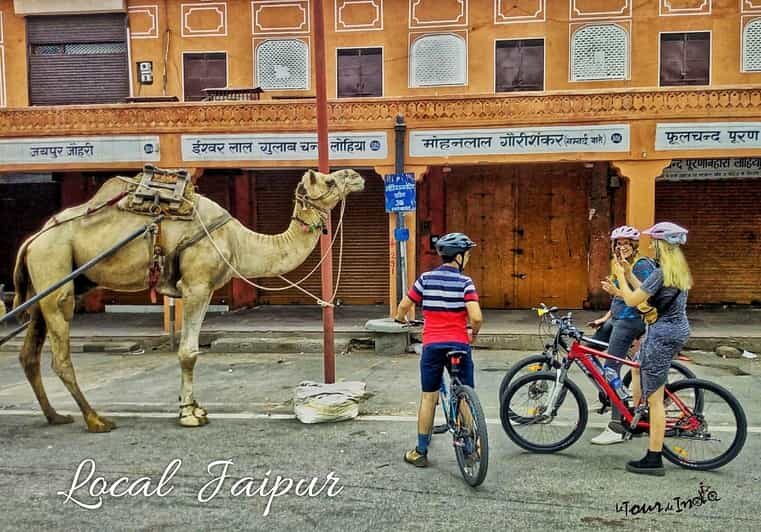
- Hawa Mahal: the “Palace of Winds” for quick style and street views
- Govindam Retreat: a taste of Rajasthan during your monument day
- City Palace: where the royal collection lives
- Jal Mahal and then free time for Jaipur markets
- Return drive to Delhi
- Price and value: is $342.64 per person fair for this 3-day plan?
- Guides, customization, and the kind of group this fits
- Should you book this private Golden Triangle tour?
- FAQ
- FAQ
- How long is the Golden Triangle tour?
- Where does the tour pickup happen?
- What time can I choose for pickup in Delhi?
- Is private transportation included?
- Are admission tickets included for the main sights?
- Does the tour include meals and accommodation?
- Will I go from Delhi to Agra during Day 1?
- Is Fatehpur Sikri included?
- Are there markets included in Jaipur?
- What happens if the weather is bad?
Quick hits: what makes this tour work
- Private transportation across Delhi, Agra, and Jaipur, with bottled water included.
- Pickup window in Delhi: choose a time between 9:00 AM and 11:00 AM.
- Guide support you can talk to, with one named guide frequently praised: Suhani.
- Major UNESCO stops in sequence, including Red Fort, Taj Mahal, Agra Fort, and Qutub Minar.
- Flex time in Jaipur markets like Johari Bazaar and Bapu Bazaar after the monuments.
How the private Golden Triangle loop works in 3 days
This is the classic Golden Triangle route, but the key difference is the “private” part. You’re not sharing a group bus. You’re moving in private car/vehicle, and the itinerary is designed so you can cover a lot of ground in a short window.
The other practical win: you get a Delhi pickup and a Delhi drop-off. That matters because the Golden Triangle usually means awkward transfers. Here, the driver handles the logistics, and you concentrate on the sightseeing.
The structure is straightforward: Day 1 is Delhi sights with a late push to Agra, Day 2 is Agra highlights plus a Fatehpur Sikri stop before Jaipur, and Day 3 is Jaipur’s big monuments plus a return drive to Delhi. If you’re time-crunched, this kind of straight-line plan can save you real energy.
You can also read our reviews of more private tours in Jaipur



Delhi day: Red Fort to Akshardham, then Qutub Minar and Agra
Day 1 starts with pickup from anywhere in Delhi, Noida, Gurugram, Ghaziabad, or Faridabad. You can choose a pickup time between 9:00 AM and 11:00 AM, which gives you a chance to match the rest of your schedule.
From there, the day is a tour of Delhi’s major landmarks across different eras and religions. You begin with Red Fort, then move through Jama Masjid, Gurudwara Bangla Sahib, Swaminarayan Akshardham, and Humayun’s Tomb/Qutub Minar area sights, before finishing with India Gate and continuing on to Agra.
A quick heads-up: several stops list admission as not included, so you’ll pay on-site. The tour still gives you the time blocks so you can plan your budget and your energy.
Red Fort: a UNESCO stop with a strong sense of place
You’ll get a dedicated visit to Red Fort, a UNESCO World Heritage Site. The focus here is architecture and atmosphere: explore the grounds, look at the built details, and learn the historical significance of what you’re seeing.
The time allocated is about 30 minutes for Red Fort. That’s not a long lecture time, but it’s enough to walk, take in the scale, and orient yourself for the rest of the day.
If you care about details, go slower than you think you need. This fort is one of those places where your first look gives you the big picture, and your second look catches the carvings and layout.
Jama Masjid: one of the largest mosques in India
Next up is Jama Masjid, described as one of the largest mosques in India. You’ll spend around 30 minutes there, with time to marvel at the design and also climb a minaret for panoramic views.
That “views” piece is a practical reason to include Jama Masjid on a schedule like this. You’re not just looking at a building; you get a higher perspective that helps you understand the city’s layout.
Again, admission isn’t included for this stop, so treat it as an extra line item in your trip math.
Gurudwara Bangla Sahib: calm and a story tied to community care
At Gurudwara Bangla Sahib, the tone shifts. The description includes a story tied to the Sikh Gurus visiting during epidemics and using water from the tank to help people recover. It’s a reminder that places of worship aren’t only architecture—they’re also built around community history.
You’ll have about 30 minutes at this stop. It’s a good pacing break after forts and mosques, and it gives you a different kind of “listen and observe” experience.






Swaminarayan Akshardham and the Humayun’s Tomb / Qutub Minar area choice
You’ll visit Swaminarayan Akshardham (listed as built in 2005, but described with a feel of older architecture). This stop is about 30 minutes.
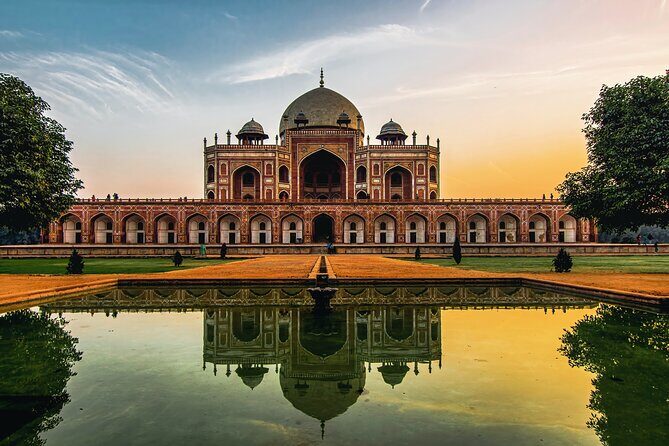
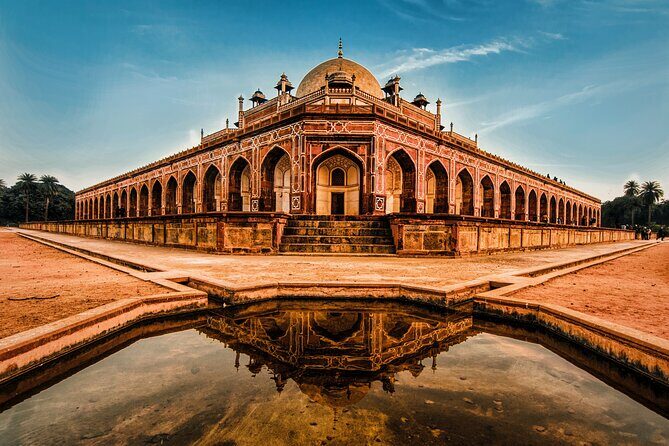
Then the schedule moves into Humayun’s Tomb and Qutub Minar, both UNESCO-linked. The descriptions are a little messy about swapping between options, so I’d treat this portion as: you’ll be in the general area for major Mughal-era and UNESCO sights, but confirm in your final details how the time is split between Humayun’s Tomb and Qutub Minar.
Either way, this is where Delhi’s “skyline monuments” show up. Qutub Minar is described as the tallest brick minaret and dates back to 1192 with bricks. Humayun’s Tomb is a major Mughal-era mausoleum and a strong follow-up visually.
India Gate before you head to Agra
You’ll finish Day 1 with India Gate, a war memorial. You get a relaxed 30-minute walk around it and time to soak up the atmosphere before you transition to travel.
Then the driver moves you from Delhi to Agra, with about 3 hours of drive time, and drops you at your hotel in Agra. That means Day 1 is a full day: sightseeing plus a significant transfer.
Agra day 2: Taj Mahal, Agra Fort, and Itmad-ud-Daula
Day 2 begins with Taj Mahal. The plan gives you about 3 hours, which is exactly what you need if you don’t want to feel rushed. You’ll look at the white marble and learn the story behind its creation.
Admission is not included here, so you’ll want to bring extra money for entry fees. But the time allocation makes the cost feel more justified—you’ll actually see more than a quick pass.
Agra Fort: where architecture blends Indian and Islamic styles
Next is Agra Fort, another UNESCO World Heritage Site. You’ll have about 1 hour at this stop, and the emphasis is on architecture and the way it blends Indian and Islamic art.
The value of Agra Fort in a tight itinerary is simple: it gives context. Seeing it right after Taj Mahal helps you understand that this region isn’t just one monument—it’s a layered story of empire and power.
Itmad-ud-Daula: the Baby Taj for marble lovers
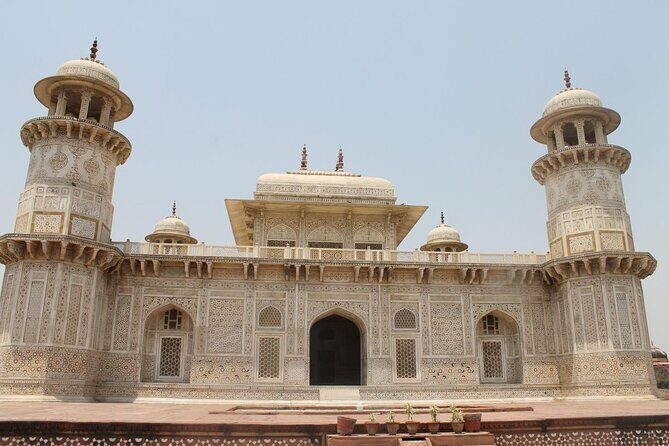
Then comes Itmad-ud-Daula, often called the Baby Taj. You’ll spend about 1 hour here, focused on intricate marble work and the gardens around the mausoleum.
This stop is a smart choice when time is short. It’s not as famous as Taj Mahal, but it rewards careful looking. If you like craftsmanship, you’ll feel like you got a quiet bonus inside a busy schedule.
Fatehpur Sikri en route to Jaipur
After Agra, the plan includes a stop at Fatehpur Sikri (about 1 hour), described as a fortified ancient city and the short-lived Mughal capital between 1572 and 1585.
This is a “high payoff in limited time” kind of stop. You’re getting a sense of the grandeur of a former capital without dedicating an entire day to it.
Admission isn’t included here, so again: budget for entry fees.
Drive to Jaipur and let the evening work for you
From Fatehpur Sikri, you drive to Jaipur and get dropped at your hotel. The drive time listed is about 3 hours.
Day 2 doesn’t schedule major Jaipur monuments. That’s useful, because it gives you space to handle jet-lag-of-the-road feelings: freshen up, eat, and plan what you want to see most on Day 3.
Jaipur day 3: Amber Palace, Hawa Mahal, City Palace, and market time
Day 3 is the full-on “Pink City” monument day. You start with Amber Palace (Amber Fort).
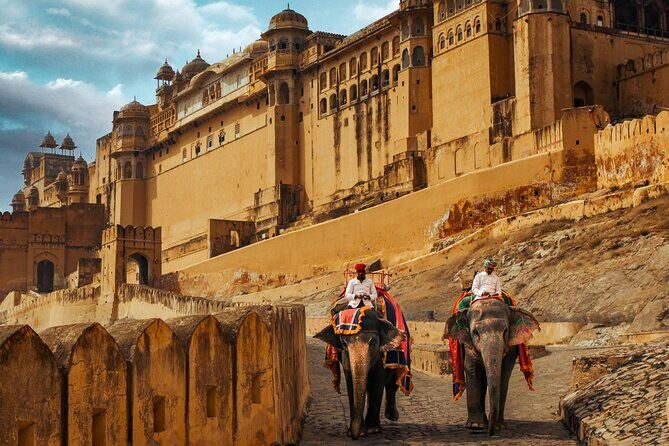
The time block is about 3 hours, and the plan mentions an elephant ride up to the fort entrance. Admission is not included, so if the ride has its own fee at the site, you’ll pay that separately. I’d also keep in mind that animal rides are one of those topics where people have different views—if it doesn’t fit your style, you can decide before you arrive.
Amber Fort is a hilltop fortress, and the views are part of why it’s so famous. You’ll also get time to explore the grandeur and architecture. If you only do one major fort in Jaipur, this is the one.
Hawa Mahal: the “Palace of Winds” for quick style and street views
Next stop is Hawa Mahal, known as the Palace of Wind. It’s allocated about 30 minutes.
This is the kind of monument that works even with limited time because the facade does the storytelling. The description highlights the ornate lattice work and the many windows designed for royal women to observe the street below.
If you’re going at a time with strong light, you can get better photos by stepping back and looking at the facade’s full shape before you move closer to details.
Govindam Retreat: a taste of Rajasthan during your monument day
The itinerary includes Govindam Retreat with about 1 hour. It’s described as a concept capturing the spirit of Rajasthan and offering a casual dining experience.
Admission isn’t relevant here, so it’s basically your food-and-rest stop—use it to recharge. Since meals are not blanket-included unless you choose a with-hotel option, having this structured dining slot can reduce decision fatigue.
City Palace: where the royal collection lives
You’ll also visit the City Palace of Jaipur, with about 1 hour. This is the residence of the Jaipur royal family in the plan’s description, and you’ll see architecture, courtyards, museums, and an art-and-artifacts collection.
This stop gives you something different from forts and tombs. It’s inside-the-city heritage: objects, design, and the way power expressed itself through spaces.
Jal Mahal and then free time for Jaipur markets
The next named stop is Jal Mahal, located in the middle of Man Sagar Lake, described as Rajput-style architecture and from the 17th century. The itinerary lists about 2 hours for this part, and then it includes free time to visit markets like Johari Bazaar and Bapu Bazaar.
Here’s the practical trick: markets are best when you go in with a plan. Decide what you’re hunting for (jewelry, textiles, souvenirs), set a budget, and keep the rest as strolling time. That way you don’t lose the day to comparisons.
Return drive to Delhi
After Jaipur sightseeing, you’ll be driven back to Delhi and dropped off at your preferred location. The time listed is about 4 hours.
That means Day 3 ends later than you might expect if you’re used to short city tours. If your flight or meeting is close by, build in a buffer.
Price and value: is $342.64 per person fair for this 3-day plan?
At $342.64 per person, this is not the cheapest way to do the Golden Triangle. But it’s also not priced like you’re paying for a random taxi. What you’re buying is the structure and the comfort of a private, end-to-end plan.
Here’s what makes the value easier to see:
- Private transportation across three cities, plus parking fees and fuel surcharge.
- Bottled water included.
- Gratuities included (that’s often a hidden cost when you hire drivers separately).
- Pickup and drop-off in Delhi, which usually costs time and money when you DIY.
The big cost you should expect on top: admission tickets. The itinerary lists many sites with admission ticket not included, including major ones like Taj Mahal, Agra Fort, Itmad-ud-Daula, and other UNESCO-linked stops.
Also note what’s not included: any personal request. Meals and accommodation are extra unless you pick an option that includes hotel-meal arrangements. That’s a real budgeting point. If you want to stay comfortable without thinking, choose the with-hotel meal setup; if you prefer to control your food budget, plan meals separately.
One more detail I appreciate: the tour mentions free cancellation and the experience requires good weather. If plans shift due to weather, you’ll be offered a different date or a refund. That reduces the risk of paying up front for an outdoor-heavy itinerary.
Guides, customization, and the kind of group this fits
The tour is private, so only your group participates. That’s ideal if you’re traveling with family, friends, or colleagues and you don’t want to coordinate with strangers.
Customization is specifically mentioned. That’s useful when your priorities don’t match a fixed route—maybe you care more about forts than shopping, or you want different timing. With a private driver and a private schedule, small adjustments are much easier.
The guide quality seems to be a standout. One praised guide by name is Suhani, described as delightful, extremely knowledgeable, and easy to talk to. That matters because UNESCO stops can feel like alphabet soup if you don’t have someone to translate what you’re seeing into meaning.
Should you book this private Golden Triangle tour?
I’d book it if you want a tight 3-day Golden Triangle with private comfort, you’re okay budgeting for site admissions, and you’d rather spend your time looking at monuments than managing logistics. The pickup window in Delhi is convenient, and the itinerary’s structure keeps travel and sightseeing in a workable rhythm.
I would pause before booking if your schedule is fragile on Day 3’s return to Delhi, because the plan includes a long 4-hour drive back after Jaipur. Also, if you’re trying to keep costs ultra-low, the “admission not included” pattern means you’ll be paying several entry fees on-site.
If you want the simplest version of the Golden Triangle—private transport, curated stops, and time at the big hitters like Taj Mahal and Amber Palace—this one makes a lot of sense.
FAQ
FAQ
How long is the Golden Triangle tour?
It runs for about 3 days.
Where does the tour pickup happen?
Pickup is available from anywhere in Delhi, Noida, Gurugram, Ghaziabad, and Faridabad.
What time can I choose for pickup in Delhi?
You can choose any pickup time between 9:00 AM and 11:00 AM.
Is private transportation included?
Yes. The tour includes private transportation and bottled water.
Are admission tickets included for the main sights?
Most admission tickets are not included. Some parts are marked free, but sites like Taj Mahal and other major stops list admission ticket not included.
Does the tour include meals and accommodation?
Meals and accommodation are extra. If you choose the With Hotel option, the tour states it provides meals.
Will I go from Delhi to Agra during Day 1?
Yes. After the Delhi sightseeing stops, the driver will drive from Delhi to Agra, with about 3 hours travel time, and drop you at your hotel in Agra.
Is Fatehpur Sikri included?
Yes. There is a stop at Fatehpur Sikri (about 1 hour) on the way from Agra toward Jaipur.
Are there markets included in Jaipur?
Yes. After the Jal Mahal portion, you’ll have free time to visit markets such as Johari Bazaar and Bapu Bazaar.
What happens if the weather is bad?
The experience requires good weather. If it’s canceled due to poor weather, you’ll be offered a different date or a full refund.