REVIEW · HERITAGE WALKING TOURS
Jaipur walking tour.
Book on Viator →Operated by V Care Tours · Bookable on Viator
A lane in Jaipur has a rhythm all its own. This walk is about the stories that live in the alleys, temples, and markets, not just a checklist of monuments. What I like most is the people-first approach, with faith and community talked through real daily life, and the focus on watching crafts in action around Johri Bazaar. You’ll also get practical, human tips for temple visits, from what to wear to how to handle shoe-off moments. One possible drawback: this is an early-morning start and the route includes some temple time, plus you should expect uneven, sometimes messy old-city lanes.
This is also a private experience, so the pace feels like it’s set for your group, not for a big bus crowd. If your idea of Jaipur is all marble views and palace photos, you may find the backstreets less instantly “Instagram.” But if you want the city’s pulse—priests, shopkeepers, chai sellers, and craftsmen—this is a very strong match.
In This Review
- Once Upon a Time in Jaipur: What You Actually Experience
- Morning Logistics and Meeting at Sanganeri Gate
- Johri Bazaar and Old Trading Streets: Watch Craft Work Up Close
- Temples, Shoe Rules, and the Faith Talk That Makes Sense
- Back Lanes of the Pink City: Stories That Move Through Real Life
- Snacks, Street Smells, and What’s Included (and Not)
- Photos, Personal Space, and Respect in Tight Lanes
- Price and Value: Why This Costs About $34.04
- Who Should Book This Jaipur Walk (and Who Might Skip It)
- Practical Tips to Make Your Walk Smoother
- Should You Book Once Upon a Time in Jaipur?
- FAQ
- Where do we meet, and does the tour return there?
- What time does the walking tour start?
- How long is the Jaipur walking tour?
- What’s included, and what’s not included?
- What should I wear for the temple parts?
- What happens if the weather is bad?
Once Upon a Time in Jaipur: What You Actually Experience
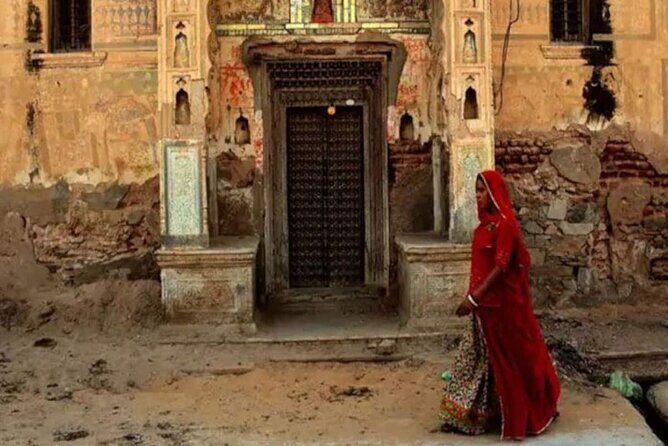
This tour has a simple promise: you won’t just read history on a wall. You’ll hear stories about faith, caste, and community that help you understand why Jaipur’s old city still runs on traditions you can see and hear. The guide’s job isn’t to recite facts like a script. It’s to connect what you’re walking past to why it matters in real life today.
The best part is the tone. It’s talk, laugh, listen, look around. You’ll move through back lanes of the Pink City, past older homes and temple spaces, and into market energy where daily life keeps going. That includes Johri Bazaar, a jewelry-making area where the city’s craft culture is hard to miss.
The walk also encourages you to pay attention to smaller signals: how people greet, how religious spaces work, and how traditions echo into modern habits. Even the little cultural details—like learning the head-nod meaning in this part of India—become part of how you understand what you’re seeing.
Morning Logistics and Meeting at Sanganeri Gate
The tour starts at 7:30 am at Sanganeri Gate in Jaipur’s Pink City area. It ends back at the same meeting point, so you don’t have to figure out your own return route through busy lanes.
Duration is about 2 hours 30 minutes. That’s long enough to get beyond the first street corner, but short enough that it stays realistic for most people. It’s also a morning walk, which means you’ll hit the city before peak heat and before the day fully turns into full throttle traffic and crowds.
It’s a private tour/activity. Only your group participates, so you can ask questions without feeling rushed. You’ll also get a mobile ticket, which keeps things simple if your travel days are already packed.
Two practical notes matter here:
- The tour visits temple areas, so plan for a clothing and footwear change (more on that soon).
- The route is walkable, but it’s still old-city walking. Think uneven ground, close walls, and tight lanes where your focus should stay on your feet and your surroundings.
You can also read our reviews of more walking tours in Jaipur



Johri Bazaar and Old Trading Streets: Watch Craft Work Up Close
Johri Bazaar is the anchor stop, and it’s a big reason to book this walk even if you’ve seen Jaipur before. This is the jewelry-making district feel—shops, tools, and the steady rhythm of artisans at work. Instead of just looking at finished products behind glass, you get a chance to understand the process and the people behind it.
In this kind of market, you’ll learn faster if you slow down and watch. Here, watching means noticing how the trade is organized: who you’re talking to, what they do, and how the work connects to faith and community life. Jewelry isn’t just commerce in Jaipur. It’s a craft that ties into ceremonies, gift-giving, and identity.
A bonus from the way the walk is framed: it’s not only about the craft. It also connects trade with the social fabric—who has certain roles, how community ties form, and why some traditions persist in everyday habits. That’s how a market visit turns from shopping into understanding.
Temples, Shoe Rules, and the Faith Talk That Makes Sense
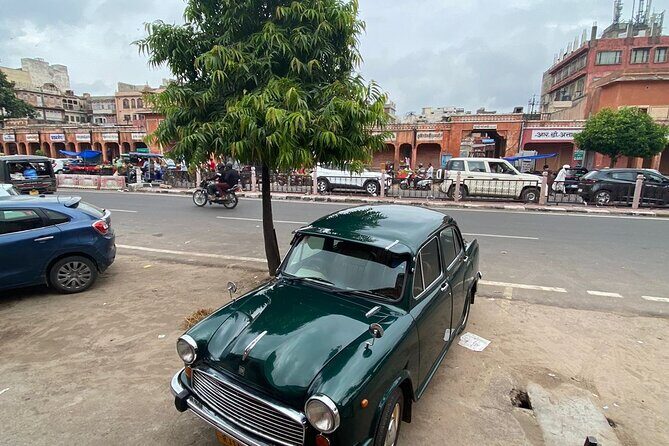
Temple time is part of the experience, and it’s also where you’ll feel the tour’s practical planning. You’ll want to wear long pants and long sleeves since you’ll be visiting temple areas. You’ll also need shoes that are easy to remove, because you’ll likely have moments where you switch from street footing to temple rules.
This isn’t just a clothing checklist. The temple stops are part of the story approach—faith isn’t treated like a museum exhibit. You’ll hear how beliefs and community life intersect, and you’ll also get reminders about how to behave in religious spaces.
One cultural detail you should be ready for: when guides talk about local communication, it can include the famous head nod system. In Jaipur, that kind of gesture can mean different things depending on context, and the walk gives you a way to pay attention instead of guessing.
Also keep in mind: some temple visits can mean you’re standing around a bit, listening closely. Bring the mindset that this is a conversation walking tour, not a rapid-photo sprint.
Back Lanes of the Pink City: Stories That Move Through Real Life
The core of the walk is the shift from monument mode to neighborhood mode. You’ll walk through back lanes where you’re more likely to see daily routines than grand facades. Think older homes, narrow streets, and market corners where people are working, selling, and moving.
You’ll get stories about how the city operates beyond sightseeing: how caste and community shape roles, why certain traditions stay strong, and how religion fits into the rhythms of daily life. That’s the difference between a heritage walk that stops at buildings and one that uses those buildings to explain a living system.
The guide’s style matters here. In the way this tour is described, the guide named Deepak is warm, funny, and easy to talk with. The aim is to make you comfortable enough to ask questions and not feel like you’re being rushed through someone else’s agenda.
You’ll also encounter moments of surprise, like those jumping monkeys that some parts of Jaipur are known for. When that happens, you’ll be glad you’re walking slowly enough to notice what’s going on around you, not just staring at the next street corner.
Snacks, Street Smells, and What’s Included (and Not)
Snacks are included, and that’s a smart inclusion for a morning walk. It helps you keep energy up without needing to stop for a full meal in the middle of the route.
Food is part of the tour flavor, too. You’ll pass areas where street food energy is real—incense in the air, spice smells, vendor calls. If you’re sensitive to strong odors, give yourself a little buffer by carrying water and staying hydrated.
What’s not included is as important as what is. There’s no breakfast included. That means if you’re the kind of person who needs food before you move, plan a small breakfast before the 7:30 am start. Also, private transportation isn’t included, so count on reaching the meeting point on your own via nearby public transportation.






Photos, Personal Space, and Respect in Tight Lanes
One of the best practical reminders is simple: ask permission before taking a picture of a person. In tight old-city lanes, personal space is closer than you might expect, and it’s easy to snap a photo without thinking.
If you want good photos, this rule actually helps. When you ask, people are more likely to respond, and you’re less likely to cause friction. It also keeps the walk respectful, which matters more here than getting the perfect shot.
Also remember that the tour goes through older streets. You might encounter dirty corners where garbage gathers. That’s not the point of the walk, but it’s part of being in a living neighborhood rather than a controlled tourist area.
Price and Value: Why This Costs About $34.04
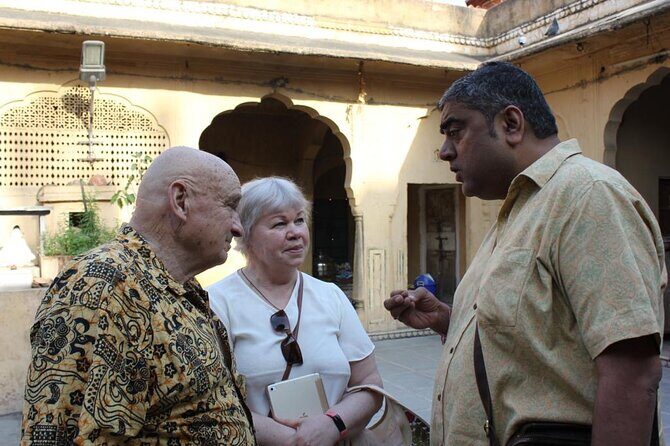
At $34.04 per person for about 2.5 hours, the value comes from more than the walking. You’re paying for a guide who ties the city together with stories, plus for the snack inclusion.
For a walking tour in Jaipur, this price sits in the realm of affordable guided experiences, but the value is in what’s covered: temple time, local neighborhood viewing, market craft focus around Johri Bazaar, and guided explanations that turn a street walk into understanding.
If you compare this to doing Jaipur by taxi plus monument tickets, the savings can be real. You’re also getting a different kind of day. This walk doesn’t try to outdo palaces. It gives you the social and religious context that helps the palaces make more sense later, even if you haven’t decided to visit them yet.
Who Should Book This Jaipur Walk (and Who Might Skip It)
This tour fits you best if you want Jaipur’s living side:
- You like conversations and cultural explanations, not just photos.
- You’re curious about how belief and community show up in everyday routines.
- You enjoy markets where you can watch work happening, not only browse finished items.
- You’d rather start the day early and feel the city before it fully crowds up.
You might consider skipping if your ideal tour is mostly indoor comfort, lots of wide-open views, or minimal walking. Also, if temple visits are a deal-breaker for you, the clothing and shoe-off expectations could feel like too much.
Practical Tips to Make Your Walk Smoother
Plan for the real old-city conditions and you’ll enjoy it more:
- Wear long sleeves and long pants for temple areas.
- Bring a water bottle, since you’ll be on your feet for hours.
- Choose shoes that are easy to remove.
- Carry money only if you want to buy things. The tour itself includes snacks but doesn’t list shopping stops with fixed items.
- Take photos only after permission, especially of people.
The experience also depends on good weather. If conditions are poor and the tour can’t run, you should expect a different date or a full refund.
Should You Book Once Upon a Time in Jaipur?
Book it if you want a Jaipur morning that feels human, not mechanical. The mix of Johri Bazaar craft focus, temple storytelling, and neighborhood back lanes is a smart way to understand why the Pink City behaves the way it does.
Skip it only if you’re mainly chasing landmark architecture and want fewer rules for dress or behavior. Otherwise, this is the kind of tour that can change how you see Jaipur, even after you move on to bigger sights.
FAQ
Where do we meet, and does the tour return there?
The tour meets at Sanganeri Gate, Pink City, Jaipur, Rajasthan 302003, India, and it ends back at the same meeting point.
What time does the walking tour start?
It starts at 7:30 am.
How long is the Jaipur walking tour?
The duration is about 2 hours 30 minutes.
What’s included, and what’s not included?
Snacks are included. Private transportation and breakfast are not included.
What should I wear for the temple parts?
You should wear long pants and long sleeves. You should also wear easy-to-remove shoes for temple visits.
What happens if the weather is bad?
This experience requires good weather. If it’s canceled due to poor weather, you’ll be offered a different date or a full refund.