REVIEW · CITY TOURS
Jaipur Walking Tour- Explore Old Heritage City With Private Guide
Book on Viator →Operated by Abby & Scout Tours · Bookable on Viator
Jaipur turns a corner and keeps going. This private walking tour takes you past temples, palace views, and the streets where people still shop for daily essentials. I love that you get a private, English-speaking local guide, so the pacing and focus can match your interests. I also like that the route blends heritage sights with handcraft markets, not just big monuments.
You’ll get hands-on texture in the Old City: flower and spice areas, places known for silver items, and shopping streets tied to trades like sweets and dairy ingredients. The guide also helps you connect the dots between what you see on the street and what artisans and traders do all day, with stops for tea/coffee and well-timed snacks.
One real consideration: hotel pickup and drop-off cost extra. If you’re staying farther from the Old City, factor in how you’ll reach the start.
In This Review
- Key highlights at a glance
- Entering the Old City on your own pace
- Kalki Temple: a quiet start before the market streets
- Hawa Mahal views: palace drama without committing to the ticket
- Purohit Ji Ka Katla and wedding fabrics you can actually see
- Gopal Ji Ka Rasta: Mawa and why sweets taste the way they do
- Swargasuli Tower: the Victory Tower and a great street-level photo moment
- Choti Chopad: silver, temples, and the spice-and-flower rhythm
- Bhagat Mishthan Bhandar: tasting Jaipur sweets without a full lunch
- Maniharo Ka Rasta and Tripolia Bazaar edges: a street with old charm
- Thatheron ka Rasta: utensil makers and the sound of craft
- Sai Baba Mandir and Golcha Cinema: faith and local life in one sweep
- Food, tea, and what to budget on the spot
- Price and value: what you get for $20.17
- Timing rules that actually affect your day
- What to expect physically
- Should you book this Jaipur walking tour?
- FAQ
- How long is the Jaipur walking tour?
- What’s included in the tour price?
- Is hotel pickup and drop-off included?
- Are entrance tickets included for the stops?
- What time does the tour run?
- Is street food and lunch included?
- Do I need to be very fit?
- What happens if it’s raining or the weather is poor?
- Where does the tour start?
Key highlights at a glance
- Private guide with English support so you’re not stuck with a generic script
- Old City markets + artisan streets for bangles, silver items, spices, flowers, and more
- Architectural stops with optional interiors (Hawa Mahal and Swargasuli Tower)
- Tea or coffee plus bottled water included to keep you comfortable
- Sweets stop at Bhagat Mishthan Bhandar with time to taste local favorites
- Golcha Cinema option to step into an old-school local landmark (ticket may apply)
Entering the Old City on your own pace

This is a straightforward, practical walking tour in Jaipur’s Old City area, built around trades, temples, and landmarks you can actually see from street level. It runs about 3 to 4 hours, with the provider listing best start times in the late morning through late afternoon window. That matters because many market shops open around 10:30 or 11:00, so starting too early can mean closed doors and a lot of empty storefronts.
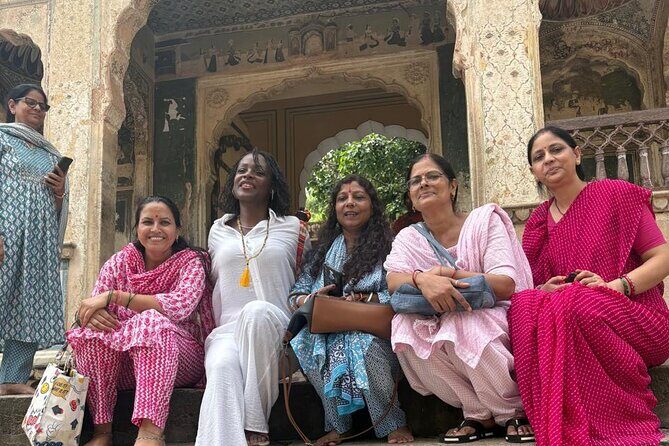
The tour is private, meaning it’s only your group. That’s a big deal in a market-heavy route: you can slow down when you want photos, ask questions when something catches your eye, and skip the parts that don’t interest you. The guide (often mentioned by name as Gaurav in the tour’s feedback) also brings energy and context that makes the street scene easier to understand.
Price is $20.17 per person for the tour itself, which is low for a guide-led, private Old City route. What keeps it good value is that the tour price includes GST, plus bottled water and tea or coffee. What’s not included is where your budget will start to move, mainly street food charges, lunch (if you want it), and tips.
You can also read our reviews of more walking tours in Jaipur
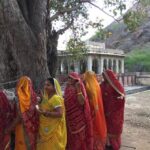

Kalki Temple: a quiet start before the market streets
Your walk begins at Kalki Temple. It’s a small but meaningful opener: you get a chance to start the day on a calmer note before the route shifts into shopping lanes and craft areas. There’s no entry ticket cost here, and the stop is short (listed around 10 minutes), so it doesn’t eat into your market time.
If you’re the type who likes to understand a place before shopping it, this stop helps you set the tone. You’ll also find it useful for getting your bearings in the Old City before the streets get denser.
Hawa Mahal views: palace drama without committing to the ticket
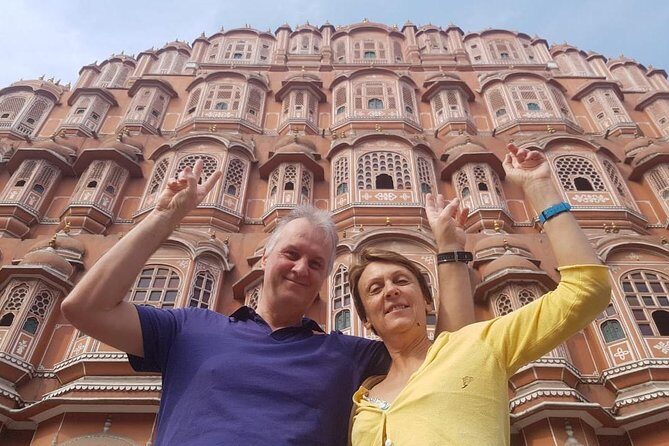
Next you head to Hawa Mahal, the Palace of Wind. You’ll get a free roadside view here, and that’s a smart way to do it if you want the icon without stretching the day. The palace is famous for how it looks from outside, and the tour gives you time to take in the architecture.
Here’s the practical part: if you want to go inside, the guide can help with tickets and help you skip the line to buy them. Also, the tour notes that entry closes about an hour before sunset, so late afternoons can limit options.
Even if you don’t enter, this stop works well because the surrounding streets are where the Old City character shows up—people moving between errands, shops, and family life.
Purohit Ji Ka Katla and wedding fabrics you can actually see
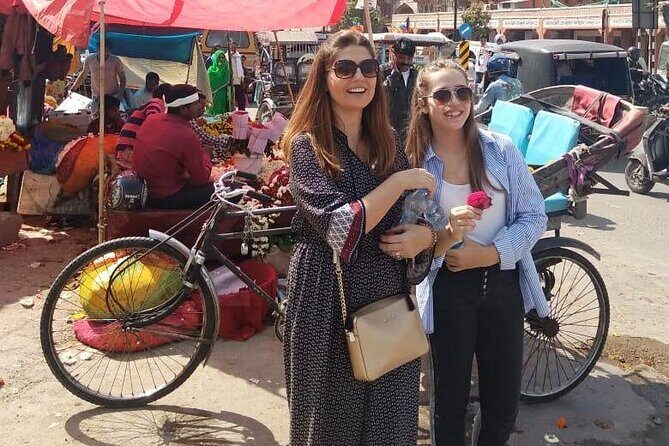
One of the more distinctive segments is around Jai Mata Di Paridhan, described as Purohit Ji Ka Katla—a market known for wedding fabrics, dresses, and sherwanis. The tour frames it as a hidden-feeling shopping zone, but not one that’s hard to use if you go with a local guide.
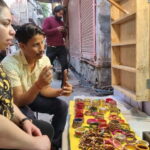
This is the kind of place where browsing is more than buying. You’ll see how textiles are presented, how garments get chosen for ceremonies, and how merchants explain differences in styles. The tour’s description also highlights interaction with traders and artisans, which is what makes this stop worth your time. It’s not just walking past stalls—it’s stopping long enough to understand what you’re looking at.
Tip for you: if textiles are your interest, ask the guide what these materials are typically used for. Even basic context makes the shopping streets feel less random.
Gopal Ji Ka Rasta: Mawa and why sweets taste the way they do
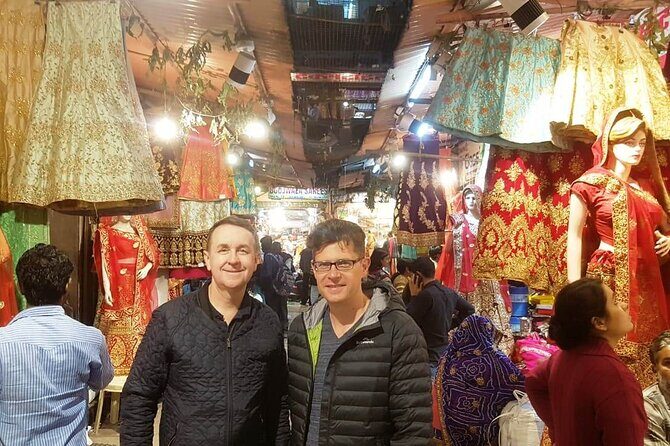
At Gopal Ji Ka Rasta, you get an ingredient story, not just a street-name story. This market is associated with manufacturing Mawa—also known as khoya or khoa—a dairy product made from evaporated milk solids. And yes, it’s a key ingredient in a lot of northern Indian sweets.
Even if you don’t plan to buy anything, this is a fun stop because it changes how you think about the sweets you might eat later. You’ll connect the food you taste with where it comes from.
The stop is listed around 15 minutes, so it’s enough time to observe and ask questions without turning the day into a long detour.
You can also read our reviews of more guided tours in Jaipur





Swargasuli Tower: the Victory Tower and a great street-level photo moment
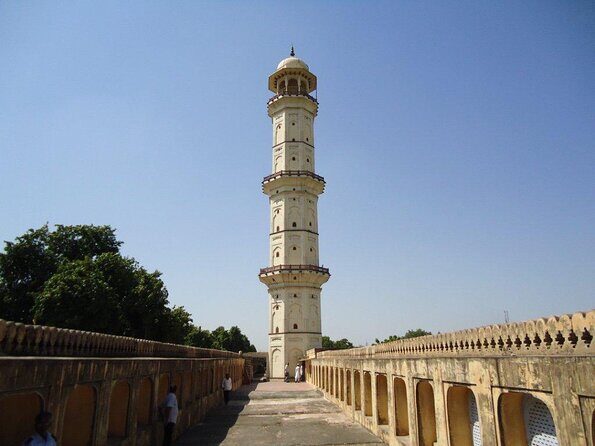
Then you reach Swargasuli Tower, an 18th-century minaret also known as the Victory Tower. The tour gives you a scenic roadside vantage point, plus time to capture photos. The description notes it as a 7 or 8-story structure, which helps you picture it when you’re standing near it.
As with Hawa Mahal, you get the view for free. If you want to go inside, tickets are an extra step, and your timing matters because entry closes about an hour before sunset.
This is also one of the better “pause and look up” stops on the walk. In a route full of stalls, it’s a helpful break for your eyes—and your feet.
Choti Chopad: silver, temples, and the spice-and-flower rhythm
Choti Chopad is where the tour leans into sensory shopping areas. You’ll have time to see:
- a very ancient temple nearby
- shops dealing in silver-made items
- areas connected to the flower market
- spice market streets
This stop is listed around 30 minutes, which is generous compared with many other points. It’s also a good place to slow down. If you’re into crafts, jewelry-making, and the idea of how everyday items are produced and sold, you’ll get a lot out of this segment.
If you plan to shop (even small items), this is the area where you’ll likely spend the most time comparing styles and asking questions about materials.
Bhagat Mishthan Bhandar: tasting Jaipur sweets without a full lunch
Next comes Bhagat Mishthan Bhandar, described as a famed sweets shop where you can taste some of the best locally made sweets. The tour notes a stop duration around 15 minutes.
Is it included? The tour price covers the guide, water, tea or coffee, and GST. The description says street food and lunch are not included, and it does not explicitly state that sweets purchase is included. In practice, think of this stop as your chance to taste—then decide what you want to buy once you’re there.
If you love food stops that don’t derail the day, this works well. You get a quick taste and return to the walk with fresh energy.
Maniharo Ka Rasta and Tripolia Bazaar edges: a street with old charm
At the end of Tripolia Bazaar lies Maniharo ka Raasta, a street tied to jewelers and a market vibe described as having regal past charm. The tour gives you time around 20 minutes, which is enough to browse and soak up details.
This is also one of the spots where you’ll feel the Old City as a working place, not a museum. Merchants are selling to people who know what they want, and the guide can help you interpret the differences between similar items.
If you’re photographing, keep an eye on the light here. Narrow streets can give you interesting shadows, and the guide’s timing help can matter.
Thatheron ka Rasta: utensil makers and the sound of craft
One of the most atmospheric segments is Thatheron ka rasta (also described as Thatheron ki Gali). Here, the tour emphasizes the clang and clink of metal—the sound of people still making and selling items with traditional tools and techniques.
The stop is listed around 15 minutes. That’s usually the right amount of time for this kind of craft street: long enough to watch the process and talk to shopkeepers, short enough not to break the flow.
If you like crafts, this is the segment that tends to feel most real. It’s less about a single landmark and more about a trade happening in front of you.
Sai Baba Mandir and Golcha Cinema: faith and local life in one sweep
You’ll also stop at Sai Baba Mandir, listed as the oldest Sai Baba temple in Jaipur City. This is a 15-minute pause that adds variety to the walk, balancing commerce with spiritual space.
Finally, the tour ends at Golcha Cinema, noted as one of the oldest cinema halls in Jaipur. You’ll get around 15 minutes at the end of the route, and the guide may be happy to take you inside. If you go in, entry ticket may apply, and the tour notes the guide can help you buy it.
This ending feels smart. After hours of walking among shops and craft streets, cinema is a different kind of local landmark—less about shopping decisions and more about seeing how culture shows up in everyday entertainment.
Food, tea, and what to budget on the spot
The tour includes bottled water and tea or coffee during the walk. That’s genuinely helpful in Jaipur’s heat and sun exposure, and it reduces the number of stops you have to plan on your own.
The tour also references sampling street foods and a local drink called lassi, but it clearly states street food charges are not included. So you should budget for small purchases if you want to try multiple things.
My advice: treat food costs as flexible. Decide on lassi and one or two snacks, then stop. If you try to eat everything you see, you can end up feeling too full to enjoy the later market segments.
Price and value: what you get for $20.17
At $20.17 per person, this is positioned as a budget-friendly private tour. For that price, you get:
- an English-speaking private local guide
- bottled water and tea or coffee
- GST included
- free access for the included sights except where noted for optional interior visits
What you pay extra for:
- pickup/drop-off from your hotel (additional charge)
- street food and lunch
- tips for the guide
- optional entry tickets if you want to go inside Hawa Mahal and Swargasuli Tower
- any separate entry fee for Golcha Cinema if you choose to enter
- travel insurance and medical costs (you’re advised to carry your own travel insurance)
For many people, the best value here is that the guide makes the Old City easier to navigate. Even when you’re not buying anything, the context helps you see what matters and what’s just noise.
Timing rules that actually affect your day
Two timing realities can make or break a market walk like this.
First, most shops open around 10:30 or 11:00, and the tour specifically recommends starting between 11:00 AM and 5:00 PM. Starting later can mean a smaller crowd and fewer vendors, while starting too early can mean partial closures. If you can choose, aim for the middle of that window.
Second, Sundays in the Old City are less eventful, with limited hours and more closures. If your schedule allows it, pick another day when you can. If Sunday is your only option, keep expectations realistic, but don’t cancel—this tour still hits multiple sights that work even when some shops are quiet.
Also note that the tour runs within listed operating hours (11:00 AM to 4:00 PM).
What to expect physically
This is a walking tour with a requirement of moderate physical fitness. You won’t be doing mountain climbs, but you should expect a steady walking pace, plus time standing in shop areas.
If you have knee issues or you hate being on your feet for 3 to 4 hours, plan smarter: wear comfortable shoes, bring water, and don’t wait until you feel tired to ask for a short break.
Should you book this Jaipur walking tour?
I’d book it if you want a private Old City walk where the focus is on markets, crafts, and real neighborhoods, not a checklist of monuments. It’s a strong pick for first-time visitors who get overwhelmed by Jaipur’s street layout. The guide support makes the route feel coherent, and the mix of temples, palace views, and artisan areas keeps it from turning into a one-note shopping spree.
Skip it—or think twice—if you’re relying on included hotel pickup, hate any walking, or want a tour where every single stop is an indoor ticketed attraction. Here, some sights are view-only from the street, and optional entries can add small extra costs.
If you can handle walking and you’re okay budgeting a little for food and optional tickets, this is a good value way to see a side of Jaipur most people only glance at from a car window.
FAQ
How long is the Jaipur walking tour?
It’s listed as approximately 3 to 4 hours.
What’s included in the tour price?
The tour includes an English-speaking private local guide, bottled water and tea or coffee, GST, and it’s free for infants and children up to 17.
Is hotel pickup and drop-off included?
No. Pickup and drop-off from your hotel are available for an additional charge.
Are entrance tickets included for the stops?
All included places are listed as free of entry except that the tour provides roadside views at Hawa Mahal and Swargasuli Tower. If you want to go inside, tickets are optional and you can get help with buying them.
What time does the tour run?
The listed opening hours are 11:00 AM to 4:00 PM (Monday through Sunday). Shops in the old city often open around 10:30/11:00, so starting later on that window is recommended.
Is street food and lunch included?
No. Street food charges and lunch are not included.
Do I need to be very fit?
You should have moderate physical fitness, since it’s a walking route.
What happens if it’s raining or the weather is poor?
The tour notes it requires good weather. If canceled due to poor weather, you’ll be offered a different date or a full refund.
Where does the tour start?
The information provided says it’s near public transportation, but it does not specify a detailed meeting point address in the details given.