REVIEW · HERITAGE WALKING TOURS
Jaipur No Shopping Guided Sightseeing Tour with Heritage Walk
Book on Viator →Operated by LE TOUR DE INDIA · Bookable on Viator
First thing you notice is how focused the day feels. This is a no-shopping Jaipur sightseeing tour that mixes big-name monuments with smart heritage walks through Amer’s lanes and Jaipur’s old-city streets, so you get context instead of just photos. You also travel in a comfortable air-conditioned car or mini bus with a professional driver and a guide who keeps the story moving from stop to stop.
I like two things most. First, the guide-led pace and commentary at places like Albert Hall Museum and Jantar Mantar help you “read” the architecture while you’re standing in front of it. Second, the Amer and Pink City walking sections add texture—small lanes, local patterns, and the kind of details you miss when you only pass by from the car.
One consideration: several major monuments have entrance tickets not included, so plan for extra costs and arrive ready for some walking in warm weather.
In This Review
- Key things I’d watch for before you book
- A no-shopping Jaipur day that actually makes sense
- Meet-up point, how the day flows, and what to expect
- Albert Hall Museum: the Indo-Saracenic entrance to Jaipur
- Amer (Amber) heritage walk: where the lanes do the storytelling
- Panna Meena ka Kund: the step pattern you actually remember
- Jagat Shiromani Ji Temple: quiet architecture in Amer
- Amber Fort: the big courtyards and mirror-work detail
- Lunch stop before Jantar Mantar: choose what you like
- Jantar Mantar (UNESCO): astronomy you can follow
- City Palace: royal power made into rooms
- Hawa Mahal: honeycomb windows and the breeze story
- Pink City heritage walk: old streets after the big sights
- Guides and the kind of experience you’ll get
- Is the price good value for a full-day loop?
- Who this tour fits best
- Quick advice to get the most out of the day
- Should you book this Jaipur no-shopping heritage tour?
- FAQ
- FAQ
- How long is the Jaipur No Shopping Guided Sightseeing Tour with Heritage Walk?
- What is included in the tour price?
- Are monument entrance tickets included for stops like Amber Fort or City Palace?
- Is lunch included?
- How many people are in the group?
- Where do I meet the tour and where does it end?
- Is there any shopping during the tour?
Key things I’d watch for before you book
- No-shopping promise means fewer detours and more time on the actual sights and streets
- Small group size (max 10) keeps the day flexible and questions from getting lost
- Heritage walks in Amer town and the Pink City get you into the old-city rhythm
- UNESCO Jantar Mantar is part of the route, with guided explanations so it feels less like a checklist
- Lunch is on you (you’ll be taken to a recommended restaurant, but you pay for what you choose)
- Monument tickets are extra for places marked not included, like Amber Fort, City Palace, and Hawa Mahal
A no-shopping Jaipur day that actually makes sense
Jaipur can overwhelm you fast. The city is famous for its sights, but also for the shopping stops that can eat up your best hours. This tour is built as a straight line through the highlights, with a guide who focuses on how the city works—architecture, landmarks, and everyday culture—rather than steering you into stores.
You’re also not stuck on a single stretch of sightseeing. The day blends driving time with walking time, so you get both the views from the car and the close-up texture on foot. If you enjoy learning while you walk—small streets, built forms, and local stories—this format is a good fit.
The “small group” detail matters more than it sounds. With a maximum of 10 people, your guide can slow down when someone asks a question or wants a photo, instead of constantly herding everyone along.
You can also read our reviews of more walking tours in Jaipur


Meet-up point, how the day flows, and what to expect
Your tour starts and ends at Le Tour De India, 14-B near Mirza Ismail Road, Panch Batti, in Jaipur. The meeting point is described as near public transportation, so you’re not locked into a hotel transfer. If you are coming from elsewhere and don’t want to figure it out, you can arrange transfers at an extra cost, but they’re not included.
The total duration is about 8 hours 9 minutes. That’s a full day, not a quick hits tour. Expect a mix of museum time, fort courtyard time, city-palace time, and guided walking—plus a scheduled lunch stop where you pick what you want.
You’ll have bottled water and coffee or tea included. For hot days, that’s genuinely useful. It also keeps the mood steady so you’re not hunting for drinks between stops.
Albert Hall Museum: the Indo-Saracenic entrance to Jaipur
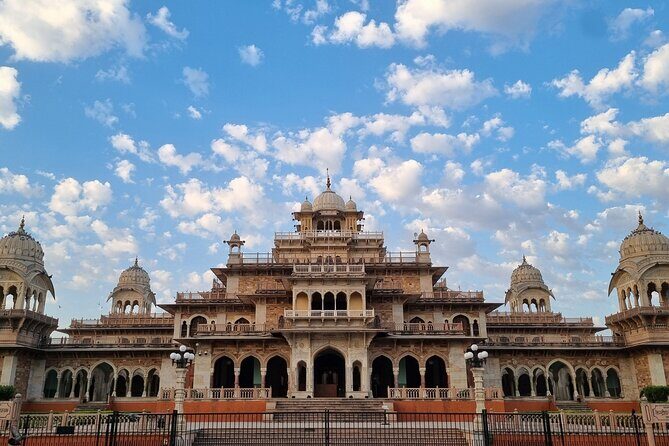
You start at Albert Hall Museum, one of Jaipur’s most recognizable buildings. The exterior is a strong example of Indo-Saracenic architecture, with domes, arches, and intricate design elements that are easier to notice when your guide points them out as you arrive.
You get around 40 minutes here. Admission tickets are not included, so check your plans before the day so you’re not scrambling at the last minute. If you’re into architecture, this stop is a great warm-up because it sets the visual language for what you’ll see later.
A practical note: museums can be tiring under bright sun outside the galleries. Give yourself a moment to breathe, then focus on the main areas your guide highlights.
Amer (Amber) heritage walk: where the lanes do the storytelling
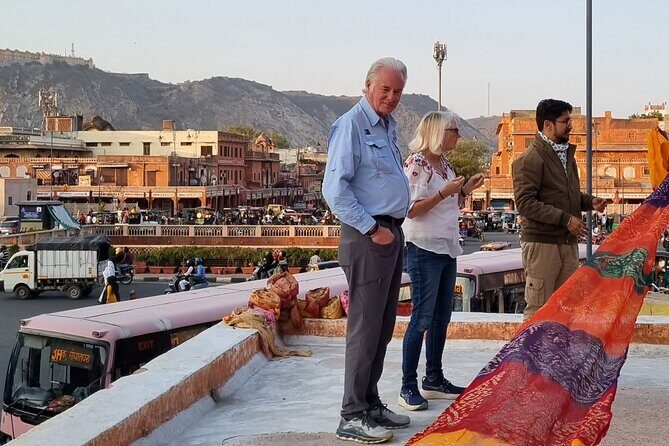
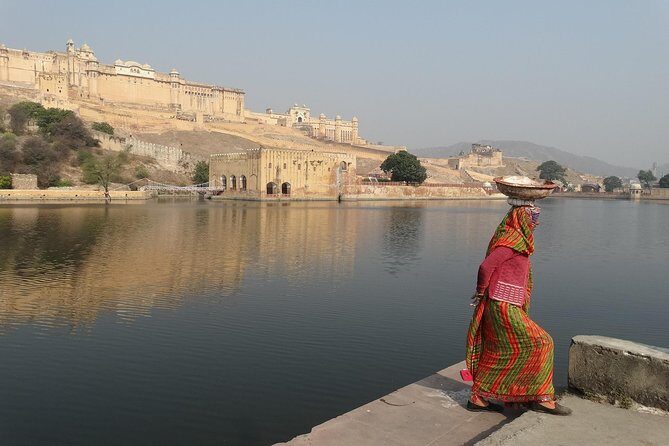
From Jaipur proper, you drive to Amer (Amber), then you step into the historical town for a heritage walk through the inner lanes. This is not just a quick stroll—it’s a designed walk meant to show the charm of the older areas beyond the famous photo spots.
You’ll have about 35 minutes here, and admission is free. That free admission matters because it keeps the day moving without adding another ticket line. The lanes can also be a nice change of pace from the wider streets you see around the monuments.
This is the part of the tour that tends to feel most “real.” Your guide can point out how buildings, street layout, and landmarks connect, which is exactly what makes the later fort and temples more meaningful.
Panna Meena ka Kund: the step pattern you actually remember
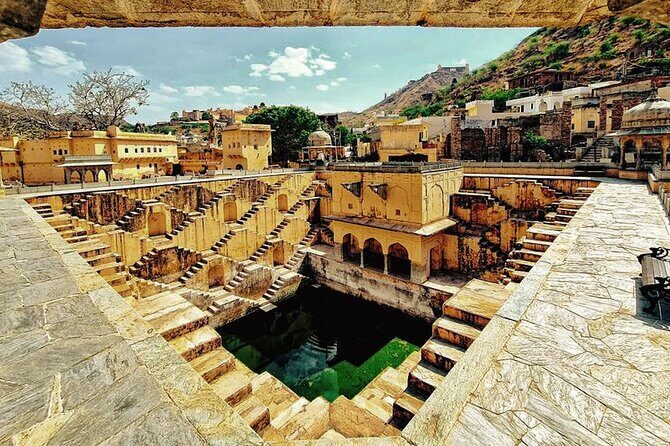
Next up is Panna Meena ka Kund, a 16th-century stepwell. What makes it stand out is the symmetrical, zigzag pattern of steps that lead down to the reservoir. It’s a simple stop time-wise—about 15 minutes—but it’s the kind of place that stays in your memory because the design is so clear from multiple angles.
Admission is free, so it’s a low-cost way to break up the bigger monument blocks. Even if you’re not a museum person, this works because the structure is the experience.
If you want photos, watch your footing. Stepwells can have uneven surfaces, and you’ll be moving around quickly.
You can also read our reviews of more guided tours in Jaipur





Jagat Shiromani Ji Temple: quiet architecture in Amer
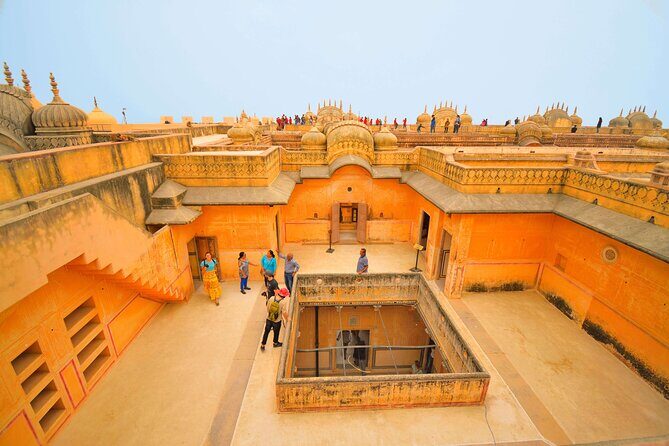
You then visit Jagat Shiromani Ji Temple, dedicated to Lord Krishna. The tour gives you about 20 minutes here, and admission is listed as free.
This temple stop is a useful contrast to the larger showy monuments. Instead of scale, it’s about devotion, architectural detail, and how worship spaces sit within the Amer setting. If you like stepping away from crowds for a short moment, this is one of those pauses that can refresh you before Amber Fort.
Amber Fort: the big courtyards and mirror-work detail
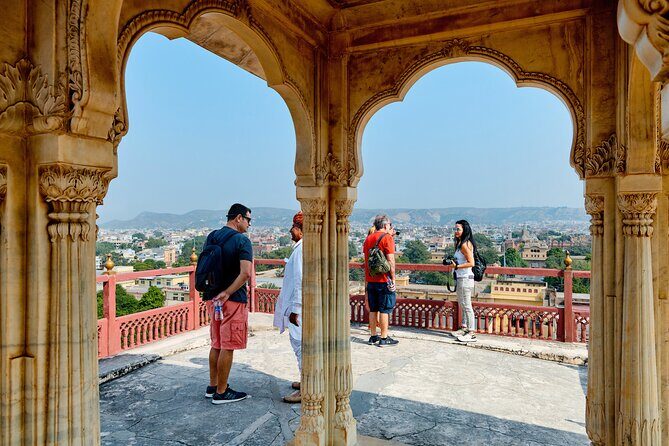
Now comes Amber Fort, one hour on site. This is the stop most people picture when they think of Amer: a sprawling fort on a hilltop with views toward Maota Lake and the Aravalli Mountains. The fort is known for grand palaces, ornate gateways, and intricate mirror work.
Admission tickets are not included, so plan for that cost. Also plan for how much time you’ll actually spend walking inside. One hour is enough to see major areas, but you’ll still want comfortable shoes because there’s a lot of moving around.
If you care about photos, this is a good place to take a breath and then slow down. Your guide’s commentary helps you notice things like decorative styles and how spaces were organized for royal life.
Lunch stop before Jantar Mantar: choose what you like

After Amer, you head back toward the old city of Jaipur. The schedule includes a meal at a recommended restaurant, then Jantar Mantar.
Lunch is not included. That means you’ll pay for your own meal, but you benefit from someone choosing a place they consider reliable. It’s a practical setup for a full-day tour: you can pick something that suits your appetite and energy level, then get back to the monuments without the hunt.
If you’re sensitive to heat, aim for a slower lunch rather than rushing. You’ll want that energy for the next series of sights.
Jantar Mantar (UNESCO): astronomy you can follow
Jantar Mantar is where the tour shifts from sightseeing to science-in-stone. It’s described as an astronomical observatory and a UNESCO World Heritage site. You get about 35 minutes here, and admission tickets are not included.
Here’s why the guide matters: without explanation, observatory structures can feel like metal-and-stone leftovers. With guidance, you start to understand how the instruments relate to measuring time and the sky. It’s one of those places where a good explanation changes what you notice.
Take your time walking between key points. The best photos often come from standing still and letting your guide explain what you’re looking at, rather than sprinting ahead.
City Palace: royal power made into rooms
Next is City Palace, with about 30 minutes on site. You’ll enter with your expert guide and visit courtyards, gardens, and beautifully adorned palaces.
Admission tickets are not included. Still, the value is in how the guide frames the spaces—this tour isn’t just about what you see, but how royal Jaipur lived and organized power inside the city.
City Palace is also a good spot to check your pace. If you want photos, this is where you can get great angles without needing to chase the sun as much as at some outdoor forts.
Hawa Mahal: honeycomb windows and the breeze story
Hawa Mahal, or Palace of Breeze, is one of Jaipur’s signature buildings. It’s famous for its honeycomb façade with 953 intricately carved windows, and it was built in 1799. You get about 45 minutes here, with admission tickets not included.
This stop is great if you enjoy architecture details and clever design. From a distance it’s impressive, but it’s the pattern of windows that makes it feel like a whole design system rather than one pretty wall.
A practical tip: the structure is visually dominant, so you may want to keep your expectations realistic. You might spend more time photographing than you do learning, unless your guide points out the design logic. If your guide is active, you’ll get far more out of the time.
Pink City heritage walk: old streets after the big sights
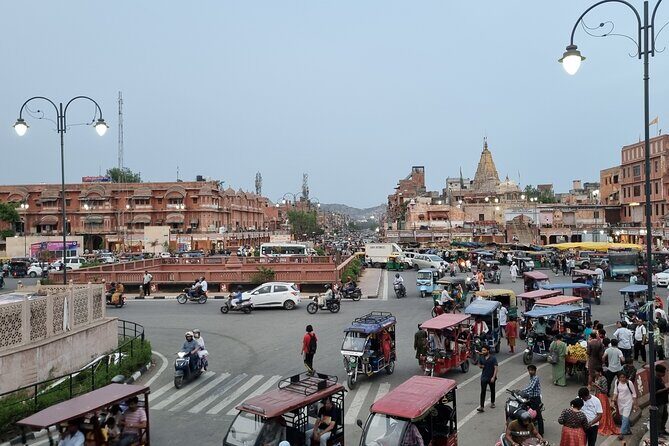
You finish with a walking tour through the inner lanes of Jaipur’s Old City. This heritage walk is meant to show the Pink City character: narrow streets lined with pink-hued buildings, with your guide pointing out features as you go.
You get about 40 minutes here, and admission is free. This is a smart way to end because it turns the day from a monument checklist into a human-scale stroll.
By this point, your legs may be ready to revolt. So keep the pace. The goal is to enjoy the street-level details, not to win a speed contest.
Guides and the kind of experience you’ll get
One of the best parts of this tour is the guide style—sharing culture and pointing out crafts, food, and local context. You might be led by guides such as Archit, Jyoti, or Himmat, and the experience seems to stay consistent: clear explanations, friendly conversation, and a focus on what you’re actually seeing.
Some guides are also described as photo-friendly, which helps if you want less awkward posing and more natural shots in the architecture-heavy settings. Another common theme is thoughtful attention—people mention polite guidance and good conversation, not just “here’s the monument, next stop.”
I also like that the day is built around heritage walks rather than only entrances. When the guide spends time on lanes and design details, Jaipur starts to feel like a place you can understand.
Is the price good value for a full-day loop?
At $56.66 per person, this tour is positioned as a value option for a long day covering many top sights. The included items—an air-conditioned vehicle, bottled water, coffee or tea, and a guide—matter because they reduce your daily logistics stress. The no-shopping structure also protects that value; you’re not paying for detours.
The trade-off is straightforward: monument entrances are not included for several major stops. That means the final spend can rise depending on exactly which entrances you choose and how many you want to enter fully.
If you’re the type who likes guided explanations and wants the day organized for you, the price can feel fair. If you’re trying to keep costs ultra-low and don’t plan to pay for entrances, you may want to compare with alternatives that include fewer monuments but also fewer paid entry points.
Who this tour fits best
This is a strong pick if:
- You want a structured day but hate shopping detours
- You like walking parts of a tour, especially old-city lanes
- You care about architecture and want explanations at each major site
- You prefer a small group over a big bus crowd
It may be less ideal if:
- You don’t want to pay extra for monument entrances
- You get uncomfortable walking in heat for a full day
- You want a totally relaxed pace with no schedule pressure
Quick advice to get the most out of the day
- Wear comfortable shoes. The walk sections and fort/courtyard areas add up.
- Bring or plan for extra spending on entrance tickets at stops marked not included.
- Use the included water early. Waiting until you’re thirsty can slow you down.
- If you have specific interests—architecture, temples, astronomy—tell your guide so they can emphasize the right parts.
Should you book this Jaipur no-shopping heritage tour?
If your priority is major sights plus meaningful street-level heritage, this is worth considering. The biggest selling point is the no-shopping setup combined with heritage walks that help you connect the monuments to the city around them. For $56.66, you’re paying for organization, transport, and guided context, and you’re not being pushed into retail stops.
Book it if you’re happy paying separate entrance fees and you’re ready for a long day. Skip it if you want only free viewpoints and minimal walking, because several highlights require paid entry and the day keeps you moving.
FAQ
FAQ
How long is the Jaipur No Shopping Guided Sightseeing Tour with Heritage Walk?
It runs for about 8 hours 9 minutes (approx.).
What is included in the tour price?
The tour includes coffee and/or tea, an air-conditioned vehicle, bottled water, an expert guide, and heritage walk experiences. Monument entrance tickets and lunch are not included.
Are monument entrance tickets included for stops like Amber Fort or City Palace?
No. Monument entrance tickets are listed as not included.
Is lunch included?
Lunch is not included. The tour includes a stop at a recommended restaurant where you can order what you’d like.
How many people are in the group?
The tour has a maximum of 10 travelers.
Where do I meet the tour and where does it end?
The tour starts at Le Tour De India, 14-B near Mirza Ismail Road, Panch Batti, Jayanti Market, New Colony, Jaipur, Rajasthan 302001, India. It ends back at the same meeting point.
Is there any shopping during the tour?
This is a no-shopping tour, with no shopping detours.