REVIEW · 4-DAY EXPERIENCES
4 Days Private Golden Triangle Tour
Book on Viator →Operated by Travel Nice India · Bookable on Viator
Four days, three cities, zero guesswork. This private Golden Triangle circuit from Jaipur is built for travelers who want the big-ticket sights of Rajasthan and Mughal India—Jaipur, Agra, New Delhi—without constantly re-planning your day. You’ll ride in a luxury air-conditioned vehicle, start with easy pickup from your location, and move point-to-point with a guided focus.
I especially like how the plan protects your mornings with a sunrise Taj Mahal visit plus a guided inside tour, then follows with heavyweight Agra landmarks. Second, I like the convenience of built-in tickets, parking, fuel, and tolls, so you’re not constantly calculating what costs extra. One drawback to keep in mind: the days are packed with must-sees and driving time, so if you prefer slow, wandering hours in each place, this itinerary may feel a bit full.
In This Review
- Key things I’d watch for
- Golden Triangle in Four Days: What You Actually Experience
- Price and Logistics: Is $400 per Person Good Value?
- Day 1 in Jaipur: Jal Mahal, Jantar Mantar, City Palace, Hawa Mahal
- Day 2: Jaipur to Agra via Abhaneri Step Wells and Fatehpur Sikri
- Sunrise Taj Mahal and Agra Fort: The Morning You Don’t Want to Miss
- Day 4 Delhi Highlights: Qutub Minar, India Gate, and Rashtrapati Bhavan
- Udaipur Mention: Worth Confirming Before You Go
- How the Private Driver and Guides Make This Work
- Practical pacing tips for a four-day packed route
- Should You Book This Tour?
- FAQ
- What cities are included on this 4-day Golden Triangle tour?
- Is pickup available?
- Are entrance tickets included?
- What meals are included?
- Is the tour private?
- Does the plan include sunrise Taj Mahal?
- Is there free cancellation?
Key things I’d watch for
- Private group comfort: Only your group participates, with a luxury AC car doing the heavy lifting.
- Sunrise timing: Taj Mahal is scheduled for sunrise, with about a two-hour guided visit inside.
- Guided city flow: Each major day is structured around guided viewpoints and monument stops.
- Tickets and essentials included: Entrance tickets, parking, fuel, road tax, plus 2 breakfasts and 2 lunches are part of the package.
- Short stops in Delhi: Some Delhi highlights are quick photo-and-see moments, not long museum-style visits.
- Udaipur is mentioned, but verify: The overview mentions Udaipur, but the day-by-day plan focuses on Jaipur, Agra, and Delhi—confirm what’s actually included.
Golden Triangle in Four Days: What You Actually Experience
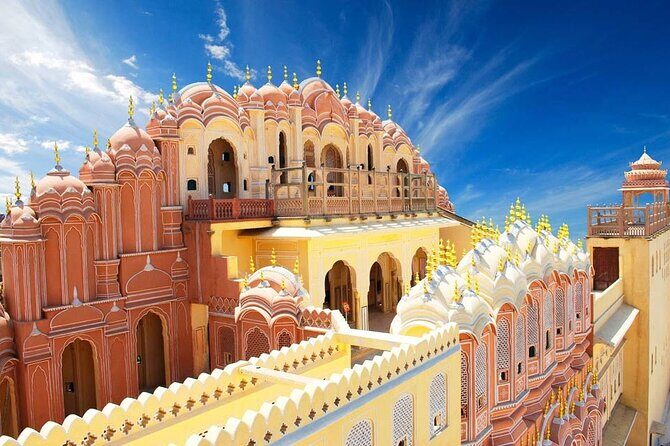
This tour is a classic Golden Triangle format, but with a twist aimed at convenience: you start in Jaipur, then connect to Agra and New Delhi. In four days, you’ll see the headline monuments most people picture when they think of India’s royal and Mughal eras—Amber-area Jaipur icons on day one, Fatehpur Sikri and stepwells en route to Agra on day two, and then Taj Mahal and Agra Fort on day three, followed by Delhi’s major landmarks on day four.
What makes it appealing is not just the sights. It’s how the days are sequenced so you can keep your energy for the real anchors: Jaipur’s architectural landmarks, Agra’s signature monuments, and Delhi’s iconic mix of UNESCO-era monuments and major government landmarks. If you’ve ever tried to do this route by yourself, you already know the friction points: transport decisions, timed entry planning, and figuring out where to go next. Here, the structure handles a lot of that for you.
Because it’s private, you also have more room to adjust in the moment. The driving and timing are still fixed by the itinerary, but a private guide-and-driver setup generally gives you a smoother experience than coordinating multiple strangers and vehicles.
You can also read our reviews of more private tours in Jaipur



Price and Logistics: Is $400 per Person Good Value?
At $400 per person for roughly four days, the value depends on what you typically pay when you travel in India on your own. The big “value levers” here are the things that usually eat time and money:
- Luxury air-conditioned vehicle
- Monument entrance tickets included (and the day plan marks several Jaipur/Delhi stops as admission ticket free within the schedule)
- Parking, tolls, fuel, and road tax included
- Meals included: 2 breakfasts and 2 lunches
- Hotel transfers within the plan: pickup in Jaipur day one, and drop-off in Delhi at the end
What’s not included is also important: personal expenses and tips/gratuities aren’t part of the price. That’s normal for private tours, but you’ll want to budget a little extra for gratuities so you’re not stuck at the end scrambling.
To me, the strongest argument for booking is simple: you’re paying for transport + tickets + guided time in a tight window. If your alternative is DIY, you’d still need a car/driver for comfort, plus you’d be spending time coordinating entry and moving between cities. Here, you’re buying a smoother rhythm—especially useful if you’re not fluent in navigating on the ground.
Day 1 in Jaipur: Jal Mahal, Jantar Mantar, City Palace, Hawa Mahal
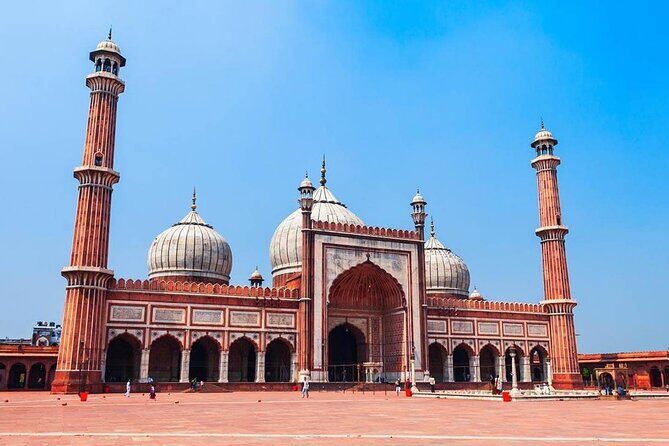
Day one is a Jaipur orientation day, and it works because the stops complement each other. You’re not bouncing randomly—you’re moving through Jaipur’s layers: lakeside royalty, scientific empire-building, and palace architecture.
Pickup and guided Jaipur city tour
You start with pickup from your hotel, airport, railway station, or another chosen location in Jaipur. That “door-to-door” start matters on a first day. You avoid the hassle of sorting transport immediately, which is when mistakes happen.
Jal Mahal (the lake palace)
Jal Mahal sits in the middle of Man Sagar Lake. The schedule frames it as a palace renovated and enlarged in the 18th century by Maharaja Jai. Even if you don’t spend a long time here, it sets a visual mood for Jaipur—water, sandstone, and royal styling.
Jantar Mantar
Then you pivot from scenic to brainy. Jantar Mantar is a collection of nineteen architectural astronomical instruments built by Sawai Jai Singh II, completed in 1734. You’ll likely find it surprising that this is not just a landmark to look at—it’s a monument built around how the empire tracked the sky.
City Palace
City Palace connects Jaipur’s identity to its ruling history. It was established when the city was founded, and it’s tied directly to Maharaja Sawai Jai Singh II moving his court to Jaipur from Amber in 1727. This is one of those stops where a guide can turn your photos into understanding.
Hawa Mahal
Finally, Hawa Mahal—the Palace of Wind—gives Jaipur its signature silhouette. Built with red and pink sandstone, it sits along the edge of City Palace and stretches to the Zenana, the women’s chambers. Even with limited time, it’s one of the most photogenic structures in the city.
After the tour, you’re transferred to your Jaipur hotel for the night. That wrap-up is key: day one is a full introduction, and you’ll want downtime before the travel day on day two.
Day 2: Jaipur to Agra via Abhaneri Step Wells and Fatehpur Sikri
Day two has a driving backbone, but it’s not “just transit.” It’s built around two unforgettable landscapes of stone and water: stepwells, then a Mughal city.
Abhaneri (step wells)
On the way to Agra, you visit Abhaneri, focusing on step wells. The plan gives you a long block of time for this part of the day, which matters because stepwells aren’t just a quick stop. They’re about scale and design—stone steps carved into a practical system.
Chand Baori
Next comes Chand Baori, described as a massive ornate stepwell reached by 3,500 steps. Even if you don’t want to climb every step, you’ll appreciate the geometry and the way it captures light and shadow. This is one of those “why did humans build this” wonders, and guides can help you understand the logic.
Fatehpur Sikri
Fatehpur Sikri is a small city west of Agra, founded by a 16th-century Mughal emperor. The red sandstone buildings cluster around the center, and Buland Darwaza is highlighted as the entrance to Jama Masjid. This stop helps balance the day—your morning and mid-day are about water engineering and stone stairs, then you switch to Mughal grandeur.
After Fatehpur Sikri, you arrive in Agra and check in at your hotel for an overnight stay. That hotel break is practical: it sets you up for the big morning on day three.
Sunrise Taj Mahal and Agra Fort: The Morning You Don’t Want to Miss
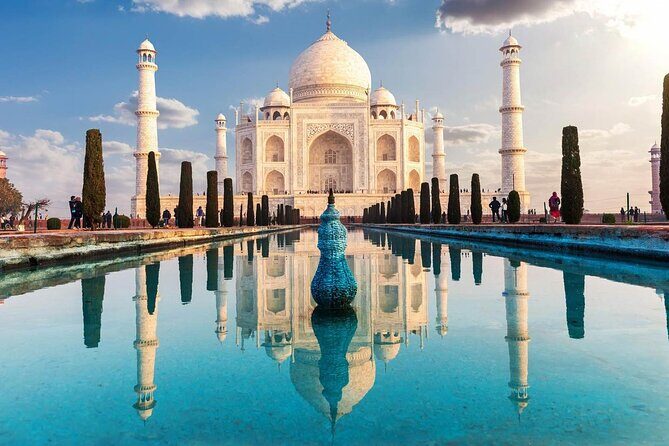
Day three is the heart of the whole route. The plan schedules Taj Mahal for sunrise, plus a guided tour inside for about two hours. That timing is crucial because Taj Mahal is one of the monuments where the light really changes the experience. A sunrise slot also means you get the famous building in a calmer mood, rather than treating it like a late-day rush stop.
Taj Mahal inside the main experience
You’ll visit Taj Mahal during sunrise and then go inside with a guide for roughly two hours. The Taj is described as an ivory-white marble mausoleum on the southern bank of the river. That’s exactly the kind of statement that makes sense once you’re there—marble color, surfaces, and symmetry all become more noticeable when you slow down for the guided parts.
Agra Fort
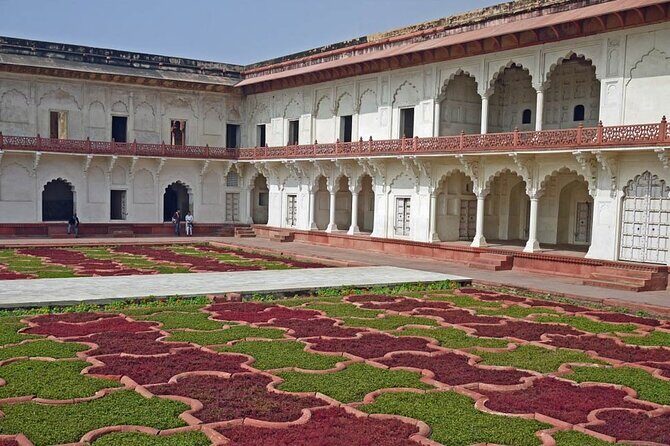
After Taj Mahal, you move to Agra Fort, described as the main residence of Mughal emperors until 1638, when the capital shifted to Delhi. The fort is also noted as a key imperial seat before British capture. This gives you a different angle than Taj Mahal: Taj is the memorial, while Agra Fort is the power center.
Tomb of I’timād-ud-Daulah (Baby Taj)
You also visit Tomb of I’timād-ud-Daulah, often called the Baby Taj. The plan highlights it as a Mughal mausoleum and even describes it as a jewel box. This stop is great if you like detail—smaller in scale than Taj Mahal, but often more intimate.
Then you transition to the next city: you arrive in Delhi later and check in for an overnight stay. The move from Agra to Delhi is part of what keeps the trip to four days. If you try to do this independently, the logistics can easily add stress.
You can also read our reviews of more tours and experiences in Jaipur






Day 4 Delhi Highlights: Qutub Minar, India Gate, and Rashtrapati Bhavan
Day four is half-day guided Delhi. The emphasis is on the most recognizable landmarks, with short, efficient stops that still feel satisfying.
Qutub Minar
Qutub Minar is part of the Qutb complex and is UNESCO-listed. The schedule notes the height at 72.5 meters, and that it functions as a minaret and victory tower. This is the stop that gives you the biggest architectural payoff in the shortest time. Even with a limited visit duration, you get the “this is why people come” moment.
India Gate
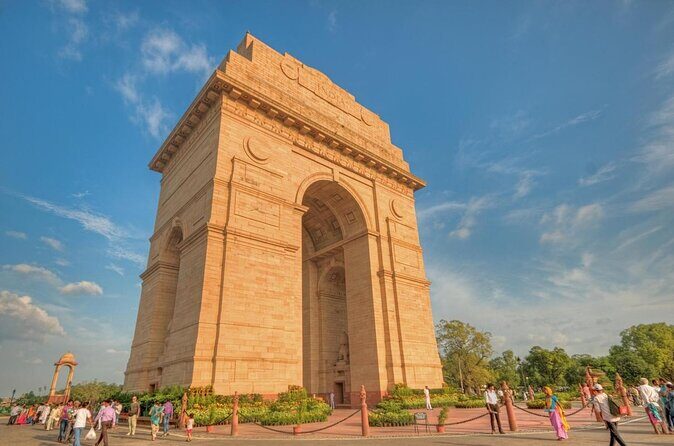
India Gate is a war memorial on Rajpath, part of the ceremonial axis. With only about fifteen minutes in the plan, this is a photo-and-see stop, but it also anchors your understanding of modern India’s public monuments.
Parliament House and Rashtrapati Bhavan
You’ll also see Parliament House (Sansad Bhavan) and Rashtrapati Bhavan. The schedule frames Rashtrapati Bhavan as the official residence of the President of India at the western end of Rajpath. With short visits, you mainly focus on exterior views and orientation, which still helps if you’re not visiting Delhi with a long checklist.
Agrasen Ki Baoli
Agrasen ki Baoli is included as a protected monument, described as a 60-meter long and 15-meter wide structure. Even in a short slot, it’s a nice contrast: Delhi isn’t only about big modern government buildings. You get a step back into older urban design.
The day ends with a drop-off in Delhi, Noida, or Gurugram at your desired location.
Udaipur Mention: Worth Confirming Before You Go
One line in the overview says the package includes a visit to Udaipur, but the day-by-day plan you have here focuses on Jaipur, Agra, and Delhi. That means you should treat Udaipur as a potential add-on, not something you can count on automatically from this four-day outline alone.
If Udaipur is important to your dream itinerary, ask your operator to confirm exactly what will happen in your dates: will you add Udaipur as an extra day, or is it a different variation of the same tour name? This is the one point that could affect your expectations the most, because it changes the whole rhythm of the Golden Triangle route.
How the Private Driver and Guides Make This Work
This kind of trip lives or dies on the ground support. The feedback tied to this operator highlights drivers who are friendly, professional, and on time, with an emphasis on safe door-to-door service from airport to monuments. Names like Manipal, Shiv Narayan Pal, and Sudhir come up in the kind of praise you want to see for a multi-day car tour: safe driving, comfort, and reliability.
You’ll likely appreciate the luxury air-conditioning during long transfers. It’s not just comfort—it’s sanity. When you’re doing sunrise Taj Mahal and then moving cities, you need your body to feel okay, not cooked.
Also note the structure: you get guided tours at the core monuments, while other stops are shorter and more visual. That balance is good. It keeps your day moving, but still gives you context where it matters most—Taj Mahal, the key Jaipur palaces, and the big Delhi landmarks.
Practical pacing tips for a four-day packed route
This itinerary is designed to minimize wasted time, but it’s still a lot to fit into four days. Here’s how I’d plan your mindset:
- Protect the sunrise morning. Sunrise Taj Mahal is the anchor; treat the night before as your chance to rest.
- Expect shorter segments in Delhi. Your Delhi stop list is efficient. If you love slow wandering, you may want to add extra time later.
- Use the car time well. The vehicle is part of what you’re paying for. Bring a water bottle and keep small essentials handy so you’re not scrambling during transfers.
- Budget for tips. Tips aren’t included, and you’ll feel better if that’s already decided.
If you want maximum flexibility to adjust preferences, the private format helps. But the itinerary’s structure still drives the schedule, especially for timed highlights like sunrise Taj Mahal.
Should You Book This Tour?
Book it if:
- You want a private Golden Triangle with transport handled and major monuments covered in four days.
- You value guided time at the biggest sites, especially sunrise Taj Mahal.
- You’re the type who would rather pay a bit more to reduce stress than spend time coordinating vehicles and tickets.
Consider alternatives or longer stays if:
- You prefer slow travel and lots of free time in each city.
- You’re hoping Udaipur will be a key part of your trip; in that case, confirm whether Udaipur is truly included in your exact dates.
My take: this is a strong choice for first-timers who want the headline India experience with comfort and structure. The price makes more sense when you count the included vehicle, tickets, tolls, fuel, road tax, and meals. Just make sure you’re aligned on what’s actually happening beyond Jaipur, Agra, and Delhi.
FAQ
What cities are included on this 4-day Golden Triangle tour?
The tour connects Jaipur, Agra, and New Delhi. The overview also mentions a visit to Udaipur, so it’s worth confirming whether Udaipur is included in your specific dates.
Is pickup available?
Yes. You can be picked up from your hotel, airport, railway station, or another desired location in Jaipur.
Are entrance tickets included?
Yes. Monument entrance tickets are included in the package, and the day-by-day plan marks several stops as having admission ticket included or free within the schedule.
What meals are included?
You get 2 breakfasts and 2 lunches included.
Is the tour private?
Yes. This is a private tour/activity, so only your group participates.
Does the plan include sunrise Taj Mahal?
Yes. Day three includes a Taj Mahal visit during sunrise, with a guided tour inside for approximately two hours.
Is there free cancellation?
Yes. Free cancellation is available if you cancel up to 24 hours in advance for a full refund.