REVIEW · 4-DAY EXPERIENCES
4 Day Golden Triangle Tour to Agra and Delhi From Jaipur
Book on Viator →Operated by Imperial Holidays · Bookable on Viator
Golden Triangle in four days, no stress.
What makes this trip work is the private setup plus a tight route that hits Jaipur, Agra, and Delhi with local guidance instead of self-navigating. I like the air-conditioned car and the built-in rhythm of hotel breakfast, guided time, and enough breaks that the days don’t feel like a nonstop sprint.
There is one real consideration: the monument entrance fees are not included in the base price. Plan on about $60 per person for entrances, and remember you’ll start early for the sunrise Taj Mahal visit.
In This Review
- Key highlights worth planning around
- The value of a private Golden Triangle starting in Jaipur
- Jaipur first: guided stops that actually help you understand what you’re seeing
- Amber Palace, Jal Mahal, and Jantar Mantar: what to expect on the ground
- Day 2’s detour: Chand Baori stepwell and Fatehpur Sikri on the way to Agra
- Agra day starts with the Taj Mahal at sunrise
- Delhi half-day tour: Qutub Minar, India Gate, and the power-axis views
- Hotels, breakfasts, and the private car: what you’re really buying
- Price and what it adds up to: where the real costs show
- Who this tour suits best (and who should look elsewhere)
- Driver and guide vibe: the quiet wins that make the trip smoother
- Should you book this 4-day Golden Triangle tour from Jaipur?
- FAQ
- What does the tour price include?
- Are entrance fees included?
- How do you get to the Taj Mahal monument from the parking area?
- What’s the Taj Mahal timing on this tour?
- Where do you get picked up and dropped off?
- What are the hotel rooms like?
- Is free cancellation available?
Key highlights worth planning around

- Sunrise Taj Mahal with guided time inside and a smooth start to the day
- Private local guides for each main stop, so you’re not just collecting photos
- Agra “Baby Taj” and Agra Fort added in the same day, not left for later
- Battery bus to the Taj area included, cutting down walking time right at the start
- Jaipur essentials in one day: Amber, City Palace, Jantar Mantar, and Hawa Mahal
The value of a private Golden Triangle starting in Jaipur
If you’re new to North India, the Golden Triangle can feel like a blur—unless you have a plan. This tour is designed to keep you moving, but not confused. You start in Jaipur, get picked up from your hotel (or airport/railway station), and spend day one easing into the region with a guided city route.
The private car matters more than it sounds. You’re not timing buses, hunting taxis, or waiting for other people’s schedules. You also get bottled mineral water and soft drinks during the journey, which helps on longer driving segments. And since it’s private, the pace is set for your group rather than a fixed mass schedule.
Price-wise, the number you see—$174.01 per person—lands in a “good starting point” range for a 4-day route with three hotel nights and private transport. The key is what’s included versus what’s extra: breakfast and accommodation are included with the hotel option, but monument entrance fees are separate.
You can also read our reviews of more tours and experiences in Jaipur



Jaipur first: guided stops that actually help you understand what you’re seeing
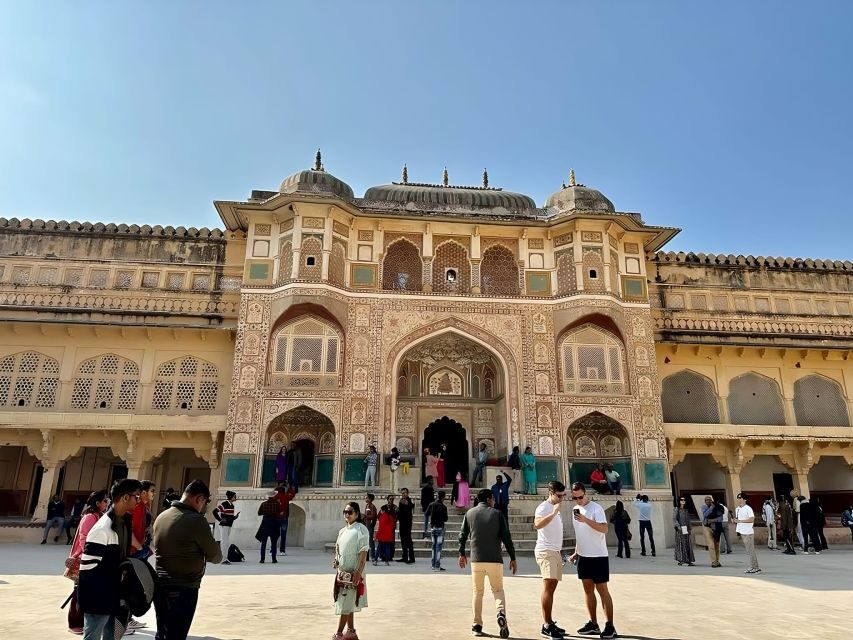
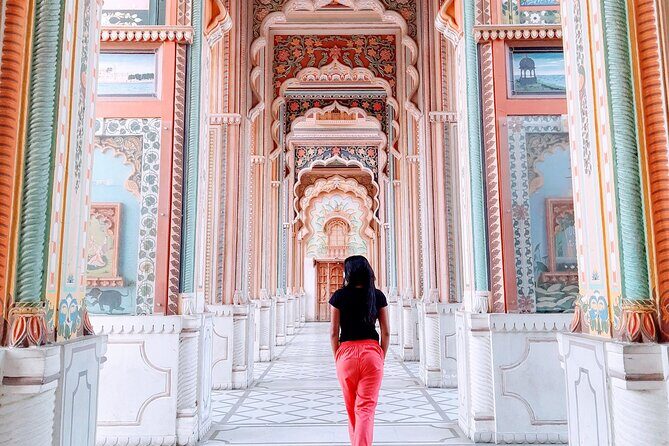
Jaipur day begins with pickup, then a guided city tour that strings together the landmarks most first-timers hope to see: Amber Palace, Jal Mahal, Jantar Mantar, City Palace, and Hawa Mahal. The best part is that these stops connect to each other. You’re not wandering through disconnected photo spots—you’re getting context as you go.
Amber Palace (also called Amer Fort) is a must because it shows how power and design worked in Rajasthan. It sits high on a hill, so you get that classic fortified look, and it sets the tone for the rest of the day. Even if you’re short on time, you’ll feel like Jaipur has “arrived” the moment you reach Amber.
Then comes Jal Mahal, the palace sitting in the lake. It’s one of those sights you can miss if you’re driving without a plan. After that, Jantar Mantar gives you a different side of Jaipur—astronomy and instrument design—before the tour shifts to royal spaces at City Palace and the iconic façade of Hawa Mahal.
One practical note: the itinerary lists short time windows at each stop. That usually means you’ll see the highlights rather than spending half a day deep in each site. If you like slow travel, you’ll probably want to add extra time on day one once you arrive.
Amber Palace, Jal Mahal, and Jantar Mantar: what to expect on the ground
This route moves efficiently, and that’s both a strength and a heads-up. Amber Palace and Jal Mahal are visually dramatic, but your experience depends on how you manage your expectations: this is a guided highlights tour, not an all-day deep dive at every monument.
At Amber Palace, the focus is the fort complex itself. You’ll likely spend enough time to walk, take in the structure, and get the story behind it from your local guide. The tour lists admission ticket time as free in the schedule, but entrance fees are still shown separately as a total cost for monuments. The guide is there to help you buy entrance fees without waiting in any que, which is exactly how you want it to work when you’re on a tight schedule.
Jal Mahal is quick by nature—because it’s a palace viewed from across the water. Don’t expect this to replace time at the main fort; think of it as a visual pause that breaks up the day.
Then Jantar Mantar shifts your mindset. It’s a UNESCO-listed style of attraction because it’s about measurement and observation, not just buildings. If you enjoy details like how old instruments tracked the sky, this stop can be a surprise favorite.
Day 2’s detour: Chand Baori stepwell and Fatehpur Sikri on the way to Agra
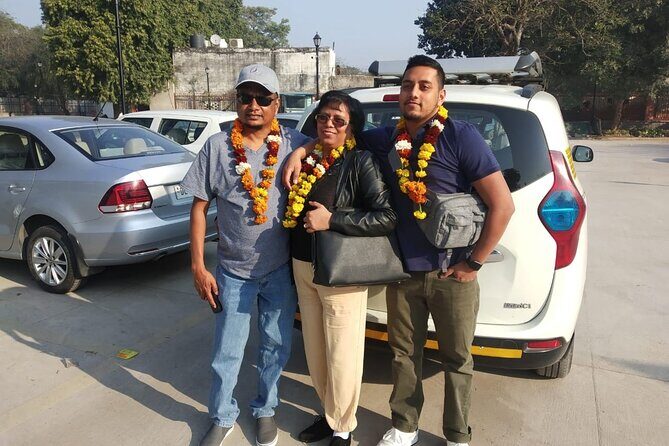
The second day is where the Golden Triangle route becomes more interesting than just the three headline cities. After breakfast, you head from Jaipur toward Agra with two stops that change the vibe.
First up is Chand Baori in Abhaneri, one of India’s most famous stepwells. The scale is the point here: the stepwell is reached by thousands of steps, and it’s built like an architectural statement. Even if you don’t go deep into the history, you’ll feel how deliberate the design is—rainwater management turned into a landmark.
Next is Fatehpur Sikri, a Mughal-era city site with red sandstone structures at its center. The highlight you’ll likely hear about is Buland Darwaza, the grand gateway into the complex. The tour timing is around two hours, which is enough to walk the major areas with a guide and still keep the day moving.
By the time you reach Agra, you check in and overnight at your hotel. This matters because Agra days can start early. Having a real reset built into the schedule is a quiet luxury.
Agra day starts with the Taj Mahal at sunrise

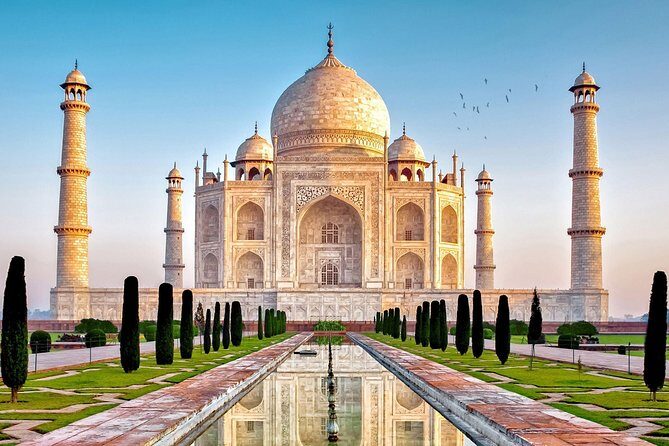
If you only care about one thing in Agra, make it the Taj Mahal at sunrise. This tour schedules it for an early visit, plus a guided tour inside for about two hours. That pairing is smart: the outside views are for the light, and the interior time is where the place becomes more than a postcard.
The tour also includes a battery bus ride to and from the Taj Mahal parking area up to the monument. That’s not flashy, but it’s practical. You get less fatigue right when you’re already starting early, and the walk transitions from “manage the crowds” to “enjoy the approach.”
Once you’ve done the Taj, you continue with three additional stops that complete the Mughal picture in Agra:
- Agra Fort (about one hour): the fort that served as a Mughal residence
- Itmad-ud-Daula (about 45 minutes): often described as a “Baby Taj” for its marble refinement
- A full day of monument time without feeling like you’re jumping between cities
This is one of the best-value parts of the itinerary because you’re not splitting Agra into multiple days. You’re getting an organized sweep: one icon, then two companion sites that add variety.






Delhi half-day tour: Qutub Minar, India Gate, and the power-axis views
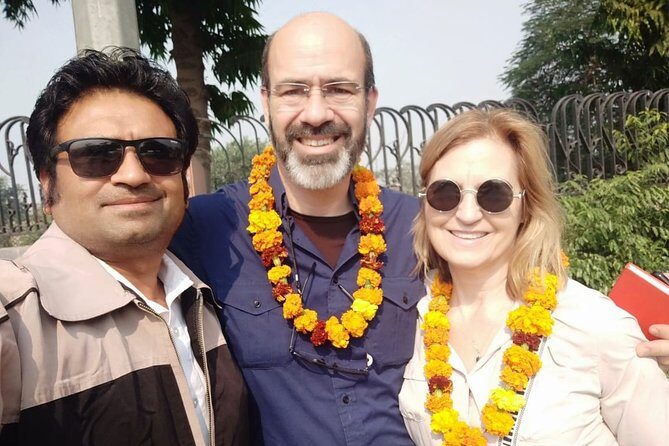
You reach Delhi on day three, check in, and then on day four you get a half-day guided tour. It’s not meant to cover everything in Delhi—that would take far longer. Instead, it hits several major landmarks in a short, structured arc.
Start with Qutub Minar at the Qutb complex, listed as part of a UNESCO World Heritage Site. The tour gives it about an hour, which is enough time to understand why the minaret is such a big deal—both as a tall structure and as part of a broader historic complex.
Then you move to India Gate on Rajpath, the war memorial area. It’s quick (about 15 minutes), but it’s a useful stop because it anchors Delhi’s more modern ceremonial layout.
The tour route also includes views or stops connected to Sansad Bhavan (Parliament building) and Rashtrapati Bhavan (the President’s residence). Even when time is short, this is the kind of sight you appreciate more when you understand the city’s “power axis” idea—again, that’s where the guided element pays off.
Finally, you wrap with Agrasen Ki Baoli (about 15 minutes). It’s a protected monument and offers a different angle from the grand government buildings and towering minaret.
At the end, you’re dropped off in Delhi, Noida, or Gurugram based on where you want to go.
Hotels, breakfasts, and the private car: what you’re really buying
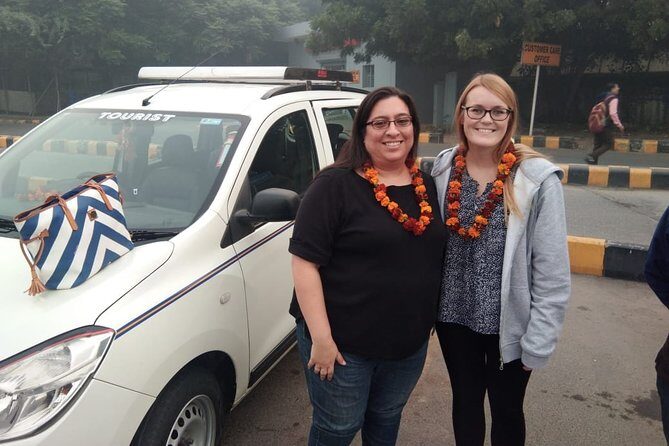
The tour includes three nights’ accommodation (when booked with the option that includes hotels) and daily breakfast. It’s a simple inclusion, but it’s one of the most important ones for staying comfortable on a tight route. You’re not trying to find meals at the last second or relying on questionable timing between stops.
On the hotel style, the overview describes four- or five-star hotels, which generally means solid rooms and a reliable base after long drive days. Rooms are typically twin-sharing. If you book as three people, the default is triple-sharing unless the three guests prefer two rooms—in that case, there’s an additional charge.
Your transport is private and air-conditioned. The car type depends on group size (sedan for one to two people, six-seater wagon for three to four, ten-seater van for five to ten). For me, that matters because it affects comfort and space. A small sedan can feel fine for two people, but a larger group needs the right vehicle to avoid “tall person seat squeeze” moments.
Guides are a big part of the value here. The tour includes all sightseeing with private local guides, and your guide helps you buy entrance fees so you don’t have to spend time waiting in any que. That one line changes the day.
Price and what it adds up to: where the real costs show
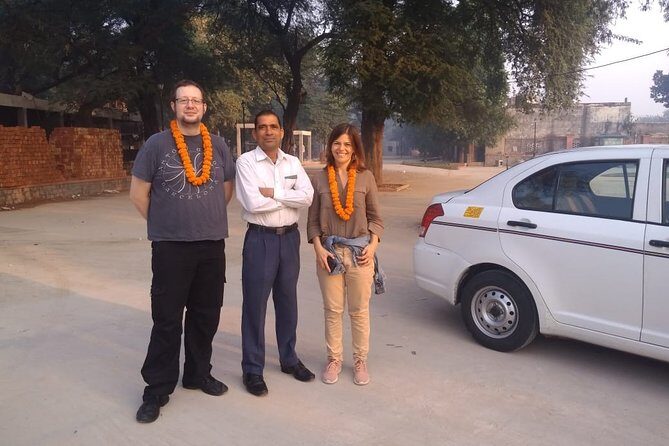
At $174.01 per person, this tour is priced like a midrange option for a short Golden Triangle circuit with private transport and hotel nights. The value comes from the combination of:
- three nights of lodging with breakfast
- a private, air-conditioned car
- guided sightseeing across all the major stops
- included transit support like the Taj Mahal battery bus ride
- bottled water and soft drinks during journeys
What’s not included is the entrance fees for monuments, listed as $60 per person in total. Because you’ll be hitting multiple major sites, this isn’t surprising. The key is that you aren’t expected to manage ticketing alone. Your guide helps with entrance fees on-site, so your time stays focused on the monuments rather than logistics.
If you want to estimate your full budget quickly, think:
- Base price per person
- Plus about $60 per person for entrances
- Optional gratuities (not required, but typical)
Also note: free cancellation is available if you cancel at least 24 hours in advance for a full refund. That’s helpful if you’re still locking in dates.
Who this tour suits best (and who should look elsewhere)
This Golden Triangle tour from Jaipur is ideal if you want a structured route with a private car and guided stops. It’s a strong fit for first-time visitors who want the big monuments—Jaipur’s forts and royal sites, Agra’s sunrise Taj day, and Delhi’s main landmarks—without having to plan each move.
It’s also a good choice if you travel in a group that values predictability. The private setup keeps your schedule together, and the guide-led approach makes the time at each site more meaningful than wandering independently.
Where it may not be your best match is if you prefer long stays at fewer places. The day timing suggests a highlights approach, not slow travel. Also, sunrise Taj Mahal visits are early by design. If mornings are your enemy, plan accordingly.
Driver and guide vibe: the quiet wins that make the trip smoother
One thing you can tell from the service details is that the provider aims for comfort and safety. The overview calls out personal care and attention, plus hotel and airport pick-up/drop-off. The private car and competent driving also reduce stress when traffic and distances are part of the deal.
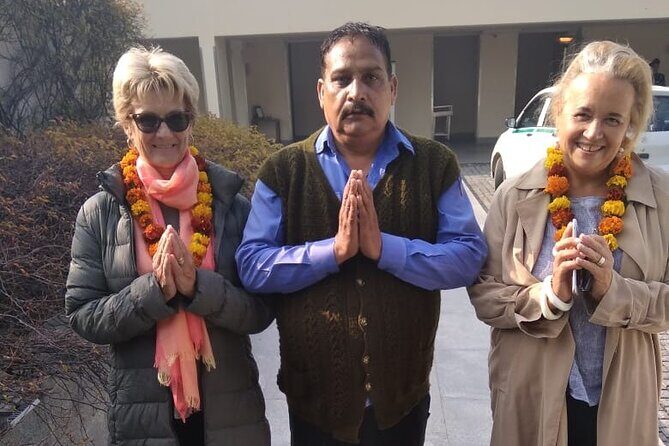
In the feedback tied to this experience, the driver Sanjeev is specifically praised for being friendly, patient, and bringing a good sense of humour. That kind of attitude matters more than people think. On long route days, you remember whether the ride feels calm and well handled, not just whether you hit the checklist of sites.
Should you book this 4-day Golden Triangle tour from Jaipur?
Yes—if you want a clean, guided route that hits the Golden Triangle classics in a short time window. This tour is built for people who value organization: private transport, local guides, daily breakfast, and a sunrise Taj Mahal day that isn’t wasted on ticket lines and delays.
I’d book it if:
- you’re doing Jaipur, Agra, and Delhi for the first time
- you’d rather pay for convenience than manage logistics
- you want a structured day plan with enough time to see the major monuments
I’d pause and compare if:
- you want more free time at each monument
- you don’t do well with early mornings
- you expect the entrance fees to be included in the base price (they’re not)
Overall, the combination of private car + guided sites + sunrise Taj makes this a practical value play. It’s not trying to be the cheapest way to do the Golden Triangle. It’s trying to be the easiest way to do it well.
FAQ
What does the tour price include?
The tour includes three nights of accommodation (if you select the hotel option) with daily breakfast, private air-conditioned car transport, private local guides for sightseeing, battery bus rides to and from the Taj Mahal parking area, bottled mineral water and soft drinks during journeys, and pick-up and drop-off.
Are entrance fees included?
Entrance fees for monuments are not included. The total listed for monument entrance fees is $60.00 per person, and your guide helps you buy entrance fees so you don’t have to wait in any line.
How do you get to the Taj Mahal monument from the parking area?
A battery bus ride is included to and from the Taj Mahal parking lot up to the Taj Mahal monument.
What’s the Taj Mahal timing on this tour?
You visit the Taj Mahal during sunrise, with a guided tour inside for approximately two hours.
Where do you get picked up and dropped off?
You can be picked up from your hotel, airport, railway station, or another desired location in Jaipur. On the last day, you’re dropped off in Delhi, Noida, or Gurugram based on your preference.
What are the hotel rooms like?
Rooms are generally provided on a twin-sharing basis. If you book for three people, the default is triple-sharing unless you prefer two rooms, which may require an additional charge.
Is free cancellation available?
Yes. You can cancel up to 24 hours in advance of the experience’s start time for a full refund. If you cancel less than 24 hours before, the amount paid is not refunded.