REVIEW · TUK-TUK TOURS
Private Tuk-Tuk Tour of Jaipur with Guide
Book on Viator →Operated by Reliable India Tours · Bookable on Viator
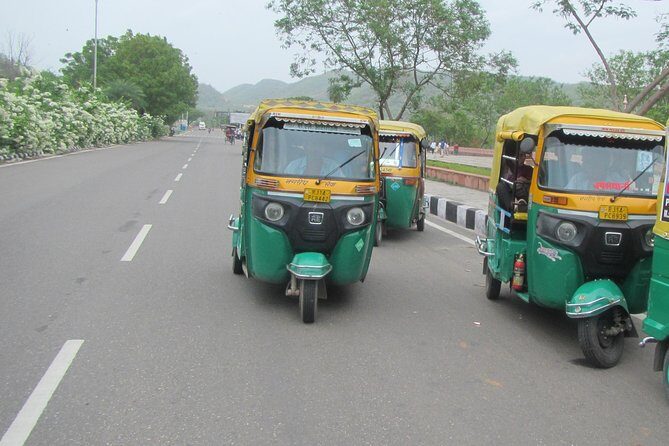
One tuk-tuk, a whole day of Jaipur. This private tuk-tuk tour is a practical way to cover the big sights with hotel pickup and drop-off, and it helps you move on your own time instead of being stuck with a fixed bus route. I like that it’s truly for your group, so the day feels organized without feeling staged.
What really works is the human touch: you can choose an English, French, or German-speaking guide and driver, and the explanations connect the dots between buildings and Jaipur’s famous arts. One thing to plan for: the major monument entrance fees are not included (there’s a combined entry price listed), so budget for that in advance.
In This Review
- Key highlights worth your attention
- How a private tuk-tuk makes Jaipur feel doable
- Price and what you actually pay for
- The big route: how the 8 hours really work
- Stop-by-stop: what each place adds to your day
- Hawa Mahal (Palace of Breeze): the photo icon with a purpose
- Jantar Mantar: science in stone
- City Palace: where royal life overlaps with present-day Jaipur
- Jal Mahal: a quick look at the water palace
- Royal Gaitor Tumbas: carvings, temples, and 18th-century memory
- Amer (Amber Fort area): the big fort moment
- Panna Meena ka Kund: the stepwell you’ll remember
- What the guide adds (beyond names and dates)
- Practical comfort and timing tips that make the day better
- Who this private tuk-tuk tour is best for
- Should you book it?
- FAQ
- What is the duration of the private tuk-tuk tour?
- How much does the tour cost?
- Does the tour include hotel pickup and drop-off?
- What sights are included in the route?
- Are entrance fees included?
- Is the tour private?
- What languages are available for the guide and driver?
- What’s included in the tour price besides the tuk-tuk?
- What is the cancellation policy?
Key highlights worth your attention
- Private tuk-tuk means your route is flexible and not shared with strangers
- Multilingual guide options (English, French, or German) for a smoother day of explanations
- A tight cluster of icons: Hawa Mahal, Jantar Mantar, City Palace, Jal Mahal, Amer, and more
- Fuel, parking, and GST included, so you’re not doing math mid-tour
- Frequent short stops keep the day moving without making every location feel rushed
- Lunch is on you, but you’ll have built-in breaks where you can step away and grab food
How a private tuk-tuk makes Jaipur feel doable
Jaipur can be a lot in one day. The traffic alone can turn sightseeing into a timing game. This private tuk-tuk format solves the main problem: you’re not trying to squeeze your day between multiple tour groups and rigid schedules. You get picked up and dropped off from your hotel (or airport/railway station), and your driver handles the driving while your guide handles the story.
The day is designed around a classic Jaipur route, but the real value is control. If you want more time at a place that grabs you, your guide can usually flex the pace. If you’d rather keep things brisk, you can. That’s the difference between seeing “the highlights” and actually feeling like you experienced the city.
The other part I appreciate is the “small comforts that matter” feeling: bottled water is included, and the tour price covers fuel and parking fees, plus GST. Those add-ons can sneak up on you on independent plans, so it’s nice when they’re already handled.
You can also read our reviews of more guided tours in Jaipur


Price and what you actually pay for
The price is listed as $8.99 per group (up to 3), which is a big reason this tour is such good value if you’re traveling with friends or family. Also, it’s a private vehicle—so you’re not splitting costs across strangers on a shared ride.
What’s not included is equally important. Entrance fees are not included, and there’s a listed combined entry fee for Jaipur’s popular monuments (about $25 per person). When you budget for a day like this, that entry fee is the piece that can make or break the bargain.
So here’s how I’d think about it:
- If you’d be paying admission anyway and hiring local help, a private tuk-tuk is a strong deal.
- If you’re determined to skip many ticketed stops, you might need to compare what you’ll actually see for free versus ticketed sites.
Either way, the tour gets you to the key places with an organized plan, and that alone can save hours of guesswork.
The big route: how the 8 hours really work
The tour runs about 8 hours, and it mixes long looks with quick hit stops. That structure matters in Jaipur, because some sites naturally take time (palaces, forts, and museum-like areas), while others are best as a viewpoint moment.
A good example is the pacing choice built into the itinerary:
- You get longer time blocks at Hawa Mahal (1 hour), Jantar Mantar (1 hour), the City Palace (2 hours), and Amer (2 hours).
- Then you have short, efficient moments for places like Jal Mahal (about 15 minutes) and Panna Meena ka Kund (about 30 minutes).
This isn’t “rush through everything.” It’s more like a well-run highlight reel where you still have enough time to look around and absorb what you’re seeing.
One more practical note: the tour is described as requiring good weather. If weather turns, you may be offered a different date or a full refund. That’s not just fine print—on days with poor conditions, outdoor viewpoints and walking areas get less enjoyable fast.
Stop-by-stop: what each place adds to your day
Hawa Mahal (Palace of Breeze): the photo icon with a purpose
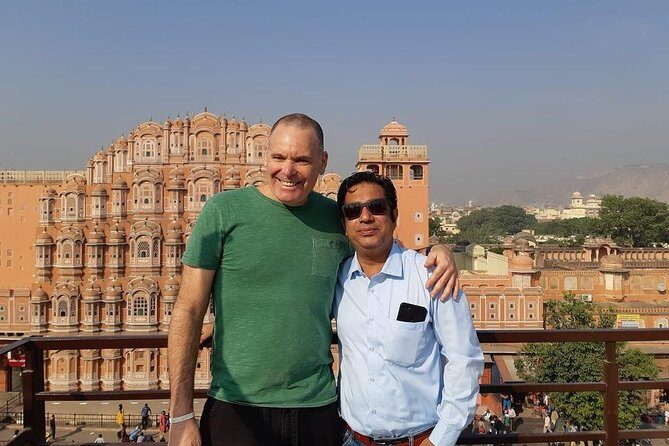
Most people come for the façade, and yes, it’s famous for a reason. Hawa Mahal, built by Sawai Pratap Singh, was designed so the royal household could observe everyday city life. That angle changes how you look at it. It’s not just a pretty shell—it’s a window on social life and power in Jaipur.
You’ll get about 1 hour here, and the admission is listed as not included. If you’re the type who likes to do more than quick snapshots, use that hour to study the structure and the idea behind it.
You can also read our reviews of more private tours in Jaipur






Jantar Mantar: science in stone
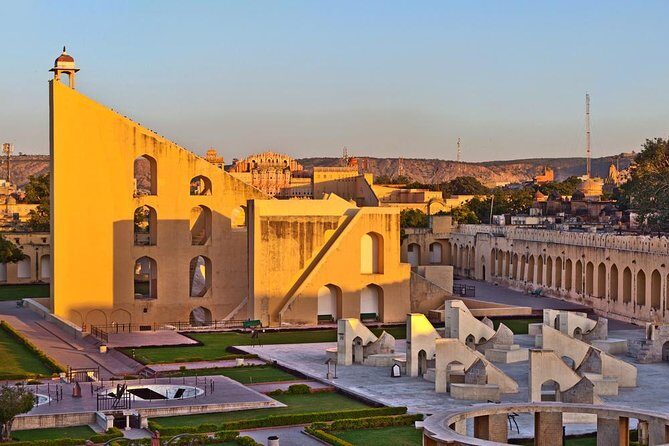
Next is Jantar Mantar, described as a collection of nineteen astronomical instruments built by Sawai Jai Singh. The standout is the world’s largest stone sundial, and once you see the scale of the instruments, you realize this wasn’t decoration. It’s measuring, observing, predicting.
You’ll have around 1 hour and, again, admission isn’t included. Even if you’re not a science person, your guide can help you connect what you’re seeing to how people tracked the sky centuries ago. This stop is a good “mind stretch” in the middle of a day that’s mostly architecture and royal sites.
City Palace: where royal life overlaps with present-day Jaipur
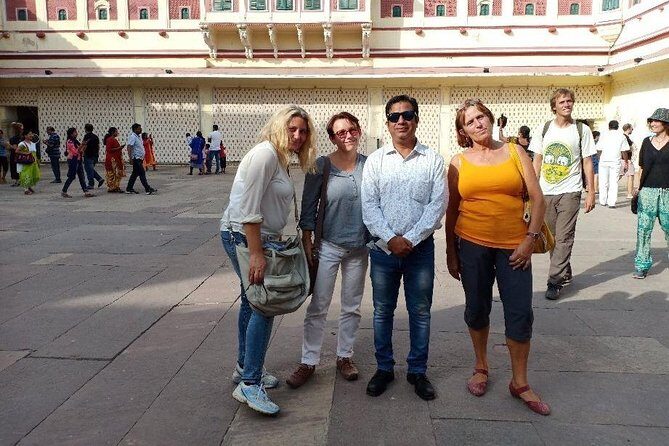
Then you move to the City Palace, built by Maharaja Jai Singh. What makes this stop feel special is that it’s not only a historic complex—it’s also linked to the erstwhile royal family’s space. You’ll have about 2 hours here, which is just right: enough time to wander at a comfortable pace and still not feel like you’re stuck all day.
Admission is not included. In my opinion, this is one of the best places to spend time if you want context, because your guide can explain how the palace fits into Jaipur’s rise as a planned, rule-focused capital.
Jal Mahal: a quick look at the water palace
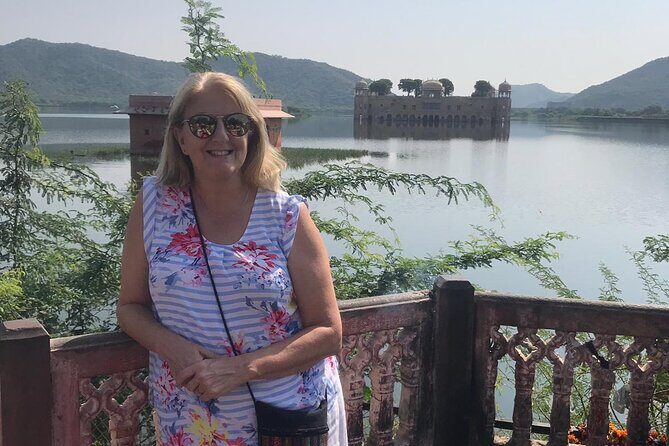
Jal Mahal is the water palace in the middle of Man Sagar Lake. The itinerary gives you a short stop—about 15 minutes—and admission here is listed as free.
In a perfect world, you’d want more time, but this stop works best as a viewpoint and photo break. Think of it as a pause between the heavier palace-and-fort sections. You can stand, take pictures, and enjoy the contrast between royal architecture and lake setting without it eating your whole afternoon.
Royal Gaitor Tumbas: carvings, temples, and 18th-century memory
For something different from the big-name icons, you’ll head to Royal Gaitor Tumbas, built in the 18th century. This is where intricate carvings come into play, along with a complex that includes temples dedicated to different figures.
You’ll have about 45 minutes here, and admission is not included. This stop can be a strong payoff if you like details—stonework and symbolism—because it’s less of a checklist moment and more of a place to slow down and look closely.
Amer (Amber Fort area): the big fort moment
Amer is about 11 km from Jaipur, and this is one of the main anchors of the day. You’ll spend around 2 hours here, with admission listed as free for this specific stop in the itinerary details.
Amer is described as renowned for its grand fort and palace, with a fusion of Hindu and Muslim architecture. That blend is part of why Amer works so well as a Jaipur highlight: it tells you the city wasn’t built from one single style. Your guide can point out how that fusion shows up in the design choices.
If you’re the kind of visitor who wants your fort to feel more than just impressive, this is a good time to listen closely—because Amer’s layout and features are easier to understand when someone explains what you’re looking at.
Panna Meena ka Kund: the stepwell you’ll remember
The final listed site is Panna Meena ka Kund, a 16th-century stepwell described as about 200 feet deep with 1,800 symmetrical steps and an eight-story structure. It also served as a water reservoir and a social hub.
You’ll have about 30 minutes, and admission is listed as free. This stop is one of the most interesting ways to end the day, because it’s not a palace façade or a royal tomb—it’s a piece of infrastructure that shaped daily life. If you like architecture that has a job and a human story attached, this is the one.
What the guide adds (beyond names and dates)
A lot of tours stop at facts. This one is set up for more conversation and context. The tour description emphasizes a licensed guide and driver, and the reviews point to guides who share what makes Jaipur special—things like Indian art, textile, rugs, and gems.
That matters, because Jaipur’s best souvenirs are not random. When you understand how textile patterns and materials connect to local craft traditions, shopping becomes more than buying. It becomes reading the city with your eyes and then with your hands.
Even if you don’t plan to shop, this kind of guidance makes your sightseeing feel less like standing in front of landmarks and more like understanding why they look the way they do.
Practical comfort and timing tips that make the day better
This tour is built for a full day, so small choices can protect your energy.
- Plan your day so you’re ready for a steady pace. Even with short stops like Jal Mahal (15 minutes), the day still has multiple major locations.
- Bring a budget for entrance fees, since the itinerary marks most admissions as not included and lists a combined monument entry fee.
- Use the bottled water and plan for breaks. Food and drinks aren’t included, so decide ahead of time how you’ll handle lunch or snacks.
Also, because it’s a private tour for up to three people, you can coordinate your group’s style. If one person wants more time at City Palace and another prefers more fort time, the guide can usually manage the balance better than a shared group.
Who this private tuk-tuk tour is best for

I think this tour is ideal if you:
- Want to hit major Jaipur landmarks in one day without dealing with navigation
- Prefer a private experience over crowded sightseeing
- Like explanations that connect architecture to culture and craft
- Are traveling in a small group and can use the group pricing
It also works well for first-timers. If you only have a single day in Jaipur, this route gives you a strong cross-section: city palace life, astronomy in stone, fort power, and stepwell daily-use design.
If you already know Jaipur well and want deep, off-the-map detours, this might feel a bit too “greatest hits.” But for most people, it’s a smart way to get oriented and leave with a clear picture of the city.
Should you book it?
Yes—if you want an organized, private way to see the core icons of Jaipur in about 8 hours, this is a solid pick. The best reasons are the private tuk-tuk, hotel/airport pickup and drop-off, and the fact that the price covers the vehicle costs like fuel, parking, and GST.
I’d think twice if you hate paying admission fees on top of a tour price, because the monument entry is not included and there’s a combined fee listed. Also, since the experience depends on good weather, keep flexibility in your schedule.
If your goal is a smooth day with strong stops—Hawa Mahal, Jantar Mantar, City Palace, Amer, and Panna Meena ka Kund—this private tuk-tuk tour is an easy yes.
FAQ
What is the duration of the private tuk-tuk tour?
The tour lasts about 8 hours.
How much does the tour cost?
The price is listed as $8.99 per group, up to 3 people.
Does the tour include hotel pickup and drop-off?
Yes. It includes pick-up and drop-off from the hotel, airport, or railway station.
What sights are included in the route?
The itinerary includes Hawa Mahal, Jantar Mantar, City Palace, Jal Mahal, Royal Gaitor Tumbas, Amer, and Panna Meena ka Kund.
Are entrance fees included?
No. Entrance fees are not included, and a combined entry fee for Jaipur popular tourist monuments is listed as about $25 per person.
Is the tour private?
Yes. It’s a private tour/activity, and only your group participates.
What languages are available for the guide and driver?
You can choose an English, French, or German speaking driver and guide.
What’s included in the tour price besides the tuk-tuk?
Included items are bottled water, fuel, parking, and other charges. A mobile ticket is also provided.
What is the cancellation policy?
Free cancellation is offered up to 24 hours in advance for a full refund. The experience requires good weather, and if it’s canceled due to poor weather, you’ll be offered a different date or a full refund.