REVIEW · 6-DAY EXPERIENCES
Private 6-Day Golden Triangle Tour: Delhi, Agra, Jaipur by Car
Book on Viator →Operated by Namaste India Vacations · Bookable on Viator
Six days, three cities, one smooth ride. This private Golden Triangle tour in an air-conditioned car is built for comfort, with a guide working with your group each day and time to move at your pace. I like that you’re not stuck in a rigid “everyone together, always together” flow, and I also like the extra pull into Abhaneri to see Chand Baori, one of India’s most unusual stepwells. One drawback to plan for: monument entry tickets and your meals aren’t included, and accommodation is totally up to you.
You also get practical support from day one: hotel pickup each morning, a guide for sightseeing days in Delhi, Agra, and Jaipur, plus a water bottle included. And yes, the drive rhythm matters—Delhi to Agra is about 4 hours, then you’ll work your way toward Jaipur with an Abhaneri detour. If you’re lucky enough to have Mohammed as your guide, his photo-help and Agra knowledge come up in standout feedback, and drivers like Ajay have been praised for safe, courteous handling in heavy traffic.
In This Review
- Key highlights you’ll actually feel on the trip
- How the private Golden Triangle car tour really works
- Delhi at street level: Old Delhi rickshaw, Red Fort, and Akshardham
- Agra’s monuments: Taj Mahal, Agra Fort, Itmad-ud-Daula, and Mehtab Bagh
- Chand Baori and Abhaneri: the stepwell detour that changes the whole tone
- Jaipur sights without the rush: Amber Fort, City Palace, Hawa Mahal, and Jantar Mantar
- Price and logistics: what $215 really buys you
- Should you book this Delhi–Agra–Jaipur private car tour?
- FAQ
- What’s included in the tour price?
- Are monument entry tickets included?
- Do I choose my own hotel?
- What cities and main sights are covered?
- Is this tour private or shared?
- How does the tour end?
Key highlights you’ll actually feel on the trip
- Daily hotel pickup with an air-conditioned vehicle keeps mornings easy.
- Private group pacing so you can linger, pause, and reorder your day when it fits.
- Delhi to Agra by road means you’re not losing half a day to trains.
- Chand Baori in Abhaneri adds a famous-but-not-typical stop beyond the main Golden Triangle list.
- A guide each day helps you connect the dots between Mughal sites, forts, and observatories.
- Taj Mahal plus more: you’re not only ticking one icon—you’ll also see Agra Fort, Itmad-ud-Daula, and Mehtab Bagh.
How the private Golden Triangle car tour really works
This is a classic Delhi–Agra–Jaipur route, but with two big upgrades for day-to-day sanity: private touring and daily pickup. Instead of meeting a big group and chasing a guide with a megaphone, you’re paired with a professional guide for the cities where you’ll actually be sightseeing, and your car starts from your hotel.
The tour structure also gives you flexibility in a simple way: you travel at your own pace because it’s just your group. That matters because these cities don’t run on “one fixed schedule” in real life—line-ups, photo stops, and the time it takes to walk around forts can change hour to hour. With a private setup, your guide can slow down if you want better photos or speed up if you prefer fewer stops.
The car routing is another practical piece. Delhi to Agra is listed as roughly a 4-hour drive, and you’ll later head back toward Delhi in the early morning on your last day, connecting to the international airport for departure. It’s not a short hop kind of trip, so the air-conditioned ride isn’t a luxury—it’s part of the value.
You can also read our reviews of more private tours in Jaipur



Delhi at street level: Old Delhi rickshaw, Red Fort, and Akshardham
Delhi is split into Old Delhi and New Delhi, and this tour takes advantage of that. You start with a day focused on landmarks across both sides of the city, plus you get the chance to see the markets atmosphere by doing a rickshaw ride through Old Delhi. You’ll also have time for local street food in Old Delhi, which is one of the fastest ways to feel Delhi’s energy without needing a deep cultural lecture first.
On the New Delhi side, you’ll see several major sights that help you understand the city’s layers:
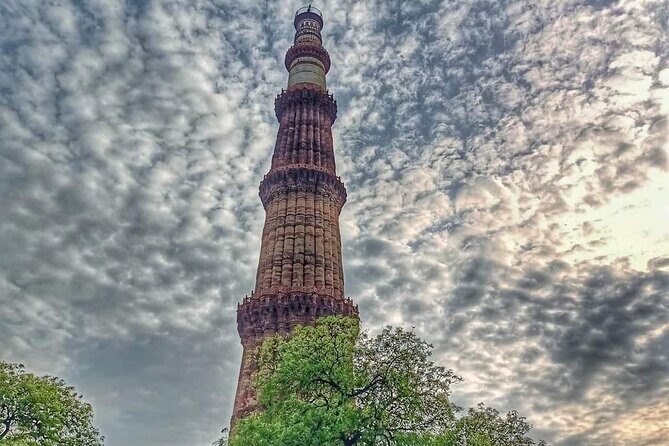
- Red Fort (Lal Qila), a Mughal fort commissioned by Shah Jahan and completed in 1648. You’re scheduled for about an hour here, and because it’s a fort complex, you’ll want comfortable shoes.
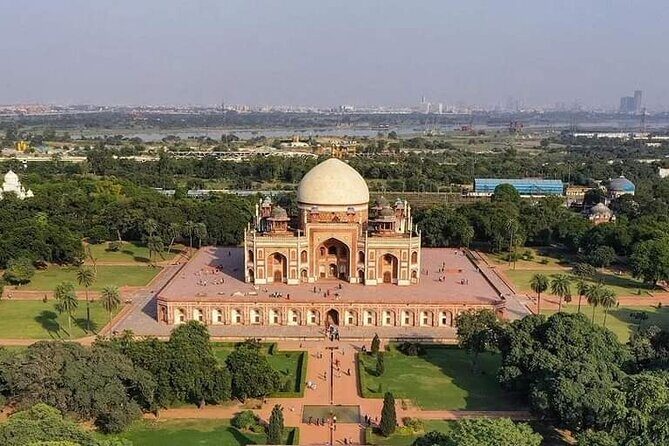
- Humayun’s Tomb, a UNESCO-listed Mughal monument and considered one of the finest early examples of Mughal architecture, with about 1 hour 30 minutes.
- India Gate, a war memorial designed by Sir Edwin Lutyens, with a shorter stop of about 30 minutes.
- Swaminarayan Akshardham, a huge temple complex that’s officially opened to the public, with about 1 hour 30 minutes set aside.
What I like about this balance is that Delhi doesn’t feel like a single theme park day. You get Mughal monuments, a major memorial, and then a major modern-scale temple complex in the same trip window. It also helps you avoid the common mistake of only focusing on one part of Delhi.
One thing to consider: the entry tickets for several key sites here are listed as not included. That doesn’t make the tour bad—it just means you need to budget for monument access when you’re on the ground.
Agra’s monuments: Taj Mahal, Agra Fort, Itmad-ud-Daula, and Mehtab Bagh
Agra is where the tour’s “wow per hour” tends to spike. After your road transfer from Delhi (about 4 hours), you’ll hit the big Mughal hits, including the Taj Mahal and several companion stops that make the day feel fuller than a single monument.
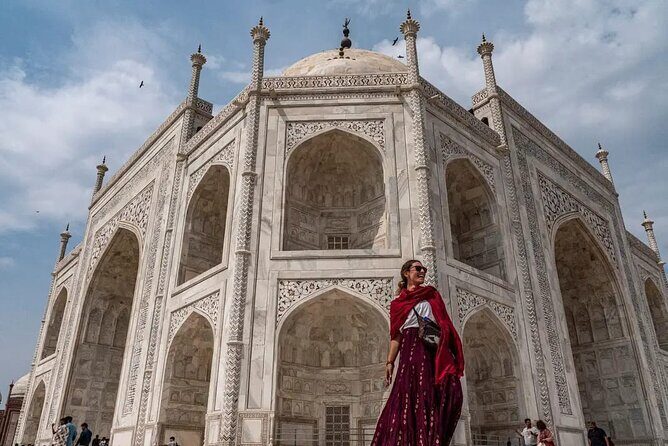
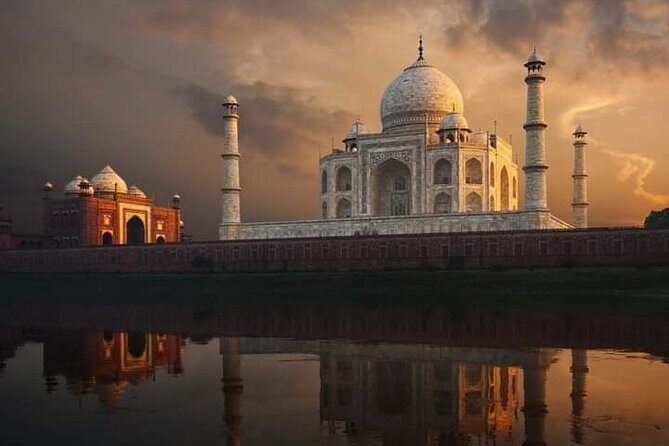
The Taj Mahal stop is scheduled for about 2 hours 30 minutes, and it’s the kind of visit where time matters. You’re not just looking at a building; it’s a whole composition—white marble mausoleum built by Shah Jahan in memory of Mumtaz Mahal, completed in 1653, with the emotional backstory of her passing in 1631. If you want to photograph it well, this longer window helps.
Then you’ll move through:
- Agra Fort, built by Akbar and used by Mughal emperors as a residence before the capital shifted to Delhi (about 1 hour 30 minutes).
- Itmad-ud-Daula, also called the Baby Taj, built by Empress Nur Jahan for her father, Mirza Ghiyas Beg (about 1 hour).
- Mehtab Bagh (Moonlight Garden), on the opposite bank of the Yamuna River, scheduled for about 1 hour.
These are the kinds of stops that turn Agra from one iconic photo into a clearer story about how Mughal power and taste showed up in architecture. If you like details—arches, tomb design, garden planning—this lineup is a strong match.
You’ll also have a short craft stop: Marble Art Palace in Agra, around 30 minutes. Since Agra is known for handicrafts, this can give you a sense of how the local design tradition continues beyond monuments.
Practical note: entry tickets are not included for these major Agra sites. So you’ll want to keep a little extra cash or plan online where your guide directs you, if that’s an option.
Chand Baori and Abhaneri: the stepwell detour that changes the whole tone
Golden Triangle tours often feel the same by Day 3—monument, fort, palace, repeat. This one gives you a very different kind of visual on the way to Jaipur: Chand Baori in Abhaneri village.
You’re set up for a long half-day, and the stop for Chand Baori is listed as about 8 hours. That time window matters because you’re not only seeing a structure—you’re also exploring the ancient village setting around it. Chand Baori is famous for intricate stepwell architecture, and stepwells are special because they’re part water system, part design project, part community memory.
The plan also includes Fatehpur Sikri sightseeing on the way to Jaipur. Even if you don’t become a full-time Mughal architecture scholar overnight, having this extra stop breaks up the standard Golden Triangle rhythm and makes the road day feel like a real sightseeing day, not just a transit gap.
The real value here is variety. Taj Mahal and forts are stone-and-myth. Chand Baori is geometry and everyday infrastructure turned into art. It’s the kind of stop that makes your trip feel more personal and less “checklist.”
Jaipur sights without the rush: Amber Fort, City Palace, Hawa Mahal, and Jantar Mantar
Jaipur is often called the Pink City for a reason: it’s visually distinctive, and the tour’s schedule hits the big icons plus a couple of “why this city is different” stops.
Your Jaipur day includes:
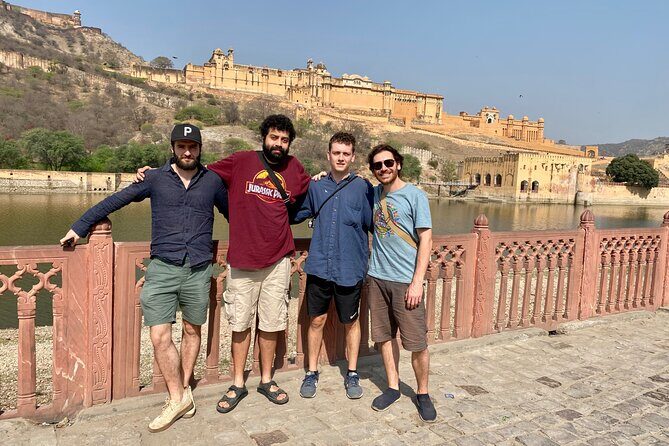
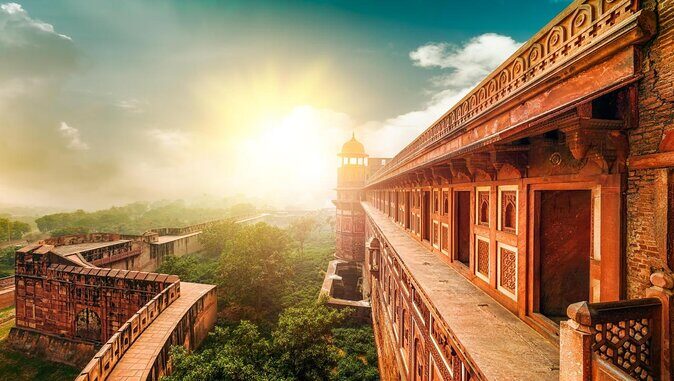
- Amber Fort (Amer Fort) on a hilltop overlooking Maota Lake. You’ll have about 1 hour 30 minutes here, and the plan mentions an elephant or jeep ride up to the fort’s ramparts. Either way, it turns the approach into part of the experience, not just transportation.
- City Palace, the palace complex in the heart of Jaipur, where the Maharaja of Jaipur and the Kachwaha Rajput clan were based. Your time here is about 1 hour 30 minutes.
- Hawa Mahal (Palace of Breeze), a famous architectural landmark, scheduled for about 45 minutes.
- Jantar Mantar, an astronomical observatory built by Maharaja Sawai Jai Singh II, with about 1 hour allocated.
Then there’s a shorter stop designed for shopping curiosity: Jaipur Gems & Jewellery for about 30 minutes. The tour doesn’t position it as a must-buy place, but it can be useful if you want to understand what gemstones look like in person and how the local market works.
What I like about this Jaipur mix is that you’re not only seeing royal buildings. You’re also seeing how Jaipur connected astronomy, architecture, and power. Jantar Mantar isn’t just a photo spot—it helps you appreciate why the city earned its reputation for scientific design.
Also, since the tour is private, you can pace Hawa Mahal and the street-view photo moments differently than someone trying to get from one end of Jaipur to the other on a strict bus schedule.
You can also read our reviews of more tours and experiences in Jaipur


Price and logistics: what $215 really buys you
At $215 for roughly 6 days, this tour can be good value, especially because it’s a private car setup with guided sightseeing days. But you need to look at what’s included and what isn’t, because the “real cost” is the monument and meal add-ons.
Here’s what’s included based on the tour details:
- Professional tour guide in Delhi, Agra, and Jaipur
- All fees and taxes
- Air-conditioned vehicle and private car for sightseeing plus hotel pickup/drop-off
- Water bottle
Not included:
- Accommodation
- Food (lunch, breakfast, dinner)
- Paid entry tickets for monuments
That means your budget needs to cover hotels in Delhi, Agra, and Jaipur, plus meals and monument entries. The flip side is that the tour gives you freedom to choose your accommodation style city by city, rather than forcing one hotel standard on everyone. If you already know where you want to stay, this can be a nice way to keep control.
One more practical note: you’re given mobile ticket access, and the tour includes pickup offered. Combined with the free hotel pickup/drop-off, it reduces the most stressful part of Golden Triangle travel: getting from airport or hotel into the correct starting point each day.
If you’re the type who wants a plan but not a cage, this pricing structure often works well—especially for couples or small groups who would otherwise need to hire separate cars and guides.
Should you book this Delhi–Agra–Jaipur private car tour?
I’d book this tour if you want:
- A private experience where your guide can set the day pace
- Daily hotel pickup in an air-conditioned vehicle
- The full Golden Triangle big-name sites plus an Abhaneri stepwell detour
- A guide-led approach, which helps when navigating ticket lines and figuring out what to prioritize
I’d skip or rethink it if you:
- Don’t want to manage extra spending for monument tickets and meals
- Prefer a fully “hotel + food + tickets bundled” package
A good way to make this tour work smoothly is to decide your hotel strategy in advance, then budget separately for entries and meals. With that sorted, you’ll spend your time doing what you actually came for: Delhi’s Mughal landmarks and Old Delhi streets, Agra’s Taj-centered architecture day, and Jaipur’s forts, palace complex, and observatory.
FAQ
What’s included in the tour price?
The tour includes a professional tour guide in Delhi, Agra, and Jaipur, air-conditioned vehicle transportation with hotel pickup and drop-off, all fees and taxes, and a water bottle.
Are monument entry tickets included?
Paid entry tickets for monuments are not included. Some stops list admission ticket free, but many major sights are marked as not included.
Do I choose my own hotel?
Yes. Accommodation is not included, and you can choose any type of hotel in each city.
What cities and main sights are covered?
You’ll visit Delhi, Agra, and Jaipur, including stops such as Red Fort, Humayun’s Tomb, India Gate, Swaminarayan Akshardham, the Taj Mahal, Agra Fort, Itmad-ud-Daula, Mehtab Bagh, Chand Baori in Abhaneri, Amber Fort, City Palace, Hawa Mahal, Jantar Mantar, plus a short Jaipur gems stop.
Is this tour private or shared?
It’s private. Only your group participates, and you travel at your own pace.
How does the tour end?
Early in the morning you’ll be transferred back to Delhi, and then you’ll be transferred to the international airport for your departure.