REVIEW · CITY TOURS
Private Guided City Tour of Jaipur
Book on Viator →Operated by RAAH EXPERIENCES · Bookable on Viator
Jaipur in one smooth, story-driven day. This private guided tour hits major sights like Amber Fort while also slowing down for lesser-visited places such as Panna Meena ka Kund and Jagat Shiromani Ji Temple. I like that the guide handles practical stuff on the ground—tickets when they’re included, helpful explanations, and even a hand with getting a good photo. One possible drawback: Hawa Mahal entry isn’t included, so you may need to cover that ticket separately.
What makes the day feel worth it is the pacing. You’ll move between stops in an air-conditioned vehicle, pause long enough to actually look, and still get a lunch break (meals aren’t included). Plus, the tour is flexible to your time and pace, which matters in Jaipur where traffic can change the plan.
In This Review
- Key highlights you’ll feel right away
- A private Jaipur route that actually respects your time
- Starting near Hawa Mahal: great views, ticket is extra
- Panna Meena ka Kund and Jagat Shiromani Ji Temple: engineering and marble calm
- Panna Meena ka Kund (the step well that solved daily life)
- Jagat Shiromani Ji Temple (white marble toran and local rhythm)
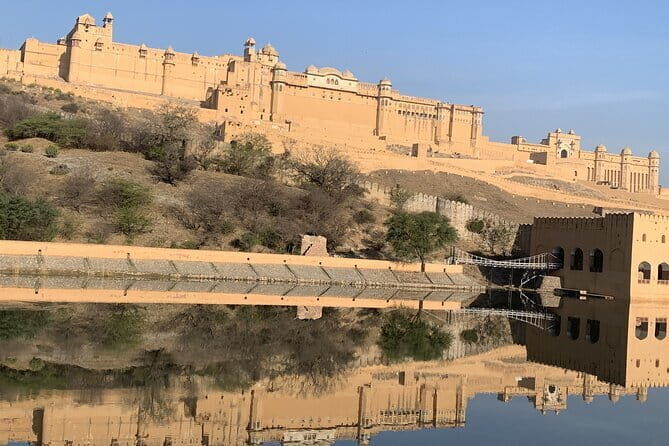
- Amber Fort and Jal Mahal: the day’s biggest visuals
- Amber Fort: the main event (and why timing matters)
- Jal Mahal: a palace on water, mostly for pictures
- Jantar Mantar: UNESCO, timekeeping, and real science
- City Palace museum section and the 309B sacred fire stop
- City Palace: royal residence plus a museum section
- 309B, Mangala Rd: pavilions connected to sacred fire
- Patrika Gate and Monkey Temple: finishing with a local-feeling pace
- Patrika Gate: arts, crafts, and a modern facade idea
- Monkey Temple: animals, faith, and a reality check
- Language help and the Om Prakash factor
- Price and value: what $45.33 per group really means
- Timing, lunch, and what to bring for a smooth day
- Should you book this Jaipur private city tour?
- FAQ
- What is the price for the Private Guided City Tour of Jaipur?
- How long is the tour?
- Is this tour private?
- What does the tour include for admission tickets?
- Do I get pickup from my hotel?
- Which languages are available for the guide?
- Is there a lunch break during the tour?
- What if weather is bad?
- Where does the tour start and end?
Key highlights you’ll feel right away
- Private group for up to 4 with an air-conditioned car and direct guide attention
- Off-the-beaten stops like Panna Meena ka Kund and Jagat Shiromani Ji Temple
- Admissions covered for Amber Fort, Jantar Mantar, and the City Palace museum section
- Photo-first moments built into the route, including the Hawa Mahal area and Jal Mahal
- Licensed multilingual guides available in English, Spanish, and Russian
A private Jaipur route that actually respects your time
The biggest win here is that this is truly private—your group is the only group in the car. For a city like Jaipur, that means you can spend less time waiting around and more time walking at your own speed (within reason, of course). The tour is designed as a 6 to 8 hour day, with sightseeing transfers between monuments and a lunch break of about 60 to 90 minutes.
You also get pickup and drop for hotels within 10 km of the city limit, which can save you from figuring out transport mid-day. If you’re staying farther out, you’ll still start near public transportation at the meeting point and the tour returns there at the end.
Finally, the guide helps with the “small but important” moments: getting the right entry, figuring out what you’re looking at, and even stepping in for a photo. That kind of support turns a checklist day into an actual experience.
You can also read our reviews of more guided tours in Jaipur


Starting near Hawa Mahal: great views, ticket is extra
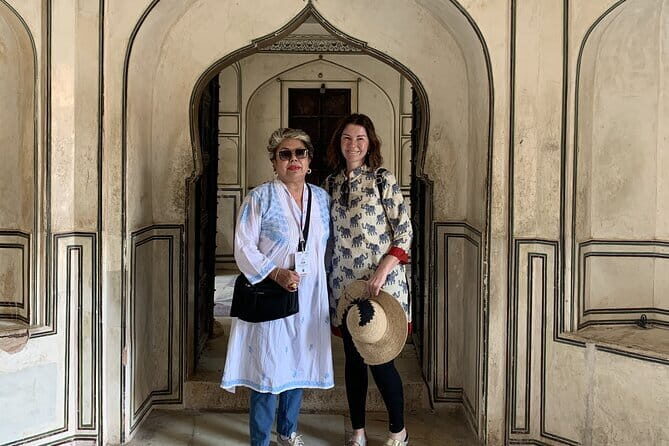
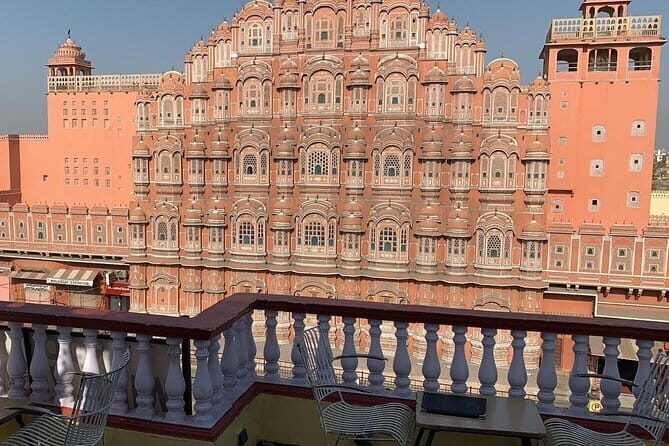
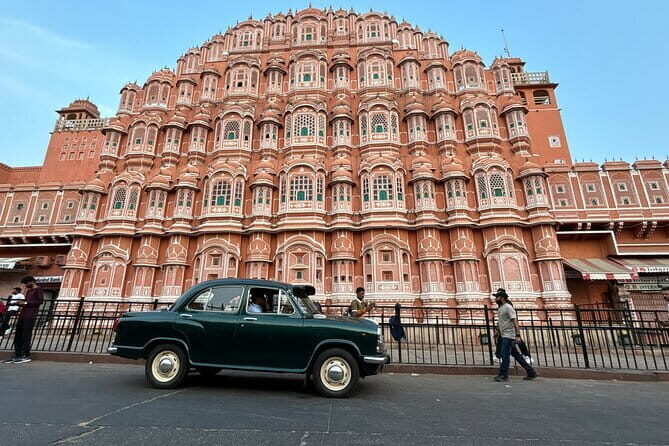
The tour typically starts around the Hawa Mahal area. You’ll do a drive-past and get a short stop for photos, with a quick intro from the guide so you know what you’re seeing before you move on.
Here’s the practical catch: Hawa Mahal admission isn’t included. So if you want to go inside or if you’re planning around a specific time window, treat that as an optional add-on rather than something automatically covered. Either way, the start still works well for orientation—you get the “Jaipur feel” fast, then roll into the calmer, more story-heavy stops.
Tip: if your group is photo-focused, wear something comfortable to walk for those quick stops. The car transfer is easy, but the best angles happen when you step out and look up.
Panna Meena ka Kund and Jagat Shiromani Ji Temple: engineering and marble calm
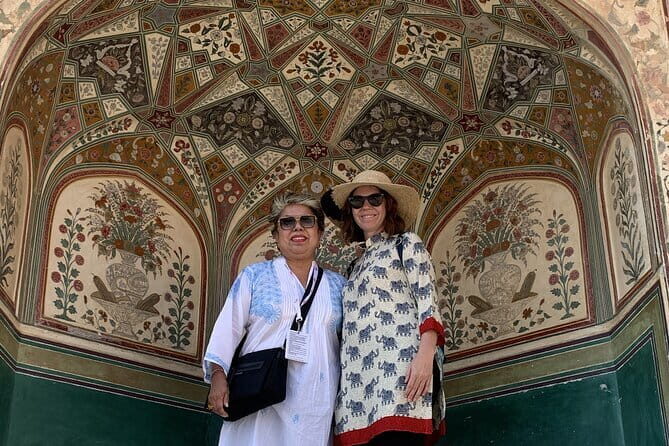
After the Hawa Mahal area, the day pivots into two quieter stops that many first-time routes skip.
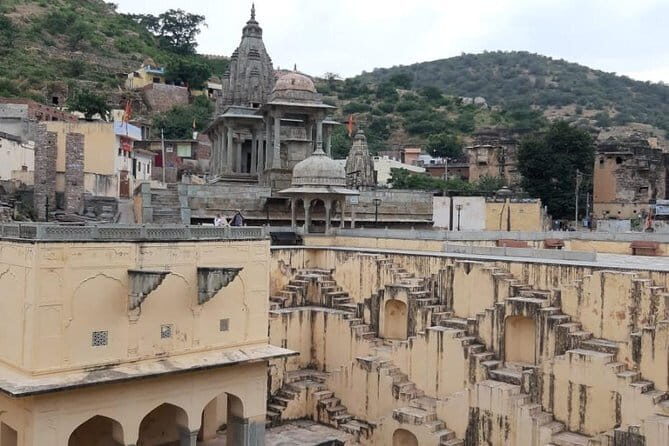
Panna Meena ka Kund (the step well that solved daily life)
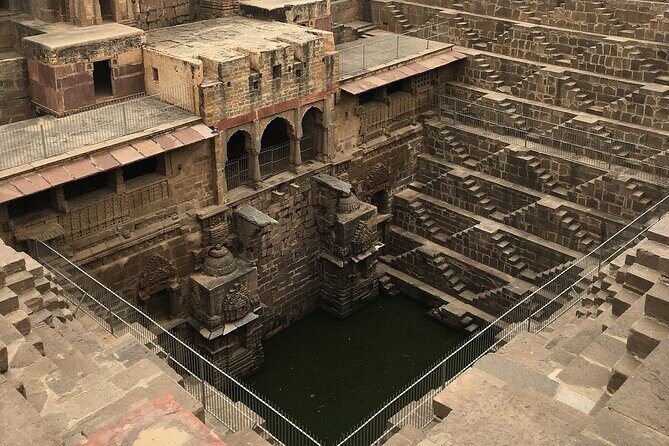
Panna Meena ka Kund is an ancient step well from the Amber region. You’ll spend about 10 minutes here, focused on the engineering and creativity behind a system designed to store and collect water for daily use.
What I like about this stop is the perspective it gives you. Jaipur’s grandeur is obvious, but this kind of structure reminds you the city was built to function—water management, practical design, and clever architecture that people relied on every day.
This part is ticket-free, so you can enjoy it without worrying about extra costs.
Jagat Shiromani Ji Temple (white marble toran and local rhythm)
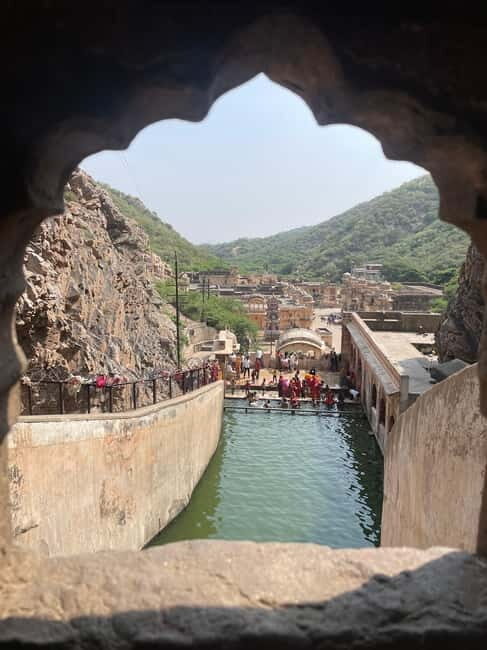
Next comes Jagat Shiromani Ji Temple, known for an entry gate (toran) made entirely of white marble. You’ll get about 15 minutes, and this is one of those places where you can rub shoulders with locals rather than only seeing monuments behind barriers.
It’s also a good “tone shift” after big architecture. The guide helps connect what you’re seeing with the spiritual side of Jaipur—especially the story behind the queen associated with the site—so you’re not just looking at a pretty gate.
Both of these stops are entry-free, which makes the flow feel efficient: you’re spending time, not waiting in lines.
You can also read our reviews of more city tours in Jaipur



Amber Fort and Jal Mahal: the day’s biggest visuals
Amber Fort: the main event (and why timing matters)
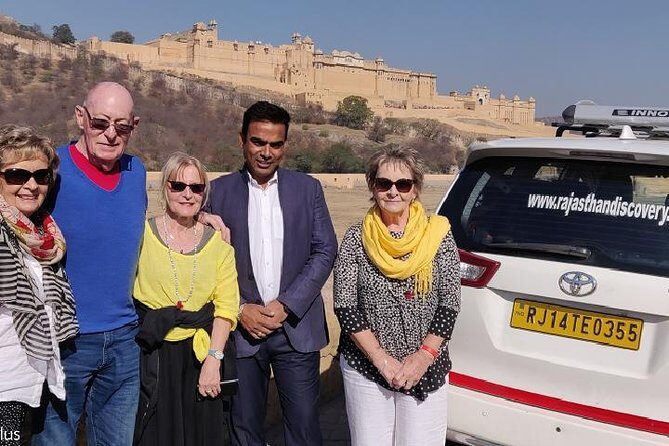
Amber Fort is a royal residence from the rulers of Amber Town, and it’s the heavy hitter of the route. Expect about 1 hour 10 minutes of time here, and admission is included.
The fort complex is huge and divided into different sections, with architectural styles that change as you move through. That means your guide’s explanations matter. Without context, it can feel like “more walls.” With context, you start seeing why different parts look and feel different, and how the fort worked as both a residence and a power statement.
A good strategy: stay curious at the transitions. When the view changes, that’s usually where the story changes too.
Jal Mahal: a palace on water, mostly for pictures
From Amber Fort, the tour stops at Jal Mahal, a palace and hunting lodge that sits in the middle of a man-made reservoir. The stop is short—around 10 minutes—and it’s mainly for photos and understanding the structure.
This is a stop that works even if you don’t love long fortress days. You get a “wow” view, and then you’re on to the next big intellectual stop.
Practical note: because this is a short photo stop, bring any photo essentials quickly—then enjoy the view. Don’t plan to read every plaque. The guide will point you toward what matters.
Jantar Mantar: UNESCO, timekeeping, and real science

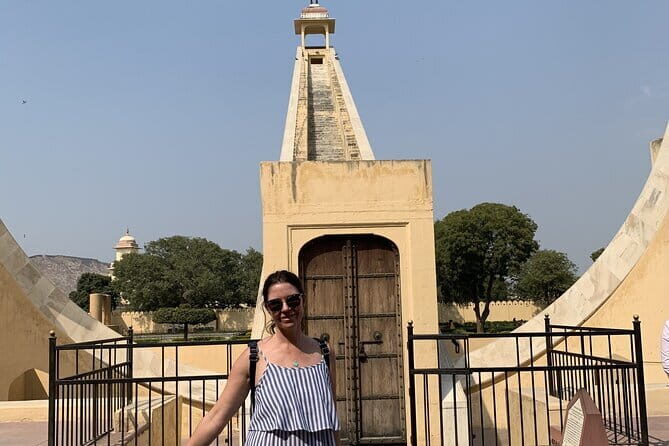
Jantar Mantar (Jaipur’s astronomical observatory) is next, with about 45 minutes. Admission is included, and it’s a UNESCO world heritage site.
The cool part is the purpose. It wasn’t built for decoration. It was constructed to calculate things like horoscope timings with better precision. The guide can also explain how the site can calculate local time with accuracy figures mentioned for the instruments—down to minutes and seconds.
Even if you’re not a science person, this stop hits because it shows how old-world thinking used observation and instruments. It’s one of those places where you stop treating it like “ancient stuff” and start treating it like “a working tool from the past.”
If you like learning in small chunks, this is your moment. You’ll have enough time to look around, ask questions, and still move on before you fatigue.
City Palace museum section and the 309B sacred fire stop
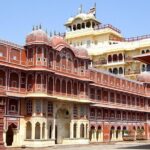
City Palace: royal residence plus a museum section
Next is The City Palace, the royal palace for Jaipur’s royal family. You’ll get about 1 hour, and admission for the museum section is included.
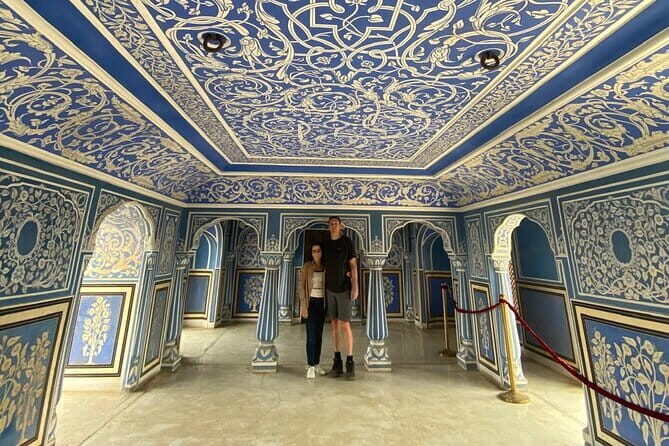
City Palace has two sections in this plan: the royal residence area and the museum section. The museum part is where you’ll learn and see displays tied to the uniqueness of the collection, guided by the tour narrative. You’ll leave with a clearer sense of how Jaipur’s rulers used art, space, and collections to represent identity and power over time.
The guide can help you focus on what’s worth your attention in the time you have.
309B, Mangala Rd: pavilions connected to sacred fire
After City Palace, the itinerary includes 309B, Mangala Rd, where members of the royal family received the sacred fire ceremony. The tour gives about 30 minutes here, and admission is included.
This is different from the big public sights. It’s more about the spiritual ceremony connection and the decorated pavilions tied to the ritual. The stop is a reminder that Jaipur isn’t only about forts and views—it’s also about ceremony, belief, and how space is used for sacred moments.
If you like variety in a day, you’ll probably enjoy this part. It gives you a more intimate angle on royal culture.
Patrika Gate and Monkey Temple: finishing with a local-feeling pace
Toward the end, the tour shifts into city edges and everyday life.
Patrika Gate: arts, crafts, and a modern facade idea
Patrika Gate is the last tour stop and marks the entry and exit to the southern part of the city. You’ll spend about 10 minutes here, and it’s ticket-free.
This gateway is tied to an idea of bringing together arts, crafts, and cultural heritage in one place. It’s a good final “breather” stop because it’s visually playful and less physically demanding than forts.
Monkey Temple: animals, faith, and a reality check
Finally, you’ll visit Monkey Temple, a Hindu pilgrimage center where you can see many monkeys. The stop is about 20 minutes and is free.
This can be a memorable ending because it’s genuinely local—less curated, more real. The landscape there is described as beautiful, and you’ll experience it the way people come for it.
Practical reminder: even if the monkeys look calm, keep your distance and don’t reach toward them. If you’re carrying food or snacks, keep them secured. A peaceful monkey photo is possible; an aggressive one isn’t a plan.
Language help and the Om Prakash factor
One of the best parts of this tour is that you’re not stuck with a generic script. The tour uses licensed guides in English, Spanish, and Russian, and other languages can be requested.
In past experiences with this provider, one guide named Om Prakash has been highlighted for exceptional English and Spanish, strong cultural explanations, helpful suggestions (including food and drinks), and a calm, attentive style. Even if your assigned guide isn’t the same person, the key point is consistent: you should get a guide who can explain what you’re seeing and help you handle small problems without drama.
The tour also includes help at monuments—getting tickets when they’re part of the package, and getting a good photo shot of you. That matters more than it sounds. In a city packed with angles, you don’t want to spend half the day negotiating with your phone.
Price and value: what $45.33 per group really means
The price is $45.33 per group (up to 4 people). That’s not per person. So if you have a group of two, it’s more like “two people paying for one car and one guide.” If you have four, the cost per person drops a lot.
What you’re getting for that price:
- Private air-conditioned vehicle for the day
- Licensed guide support
- Entry/Admission included for Amber Fort, Jantar Mantar, and the City Palace museum section
- Transfers between stops
- A lunch break window (60–90 minutes), even though meals aren’t included
What you’re paying extra for:
- Hawa Mahal admission
- Tips (not included)
- Meals and accommodations
For me, the value comes down to whether the included admissions cover the day you actually want. If your priority is “big Jaipur hits” plus a couple of off-the-beaten stops, this route makes sense. If your priority is deep time inside every monument (especially Hawa Mahal or the non-included City Palace areas), you’ll need to budget extra time and money.
Timing, lunch, and what to bring for a smooth day
This tour runs about 6 to 8 hours, depending on traffic and exact timing between monuments. Movement time matters in Jaipur, so treat the schedule as “guided flow,” not a rigid minute-by-minute machine.
You’ll get a lunch break around 60 to 90 minutes. It’s built into the plan, so you can plan to eat nearby rather than hunting down food right as you get tired. Meals themselves aren’t included, but the guide can recommend where to eat and what to try—especially Indian cuisine and local delicacies.
What to bring:
- Comfortable walking shoes (fort areas require real footwork)
- Sun protection (Jaipur sun can be relentless)
- A light layer if evenings feel cooler for you
- A small amount of cash for anything not included, like Hawa Mahal entry
Because pickup is offered within 10 km, you’ll also want to be ready at your driver pickup location on time, especially if your hotel is close to the meeting point.
Should you book this Jaipur private city tour?
I’d book this tour if you want a single-day Jaipur plan that balances the classic sights with places that feel more lived-in. The private format is a major advantage, and the included admissions to Amber Fort, Jantar Mantar, and the City Palace museum section help keep the day from turning into surprise costs.
Skip it—or modify your expectations—if you’re mainly after unbroken time inside every monument and don’t want to deal with extra entry like Hawa Mahal. Also, since the tour runs with good weather expectations, plan for flexibility if conditions are poor.
If you like your sightseeing organized, guided, and still human-scale, this is a strong way to see Jaipur without wandering around with zero plan.
FAQ
What is the price for the Private Guided City Tour of Jaipur?
The price is $45.33 per group, up to 4 people.
How long is the tour?
The tour lasts about 6 to 8 hours.
Is this tour private?
Yes. It’s a private tour/activity, and only your group participates.
What does the tour include for admission tickets?
Admission is included for Amber Fort, Jantar Mantar, and the City Palace (museum section). Entry to Hawa Mahal is not included.
Do I get pickup from my hotel?
Yes, pickup and drop facility is available from and to your hotel within 10 km within the city.
Which languages are available for the guide?
Licensed English, Spanish, and Russian guides are available. If you need another language, you can ask.
Is there a lunch break during the tour?
Yes, there is a break for lunch approximately 60 to 90 minutes. Meals are not included.
What if weather is bad?
If the experience is canceled due to poor weather, you’ll be offered a different date or a full refund.
Where does the tour start and end?
It starts at Hawa Mahal Rd, Badi Choupad, J.D.A. Market, Kanwar Nagar, Jaipur, Rajasthan 302002, India, and ends back at the meeting point.