REVIEW · EVENING EXPERIENCES
Explore Jaipur at Night with Patrika Gate
Book on Viator →Operated by Jaipur Taxi Cab · Bookable on Viator
Jaipur glows after dark. This 4-hour night route strings together the Pink City’s historic lanes, Patrika Gate, and other lit-up landmarks so you can enjoy the city’s architecture at a slower, evening pace. You’ll also get a hands-on block-printing stop, but it’s all set up so you can keep moving easily as the lights come on.
I especially like two things. First, the tour keeps the most photogenic moments concentrated—Jal Mahal, Hawa Mahal, Albert Hall Museum, Birla Mandir, and then the color-and-design gates. Second, you’re not stuck in a rigid group schedule with strangers; you’re in a private vehicle with pickup and drop-off, and the English-speaking driver can explain what you’re seeing as you go.
One caution: most monuments are viewed from the outside after dark, so don’t expect long interior visits or museum time. You’ll have short windows at each stop, which is great for photos and orientation, but it’s not a slow, deep, inside-the-building experience.
In This Review
- Key points
- Why Jaipur at night feels different (and this route makes it easy)
- Getting around: private vehicle, English-speaking driver, and your pace
- Pink City Old City at night: orientation in 30 minutes
- Jal Mahal by Man Sagar Lake: short stop, big photo reward
- Block printing demonstration: learning something you can take home
- Hawa Mahal at night: 953 windows under the stars
- Albert Hall Museum lights: grand exterior with a museum vibe
- Birla Mandir Temple: a calm pause in bright white
- Patrika Gate: the color-and-design highlight you’ll remember
- Toran Gate (dwar): a second illuminated gateway moment
- Price and value for a small group (up to 3)
- Who this Jaipur night tour suits best
- Should you book Jaipur at Night with Patrika Gate?
Key points
- Outside-only monument views after dark make the schedule fast and photo-friendly
- Private pickup and drop-off keeps you from wrestling with transport at night
- Block-printing demonstration gives you a hands-on look at a traditional technique
- Jal Mahal + Pink City + major landmarks in one evening circuit
- Patrika Gate and Toran Gate are designed for night lighting and color photos
- English-speaking driver plus bottled water for a smoother ride
Why Jaipur at night feels different (and this route makes it easy)
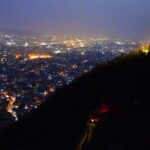
Night in Jaipur has a way of changing the mood. You’re still seeing historic places, but the light does the storytelling for you—white marble turns crisp, pale stone glows, and the city’s big icons look more dramatic than they do in daylight. This tour is built for that effect: it’s only about 4 hours, and the stops are spaced so you can see a lot without feeling rushed in every single moment.
The big win is how the timing works with what’s possible after dark. Because you’re mainly viewing landmarks from the outside, the tour avoids long ticket lines and interior queues. That means you can spend your limited time getting your bearings, taking photos, and learning the basics of what you’re looking at while you’re close to the building or monument.
For you, the best part might be the balance between structure and freedom. The route lays out the must-sees, but you’re doing it with a private driver rather than being dragged from one stop to the next in a crowd. That’s especially useful in Jaipur’s Old City, where it can be easy to lose time if you’re navigating on your own at night.
You can also read our reviews of more evening experiences in Jaipur


Getting around: private vehicle, English-speaking driver, and your pace
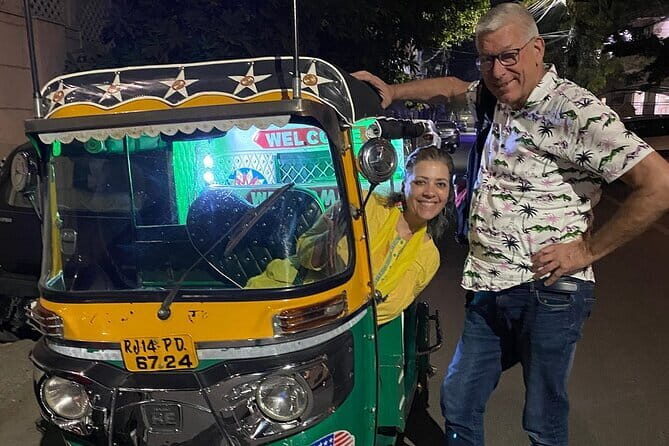
This is a private tour/activity, meaning only your group participates. For night sightseeing, that matters because you don’t want to negotiate shared logistics after sunset. The included pickup and drop-off from your hotel saves you from figuring out where to meet, how to reach each sight, and how to return when you’re done.
You’ll also ride in a private vehicle with an English-speaking driver. From the way guides are described, the experience isn’t just driving from point to point. People mention drivers like Rasid and Simar being friendly, helpful, and flexible, with Simar noted as a good driver and someone who shows a more real side of Jaipur rather than only the most obvious photo stops. That kind of attitude changes the vibe: you can ask quick questions and adjust your timing if something catches your eye.
One practical note: it’s not a walking tour marathon. The itinerary gives short, defined stop times—so your energy goes to seeing and photographing, not to navigating streets for miles. If you want a night plan that feels manageable, this fits.
Pink City Old City at night: orientation in 30 minutes
Your first stop is the Old City, also known as the Pink City, a historical area established in 1727 by Maharaja Sawai Jai Singh II. At night, the city’s architecture and street pattern are easier to read. You’re not trying to absorb everything at once—you’re getting enough of the setting to understand where you are and why the area is famous.
The stop is about 30 minutes, which is the right length for a quick loop: take a few photos, look at the facades, and get a feel for the color story that gives Jaipur its nickname. Since you’re viewing from outside and in the evening, you won’t be slowed down by entry processes or indoor time. It’s a great “get your bearings fast” stop before the route jumps into the most iconic illuminated monuments.
What to watch for: if you’re hoping for a deep dive into bazaars or a long wandering session through market lanes, this stop won’t replace that. But it’s a strong start because it sets context for everything you’ll see later.
Jal Mahal by Man Sagar Lake: short stop, big photo reward
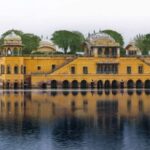
Next up is Jal Mahal, the palace on the Man Sagar Lake. At night, the idea is simple: you get the palace illuminated against the dark backdrop, and you may catch those mirror-like reflections on the water.
Your time here is about 15 minutes, so think of it like a photo-and-brief-look moment. You’ll likely spend most of your time aiming for the reflection effect and capturing the palace silhouette and lights. It’s not a long, slow sightseeing break, but it doesn’t need to be—Jal Mahal’s nighttime look is mostly about that first impression.
If you’re a photographer, this is one of your best chances for dramatic contrast in the whole evening. If you’re not, it’s still worth it because it’s a rare stop on many Jaipur days: the palace that’s known for being surrounded by water looks different when the sky goes dark.
Block printing demonstration: learning something you can take home
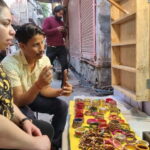
One of the most practical features of this tour is the block printing stop. You’ll go to a factory for a demonstration and learn the traditional technique firsthand. This is hands-on, not just viewing.
The stop is about 30 minutes, which is enough time to understand the basics without turning it into a full workshop day. The goal here is to show you how the process works—how patterns are made, how the technique is applied, and what makes block prints distinct.
Why this is valuable: it adds culture you can use later. After you’ve seen a few illuminated monuments, it’s easy for a night tour to turn into mostly sightseeing photos. This block printing moment gives you a different kind of memory—one that’s tied to craft and real technique rather than only architecture.
Also, it fits well into Jaipur night energy. It’s an indoor-ish activity within the overall evening circuit, so you’re not trapped outside chasing light.




Hawa Mahal at night: 953 windows under the stars
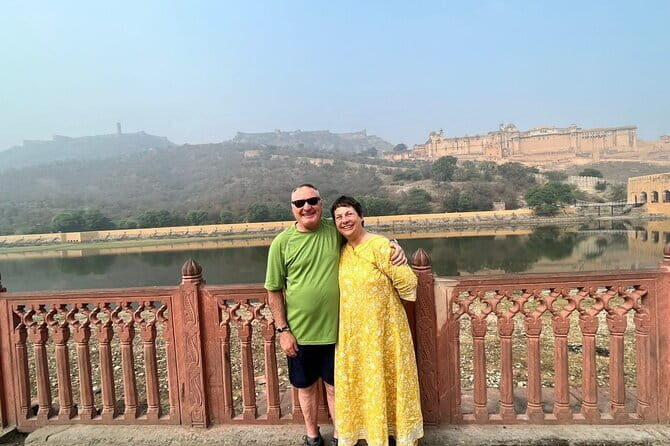
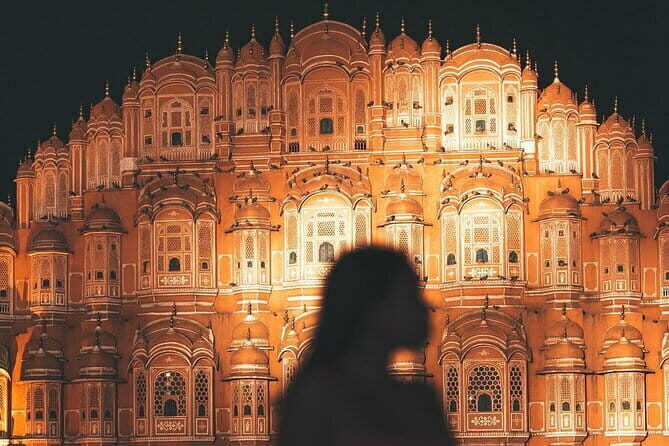
Then you get to Hawa Mahal, the Palace of Breeze. This one is famous for its intricate latticework and 953 small windows. In the evening, those details catch the light differently, so you see the facades in a more dramatic way than you would from a daytime street.
Your stop time is about 30 minutes. That gives you time to step back, take photos from a couple angles, and really look at the front face instead of just snapping one quick picture and moving on. Because the monument is viewed from outside after dark, you’ll focus on the exterior design rather than trying to plan an indoor visit.
One downside to keep in mind: if you’re the type who needs long contemplation time at one landmark, this won’t be your slowest stop. But if you want a guided evening circuit where each icon gets its moment, Hawa Mahal fits the pattern perfectly.
Albert Hall Museum lights: grand exterior with a museum vibe
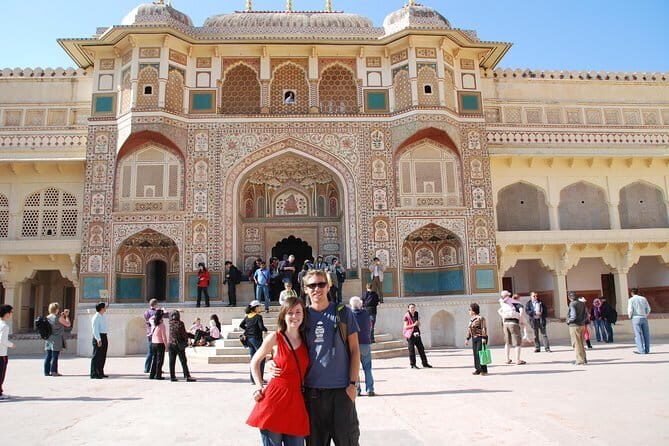
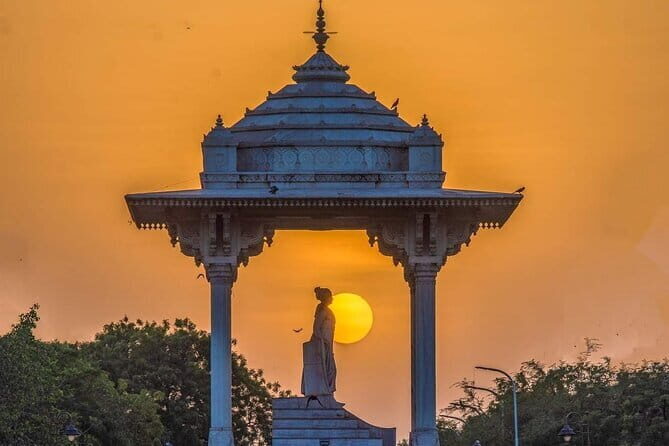
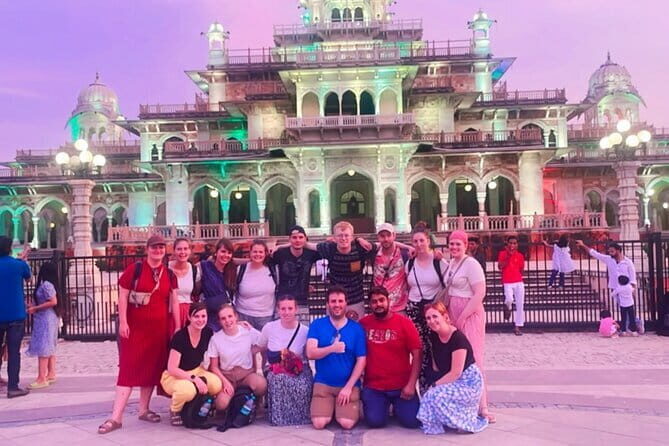
Your next stop is the Albert Hall Museum. It’s described as one of Jaipur’s oldest museums, and at night the grand exterior is lit against the sky. Even if you don’t go inside, the building’s illuminated look gives you a sense of Jaipur’s formal architecture and public landmark feel.
The time here is about 30 minutes. Again, it’s mostly a viewing-and-photo stop. You’ll want to position yourself for the best lighting angle—this is one of those places where stepping back a little can improve your shot, because the facade can fit more cleanly in the frame.
If you love architecture, this stop balances the more ornamental look of Hawa Mahal with something more monumental and symmetrical. It’s also a helpful bridge: after gates and courtyards, the museum exterior brings a different tempo to the night.
Birla Mandir Temple: a calm pause in bright white
After the busier icons, you get a calmer moment at Birla Mandir Temple. It’s illuminated at night, and the description emphasizes its white marble look and intricate architecture, with the temple set in a more peaceful surrounding.
Your stop is about 15 minutes, which is short but workable. You’ll likely spend the time in quiet looking and photos, then move along without losing the evening momentum.
This is a good stop for your energy level. If your night schedule starts to feel like a photo sprint, Birla Mandir gives you a visual reset—clean lines, bright illumination, and a more serene feel compared with the busiest gate-and-facade scenes.
Patrika Gate: the color-and-design highlight you’ll remember
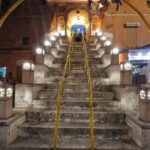
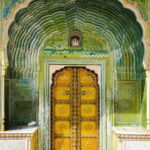
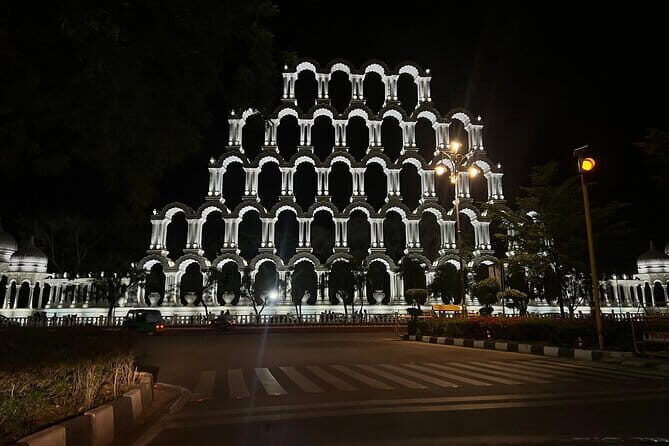
Now we get to the reason many people choose this tour: Patrika Gate. At night, it’s described as a breathtaking sight, with vibrant colors and detailed designs illuminated against the dark sky. You’ll have about 30 minutes here, which is generous enough to get multiple photo styles.
This gate is a strong candidate for your best photos of the night because it’s not just about light—it’s about pattern. When walls and metalwork are already covered in design, illumination makes those details pop, and your camera gets more to work with than just one flat facade.
In practical terms, use your time well. Spend your first few minutes observing, then try a couple different shooting positions. If you’re traveling with family or friends, this is where you’ll naturally end up coordinating because everyone can agree it looks great from almost every angle.
Toran Gate (dwar): a second illuminated gateway moment
Finally, you’ll also see Toran Gate (dwar). Like Patrika Gate, it’s described as beautifully lit at night with intricate architecture and traditional Rajasthani designs. It’s another 30-minute stop, so you’re not forced to rush.
This is a nice ending because you get one last wave of color and architectural detail before heading back to your hotel. If you’re the kind of traveler who likes to collect night gate photos, this tour does that better than most Jaipur night plans, because it doesn’t stop at one impressive entrance.
Also, by the time you reach Toran Gate, you’ve already built up your visual understanding of Jaipur’s design language. That makes the last stop feel less random and more connected to what you’ve seen earlier.
Price and value for a small group (up to 3)
The price is listed as $15.89 per group (up to 3). On paper, that’s surprisingly affordable for what you get: pickup and drop-off, a private vehicle with an English-speaking driver, and bottled water. You also get fuel, parking fees, and taxes included.
So the real value comes down to two things:
- You’re paying for time and convenience at night, when self-planning can get stressful.
- You’re paying for access to a guided route that hits multiple major sights plus the block printing demonstration.
What you should factor in: food and drinks are not included, and gratuities for the driver are not included. Also, the monuments are outside-only after dark, so you’re not paying for interior admissions or museum time. That’s not a problem if you want an efficient evening overview. Just make sure it matches your style.
If you’re traveling solo, it’s still a good option for the convenience. If you have two companions, the per-person cost drops fast, and the private aspect becomes even more compelling.
Who this Jaipur night tour suits best
This fits best if you want:
- A structured night plan that still feels flexible
- A mix of major monuments and a more hands-on cultural stop with block printing
- Photos of iconic architecture, especially Patrika Gate and Toran Gate
- Someone in the car to help you understand what you’re seeing in plain language
It may not fit you if you’re hoping for long museum time, slow walking tours, or a deeply paced cultural day where you spend hours at one site. This is designed for movement and seeing a lot in limited hours.
Because it’s booked on average about 9 days in advance, it’s also smart to plan early if your dates are fixed. Night slots can go quickly in popular cities.
Should you book Jaipur at Night with Patrika Gate?
If you want an evening that’s efficient, photogenic, and guided without feeling like a bus tour, I’d book this. The strongest selling points are the combination of outside landmark viewing, a real block printing demonstration, and two gate stops that are specifically made to look incredible with night lighting.
I’d only hesitate if you need interior access or long stays inside museums and temples. But if your goal is to see Jaipur’s major night icons, learn the basics as you go, and end with Patrika Gate photos you’ll actually use, this is a very practical choice.