REVIEW · EVENING EXPERIENCES
Jaipur Tuk Tuk Sightseeing Tour with Monkey Temple Sunset View
Book on Viator →Operated by Jaipur City Tour Taxi · Bookable on Viator
Tuk-tuk Jaipur at sunset is a perfect slow burn. This private 9–10 hour plan strings together big-name landmarks with a late-day view at Galtaji (Monkey Temple) or Nahargarh, timed for the best light. I also like the hotel or airport pickup/drop and the tuk-tuk or AC vehicle choice, so you can balance sightseeing with Jaipur heat and traffic.
A second strong point is how the guide supports you beyond trivia. Khalid and Ali are praised for answering questions about everyday life and steering the day when plans change. The main drawback is simple: entrance fees are extra (listed as ₹1,650 per person), so budget a bit beyond the $7.27 price.
In This Review
- Key highlights I’d plan around
- How the tuk-tuk (or AC) shapes your whole day
- Albert Hall Museum: your calm first hour
- Hawa Mahal: the photo moment that still teaches
- Jantar Mantar: astronomy you can actually see
- City Palace and Royal Gaitor Tumbas: royalty after the facts
- Jal Mahal: a quick, scenic pause (and why 15 minutes works)
- Amer: the fort-and-palace payoff
- Galtaji (Monkey Temple): sunset, stairs, and a little chaos
- Price and value: cheap tour, real-world costs
- Guides, flexibility, and why Khalid and Ali matter
- Who should book this Jaipur tuk-tuk sunset tour
- Quick booking call: should you book it?
- FAQ
- FAQ
- How long is the Jaipur tuk-tuk sightseeing tour?
- Are pickup and drop-off included?
- Do I need to pay entrance fees separately?
- What transportation options are available?
- Is a guide included?
- What if I need to cancel?
Key highlights I’d plan around
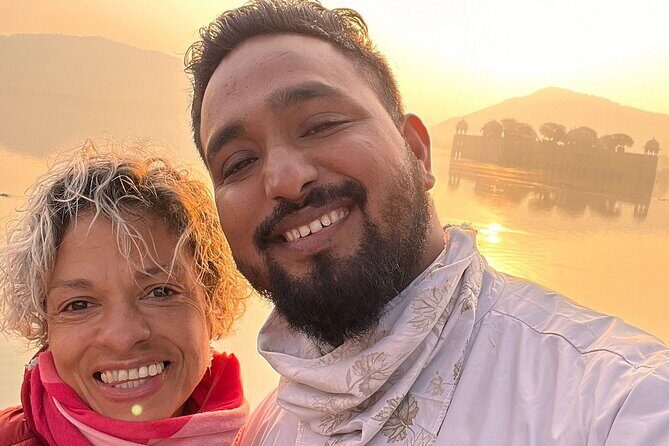
- Sunset focus at Galtaji or Nahargarh Fort for that orange glow moment
- Pickup-and-drop included, so you’re not hunting taxis all day
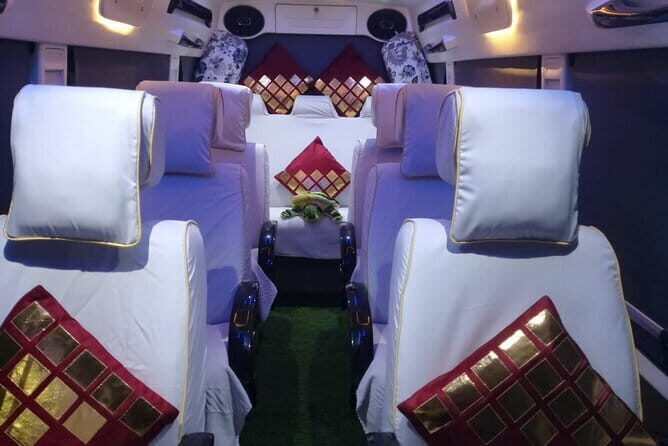
- Tuk-tuk vs AC option, letting you pick comfort or classic charm
- Albert Hall Museum first, a strong start that sets the tone fast
- Amer and the fort-palace area, with a big payoff if you like Rajput architecture
How the tuk-tuk (or AC) shapes your whole day
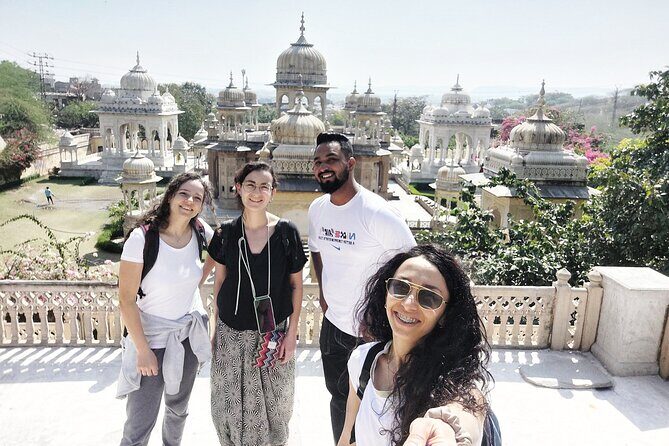
Jaipur is one of those cities where the ride matters as much as the photos. The tour gives you two sensible ways to move: a private tuk-tuk or an AC vehicle. If you want the classic experience and don’t mind slower streets, the tuk-tuk fits. If it’s hot, or you simply want to conserve energy for stops, the AC car is an easy win.
The other practical win is the pickup and drop from your chosen location in Jaipur, including hotel or airport pickup. That matters because the main route through Jaipur can eat time if you’re coordinating transport on your own. With a driver ready, you’re free to focus on the sights and timing—especially when you’re trying to land a sunset view at the end of a long day.
One thing to keep in mind: this is a full day. You’ll be out roughly 9 to 10 hours, and it can feel longer if you’re moving between multiple major sites plus the Amer and Galtaji areas. If you’re the type who wants deep, unhurried museum time at every stop, you may want to bring realistic expectations about pace.
You can also read our reviews of more evening experiences in Jaipur

Albert Hall Museum: your calm first hour

Starting at Albert Hall Museum is a smart move. It’s listed as the oldest museum in its state, and it’s not just the collections—this place is also about the building and grounds. Getting there first helps because it sets your context for what you’re seeing later: Jaipur’s artistic traditions, craftsmanship, and how the city frames culture through big monuments.
Inside, you can expect international art, miniature paintings, sculptures, and art items (the museum description points to that mix). Even if you’re not a museum person, this first stop works as a gentle warm-up before you switch to architecture and open-air sights.
The main thing to plan: the museum admission isn’t included, so you’ll want cashless readiness for whatever entrance ticket you’re covering. If you’re short on patience for indoor crowds, skim fast and focus on the displays that connect to Indian art and craftsmanship.
Hawa Mahal: the photo moment that still teaches
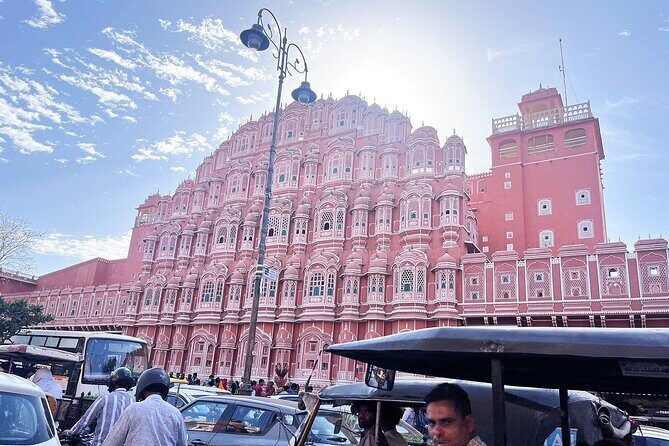
Hawa Mahal, the Palace of Breeze, is one of those landmarks that’s famous for a reason. The standout detail here is the five-story design and the fact that it’s described as standing without a foundation. The curved, pyramidal structure is exactly the kind of architecture that makes you stop in front of it, even if you’ve seen it a hundred times online.
You’ll get about 45 minutes for this stop, which is enough to take photos and walk the immediate area without turning it into a long detour. The trick with Hawa Mahal is to look for patterns. The repeated windows and the overall shape explain why the building has such strong visual identity.
Entrance isn’t included, so factor in the extra cost. Also, Hawa Mahal is best when you can stand at the right angles for the layered facade. If you’re stuck behind a lot of other people, aim to move a step at a time—don’t try to hold one perfect spot for the whole 45 minutes.
Jantar Mantar: astronomy you can actually see
Next is Jantar Mantar, Jaipur’s observatory, built by Jai Singh II. This stop is special because you’re looking at instruments that are still in use, not just museum pieces. The site is described as the largest of five observatories built by him, which gives you a reason to pay attention beyond the quick photo.
You’ll have around 45 minutes here. That’s enough time to understand the basics of what you’re looking at, especially if your guide points out how these stone structures track the sky. Even if astronomy isn’t your thing, the sheer size and geometry are what make the instruments memorable.
Admission isn’t included, so plan the ticket timing with your guide. If you’re the type who loves “tell me what I’m looking at” tours, this is where you’ll feel it pay off, since the site rewards guided interpretation.
City Palace and Royal Gaitor Tumbas: royalty after the facts
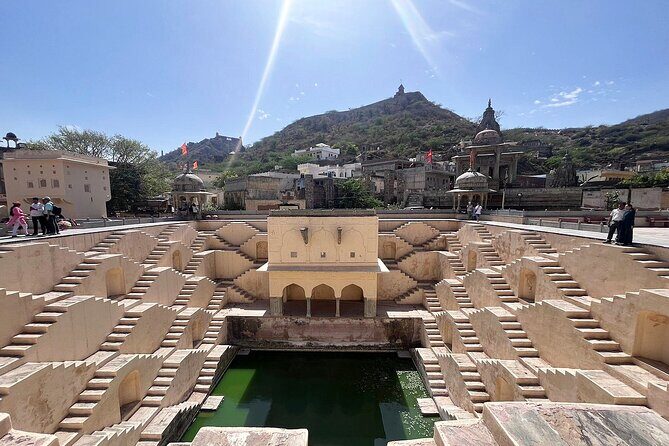
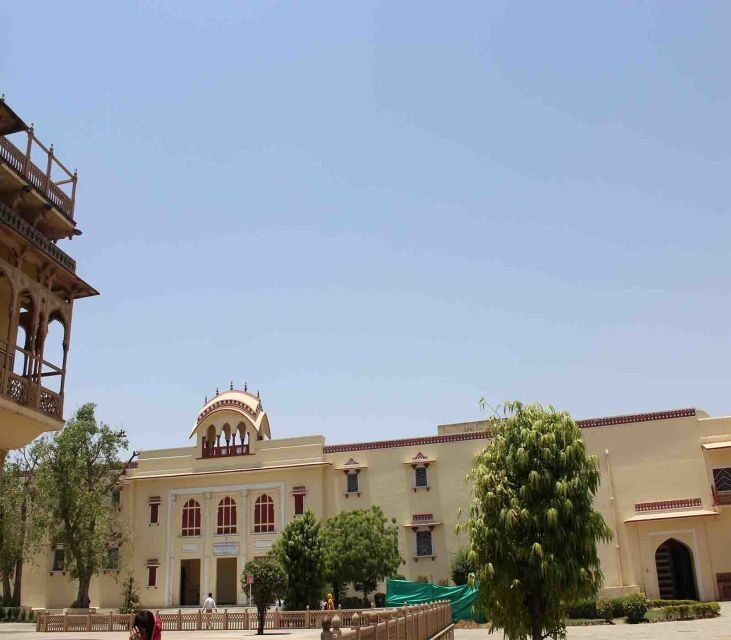
After Jantar Mantar, you’ll move to City Palace, one of Jaipur’s prominent landmarks. It’s described as commissioned by Maharaj Jai Singh II, and it’s a natural step up from the observatory. At this point, you’re shifting from measuring the universe to understanding how power, art, and daily life shaped the city.
You’ll have about 2 hours at City Palace. That’s a good amount of time if you want to linger over details like the feel of the grounds and the mix of spaces within the complex. If you tend to get museum-burnout, focus on the areas your guide prioritizes and let them keep the flow.
Then comes Royal Gaitor Tumbas. This is a regal cenotaph area for the royal family, and the description highlights the serene atmosphere with lush greenery around. You’ll get about 45 minutes, and this is often the stop that feels more human. It’s not just big architecture—it’s quieter and reflective compared to the louder city-center sights.
Again, admission isn’t included for this stop either. The value here is the contrast: you see the public face of royalty at City Palace, then you step into a more calm, ceremonial mood at Gaitor.





Jal Mahal: a quick, scenic pause (and why 15 minutes works)
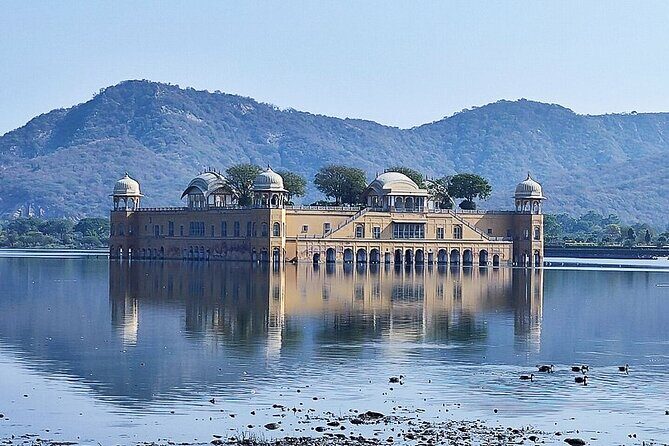
Jal Mahal is listed as a short 15-minute stop and admission is marked free. The whole point is visual—this palace sits surrounded by water, giving you a striking, postcard-ready view without turning it into an all-day detour.
Fifteen minutes sounds short, but it fits the rhythm of the day. Jal Mahal is best as a snapshot and a breath. You’ll likely be moving again soon, and the short time keeps the energy for the later stops.
If you’re thinking of using this stop as a long photo session, don’t. The schedule is built to get you to Amer and then toward Galtaji for sunset. Use Jal Mahal to refresh your eyes and reset your camera.
Amer: the fort-and-palace payoff
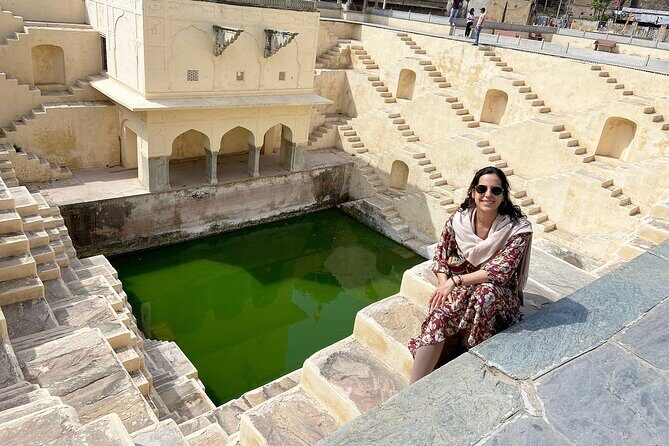
Then you head to Amer, described as about 11 km from Jaipur city. This is a major highlight for people who like architecture, because Amer is known for its Rajput fort and palace, with a blend of Hindu and Mughal architecture. That mix is exactly what makes Amer feel like more than one “style”—it reads like different chapters of Jaipur’s story.
You’ll have about 2 hours at Amer. That’s the right amount of time for a meaningful visit without forcing a rushed sprint. If you’re short on interest in history lecture mode, Amer still works because the fort-palace area is visually strong.
The stop is marked as Admission Ticket Free in the provided details. Still, if you plan to go into specific internal areas, confirm with your guide on the spot what’s covered versus what requires an extra ticket, since large complexes sometimes have different access points.
Practical tip: at Amer, you’ll likely be walking and standing. Wear shoes you trust and keep water handy. The tour includes bottled water, which is a small detail but very useful on a long day.
Galtaji (Monkey Temple): sunset, stairs, and a little chaos
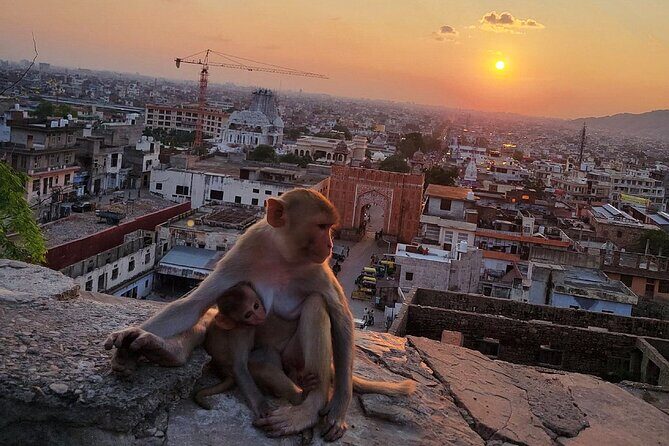
The day’s mood shifts again with Galtaji Temple, also called the Monkey Temple. It’s described as being on the outskirts of Jaipur, surrounded by mountains and adorned with beautiful flowers. That setting matters because it changes the visual background and makes the sunset view feel like a real reward, not just a photo stop.
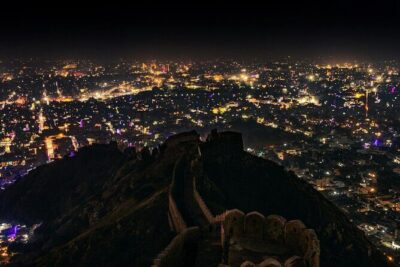
You’ll get around 1 hour here, and the overview specifically frames the sunset moment at places like Nahargarh Fort or Galtaji. If Galtaji is your sunset plan, aim to arrive with enough buffer to find viewpoints before the last light fades.
Also, expect monkeys around. The name isn’t subtle. If you’re careful and follow your guide’s advice, it can be a fun, memorable stop rather than a stress test. Bring common sense: keep bags zipped, watch your belongings, and don’t offer food.
Entrance for Galtaji is marked free in the details, but the real cost here is time and attention. The payoff is the combination of scenery plus the late-day light.
Price and value: cheap tour, real-world costs
At $7.27 per person, the base price is unusually low for a private full-day circuit with pickup/drop. The value comes from the structure: transportation is arranged for you, bottled water is included, and you’re on a private schedule rather than squeezed into a big group bus.
But here’s the financial reality check: the tour lists an entrance fee of ₹1,650 per person as not included. Even if some stops show free access in the details, you should expect at least some paid entry costs for the major sites like the museum, Hawa Mahal, Jantar Mantar, and City Palace (those stops are marked as admission ticket not included).
So the best way to think about value is this: the low dollar price covers the service and logistics, while the entrance fees are where your day’s budget actually lives. If you’re okay paying entry fees for top landmarks, this is a strong deal. If you want a strictly low-cost day with minimal paid entries, you’ll need to plan more carefully.
One more “value” detail: the tour uses a mobile ticket. That’s minor, but it reduces friction when you arrive, especially for popular sites.
Guides, flexibility, and why Khalid and Ali matter
This is a private tour with your group only, which changes the tone fast. You’re not stuck with a fixed script or forced to keep up with strangers. And the guide quality shows up in practical ways.
Khalid and Ali are highlighted for mixing site history with answers about society and life in India. That’s not just nice. It helps you connect what you see to how people actually live, which makes the day feel less like checkboxes and more like understanding.
They’re also described as accommodating requests, including last-minute changes that weren’t straightforward. In plain terms: if you need to adjust timing for heat, traffic, or just your own pace, this setup is more likely to work than a rigid group tour.
If you care about getting context and not just photos, this is one of the reasons the tour earns a 5-star rating with a very high recommendation rate.
Who should book this Jaipur tuk-tuk sunset tour
This tour fits best if you want:
- A big-hits Jaipur day without coordinating transport yourself
- The option of tuk-tuk charm or AC comfort
- A sunset goal at Galtaji (or Nahargarh Fort depending on timing)
- A guide who can explain more than just dates and names
It may not be ideal if you:
- Want a super slow, unhurried experience where every stop gets long indoor time
- Are trying to avoid all paid entrances and fees
- Prefer fewer stops and more quiet downtime in between
Quick booking call: should you book it?
Yes, if your priority is a complete Jaipur highlights day with pickup/drop, a sunset focus, and a guide that can handle questions and schedule changes. The base price is low enough that you’ll feel comfortable paying the listed entrance fees, and the pace is built to get you to the viewpoints that matter.
If you hate long days, plan to start early and keep your breaks simple. If you love photos, treat Jal Mahal and Galtaji as your biggest “return on time” moments.
FAQ
FAQ
How long is the Jaipur tuk-tuk sightseeing tour?
It runs about 9 to 10 hours.
Are pickup and drop-off included?
Yes. Pickup and drop-off from your chosen location in Jaipur (including hotel or airport) are included.
Do I need to pay entrance fees separately?
Yes. Entrance fee is listed as ₹1,650 per person and is not included.
What transportation options are available?
You can choose either a private tuk-tuk or a private AC vehicle, depending on the option selected.
Is a guide included?
An English-speaking driver is included with the vehicle. If you select the option for it, a private tour guide in other languages is also included.
What if I need to cancel?
You can cancel for free up to 24 hours before the experience start time for a full refund.