REVIEW · JAIPUR
Learn to make a Pichwai Painting
Book on Viator →Operated by Colorbox Art Academy · Bookable on Viator
Pichwai painting feels surprisingly calming. In a few hours at Colorbox Art Academy, you’ll make your own devotional artwork inspired by Srinathji, the Lord Krishna form, with step-by-step guidance. The best part is that it’s hands-on Rajasthani culture you can actually take home, not just watch from the sidelines. One thing to plan for: the experience requires good weather, so rainy days can mean a reschedule offer or a change.
I love that the class is set up for real beginners and still feels meaningful. You pay a tiny $8 for about three hours, and they provide all the materials you need. That means you can focus on learning the style and finishing something you’ll be proud to carry back, without worrying about supplies or adding extra costs.
In This Review
- Key things to know before you paint Pichwai in Jaipur
- Getting to Colorbox Art Academy and knowing the timing
- What Pichwai actually is: devotional backdrop art
- The workshop flow: step-by-step guidance for your own painting
- Materials included: the real value of the $8 price
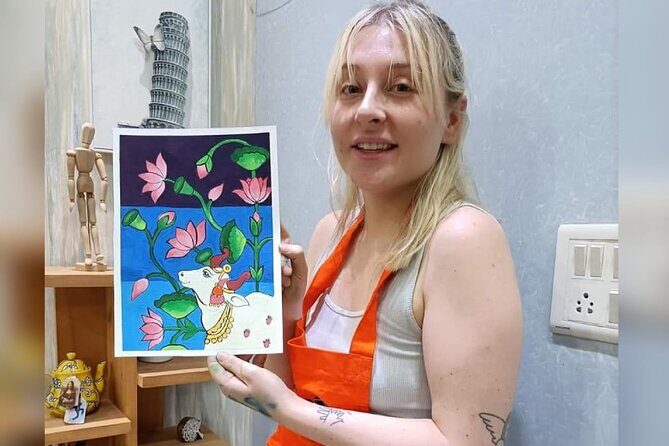
- The Pichwai motifs you’ll be recreating: cows and lotus
- Group size and class atmosphere: small enough to matter
- What you take home at the end of the session
- Practical tips so your session goes smoothly
- Who should book this Pichwai painting workshop
- Should you book the Pichwai workshop at Colorbox Art Academy?
- FAQ
- Where is the Pichwai painting workshop located?
- How long does the Pichwai painting class take?
- What will I learn to paint?
- Are art materials included?
- How many people are in the class?
- Is cancellation allowed, and what about weather?
Key things to know before you paint Pichwai in Jaipur
- A guided Pichwai workshop where you follow tutor instructions from start to finish
- Srinathji as the subject, with classic devotional motifs like cows and lotus
- All art materials provided, including brushes and paints
- Small class size with a maximum of 20 travelers
- Take-home souvenir: your finished painting goes with you
Getting to Colorbox Art Academy and knowing the timing
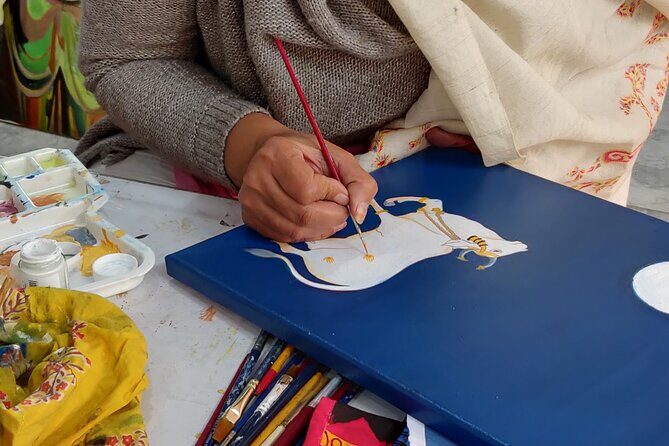
Your session starts at Colorbox Art Academy in Vaishali Nagar, Jaipur (B-1/555, Vaishali Nagar, Jaipur, Rajasthan 302021). The workshop ends back at the meeting point, so you’re not stuck figuring out how to get somewhere else afterward.
Timing is straightforward. It runs about 3 hours (approx.), and the academy’s listed hours are Monday through Saturday from 11:00 AM to 6:30 PM. The location is described as near public transportation, which matters in Jaipur where traffic and routes can shift hour to hour. If you’re mixing this with other sights, treat this as a mid-day or late-morning creative stop rather than something to squeeze into the last minute.
This is also a mobile-ticket style activity. You’ll confirm your booking, then show up with your ticket on your phone. That keeps the process simple—no hunting for paper tickets.
You can also read our reviews of more tours and experiences in Jaipur.



What Pichwai actually is: devotional backdrop art
Pichwai isn’t just “pretty wall art.” It’s devotional painting, often called the art of god. Traditionally, the name points to a purpose: Pichwai means backdrop—decorations placed behind the Lord Shrinathji idol. In other words, the art wasn’t meant to float alone on a blank wall. It was part of a worship setting, built to support the presence of the deity.
The style you’ll be working with is tied to origins in Nathdwara, near Udaipur in Rajasthan, with roots around 400 years ago. Today, people far beyond Rajasthan still try their hand at recreating it, because the motifs and mood are instantly recognizable: cows, lotus, and the devotional life around Srinathji.
What I like about this is that you’re not making a generic painting. You’re stepping into a tradition designed for a spiritual role. Even if you’re not religious, the structure of the art gives you a clear, meaningful framework: repeated motifs, a sense of ritual, and a careful attention to how the scene reads.
The workshop flow: step-by-step guidance for your own painting
The workshop is designed as an actual painting class, not a lecture. You’ll be guided through step-by-step instructions by trained tutors. That detail matters, especially if you’ve never painted in a traditional style. Pichwai has its own logic—what appears where, how the motifs are repeated, and how the overall look comes together.
Here’s what you can reasonably expect during the session:
- You’ll follow the tutor’s process in sequence, with support as you work
- You’ll use provided brushes and paints to recreate your own version
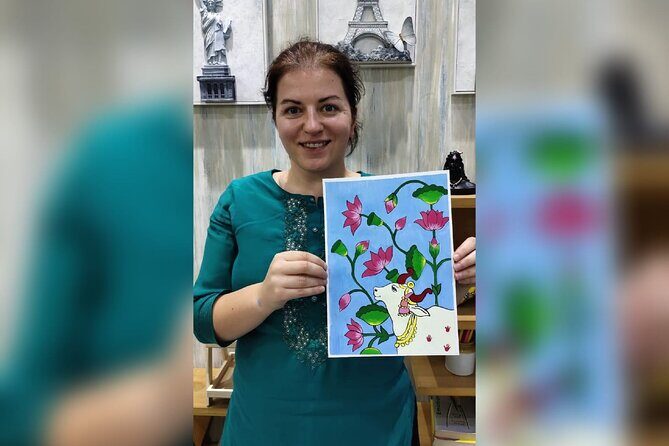
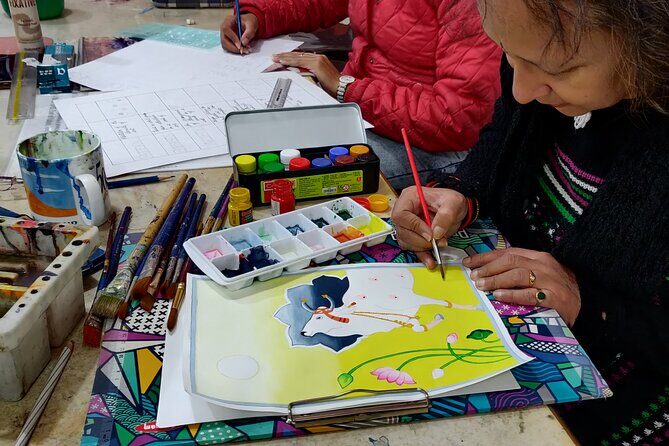
- You’ll focus on the core devotional subject matter, including animals and florals like cows and lotus
- You’ll finish with a completed painting you can take home
The class is also described as something most travelers can participate in, which usually means there’s no advanced skill requirement. The small group cap—maximum of 20 travelers—also helps. In a group that size, you’re more likely to get the specific help you need when something doesn’t look right.
The review highlights are consistent: the tutoring approach is what makes the experience shine. One of the highest-rated comments specifically praised the teacher for helping guide the class throughout, which tells me this is the kind of workshop where you’re not left to figure things out alone.
Materials included: the real value of the $8 price
At $8 for about three hours, the price is hard to beat—especially because the workshop provides everything needed to complete the artwork. The venue supplies brushes and paints (plus other materials used for the session), so you’re not paying extra for supplies you may only use once.
That’s the practical value: you get to spend money on learning, not on shopping. In Jaipur, it’s easy to end up with a “cool idea” that becomes expensive once you add tools, transport, and last-minute purchases. This class keeps it clean.
And you’re paying for time with a tutor and the chance to take the result home. That’s a big difference from something like an art walk where you admire craft but can’t bring any of it with you. Here, the painting is a souvenir that has your fingerprints on it, not just a postcard.
If you like making things as proof that you were there, this is the sort of low-cost activity that actually delivers.
The Pichwai motifs you’ll be recreating: cows and lotus
Every Pichwai style has recognizable anchors, and the two most common motifs described here are cows and lotus. Those choices aren’t random. They fit the devotional landscape around Srinathji—life, abundance, and the sacred symbolism that shows up repeatedly in the art.
In your class, you’ll recreate your own version using these motifs as part of the design. Even if you’re not sure what makes a Pichwai pattern “work,” the tutor’s step-by-step approach should help you place elements in the right way and build the painting in an organized sequence.
What I appreciate is that this doesn’t require you to invent a theme. The workshop gives you a cultural structure to work within. That keeps the task achievable, and it also helps your finished piece look like it belongs to the tradition it’s drawn from.



Group size and class atmosphere: small enough to matter
With a maximum of 20 travelers, this workshop sits in the sweet spot. It’s not so small that you lose the sense of doing it in a group, and it’s not so large that you get ignored the moment you hit a tricky step.
For art classes, group size affects two things:
- How much attention the tutor can give you
- How comfortable you feel asking questions or getting feedback
The reviews back up the attention part, praising the teacher for guiding the class throughout. If you’re someone who gets stuck and needs direct help, a small cap like this is a good sign.
This also fits well for families or groups. It’s described as a fun activity for art-loving families and group visitors who want to soak in Rajasthani culture through something practical.
What you take home at the end of the session
The workshop ends back where you start, and you carry your finished painting home. That’s a big deal with workshops like this: you’re not just attending a session and then leaving with inspiration—you leave with an actual object.
Because materials are provided, you don’t have to worry about whether your supplies were complete or whether you’ll run short mid-session. The class is built around completion, so the whole rhythm is aimed at getting you to a finished artwork within the session length.
If you’re trying to decide between buying souvenirs or doing a creative activity, this is worth considering. A take-home painting can be more personal than a store-bought decorative item, especially if you’ll remember the specific motifs and the style you practiced.
Practical tips so your session goes smoothly
A few practical points can help you make this workshop easy and low-stress:
- Plan around weather. The experience requires good weather, and if it’s canceled due to poor weather you’ll be offered a different date or a full refund. Jaipur weather can change quickly, so don’t lock this as your only plan for that day.
- Use the mobile ticket. Since it’s a mobile ticket activity, keep your booking confirmation accessible on your phone.
- Arrive with time. You have about three hours, so give yourself a buffer to settle in and get ready to paint.
- Bring curiosity, not skill. This is step-by-step, and it’s designed so most travelers can participate. If you can follow instructions, you’re in the right place.
- Expect to focus. You’ll be working at the venue for the session, so treat it as a dedicated activity rather than a quick stop between markets.
If you’re combining this with Jaipur sightseeing, try pairing it with an area nearby after the session so you can enjoy the rest of your day without rushing.
Who should book this Pichwai painting workshop
This class makes the most sense if you want an authentic Rajasthani art experience without complexity or high costs.
You’ll likely enjoy it if:
- You love hands-on activities and want a souvenir you made
- You’re interested in Rajasthani culture and devotional art traditions
- You’re traveling with family or friends who want a shared activity
- You’re a beginner who needs clear guidance while working with paint
It may be less ideal if:
- You only want a quick photo stop and no time for creating
- You’re traveling when weather is unreliable and don’t want to deal with potential rescheduling
- You dislike structured activities that follow a tutor’s sequence
Should you book the Pichwai workshop at Colorbox Art Academy?
If you’re looking for a small, affordable creative experience with a clear cultural theme, book it. The value is strong: $8 for around three hours, all materials included, and a finished painting to take home. The class size limit also signals you’ll get real guidance rather than being left to paint alone.
If you’re the type who likes learning what something means before you start, the Pichwai context—its devotional purpose as a backdrop for Srinathji—gives your painting extra weight. And if you want to do something that feels like it belongs to Jaipur, this is one of those activities that connects you to the region’s art tradition in a direct way.
Just keep one practical caution in mind: good weather is required, so plan a bit of flexibility.
FAQ
Where is the Pichwai painting workshop located?
The workshop starts at Colorbox Art Academy, B-1/555, Vaishali Nagar, Jaipur, Rajasthan 302021, India.
How long does the Pichwai painting class take?
The duration is about 3 hours (approx.).
What will I learn to paint?
You’ll be guided step by step to make your own Pichwai painting inspired by Srinathji, with common motifs including cows and lotus.
Are art materials included?
Yes. Brushes, paints, and other materials needed to complete the painting are provided at the venue.
How many people are in the class?
The activity has a maximum of 20 travelers.
Is cancellation allowed, and what about weather?
You can cancel for free up to 24 hours in advance for a full refund. The experience requires good weather; if it’s canceled due to poor weather, you’ll be offered a different date or a full refund.