REVIEW · CITY TOURS
Jaipur: Full-Day City Tour with Camel Ride and Monkey Temple
Book on GetYourGuide →Operated by INDIATOR · Bookable on GetYourGuide
Jaipur’s top sights, packed into one day. What makes this tour fun is the mix: Amber Fort for the grand defensive story, then Jantar Mantar for the mind-bending science of time and planets, plus a camel ride and a monkey-filled temple. It’s the kind of day where you keep switching gears between architecture, royal displays, and Hindu religious life without it feeling like a rushed museum crawl.
Two things I especially like: you get a proper look at how Jaipur’s rulers shaped the city through built form (not just a quick photo stop), and you also get the chance to see how the astronomers of earlier eras tried to measure the sky. One consideration, though: the schedule can shift depending on where you’re picked up, and you should make sure your guide keeps Galtaji / the Monkey Temple on the plan (weather and timing can change how the day flows).
In This Review
- Key things to know before you go
- A 9-hour Jaipur loop that hits the big monuments (and stays flexible)
- Amber Fort: where protective architecture turns into a whole experience
- Jal Mahal / Water Palace on Man Sagar Lake—and the camel ride
- Hawa Mahal’s 953 windows: architecture you can actually look at closely
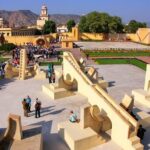
- Jantar Mantar: the science of time, planets, and measurement
- Monkey Temple at Galtaji: holy pools, monkeys, and a real-world feel
- Lunch, local shops, and how to make the day feel less rushed
- Price and logistics: what you’re paying for at about $113
- Who should book this tour (and who should think twice)
- Should you book this Jaipur full-day tour with camel ride and Monkey Temple?
- FAQ
- What time does the tour start?
- Where do I meet the guide or driver?
- How long is the tour?
- What are the main stops on the tour?
- Is lunch included?
- Do I get to ride a camel?
- Is there an English guide?
Key things to know before you go
- Amber Fort’s gate-and-courtyard flow: every stop is tied to the fort’s layered defenses and royal purpose
- Jal Mahal Water Palace camel ride: the ride happens at the water’s edge area by Man Sagar Lake
- Water Palace exhibits: weapons, royal costumes, Mughal miniatures, antiques, and paintings are part of the experience
- Hawa Mahal’s 953 windows: focus on the latticework details across the air-palace façade
- Jantar Mantar’s astronomy tools: you’ll see how Maharaja Jai Singh II supported accurate studies of celestial bodies
- Galtaji’s seven holy pools: it’s a working temple site where bathing rituals are part of what you observe
A 9-hour Jaipur loop that hits the big monuments (and stays flexible)
You start early, around 8:00 AM, with pickup from your hotel lobby. Your driver takes you between stops, and the order can change depending on your location, so think of it as one connected loop rather than a strictly timed checklist.
The overall pace works well if you like variety: fort views, palace displays, then temples and astronomy. The best part is that the day isn’t just about standing outside. You’ll walk through major sites, spend time inside the Water Palace exhibits, and finish with shopping so you’re not stuck with only sightseeing photos at the end.
You can also read our reviews of more city tours in Jaipur
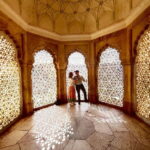

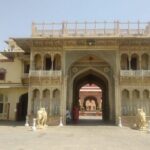
Amber Fort: where protective architecture turns into a whole experience
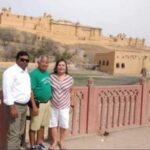
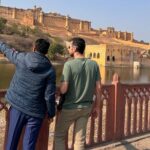
Amber Fort is the first big anchor of the day, and it’s an easy place to get hooked. The fort’s layout is built around the idea of protection—every gate, courtyard, and palace section has its own historical purpose.
You’ll hear the story tied to Man Singh, the Rajput King who’s associated with the fort’s protective architecture. What I like about starting here is that the fort doesn’t just look impressive. It explains the mindset behind the place: moving through layers, slowing down the approach, and turning a residence into a fortress.
Practical tip: wear shoes you can walk in comfortably. This is a site where you’ll likely be moving more than you expect, and the day has more stops after this, including a hilltop temple area.
Jal Mahal / Water Palace on Man Sagar Lake—and the camel ride
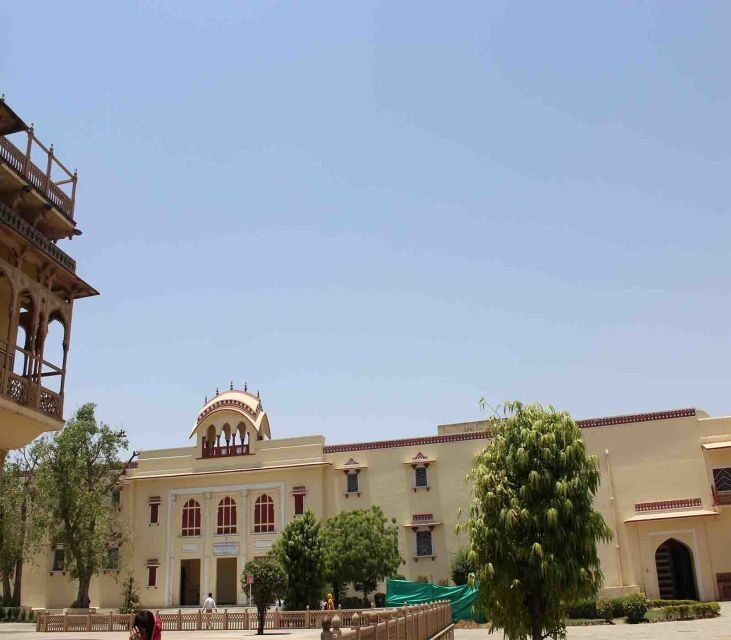
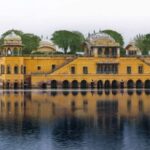
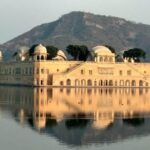
Next comes the Jal Mahal (Water Palace), located in the middle of Man Sagar Lake in Jaipur. It’s visually striking because it belongs to the water, not just the shoreline, and that setting helps make the stop feel like more than another ticketed attraction.
Here’s where the day adds a playful break: you’ll enjoy a camel ride in this area. It’s not an all-day activity, so you can treat it as a short highlight rather than a stamina test, which is great if you want the “wow” moment without losing time later.
Inside the Water Palace exhibits, you’ll see a wide set of displays: a huge collection of weapons, royal costumes, Mughal miniatures, antiques, and paintings. This part works especially well if you like seeing how royal life expressed itself beyond palaces—through clothing, artifacts, and artistic records.
And yes, the tour includes lunch afterward at a local restaurant, which matters on a long 9-hour day. A planned meal stop helps you avoid the stress of searching around once you’re already tired and sun-exposed.
Hawa Mahal’s 953 windows: architecture you can actually look at closely
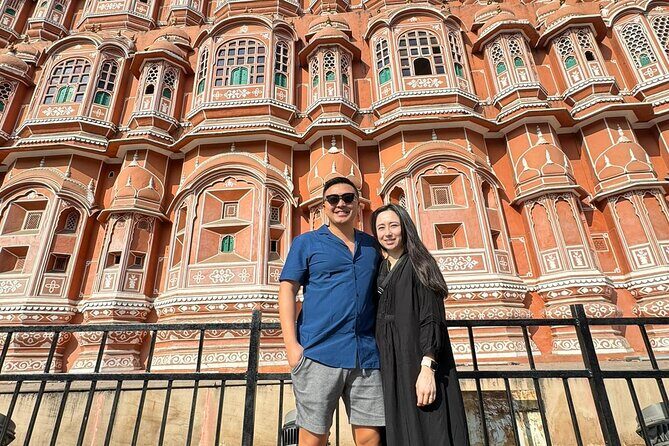
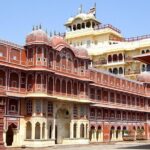
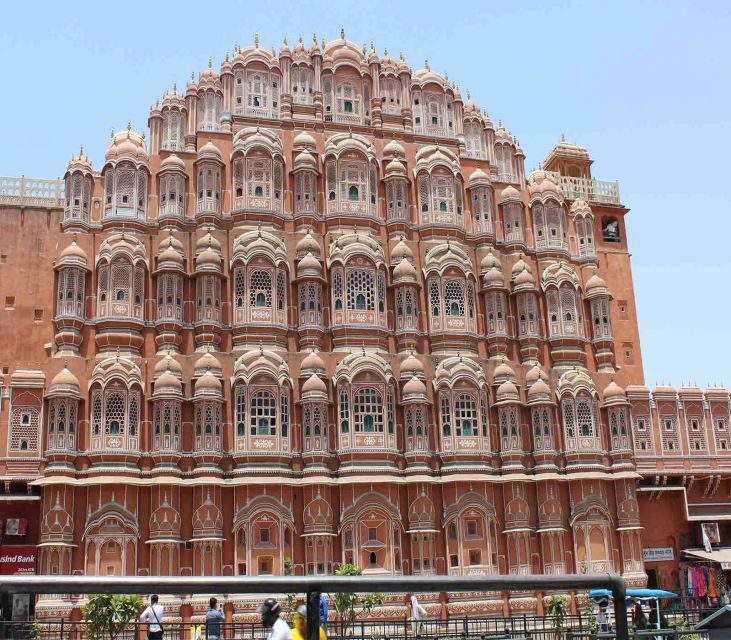
Then you head to Hawa Mahal, also called the Air Palace. The big detail here is simple but satisfying: the palace is known for its 953 small windows, all decorated with intricate latticework (a crisscross pattern).
This is the kind of site where you should slow down and study the pattern. Instead of chasing the perfect wide-angle shot, focus on how the latticework shapes light and how the windows create rhythm across the façade.
Built by Maharaja Sawai Pratap Singh, the Kachwaha ruler of Jaipur, Hawa Mahal is a reminder that Jaipur’s rulers liked bold visual statements. Even if you’re not deep into architecture, the scale and repetition of the window grid makes it easy to appreciate without a long lecture.
Jantar Mantar: the science of time, planets, and measurement
After the ornate façade of Hawa Mahal, Jantar Mantar feels like a sharp change of pace. This astronomical observation site was built by Maharaja Jai Singh II, described here as a mathematician who supported accurate observations.
The practical value of Jantar Mantar is that it connects big ideas—time, planets, celestial bodies—to real physical tools. You’re not just looking at a monument. You’re trying to understand how earlier scholars attempted to model the sky with instruments designed to measure what they needed.
If you like learning while you walk, this stop is a strong payoff. It helps you understand why Jaipur became known for both royal display and serious study of the heavens.
You can also read our reviews of more tours and experiences in Jaipur



Monkey Temple at Galtaji: holy pools, monkeys, and a real-world feel
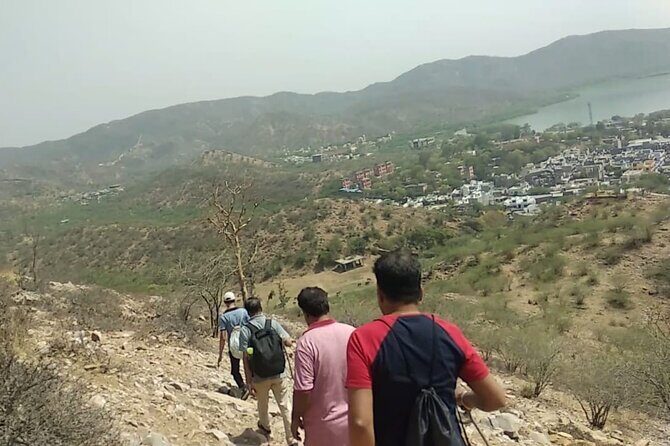
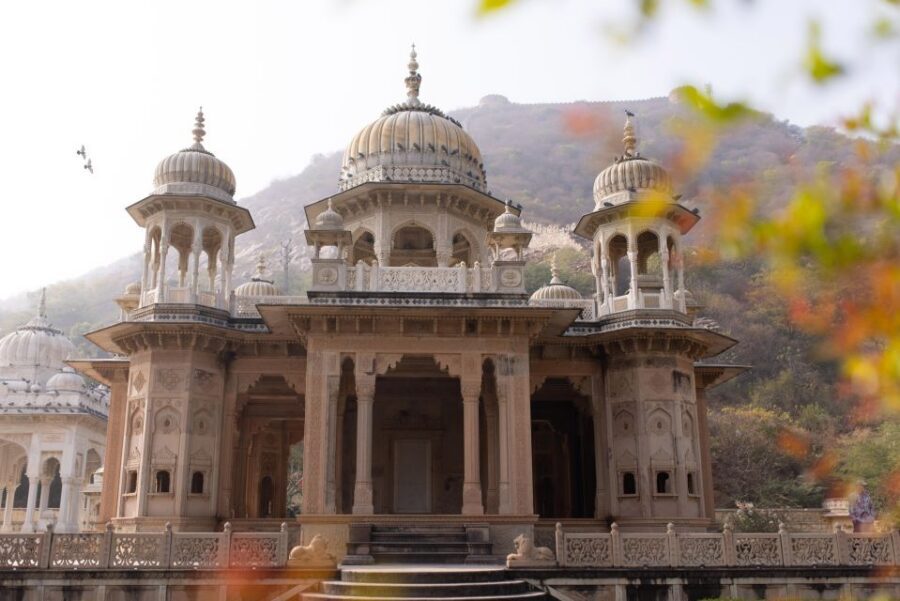
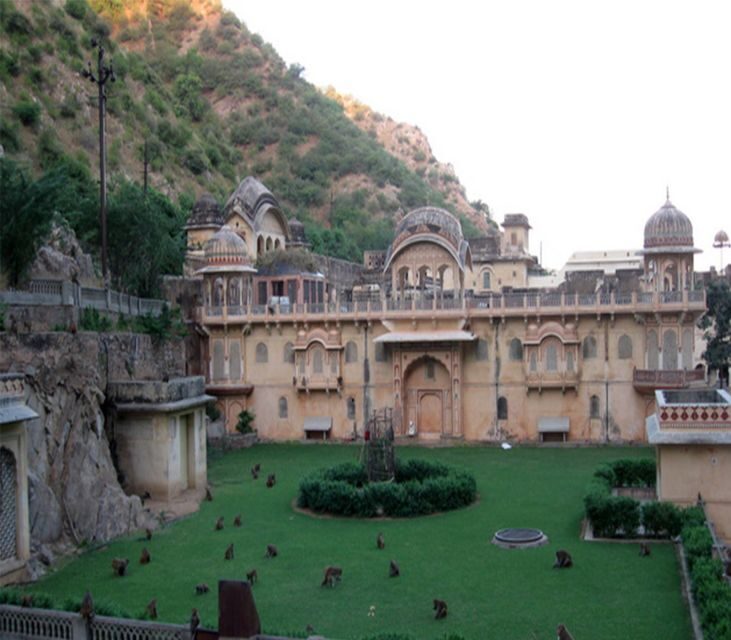
Finally, the day reaches Monkey Temple, also known as Galtaji Temple. This is home to a large number of monkeys, so it’s not a quiet, controlled stop like some indoor museums.
What makes Galtaji especially distinct in this tour is the temple’s seven water pools filled with holy water. Followers come to bathe there and wash away sins, so you’re observing a living religious practice, not just an attraction with photo backdrops.
A good caution: the monkey environment can be intense in close quarters. One past experience described a steep stone approach and a frustrating moment where food was thrown near the monkeys, which led to an uncomfortable situation. My advice is straightforward—keep your distance, keep your hands and food controlled, and don’t encourage any feeding or tossing behavior if it happens around you.
If you’re uncomfortable around animals, plan to spend your time watching from safer ground rather than trying to get close for photos.
Lunch, local shops, and how to make the day feel less rushed
Lunch is built into the flow at a local restaurant, which is ideal for a day that starts at 8 AM. It also gives you a reset before the later stops, including Hawa Mahal and Jantar Mantar, where you’ll want energy and patience.
After the main monuments, the tour ends with time for browsing famous shops, then returning to your hotel. That shopping stop is the right kind of finale: you’ve already seen the big landmarks, so the shops feel like a way to bring something home from the city rather than a last-minute chore.
If you’re shopping, I’d treat this as a slow wandering window. If something catches your eye, ask the price and confirm what you’re getting before you buy. Jaipur is known for crafts, so it’s worth being thoughtful instead of buying on impulse.
Price and logistics: what you’re paying for at about $113
At $113 per person for a 9-hour day, you’re paying for a structured, guided route that includes hotel pickup, a driver, a live English guide, lunch, and a camel ride. That bundle matters because it removes decision fatigue. You’re not trying to stitch together transport, guides, and timing across four major attractions.
The value gets even better if you want someone to keep the day moving and explain what you’re seeing—especially at places like Jantar Mantar and Amber Fort, where context changes how the buildings and instruments feel.
The main trade-off is that you’re committing to a full loop. If you prefer to linger forever at one place, this schedule may feel tight. If you want a full highlights day with a guided framework, it’s a fair deal for a day this packed.
Who should book this tour (and who should think twice)
This tour is a good match for you if you want a single-day sampler that includes royal architecture, astronomy, temple life, and a camel ride. It’s also a solid choice if you’d rather have an English guide coordinate the “what matters here” points so you don’t miss the main ideas.
You may want to think twice if:
- You dislike tight schedules and prefer unhurried pacing.
- You’re strongly averse to monkeys or unpredictable animal behavior around temple areas.
- You need the itinerary to be perfectly fixed from start to end. The tour order can change based on pickup location, and timing/weather can influence how the day plays out.
Should you book this Jaipur full-day tour with camel ride and Monkey Temple?
I’d book this tour if your priority is an efficient highlights day that mixes Amber Fort, Hawa Mahal, Jantar Mantar, and Galtaji / Monkey Temple—plus a camel ride and lunch. It’s a lot to pack into one day, but the variety keeps it interesting, and the English-guided format helps you understand what you’re looking at.
Before you go, do one simple thing: at pickup, confirm the last stop is the Monkey Temple at Galtaji. That way, if the day shifts because of location or timing, you’re starting with clarity on what matters most to you. If you’re okay with that, you should have a memorable Jaipur day that feels like more than just photos.
FAQ
What time does the tour start?
The tour starts at 8:00 AM, with pickup from your hotel lobby.
Where do I meet the guide or driver?
You meet in your hotel lobby (the meeting point is your hotel).
How long is the tour?
It lasts about 9 hours.
What are the main stops on the tour?
You’ll visit Amber Fort, Jal Mahal / Water Palace, Hawa Mahal (Air Palace), Jantar Mantar, and Monkey Temple (Galtaji Temple).
Is lunch included?
Yes. Lunch is included at a local restaurant.
Do I get to ride a camel?
Yes. The tour includes a camel ride at Jal Mahal / the Water Palace area.
Is there an English guide?
Yes. The tour includes a live tour guide in English.