REVIEW · JAIPUR
Jaipur Private Tour with Pickup
Book on Viator →Operated by Rajasthan Private Tour · Bookable on Viator
Jaipur in a single day, minus the headaches. This private tour is built for efficiency, with an air-conditioned car, pickup and drop from your selected location, and a tight set of major sights. I especially like how it pairs the big-name landmarks (Hawa Mahal, City Palace, Jantar Mantar) with quieter stops like Panna Meena ka Kund and the kunds at Galtaji. One thing to consider: the schedule is compact, so some entries are only short visits, and monument entrance fees can add up.
The price looks like a steal at around $7 for an 8–9 hour private tour, especially since transport, parking, bottled water, and fuel are included. Just keep your wallet ready for monument entrances, since the provider estimates about $30 per person in additional fees.
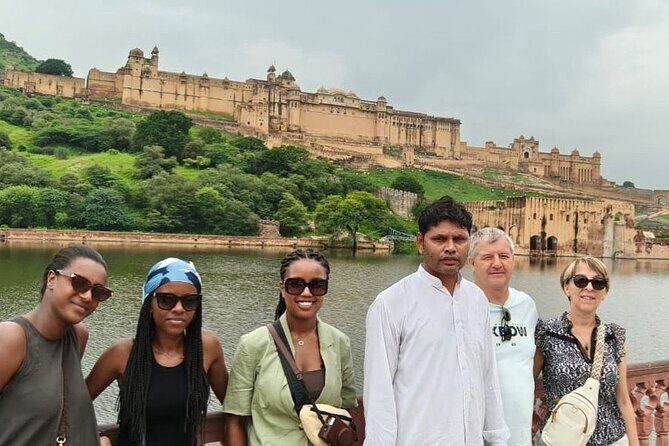
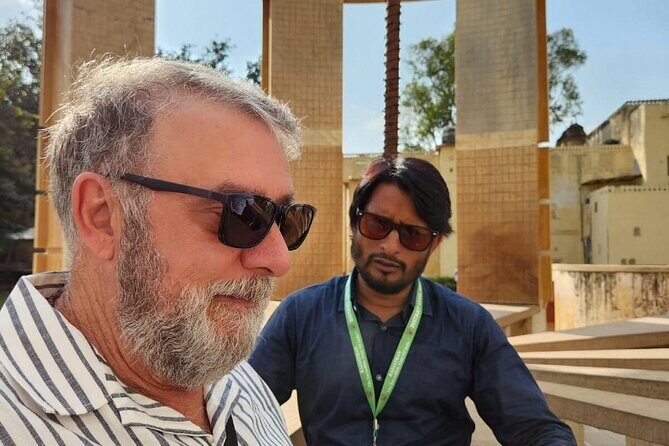
The biggest upgrade here is the human factor: the driver-guide team around Ashraf gets repeated praise for being kind, patient, and attentive, plus for safe, smooth driving. I also like that the tour is private—your group sets the pace inside the time limits.
In This Review
- Key things to love about this Jaipur pickup tour
- Why private pickup changes the whole Jaipur day
- The route: how the 8–9 hours stays packed
- Hawa Mahal: the 30-minute look at Jaipur’s pink facade
- City Palace: Mughal and Rajput power in 1.5 hours
- Jantar Mantar: science made of stone (and UNESCO made it official)
- Jal Mahal: the lake palace you see fast, but remember longer
- Ambikeshwar Mahadev Mandir: the long temple stop with real depth
- Panna Meena ka Kund: the stepwell you’ll want to see twice
- Galtaji Temple: kund water and lucky-bath vibes in the Aravalli hills
- Tickets, time, and money: the real value math
- Who this Jaipur private tour is best for
- Should you book this Jaipur private tour with pickup?
- FAQ
- Is this tour private or shared?
- Where does pickup and drop-off happen?
- How long is the Jaipur private tour with pickup?
- What are the main stops on the itinerary?
- Are monument entrance fees included in the price?
- What’s included in the tour cost?
- Is there a mobile ticket?
- When will I receive confirmation after booking?
- Can I cancel for free?
Key things to love about this Jaipur pickup tour
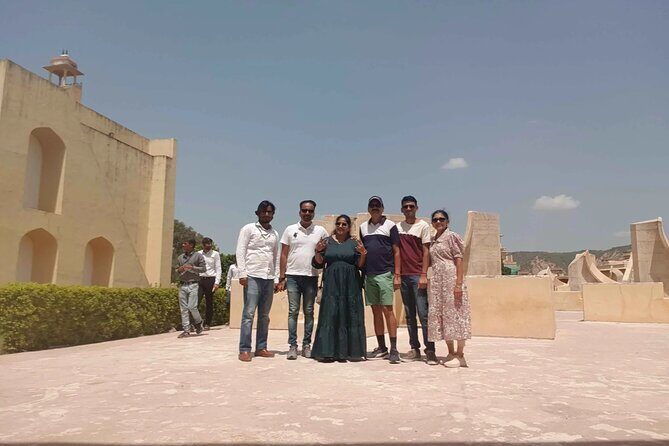
- Private pickup and drop: you start and end at your selected Jaipur location, not a random meeting point
- Air-conditioned comfort: bottled water, parking fees, and fuel surcharge are handled
- Major sights in one run: Hawa Mahal, City Palace, and Jantar Mantar are all on the list
- Temple and stepwell time: Ambikeshwar Mahadev Mandir and Panna Meena ka Kund add variety beyond the obvious
- A guide who helps you plan: Ashraf is described as patient, friendly, and practical about ticket choices
- Mobile ticket convenience: you have what you need to keep lines and confusion down
Why private pickup changes the whole Jaipur day
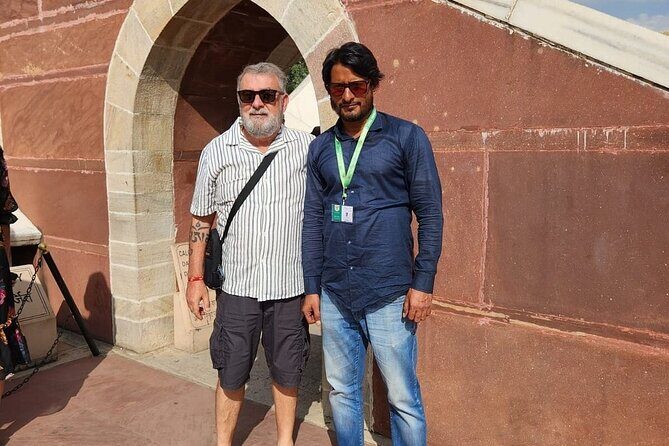
Jaipur can move fast in a way that feels busy, even when you’re trying to see things thoughtfully. The simple win with a private tour is control: you’re not negotiating buses, waiting for other groups, or bouncing between transfer points.
This one is set up with hotel/airport pickup and drop-off, so you can start where you are. You’re also in an air-conditioned vehicle with bottled water, and the tour includes parking fees and fuel surcharge. Translation: fewer hassles, fewer “where do we meet now?” moments.
And then there’s the guide/driver effect. In the notes from Ashraf, people call out his patience and attentiveness, plus how he helps with the practical stuff like navigating ticket situations. For a solo traveler, that sort of guidance is gold because you spend less time guessing and more time actually looking.
The only real trade-off is that private tours still respect time. With short timed stops—often 30 minutes—you’ll want to know what you care about most so you can focus.
You can also read our reviews of more private tours in Jaipur



The route: how the 8–9 hours stays packed

The day runs roughly 8–9 hours and moves site-to-site, with these main stops:
- Hawa Mahal
- City Palace
- Jantar Mantar
- Jal Mahal
- Ambikeshwar Mahadev Mandir
- Panna Meena ka Kund
- Galtaji Temple
You’ll notice the list has a rhythm: one big photo-and-details stop, then another landmark with something unique to learn. That balance keeps the day from turning into just a checklist.
One more thing: the tour description also mentions Amber Hill View and The Sun Temple (Monkey Temple). Those may appear depending on routing and timing, but the core, timed itinerary is built around the stops listed above. Either way, you’ll likely catch at least some of the broader Amber/Aravalli area atmosphere as you go.
Hawa Mahal: the 30-minute look at Jaipur’s pink facade
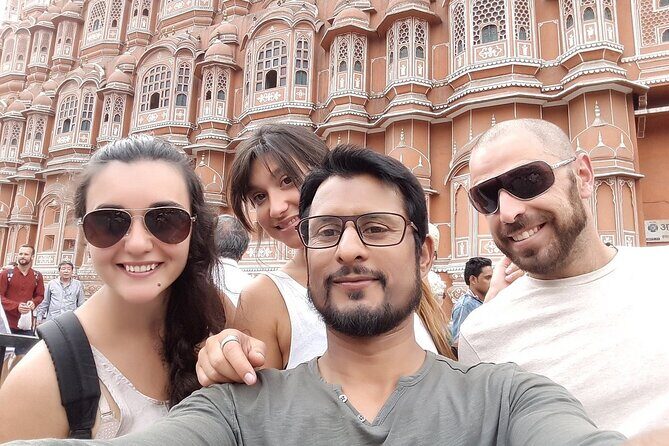
Stop 1 is Hawa Mahal, often called the Palace of Wind. It’s made from red and pink sandstone, and the famous five-story front is designed to resemble the Zenana, the women’s apartments, at the edges of the City Palace.
In just 30 minutes, you won’t do a long architectural study—but you can still get a lot out of it if you approach it smart. Look for the stacked look of the facade, and notice how the building’s “skin” is what creates the wind-and-vent idea. Even from a quick visit, you’ll understand why this is one of Jaipur’s most recognizable images.
Practical consideration: 30 minutes is short for photos plus any indoor exploring. If Hawa Mahal is a top priority for you, be ready to move quickly once you’re inside the area.
City Palace: Mughal and Rajput power in 1.5 hours
Next is the Jaipur City Palace, described as the royal residence and the former administrative hub of Jaipur’s kings. This is where you see a blend of Mughal and Rajput architecture, and the palace remains home to the country’s last ruling royal family.
You get 1 hour 30 minutes here, which is a decent chunk for a palace visit in a packed day. The value isn’t just in the exterior views. The palace’s layout and design make it feel like you’re watching centuries of taste and authority overlap.
What you can do in that time:
- Take in the architectural mix (Mughal curves and Rajput structure cues)
- Focus on the areas the guide highlights, especially if you’re short on energy later
- Use the private setting to ask questions without feeling rushed
A balanced note: City Palace is big. If you like to read every sign and linger in quieter corners, you may wish you had more than 1.5 hours. But if you’re aiming for a strong overview, this slot hits the right length.
Jantar Mantar: science made of stone (and UNESCO made it official)
Stop 3 is Jantar Mantar, a UNESCO World Heritage Site and a collection of 19 astronomical instruments built by Rajput ruler Sawai Jai Singh. The monument was completed in 1734.
This is the kind of site that’s easy to misunderstand if you rush. The trick is to treat it less like a museum and more like outdoor tools for measuring the sky. In practical terms, you’ll get more from it if your guide points out how the instruments work and what each structure is meant to calculate.
You’ll have 1 hour. That can be perfect if you use the time to:
- Walk the main area and pick out the bigger instruments first
- Let the guide connect the dots between shape and purpose
- Spend a bit more time near whichever instrument draws your attention most
Short drawback to keep in mind: you won’t do a deep technical study in an hour. But you will leave with a sense of how seriously Jaipur’s rulers took astronomy.





Jal Mahal: the lake palace you see fast, but remember longer
Then comes Jal Mahal, the palace in the middle of Man Sagar Lake. It’s built with a “smaller as you go” story design, and the palace is divided into four levels.
You’ll only have 30 minutes. The upside is that Jal Mahal works even on a quick stop because the visual is strong and the setting is distinctive. The main thing is to slow down for a few minutes: the best moments here are the view angles where the palace seems to rise from the water.
What to expect:
- It’s all about the lake-and-palace look
- You’ll likely spend time repositioning for photos and viewing angles
- If your day feels crowded, this stop can act as a brief reset
A small consideration: since it’s a short stop, you may not get long lingering time the way you would at City Palace. Think of it as a visual palate cleanser.
Ambikeshwar Mahadev Mandir: the long temple stop with real depth
Stop 5 is Ambikeshwar Mahadev Mandir, and it’s the longest time chunk on the route: 3 hours. The temple rests on 14 pillars, and its Shivshila is 5 thousand years old. It’s also mentioned in the Bhagwat Purana, which gives the place a bigger religious footprint than just a quick photo stop.
Here’s the value of giving this stop real time: temple visits aren’t only for sightseeing. They’re also for atmosphere—how the space feels, the flow of devotion, and the sense that people come back again and again.
That 3-hour window gives you room to:
- Take in the structure without feeling rushed
- Follow whatever the guide recommends for respectful viewing
- Let your energy settle before the next stepwell and hill temple
Possible drawback: if you’re temple-sensitive or you’re trying to keep the whole day strictly “sightseeing mode,” 3 hours might feel long. But if you’re even somewhat open to religious sites, this is one of the more meaningful stops on the itinerary.
Also, the tour description ties this temple area to Amber Hill View. If your route includes viewpoints nearby, you’ll get that perspective shift—from dense monuments to the broader hills that frame Jaipur.
Panna Meena ka Kund: the stepwell you’ll want to see twice
Next is Panna Meena ka Kund, a famous stepwell that draws tens of thousands each year. It’s a 200-meter-deep stepwell, and it’s one of those places that looks simple at first glance—until you really notice the geometry.
You’ll have 30 minutes. Honestly, that’s enough time if you focus. The stepwell is dramatic because of scale and repetition. Try not to let the whole visit become a photo race. Instead:
- Walk the edge and look for how the steps descend
- Take in the sense of depth rather than just surface details
- Spend a moment standing still so you really feel the drop
Balance note: if it’s busy, it can be harder to see quietly. With a private setting, you may be able to time your viewing better than in larger groups.
Galtaji Temple: kund water and lucky-bath vibes in the Aravalli hills
The final major stop is Galtaji Temple, built at a mountain pass in the Aravalli Hills, about 10 kilometers east of Jaipur. The temple is known for natural springs that collect water into tanks called kunds. Bathing in Galtaji’s waters is considered lucky, especially around Makar Sankranti.
You’ll have 1 hour 30 minutes, which is a strong amount of time for a hill-and-temple visit. This stop gives you something different from the palace-and-fort style of Jaipur. It’s more about nature meeting devotion.
What makes it special here:
- The springs and kunds give it a practical, lived-in feel
- The setting gives you a breather from the city monuments
- You can linger longer than at the 30-minute photo stops
A small consideration: if you’re expecting a “museum-style” visit, Galtaji will feel more like a functioning spiritual place with natural water features. Plan to act like you’re visiting somewhere people actually care about.
Tickets, time, and money: the real value math
The tour includes a lot that typically costs extra: private transportation, parking fees, hotel/airport pickup and drop-off, an air-conditioned vehicle, fuel surcharge, and bottled water.
The tricky part is monument entrance fees. The itinerary notes admission included for each stop, but the additional info flags that monument entrance fees are not included (estimated around $30 per person). So for your budget, assume you’ll pay something on-site or in advance for entry, and confirm the exact amount before you go.
How this affects value:
- If you were going to hire a private car anyway, this tour can feel like a bundled deal
- If you hate hunting for tickets or you’re unsure where you actually need to pay, having Ashraf-style guidance becomes part of the value
And yes, the price shown at $7 makes it sound too good to be true at first glance. Private driving plus air-conditioned comfort plus parking usually costs more than that in many places. The reason it can still work: the tour seems to be structured as a timed route with set stops, plus it includes the non-ticket costs, while monument entrances are the variable.
Who this Jaipur private tour is best for
This fits you best if:
- You want a high-efficiency day that hits Jaipur’s biggest icons
- You prefer comfort and privacy over public transport
- You like having a guide who can help with practical decisions, especially around ticket choices
- You’re open to temple and stepwell variety, not only palace photos
It may be less ideal if:
- You want long, slow exploration with deep museum reading
- You only care about two or three attractions and would rather not spend time moving between sites
- You’re sensitive to time limits at each stop
Should you book this Jaipur private tour with pickup?
If your goal is to see a lot of Jaipur without stress, I think this is a smart booking. The big attractions are covered, the transport setup is comfortable, and the guide style described for Ashraf is exactly what you want when the day is packed: patient, attentive, and helpful with real-world details.
Just go in with two expectations. First, the stops are timed, so you’ll need to choose what you pay attention to during each brief window. Second, budget for entrance fees—monument costs can swing the final total. If you’re okay with that, you’ll likely feel like you got a solid day for your money, with fewer hassles than the DIY route.
FAQ
Is this tour private or shared?
This is a private tour/activity, meaning only your group participates.
Where does pickup and drop-off happen?
Pickup and drop-off are offered from your selected location in Jaipur (including hotel/airport pickup and drop-off).
How long is the Jaipur private tour with pickup?
The duration is approximately 8 to 9 hours.
What are the main stops on the itinerary?
The listed stops are Hawa Mahal, City Palace, Jantar Mantar, Jal Mahal, Ambikeshwar Mahadev Mandir, Panna Meena ka Kund, and Galtaji Temple.
Are monument entrance fees included in the price?
Monument entrance fees are listed as not included, with an estimate of about $30 per person. The itinerary also notes admission ticket included per stop, so it’s best to confirm what’s covered for your specific booking.
What’s included in the tour cost?
Included items are private transportation, parking fees, hotel/airport pickup and drop-off, an air-conditioned vehicle, fuel surcharge, and bottled water.
Is there a mobile ticket?
Yes, the tour includes a mobile ticket.
When will I receive confirmation after booking?
Confirmation will be received at the time of booking.
Can I cancel for free?
Yes. You can cancel for a full refund if you cancel up to 24 hours in advance of the experience start time.