REVIEW · WORKSHOPS
Jaipur: local workshop tour (Handblock printing)
Book on GetYourGuide →Operated by wayofindia · Bookable on GetYourGuide
Jaipur turns printing into a hands-on lesson. In just two hours, you’ll learn how handblock printing works in the old city, with colors made from natural sources and enough practice to leave with a real sample. If you request it, hotel pickup and drop-off make it easy to fit into a sightseeing day.
I love how natural colors are part of the story, not a marketing afterthought. The workshop focuses on the practical steps and lets you participate, not just watch. I also like that you get a sample you make to take home, so you’re not walking away with only photos.
One thing to consider: there’s a showroom/shop stop afterward, and some people may feel the experience includes extra time for purchasing. If you’re not interested in buying textiles, go in with a plan to browse briefly—or skip ordering altogether.
In This Review
- Key Highlights You’ll Care About
- What Makes Jaipur Handblock Printing So Much More Than a Demo
- Old City Timing and Hotel Pickup That Actually Help
- Inside the Workshop: Hands-On Steps in Two Hours
- Natural Colors From Flowers and Vegetables (Eco-Friendly, With Real Practical Meaning)
- Sanganer and Bagru: Why Those Names Keep Coming Up
- Drinks, Private Group Attention, and Patient Instruction
- The Showroom Stop: Time to Browse, or a Shopping Alert
- Price and Value: Is $20 Worth It for Two Hours?
- Who Should Book This Handblock Printing Tour (and Who Might Skip)
- Should You Book This Jaipur Handblock Printing Workshop?
- FAQ
- Where does the handblock printing workshop take place in Jaipur?
- How long is the Jaipur handblock printing workshop?
- How much does it cost per person?
- Is the workshop offered in English?
- Is it a private group experience?
- Does the tour include hotel pickup and drop-off?
- Do you take anything home from the workshop?
- Are the dyes and materials natural or eco-friendly?
- Can I cancel for a full refund?
Key Highlights You’ll Care About
- Natural dyes from organic materials (including colors pulled from flowers and vegetables)
- Hands-on printing steps with an experienced artisan focus
- Take-home sample made during the activity
- English instruction with translation support
- Old city location with optional hotel pickup and drop-off
- Showroom afterward where browsing and ordering are available
What Makes Jaipur Handblock Printing So Much More Than a Demo
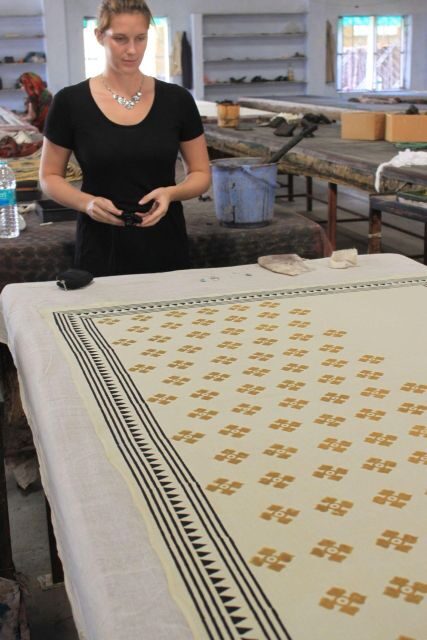
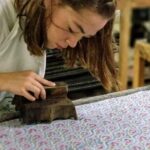
A lot of craft tours are basically a show-and-tell with a souvenir at the end. This one works differently because you practice. You’re guided through the process, then you jump in and do the steps yourself. That single shift changes everything. You start noticing why certain colors look a certain way and how the block print translates onto fabric or material.
I also like that the workshop frames Jaipur handblock printing as living craft, not museum nostalgia. The whole point is technique you can actually understand in a short session. You’ll see how artisans use their methods to get repeatable designs, even when you’re learning from scratch.
And yes, you’ll still get the culture side. The workshop ties into Rajasthan traditions associated with famous printing centers like Sanganer and Bagru, where generations have perfected hand techniques. Even if you’re not a textile geek, you’ll spot the logic behind the patterns once you’ve done a few steps yourself.
One more plus: drinks are included. In a short, hands-on format, small comforts matter.
You can also read our reviews of more tours and experiences in Jaipur
Old City Timing and Hotel Pickup That Actually Help
The workshop runs every day, with sessions timed in the old city area. That’s a big deal if you’re staying central and want to avoid wasting daylight on travel.
You’ll want to pay attention to the “twice” rhythm mentioned for the old city sessions. In practice, it means you can usually line it up without giving up your main sightseeing hours. Because the duration is two hours, you’re not stuck for half a day if you’re jet-lagged or your plans change.
If you’re staying in Jaipur city and you want it to be effortless, hotel pickup and drop-off are included—but you have to ask for it. The value here is simple: you don’t need to figure out local transport or timing your arrival around traffic.
Communication matters too. One clear benefit from real-world experience is that the coordinator typically reaches out early and helps you confirm pickup details and the driver connection. That cuts down the usual stress of “where do I meet?” in a dense old city.
Inside the Workshop: Hands-On Steps in Two Hours
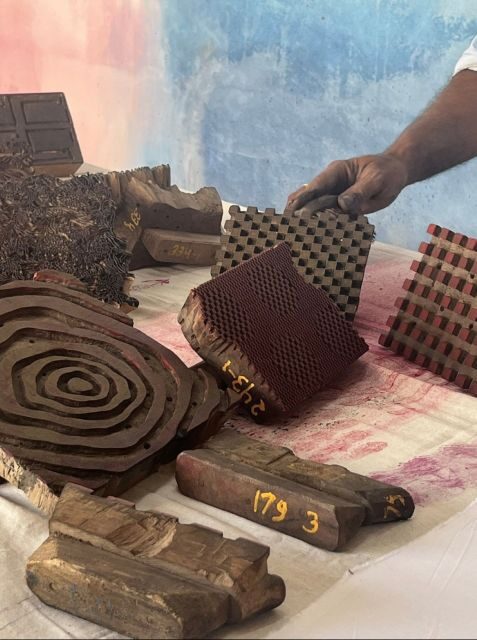
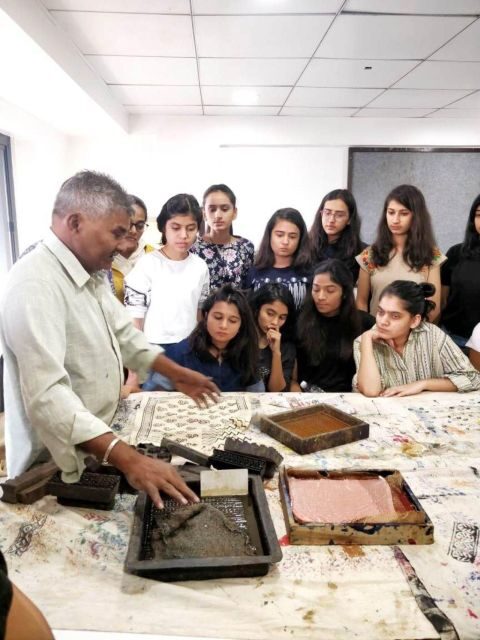
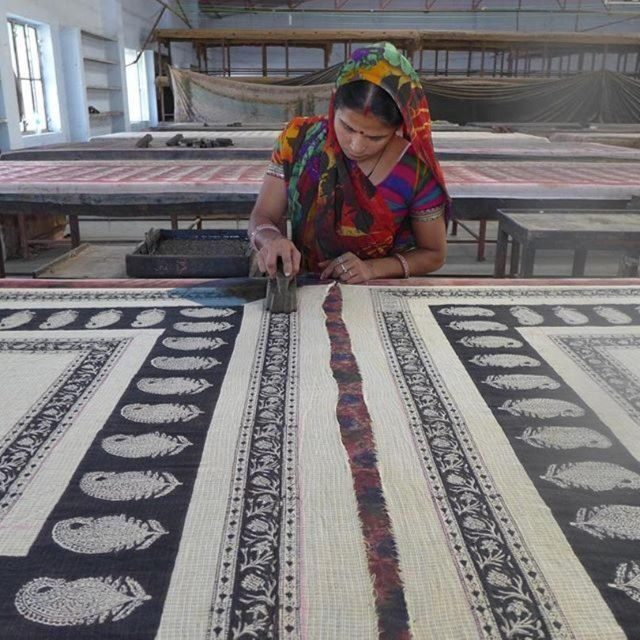
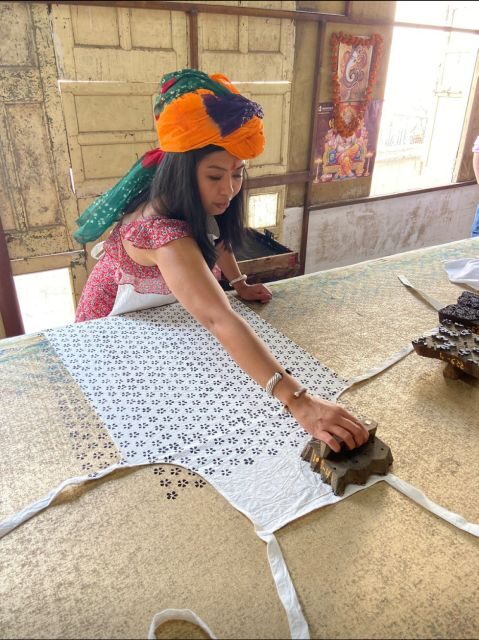
The workshop is built for fast learning. In two hours, you won’t become an artisan, but you will learn enough to understand the key actions: how design work becomes a stamped pattern and how printing connects to color choice.
Here’s what you can expect in the rhythm of the session:
- You start with an overview of handblock printing and what makes Jaipur designs distinct.
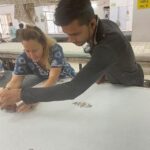
- You move into guided, hands-on participation in the main steps.
- You get to experience the use of natural materials and dyes firsthand.
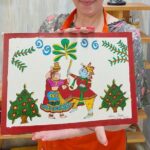
- You finish with a take-home piece: a sample you make during the activity.
The workshop is also designed around patience and clarity. The instructor is English speaking, and translation support is included. If your group is comfortable with Hindi, the communication can switch back and forth as needed, which helps a lot if English isn’t your strongest language.
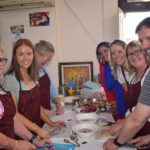
One more practical point: this is a private group format. That matters for comfort. You’ll ask more questions, get more attention on your technique, and avoid the awkward feeling of being rushed in a crowded class.
If you’re wondering about the setting: it takes place in Jaipur’s old city. That tends to mean you’ll feel the craft culture around you, even if the actual printing space is structured like a workshop.
Natural Colors From Flowers and Vegetables (Eco-Friendly, With Real Practical Meaning)
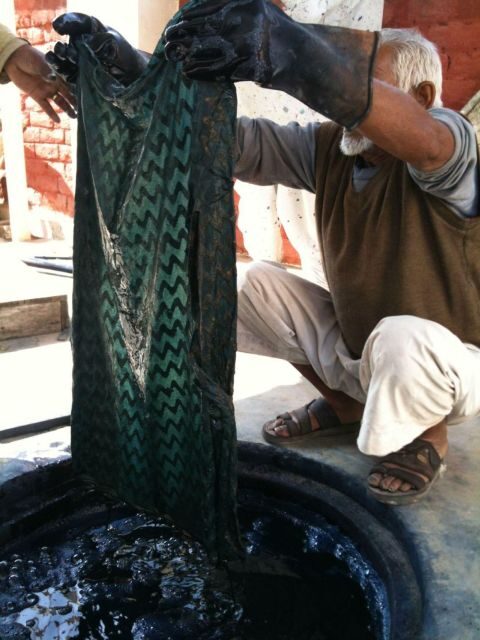
The highlight you’ll hear about most is natural dyes. The workshop emphasizes organic materials and dyes, and it’s not just a vague claim. You’ll work with colors derived from natural sources—specifically noted as coming from things like flowers and vegetables.
Why should you care? Because natural dye behavior affects the final look. You’ll notice differences in tone and how layers and printing method influence the result. Even if you don’t know the chemistry, you’ll learn the practical effect: the color story is part of the technique.
This also connects to sustainability. The workshop’s approach is framed as eco-friendly because it uses organic materials and natural dyes rather than synthetic shortcuts. Still, I’d encourage you to treat it as a craft process, not a magic spell. Natural dye work depends on careful handling and proper processes, and that’s exactly what you’d expect from experienced artisans.
If you’re eco-minded, here’s a smart way to use your time: ask the instructor how they think about material choices and why natural dyes are part of their work. You’ll get a better answer than any brochure can provide.
Sanganer and Bagru: Why Those Names Keep Coming Up
If you read about Rajasthan printing, you’ll see Sanganer and Bagru again and again. This workshop points to the same tradition. What that means for you is context. Even though you’re doing the activity in Jaipur, you’re not learning in a vacuum.
Those regions are known for handblock printing techniques that have been passed down for a very long time, and the designs are often built to work with repeated stamping and careful dye work. When you’re actively printing during your workshop, you can connect the dots:
- The block design isn’t random art. It’s made to transfer cleanly.
- The dye and dye strength matters because it affects how the pattern reads.
- The technique is repeatable, which is exactly why these craft centers became famous.
The practical lesson: once you understand why blocks and dyes are chosen, the cultural pride behind the craft makes more sense. It stops being a story you hear and becomes a method you grasp.




Drinks, Private Group Attention, and Patient Instruction
At $20 for a two-hour activity, you want to know the money goes somewhere real. Here, the basics are covered in ways that affect your experience:
- drinks included
- instructor in English
- translation/language support included
- full workshop tour and handblock activities
- taxes and parking handled
One of the most consistent quality signals from real experiences with this kind of tour is how people describe the instruction. In this case, the instructor is described as soft spoken and patient, and the coordinator communication is clear, including pickup details around the driver. That combo matters. It makes the class feel calm, which lets you focus instead of guessing.
If you’re traveling with family, this is also a format that tends to work well because you’re doing something tactile. Kids and adults both get value from seeing how a stamped pattern actually comes to life.
The Showroom Stop: Time to Browse, or a Shopping Alert
After the workshop activity, you’ll typically be taken to a showroom/shop where you can see examples of textile designs, naturally colored prints, and finished items. Then you’re given the option to browse and order.
This is where you should be honest with yourself:
- If you enjoy shopping for locally made textiles and want higher-quality pieces, this is the chance to see what the printing looks like at full scale.
- If you mainly want the hands-on craft and plan to buy nothing, set expectations ahead of time.
Some experiences mention that the showroom focus can feel strong, so you may feel it turns into a shopping trip. Your best approach is simple: decide how much time you want to spend there before you arrive. That way, browsing stays fun, not stressful.
Also, customization is mentioned as possible. The showroom offers ordering and even custom-made pieces based on measurements, with the note that same-day delivery may be available in some cases. That’s not something you should assume for every order, but it is part of what the shop can offer.
Price and Value: Is $20 Worth It for Two Hours?
Let’s talk value in practical terms. At about $20 per person for a two-hour experience, you’re getting more than a quick demo. You’re paying for:
- a full workshop tour
- handblock activities (hands-on, not just observation)
- an English instructor plus a language instructor for translating
- drinks
- hotel pickup and drop-off (if you ask for it)
- taxes and parking included
When you compare that to many short cultural activities, the key value driver is the hands-on element plus the take-home sample. The sample gives you proof you actually did the work, and it’s a nice memory that isn’t just an extra photo in your phone.
The only “value risk” is the showroom time. If you buy nothing and spend too long browsing, some of the cost-to-enjoyment ratio can feel off. But if you go in relaxed, with clear buying boundaries, the workshop part still feels like the main event.
Who Should Book This Handblock Printing Tour (and Who Might Skip)
This tour fits best if you:
- want a hands-on craft experience without a full-day commitment
- like natural dye stories and eco-friendly craft angles
- enjoy learning by doing, especially when there’s an English instructor and translation support
- want a take-home item you made yourself
It’s also a solid pick if you want something that feels cultural but doesn’t require museum patience.
You might reconsider if:
- you strongly dislike shopping or feel uncomfortable in sales-heavy environments
- you want a purely observational experience with zero showroom time
- your schedule is tight and you didn’t ask for pickup—then timing the old city meeting point could get annoying
That said, even if the showroom isn’t your thing, the workshop itself is the part you came for. Treat the shop as optional browsing, not an obligation.
Should You Book This Jaipur Handblock Printing Workshop?
If you want a real “learn it by doing it” craft session in Jaipur, I’d book this. The price is reasonable for the time and includes the basics that make it work smoothly: instruction, translation support, drinks, taxes, and often pickup/drop-off.
The biggest decision point is the showroom. If you’re comfortable browsing and buying only if it truly grabs you, this can be a satisfying, memorable craft day. If you want zero shopping pull at all, go in with firm boundaries or choose a different style of experience.
FAQ
Where does the handblock printing workshop take place in Jaipur?
The activity is held every day in the old city of Jaipur. Hotel pickup and drop-off are available if you ask for it.
How long is the Jaipur handblock printing workshop?
The duration is 2 hours.
How much does it cost per person?
The price is $20 per person.
Is the workshop offered in English?
Yes. The instructor is English, and there is also a language instructor for translating.
Is it a private group experience?
Yes, it’s listed as a private group.
Does the tour include hotel pickup and drop-off?
Hotel pickup and drop-off are included, and you can request it if you want it.
Do you take anything home from the workshop?
Yes. You make a sample during the handblock activities and can take it home.
Are the dyes and materials natural or eco-friendly?
The workshop highlights sustainability using organic materials and dyes, including natural colors that come from flowers and vegetables.
Can I cancel for a full refund?
Yes. You can cancel up to 24 hours in advance for a full refund.