REVIEW · JAIPUR CITY SIGHTSEEING TOURS
Jaipur: Half or Full-Day Sightseeing Tour with Flower Market
Book on GetYourGuide →Operated by Jaipur tour taxi cab · Bookable on GetYourGuide
Jaipur’s streets smell like marigolds. This private tour strings together morning flower market energy, royal landmarks, and a hands-on block printing workshop in one well-paced day.
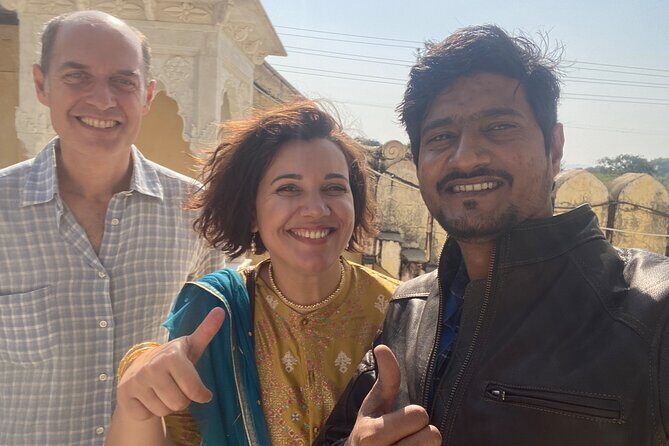
I really like that you get both the big names (think Amber Fort and Hawa Mahal) and the quieter stops that people often miss. You also travel with a guide who can explain what you’re seeing, plus drivers who focus on getting you there safely through Jaipur traffic—Khalid for monument knowledge, and Ravi for careful driving, for example.
One possible drawback: most of the wow moments are photo-and-walk stops, and attraction entrance fees and meals are not included, so you’ll want to budget extra once you’re on the ground.
In This Review
- Key highlights you’ll feel right away
- How the morning flower market sets the tone for Jaipur
- Gaitore Ki Chhatriyan: quieter stone stories at the edge of town
- Jal Mahal and Man Sagar Lake: a calm photo stop that breaks the heat
- Amber Fort: why a guide changes everything
- Panna Meena ka Kund: geometry you can actually see
- Block printing studio: turning watching into a souvenir you made
- Hawa Mahal and City Palace: royal windows and active courtyards
- Jantar Mantar: when you look up and it makes sense
- Monkey Temple timing: a hilltop start or end with views and cheeky monkeys
- Price and logistics: where the real value is
- Who should book this tour
- Small tips to make your day smoother
- Should you book this Jaipur flower market and heritage tour?
- FAQ
- How long is the Jaipur half-day or full-day sightseeing tour?
- Where does the tour start, and is pickup included?
- Is this a private tour?
- What vehicle options are available for transport?
- Are entrance fees and meals included?
- What languages are available for the guide?
- Can I cancel for a full refund?
Key highlights you’ll feel right away
- Flower market morning: bright heaps of garland flowers and a look at how people start their day tied to ceremony
- Amber Fort focus: a guided walk through palaces and courtyards rather than a rushed stop
- Hidden-feeling time: the peaceful pace at Panna Meena ka Kund and the calm of Gaitor Ki Chhatriyan
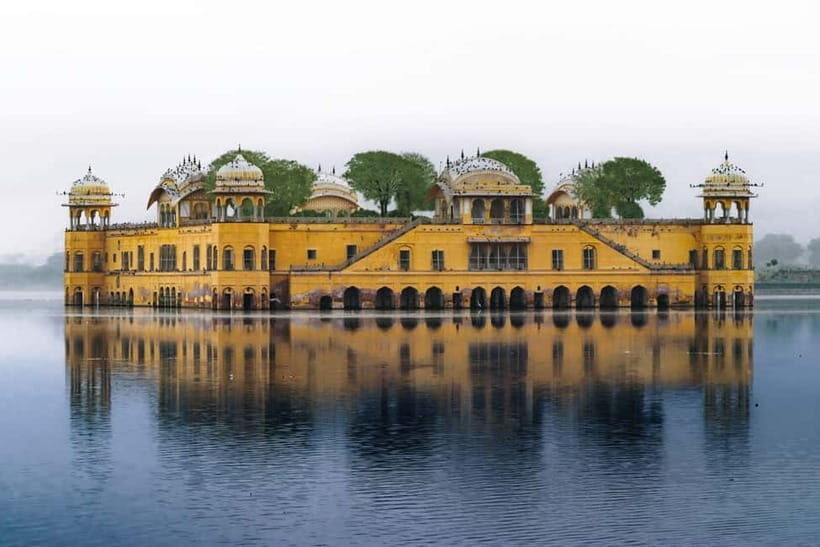
- Jal Mahal photos: Man Sagar Lake views with a reflective, quiet break from the city heat
- Block printing studio: watch artisans’ process and try printing yourself
- Science-meets-architecture: Jantar Mantar with massive instruments built to track celestial events
How the morning flower market sets the tone for Jaipur
Start your day where Jaipur wakes up with color and scent: the Jaipur flower market. In the early hours, lanes fill with vendors bringing in marigolds and other blooms, and you can see how flowers move fast from stall to garland. It’s not just shopping. It’s city rhythm—temple offerings, ceremony needs, and everyday devotion all happening in real time.
What makes this stop work well on a tour is that you’re not standing there wondering what you’re looking at. A guide can help you connect the sights to the reasons people gather and buy. You’ll also get a structured window to take photos before the day crowds build.
Practical note: it’s a morning walk with photo time, so wear something comfortable and expect you’ll naturally slow down to watch the sorting and bundling.
You can also read our reviews of more shopping tours in Jaipur



Gaitore Ki Chhatriyan: quieter stone stories at the edge of town
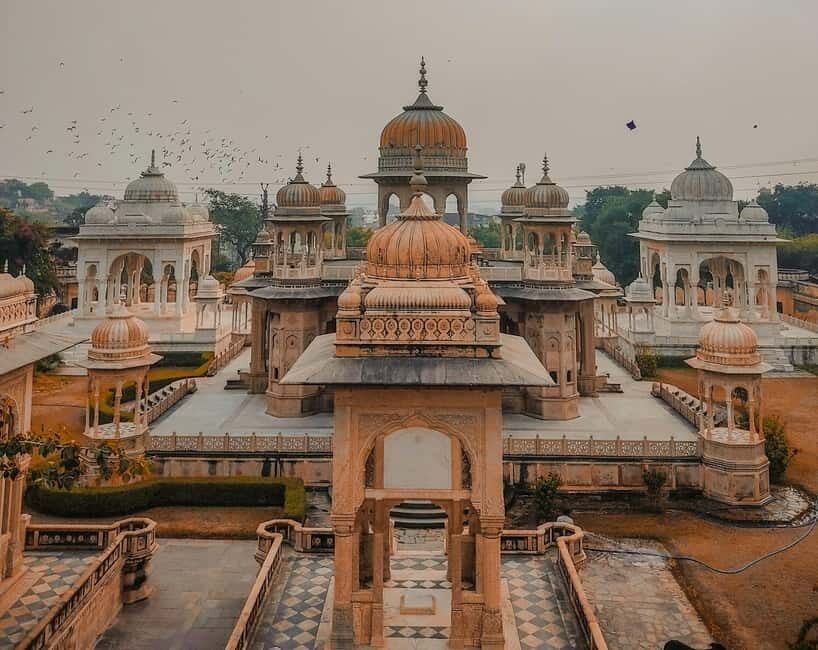
After the flower market buzz, the tour shifts gears to Royal Gaitore Ki Chhatriyan. This is the kind of place where the volume drops. The cenotaphs and carved stone memorials dedicated to Jaipur’s Kachwaha rulers feel thoughtful rather than loud or commercial.
I like this contrast because it makes the day feel more layered. Big palaces and big views can blur together when you’re in sightseeing mode. A calmer stop like this gives your brain a breather and helps you read the rest of the monuments with more context.
You’ll usually be there for a photo stop plus guided viewing, which keeps it relaxed. If you care about architecture details—carving, symmetry, and how the site sits in its surroundings—this is a good mid-morning reset.
Jal Mahal and Man Sagar Lake: a calm photo stop that breaks the heat
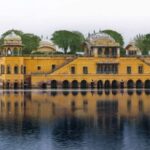
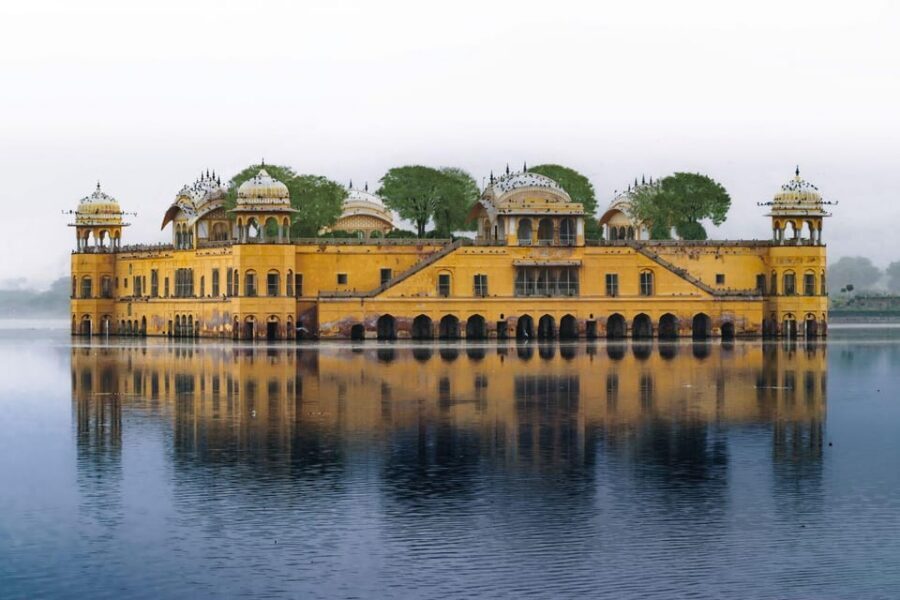
Next, you’ll pause at Jal Mahal, the palace sitting in the middle of Man Sagar Lake. It’s an “easy to understand, hard to forget” kind of landmark. Even if you’ve seen it on postcards, the lake setting makes it feel different in person.
This works as a short break in the route. You get a scenic pause before heading toward the hills and forts. If the rest of your day is going to involve steps, courtyards, and longer walks, this is the moment to stand still, frame a few photos, and let the day slow down.
Keep expectations practical: you’re not spending hours here. You’re getting that watery, reflective look and then moving on.
Amber Fort: why a guide changes everything
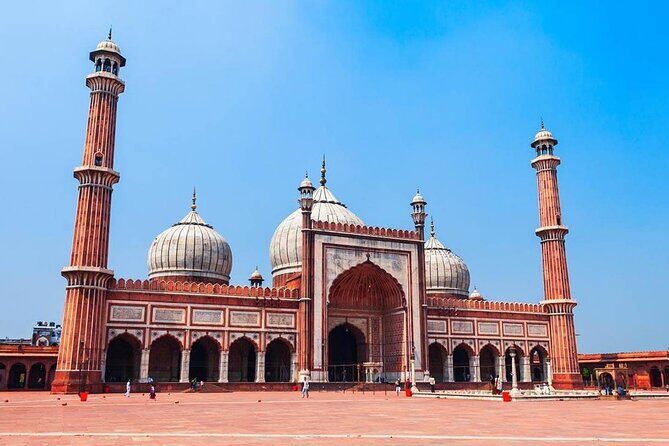
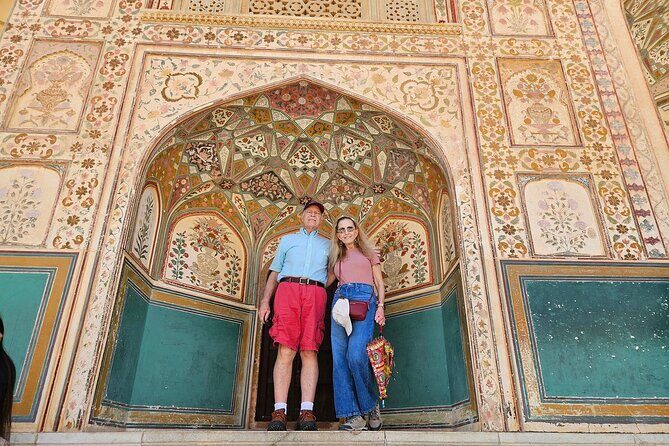
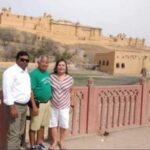
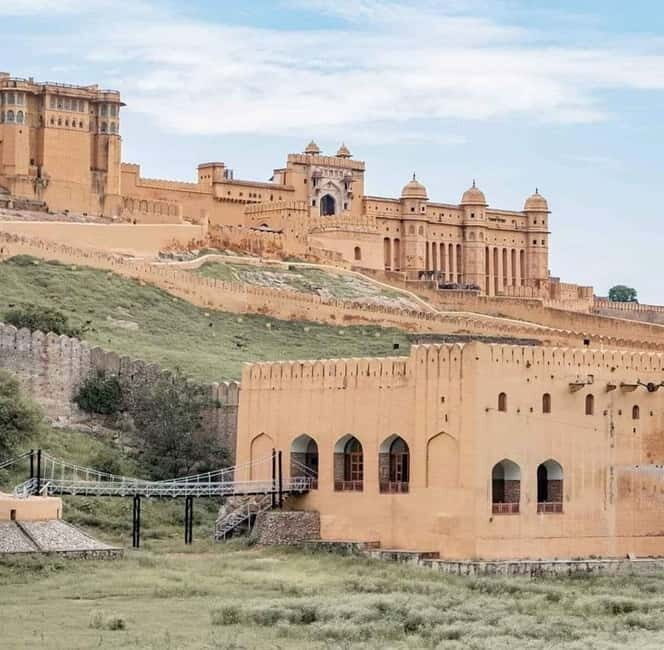
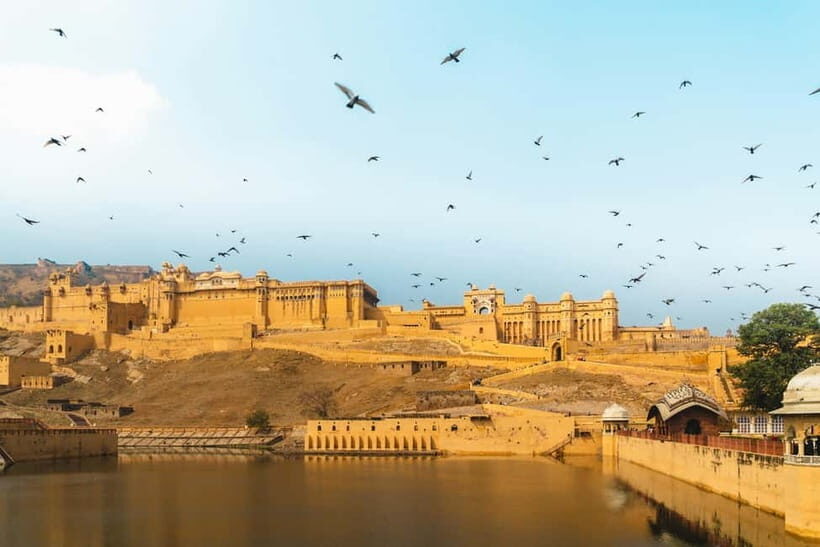
Amber Fort is the star of this itinerary for most people, and for good reason. It’s a major Rajput architectural achievement, with ornate palaces, mirrored halls, courtyards, and spaces built for power and defense. But here’s the key: without explanation, a fort can turn into walls, steps, and “pretty rooms.”
A guide makes the visit click. You’ll get the stories behind royal life, the logic of the fort’s layout, and what the design was meant to do. That turns your walking time into understanding time.
You’ll also likely notice that Amber Fort rewards patience. You don’t rush it like a bus photo stop. The tour gives it guided focus with time for photos, which helps you move through the main areas without feeling lost.
If you’re booking a half-day vs full-day version, I’d treat Amber Fort as the deciding factor. If this is your priority, pick the option that gives it enough time, because it’s the kind of place where short visits feel like you only skimmed.
Panna Meena ka Kund: geometry you can actually see
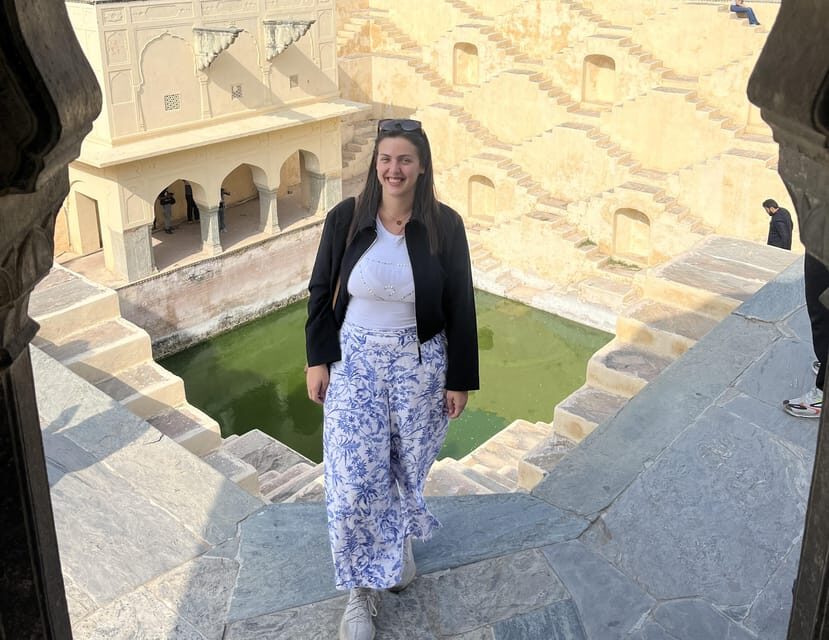
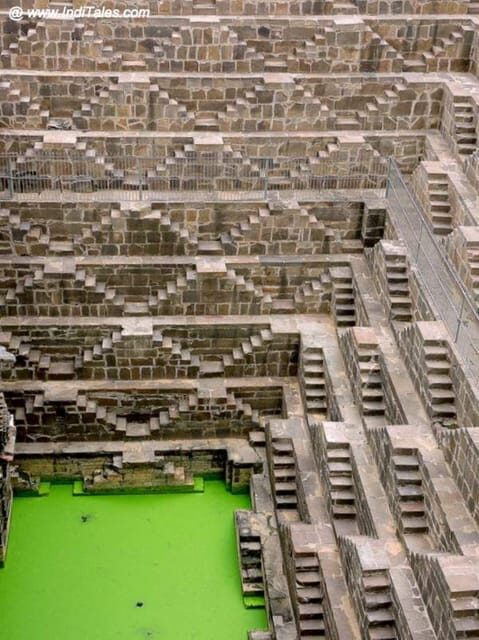
One of the more interesting cultural stops on this route is Panna Meena ka Kund, a stepwell known for its symmetrical design and photogenic look. What I like is that it’s not just a picture. It’s a structure you can study—how the layers align, how the geometry repeats, and how a working or ceremonial space becomes an architectural statement.
This is also a nice pacing tool. Stepwells can be visually dramatic without being huge. So you get a strong “wow” without exhausting yourself right before or after a bigger fort.
The tour typically includes photo time and a guided walk-through, and that guided element helps you understand what you’re seeing instead of only guessing.
You can also read our reviews of more tours and experiences in Jaipur





Block printing studio: turning watching into a souvenir you made
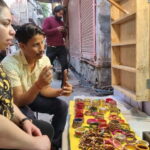
If you want one part of the day that feels genuinely hands-on, go for the block printing studio visit. You’ll watch artisans use centuries-old techniques to create patterns on fabric, using carved blocks and careful repetition.
Then you can try your hand at block printing and take home what you make. Even if you’re not artistic, this kind of workshop has a low stress factor: you’re following steps that skilled people already know how to do.
Why this stop is valuable beyond “something to do”: it connects the visual culture you’ll see around Jaipur to a living craft. You’re seeing how art becomes wearable, practical, and repeatable—and you get to participate for real.
Hawa Mahal and City Palace: royal windows and active courtyards
Next up are two of Jaipur’s most recognizable icons: Hawa Mahal and the City Palace.
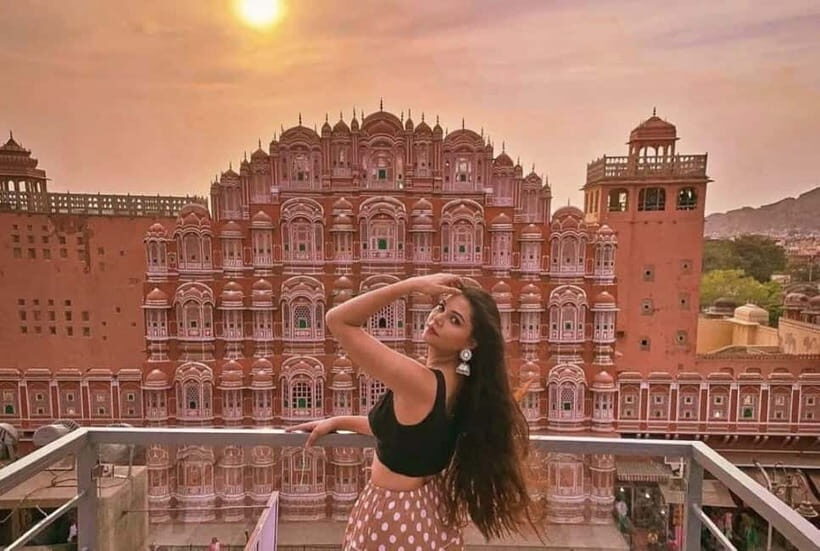
At Hawa Mahal, the honeycomb windows are the headline. Your guide can explain the idea behind the design and why those windows mattered for royal women to observe street life without being fully seen. It’s a clever architectural solution, and it’s easy to appreciate once someone points out the logic.
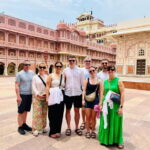
Then you’ll shift to City Palace, which is still partly associated with the former royal family. Here you’re not just looking at a façade. You walk through courtyards, galleries, and spaces like armories that help you understand how royal power was organized.
This pairing is smart. Hawa Mahal shows the “viewing” side of royal life. City Palace shows the “living” side. Together, they help the city’s royal era feel less like distant legend and more like how places functioned.
Jantar Mantar: when you look up and it makes sense
The tour ends with Jantar Mantar, the astronomical site with massive instruments built in the 18th century. It’s easy to treat it like a quirky open-air museum. But with a guide, it becomes something else: tools designed to track celestial events with precision.
I like this stop because it shifts your attention. You stop thinking only about walls and starts thinking about measurement—how knowledge was built into architecture.
You’ll get a photo opportunity plus guided viewing time. If you enjoy science, observation, or you just like when travel teaches you something without feeling like a classroom, this is a strong finish.
Monkey Temple timing: a hilltop start or end with views and cheeky monkeys
One of the tour’s highlights mentions starting or ending at the Monkey Temple. That hilltop location is the reason: you get expansive views and a lively atmosphere with playful monkeys around.
Because this is described as either beginning or ending your day, the best advice is to plan your schedule flexibly. If you like golden-hour light, try to time your camera for the direction the hill overlooks. If you’re sensitive to noise or sudden animal movement, keep some awareness around you and don’t corner monkeys for photos.
Price and logistics: where the real value is
At the listed price of $4.39 per person, this tour can look like a bargain on paper. But the practical value depends on what you end up paying on top.
Here’s the balance:
- Included: pickup and drop-off, water, tea or coffee with snacks, and guided time. You’ll also have a private vehicle setup if you choose the car or tuk-tuk option.
- Not included: attraction entrance fees and meals.
So the value is strongest when you travel with a guide and driver who reduce stress. Private transport matters in Jaipur because traffic can be intense. The reviews back this up: a careful driver team like Khalid and Ravi was praised for safe, responsible driving and for getting people through heavy roads without drama.
Also, languages matter. This tour offers live guide support in multiple languages (English, Italian, Spanish, French, German). If your comfort level is higher with one of those, it’s worth choosing the language option that matches you best.
Finally, it’s a private group, so you’re not forced into someone else’s pace. That makes the day feel more like a guided walk with decisions, not a checklist sprint.
Who should book this tour
This works best if you want:
- A single day that covers Jaipur’s signature sites plus a few calmer breaks
- Guided context (so you don’t just take photos, you understand what the photos represent)
- A cultural activity that isn’t only watching: the block printing workshop
- Pick-up from where you’re staying, so you lose less time getting started
It’s also a good fit for couples, solo travelers, and small groups who like planning but still want local flexibility.
Small tips to make your day smoother
- Decide in advance which experience matters most: Amber Fort, the stepwell, or the workshop. Then match your half-day vs full-day choice to that.
- Bring some cash or a payment plan for entrance fees, since they’re not included.
- Keep your camera ready early. The flower market is the hardest to replicate later in the day.
- If you’re sensitive to heat and walking, plan to use the tour’s short scenic pauses (like Jal Mahal) as your built-in breaks.
Should you book this Jaipur flower market and heritage tour?
I’d book it if you want one clean, organized way to see Jaipur’s main sights with a guide explaining the why behind the wow. The strongest reasons are the morning flower market, the guided approach at Amber Fort, and the practical, memorable block printing workshop.
Skip it—or at least choose the version carefully—if you hate walking/photo stops or you don’t want to manage extra costs for entrance tickets and meals. In that case, you might prefer a shorter itinerary focused only on fewer sites.
If your goal is a day that feels both historic and real—royal landmarks plus day-to-day craft—this is a solid plan for Jaipur.
FAQ
How long is the Jaipur half-day or full-day sightseeing tour?
The duration is listed as 5–8 hours, depending on the option you choose and the starting time availability.
Where does the tour start, and is pickup included?
Pickup and drop-off are included. You can start from your hotel, airport, railway station, or another preferred location in Jaipur.
Is this a private tour?
Yes. The group type is private.
What vehicle options are available for transport?
The tour offers a private air-conditioned car with a driver if that option is selected, or a private tuk-tuk with a driver if that option is selected.
Are entrance fees and meals included?
Attraction entrance fees and meals are not included.
What languages are available for the guide?
The live tour guide is available in English, Italian, Spanish, French, and German.
Can I cancel for a full refund?
Free cancellation is available up to 24 hours in advance for a full refund.