REVIEW · MARKETS
Jaipur Tuk-Tuk Tour with Flower Market Visit
Book on Viator →Operated by Jaipur Taxi Cab · Bookable on Viator
Flower perfume and tuk-tuk turns in Jaipur. I love the start at the Badi Chopad flower market, where you get color, scent, and that early-morning Jaipur energy before the sights begin. Then you slide into a private tuk-tuk with a friendly storyteller who helps the day feel less like checkboxes and more like a guided stroll across town.
The second thing I really like is the ride efficiency. With pickup and drop-off included, plus stops that cover the main landmarks in one 8-hour loop, you avoid the usual time sink of organizing tuk-tuks between monuments. You also get bottled water, which matters fast in Jaipur.
One consideration: several major monuments on the route have entrance tickets not included (like Hawa Mahal, City Palace, Jantar Mantar, and Royal Gaitor). So your $6 price covers the tour and transport, but you’ll want a bit of cash or card set aside for entry fees.
In This Review
- Key highlights at a glance
- Jaipur by tuk-tuk: why this day plan feels smart
- Stop 1: Badi Chopad flower market (30 minutes, admission free)
- Stop 2: Hawa Mahal, Palace of Breeze (45 minutes, entrance ticket not included)
- Stop 3: City Palace (about 2 hours, entrance ticket not included)
- Stop 4: Jantar Mantar (about 45 minutes, entrance ticket not included)
- Stop 5: Royal Gaitor Tumbas (about 45 minutes, entrance ticket not included)
- Stop 6: Jal Mahal, the palace on the water (15 minutes, admission free)
- Stop 7: Amer town and the 16th-century fort area (about 2 hours, admission free)
- Stop 8: Panna Meena ka Kund stepwell in Amer (about 30 minutes, admission free)
- Transportation, timing, and what the private part changes
- Price: what $6 really buys you (and what it doesn’t)
- Who this tour suits best
- What to do before you go (simple prep that helps)
- Should you book this Jaipur tuk-tuk tour?
- FAQ
- How long is the Jaipur Tuk-Tuk Tour with Flower Market Visit?
- Is pickup and drop-off included?
- What stops are included on the itinerary?
- Is admission included for all monuments?
- How much does the tour cost?
- Is bottled water included?
- What is the cancellation policy?
Key highlights at a glance

- Morning flower market at Badi Chopad: marigolds, roses, jasmine, and an easy 30-minute taste of local life
- Private tuk-tuk with a friendly storyteller: learn context while you move between neighborhoods
- Pink City classics: Hawa Mahal, City Palace, and Jantar Mantar on one practical day plan
- Royal Gaitor Tumbas: a cremation ground with strong architectural presence
- Jal Mahal photo stop: see the palace on the water from the road without extra admission
- Amer town pair-up: Amer fort area plus Panna Meena ka Kund stepwell
Jaipur by tuk-tuk: why this day plan feels smart
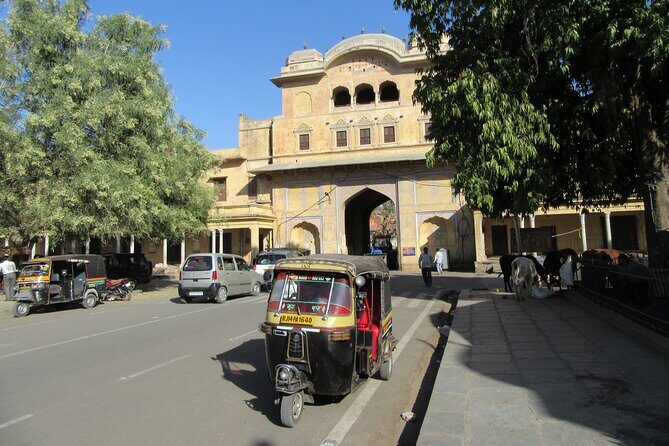
Jaipur can be a lot, fast. Between crowds, traffic, and the sheer number of places people want to see, it’s easy to spend the day running around instead of enjoying the city.
This tour fixes that with a simple formula: a private tuk-tuk, pickup and drop-off, and a route that strings together the big icons without making you coordinate every transfer. You’re not just sightseeing. You’re moving like a local would on a short day: one neighborhood at a time, with enough breaks to absorb what you’re seeing.
And the flower market start helps your brain get oriented. You hit the city in the morning, when colors and smells are strongest, then transition into the architecture and observatories.
You can also read our reviews of more shopping tours in Jaipur



Stop 1: Badi Chopad flower market (30 minutes, admission free)
Your day begins early at Badi Chopad, where the air fills with scent and vendors lay out flowers like a living color chart. The market is known for marigolds, roses, and jasmine, and the whole place has a hands-on, workday feel rather than a showy tourist vibe.
I like this stop because it teaches you how Jaipur breathes. Before you see palaces and forts, you see the everyday inputs that power rituals, ceremonies, and daily routines. It’s also one of the easiest places to enjoy without needing a long attention span. Thirty minutes is enough to walk, look, and take photos without feeling rushed.
Practical tip: wear something breathable and consider sunglasses. You’ll likely be looking up at signs, scanning stalls, and watching people move fast.
Stop 2: Hawa Mahal, Palace of Breeze (45 minutes, entrance ticket not included)
Next comes Hawa Mahal, the honeycomb-like facade that makes so many Jaipur photos possible. The palace sits right in the middle of town, and part of the fun is how you reach it—slowly moving through streets that feel alive with daily activity.
Inside time here is about exploring the floors and climbing for city views. From the top levels, you’ll get a sense of the city layout and that famous Pink City feeling. There are four floors, and walking the route helps you understand why the building became such a visual symbol.
What to watch for: you’ll spend energy climbing stairs. If you’re not a big stair person, pace yourself and plan for breaks. Also budget for the entrance ticket, since it’s not included.
Stop 3: City Palace (about 2 hours, entrance ticket not included)
Then you move from a single iconic facade into the broader story of Jaipur through the City Palace complex. This is where you see cultural artifacts and spaces connected to the city’s ruling era, and the scale makes it feel like a living museum rather than a quick stop.
Two hours is a good amount of time here. You can slow down, wander through areas open to visitors, and give your eyes time to adjust from close-up details (doors, textures, courtyards) to wider views. The durbar area is especially striking and is usually where you’ll feel the impact of how these buildings were designed for power and ceremony.
Consideration: entrance tickets aren’t included here either, so factor that into your day budget. Also, the City Palace can be busy. If you want calmer moments for photos, keep your eyes open for slightly quieter corridors as you walk deeper in.
Stop 4: Jantar Mantar (about 45 minutes, entrance ticket not included)

After palaces, you’ll switch gears to Jantar Mantar—an open-air set of massive instruments used for astronomical measurements. From a distance, it can look like abstract sculpture. Up close, it turns into something more practical: a set of tools built to track the sky.
I enjoy this stop because it breaks the usual pattern of Indian architecture-only sightseeing. You get science as a cultural artifact. Walking through the space also helps you see how the instruments relate to each other and how people once used them.
Forty-five minutes is workable if you keep moving and focus on the major pieces. If you like reading every sign slowly, you might want more time, but you’ll still get the main experience in the tour time window.
Again: entrance ticket not included, so check what you’ll need and pay directly on arrival.
You can also read our reviews of more tours and experiences in Jaipur






Stop 5: Royal Gaitor Tumbas (about 45 minutes, entrance ticket not included)
Now you go to a quieter-feeling, historically weighty area: Gaitore, the royal cremation ground for the Kachhwaha Rajput kings and family members. The architecture here is described as majestic, and it gives you a different emotional tone than the palaces.
This is one of those stops that benefits from a guide or storyteller in the tuk-tuk. Without context, step-by-step history can get lost. With context, it helps you read the structures as part of lineage and ritual—not just buildings.
You’ll have about 45 minutes, which is enough for a thoughtful walk and photos without turning it into a long, tiring slog. Bring water and pace yourself, since you’ll already have had several monuments by this point.
Entrance ticket is not included, so set expectations on additional costs.
Stop 6: Jal Mahal, the palace on the water (15 minutes, admission free)
Next is Jal Mahal—the palace on the water. The best part here is how you see it. You can view it from the road, and there’s no need to get pulled into a guide-led add-on just to get a look.
This stop is short by design: about 15 minutes. That’s enough for photos, a quick viewpoint moment, and the chance to appreciate the contrast—royal architecture floating over water, while you’re still riding through the city.
What I like: it feels like a palate cleanser after the heavier sites. You’re not reading history for an hour. You’re looking and letting the scene reset your eyes.
Since admission is free, it’s one of the best value moments on the route.
Stop 7: Amer town and the 16th-century fort area (about 2 hours, admission free)
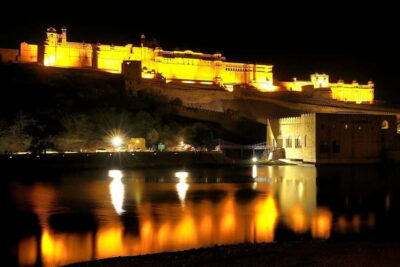
Then the tour heads to Amer (also called Amer town), about 11 km from Jaipur. This area is known for the 16th-century Rajputana fort and the hilltop setting. If you’ve been seeing Jaipur’s symbols all day, Amer is where you feel the scale shift.
Amer Town is tied to Rajput architecture, intricate carvings, and the famous Sheesh Mahal (mirror palace area). Even if you focus just on the exterior vibe and key interiors open to visitors, it’s a big visual payoff.
The tour gives you around two hours here, which is enough to walk the grounds and explore without turning it into a full-day fort marathon. Admission is listed as free for this stop, which makes it one of the more budget-friendly chunks of the itinerary.
Practical consideration: hilltop forts often mean stairs and uneven ground. Wear shoes you can trust.
Stop 8: Panna Meena ka Kund stepwell in Amer (about 30 minutes, admission free)
To close, you visit Panna Meena ka Kund, an 8th-century stepwell with symmetrical staircases and intricate design. Stepwells aren’t just cool to look at. They were built for water storage and social gathering, which makes them feel both practical and cultural.
I love stepwell stops because they slow you down. You get to notice geometry: how the stair pattern pulls your eyes down and how the symmetry frames the space. Even with a short time window, you get the main impression.
This stop is about 30 minutes and admission is free, which makes it a high-value finale. It’s also a nice way to end your day with something calmer than fort walls.
Transportation, timing, and what the private part changes
A private tour matters more than most people think. When you’re with a group, the pace is set by the slowest person. With a private tuk-tuk, the day feels adjustable: you can linger a little where you care, and speed up through the parts you’re less excited about.
The tour also includes pickup and drop-off from your hotel, airport, railway station, or bus station. That’s not a small perk in Jaipur, where moving between sights can be time-consuming.
You’ll also receive bottled water, fuel, parking, and other taxes included. That helps keep the day simple and predictable. For a budget-friendly tour price, it’s a strong way to reduce the random extra expenses that can pile up.
One note on timing: the tour lasts about 8 hours. That’s a full day, but the stops are balanced so you’re not stuck in one place for too long. The short stops (flower market, Jal Mahal, stepwell) keep the momentum going.
Price: what $6 really buys you (and what it doesn’t)
At $6 per person, you’re paying for the tour backbone: transport, driver/storyteller time, and getting you to the key places in Jaipur in one go. You’re also getting bottled water and admission coverage for a few stops.
But the biggest clarification is this: monument entrance tickets are not included for several major sites. Hawa Mahal, City Palace, Jantar Mantar, and Royal Gaitor Tumbas list tickets as not included.
So how do you judge value? For me, the value question is: does the tour save you time and coordination money? In a city like Jaipur, it often does. You avoid multiple separate hires and the stress of planning the order yourself. And since admission is included at several spots (flower market, Jal Mahal, Amer, Panna Meena ka Kund), you still get meaningful entry savings on parts of the itinerary.
If you know you’ll want to linger at the ticketed monuments for photos and reading, budget extra for those entries. If you prefer a more visual walk-through, the tour still works well.
Who this tour suits best
This is a great fit if you want:
- a full day that covers major Jaipur landmarks without constant logistics
- a comfortable tuk-tuk ride with a storytelling guide who explains what you’re seeing
- early market time before the heat and crowds build
- an itinerary that mixes architecture with something less expected, like a stepwell and royal cremation grounds
It may be less ideal if you strongly dislike entrance fees or you want a day made only of free stops. Since several ticketed attractions are part of the route, you’ll still need to plan for those.
Also, because the tour is weather-dependent, you’ll want to keep your schedule flexible if conditions are poor. Outdoor walking is part of the day.
What to do before you go (simple prep that helps)
- Wear breathable clothes and comfortable walking shoes. Forts and stepwell areas can mean lots of walking and stairs.
- Bring sun protection. Jaipur sun can be intense, especially when you’re climbing floors at Hawa Mahal or walking in Amer.
- Have a plan for entry fees. If you’re paying for tickets at multiple stops, keep some cash or be ready to pay where allowed.
If you like photos, this itinerary is photo-friendly, especially at Hawa Mahal, City Palace courtyards, and Jal Mahal’s palace-on-water view.
Should you book this Jaipur tuk-tuk tour?
Yes, I’d book it if you want a practical, one-day Jaipur route with transportation handled and a fun tuk-tuk ride that turns landmarks into context. The morning flower market is a smart start, and the mix of Pink City icons plus Amer and the stepwell makes the day feel more varied than a typical monument-only plan.
I’d hesitate only if you’re trying to keep everything strictly low-cost on entrance fees or if you’re sensitive to stair-heavy sites. If you’re okay budgeting a little extra for ticketed monuments, this is a strong value day.
It’s the kind of tour that helps you get your bearings fast and still leaves you with places worth returning to later on your own.
FAQ
How long is the Jaipur Tuk-Tuk Tour with Flower Market Visit?
The tour runs for about 8 hours.
Is pickup and drop-off included?
Yes. Pickup and drop-off are included from your hotel, airport, railway station, or bus station.
What stops are included on the itinerary?
You’ll visit the flower market at Badi Chopad, Hawa Mahal, City Palace, Jantar Mantar, Royal Gaitor Tumbas, Jal Mahal, Amer, and Panna Meena ka Kund.
Is admission included for all monuments?
No. Entrance tickets are not included for Hawa Mahal, City Palace, Jantar Mantar, and Royal Gaitor Tumbas. Admission is listed as free for the flower market, Jal Mahal, Amer, and Panna Meena ka Kund.
How much does the tour cost?
The price is $6.00 per person.
Is bottled water included?
Yes. Bottled water is included.
What is the cancellation policy?
You can cancel for a full refund up to 24 hours before the experience start time.