REVIEW · PRIVATE CAR WITH DRIVER
From New Delhi: Jaipur Tour by Fast Train or by Private Car
Book on GetYourGuide →Operated by India Tour Solution - ITS · Bookable on GetYourGuide
A 5 AM start can feel like a dare. This Delhi-to-Jaipur day trip turns that early departure into a smart hit list: Amber Fort and the big Jaipur icons, guided by a live tour guide who helps you make sense of what you’re seeing. I especially like the way the transport plan removes stress, and I like that you get guided time at each stop instead of wandering with no direction. The only real downside is the long day: you’ll be on the move from early morning to late evening.
What makes this one work for a lot of people is the balance between “do the sights” and “get the logistics handled.” You’ll have pickup and drop included, skip-the-line help, and a private vehicle ready once you arrive in Jaipur (for the sightseeing leg). If you’re prone to feeling rushed in tight schedules, this pace might feel like a lot, especially in the hotter months.
In This Review
- Key highlights you’ll feel during the day
- Jaipur in One Long Day: Fast Train vs Private Car
- The Delhi-to-Jaipur timing that keeps you on track
- Amber Fort: your guided walk through Rajput-Mughal style
- Jal Mahal (Lake Palace): great photos, no entry allowed
- Jantar Mantar: the observatory that measures time with stone tools
- City Palace: courtyards, museums, and Chandra Mahal
- Hawa Mahal: 953 windows and the story behind them
- Galta Ji (Monkey Temple): when you have time for a quieter spiritual stop
- Panna Meena Ka Kund stepwell: patterned stairs worth factoring in
- Guides, languages, and why names matter on a trip like this
- What you pay ($27) and what makes the value real
- Comfort tips that make this day trip feel easier
- Who this tour suits best (and who should skip it)
- Should you book the Delhi to Jaipur day trip?
- FAQ
- What time does pickup happen from Delhi for the train option?
- How long does the round trip take for the train and car options?
- What are the main Jaipur sights included?
- Are monument entry tickets included?
- Which languages are available for the live tour guide?
- Do I need an ID for the trip?
Key highlights you’ll feel during the day
- Live guide stops at each monument, with explanations as you walk, not after the fact
- Train or private car options so you can choose comfort vs. simplicity
- Amber Fort at the morning rhythm, when the place feels most manageable
- Jal Mahal photo time from outside (entry is prohibited, but the angles still work)
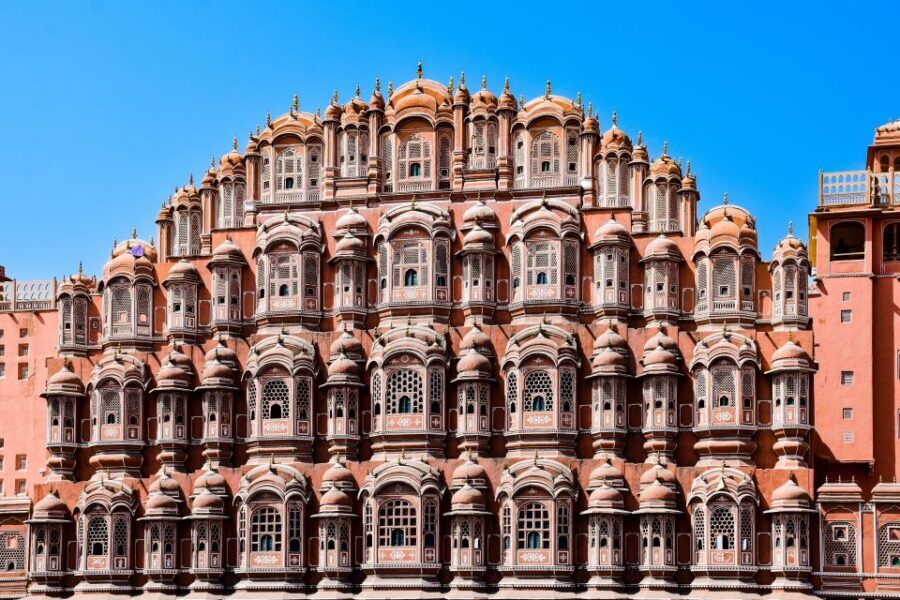
- Hawa Mahal’s 953-window façade plus the story behind those lattice screens
- Galta Ji Monkey Temple if you have time and want a calmer, more spiritual stop
Jaipur in One Long Day: Fast Train vs Private Car
You’re looking at a full-day outing that’s built around one idea: you can see the key Jaipur landmarks without wasting days on logistics. Depending on your choice, the day runs about 15–16 hours, but the “feel” changes a lot. The fast-train option is more structured, while the car option is more flexible hour to hour—at least in the way the schedule is planned.
If you like the comfort of rail and less road stress, the train option is attractive. If you’d rather keep everything in one vehicle and cut the mental load of station timing, the car option is simpler. Either way, the monuments on your Jaipur route are the same core set.
And yes, it’s early. Pickup starts around 5:00 AM, so plan an easier morning routine than you’d do for a late departure.
You can also read our reviews of more private tours in Jaipur



The Delhi-to-Jaipur timing that keeps you on track
The schedule is designed to get you into Jaipur before crowds thicken and still make the return train or drive back. For the train round-trip, pickup happens at about 5:00 AM from your hotel (with multiple pickup areas in New Delhi). The driver takes you to New Delhi Railway Station, helps you locate your coach and seats, then you board a train that leaves at 6:10 AM and reaches Jaipur around 10:45 AM.
Once you arrive, your Jaipur guide waits in front of your train coach. Then you shift into a private air-conditioned car for the sightseeing loop. The return is just as structured: you’re dropped back at Jaipur Railway Station around 5:30 PM, and the train departs at 5:50 PM, reaching Delhi around 10:40 PM. The driver meets you at the station and takes you back to your hotel.
For the car round-trip, you’re picked up around 5:00 AM from your hotel or airport area (Delhi / Gurugram / Noida). You reach Jaipur around 9:30 AM, meet your guide, then tour the sights. The day typically ends around 5:30 PM, with the drive back taking you to Delhi or the airport by roughly 8:00–9:00 PM.
Practical tip: on either option, you’ll want comfortable shoes and a plan to hydrate. You get water bottles, but Jaipur runs hot, and you’ll walk more than you might think in a “short stop” itinerary.
Amber Fort: your guided walk through Rajput-Mughal style
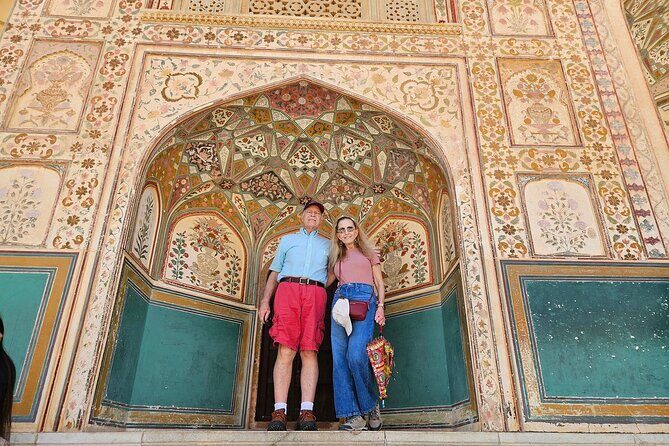
Amber Fort is the big opening act, and it’s easy to see why it’s always first. It’s a hilltop fortress with standout Rajput architecture, with a fascinating blend of Hindu and Mughal influences. Your guided time here is about 1.5 hours, which is usually enough to see the key courtyards and make the place feel coherent.
Here’s what you should watch for: the geometry and layering—how spaces unfold as you move uphill, and how the fort’s design supports royal life and ceremonial events. A live guide matters at Amber because you’re not just looking at walls. You’re learning what you’re looking at: the logic of the fort, the meaning behind architectural choices, and the stories tied to its sections.
The morning timing helps too. You’ll often get better mobility than if you come later in the day. Still, it’s a fortress, so there can be stairs and uneven surfaces. If you don’t love heights or you have mobility limits, plan your pace.
Jal Mahal (Lake Palace): great photos, no entry allowed
After Amber, you head to Jal Mahal, also called the Lake Palace. The key thing to know: you can’t enter the building. But you can see it from the outside and take photos from good viewing points.
This is one of those sightseeing stops where the value is in the views and the timing. Jal Mahal’s charm is the way it sits over the water, giving you that classic palace-on-the-lake image. You’re mostly doing it for visuals, not for interior exploration.
If you’re a photographer, go in expecting a shot-focused stop. Bring your camera settings with you, and don’t forget sunglasses. The glare off the water can get intense, even when the morning feels mild.
Jantar Mantar: the observatory that measures time with stone tools
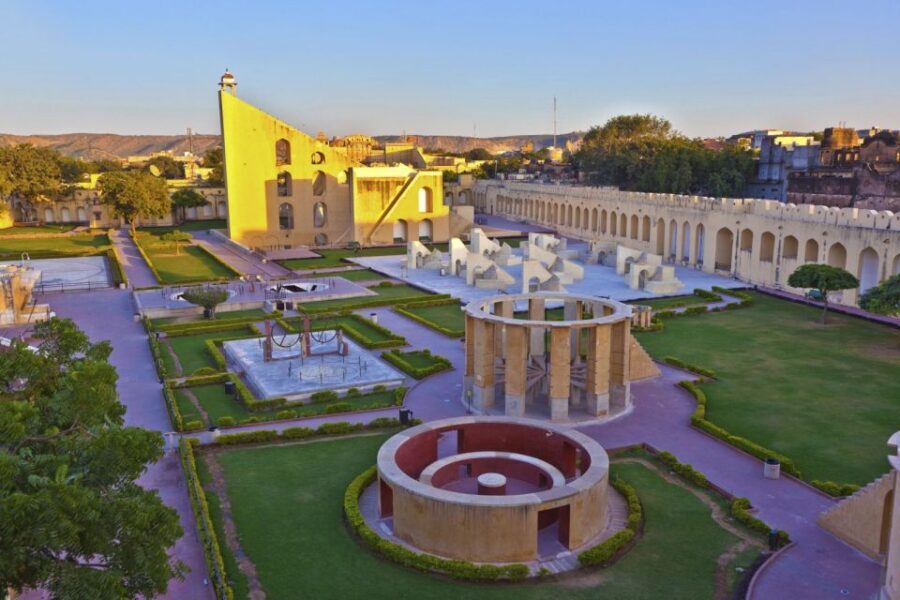
Next up is Jantar Mantar, the UNESCO World Heritage Site in Jaipur. This is an astronomical observatory built with monumental instruments that were used to measure time, predict eclipses, and track celestial bodies.
Your guided time here is about 45 minutes, which is perfect for avoiding museum-stare fatigue. The guide helps you connect each stone tool to a purpose, and you’ll likely start noticing patterns in the way the structures are aligned. It’s not just “cool old rocks.” It’s a system.
If you like science, this stop feels oddly satisfying because the explanations make the architecture feel functional. If you don’t, you’ll still get value because the guide turns the site into a story you can follow while you walk between instruments.
Lunch is scheduled after the observatory, which is practical. You’ll want real food after all that stepping around in forts and courtyards.
You can also read our reviews of more tours and experiences in Jaipur





City Palace: courtyards, museums, and Chandra Mahal
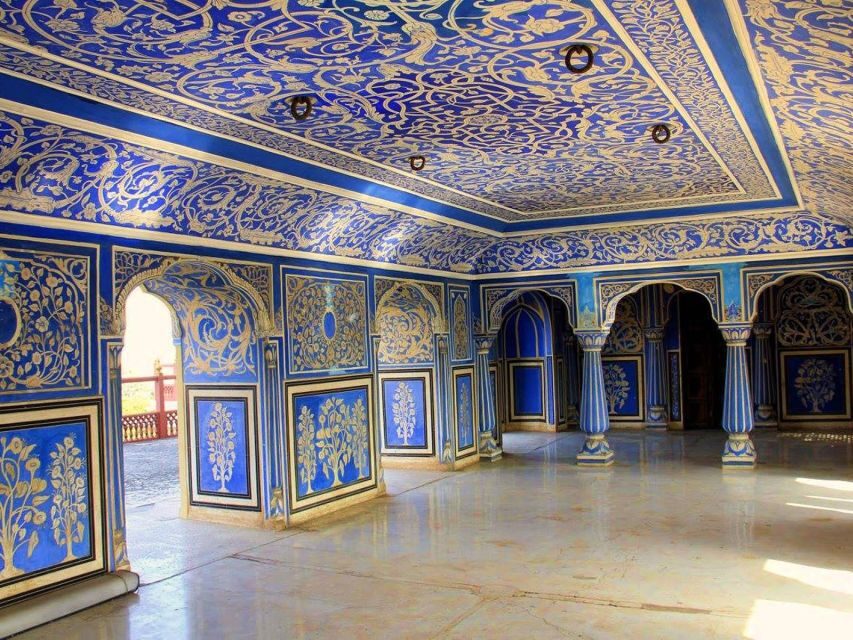
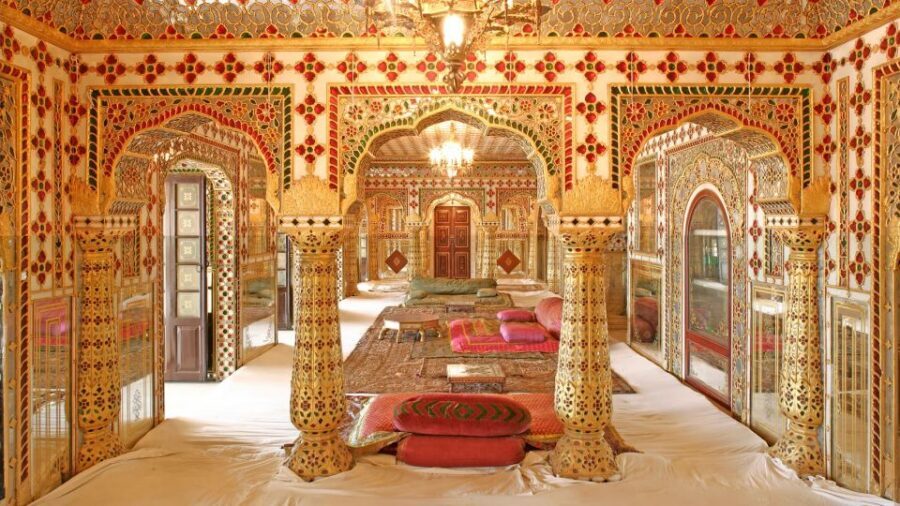
Then it’s City Palace, a landmark that mixes Rajput and Mughal elements. This palace complex is more than one building. You’ll explore courtyards, gardens, museums, and the famous Chandra Mahal.
Your guided time is about 1 hour, so your guide focuses you on what matters most: the layout, the design style shifts, and how the palace functioned as a power center. What I like about City Palace in a guided format is that it helps you see the palace as an active space rather than a static monument.
One caution: because it’s a complex, you may do a bit of walking across varied surfaces. Wear shoes you trust. If it’s hot that day, pace yourself between photo moments.
Hawa Mahal: 953 windows and the story behind them
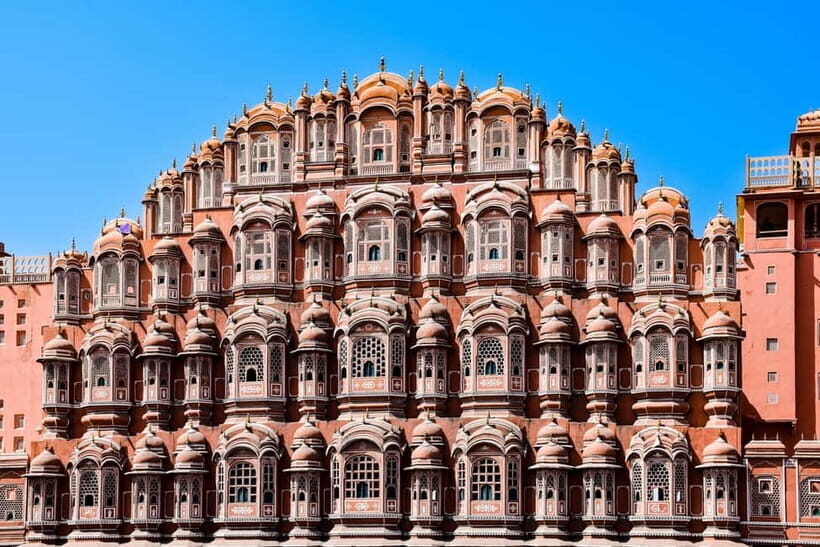
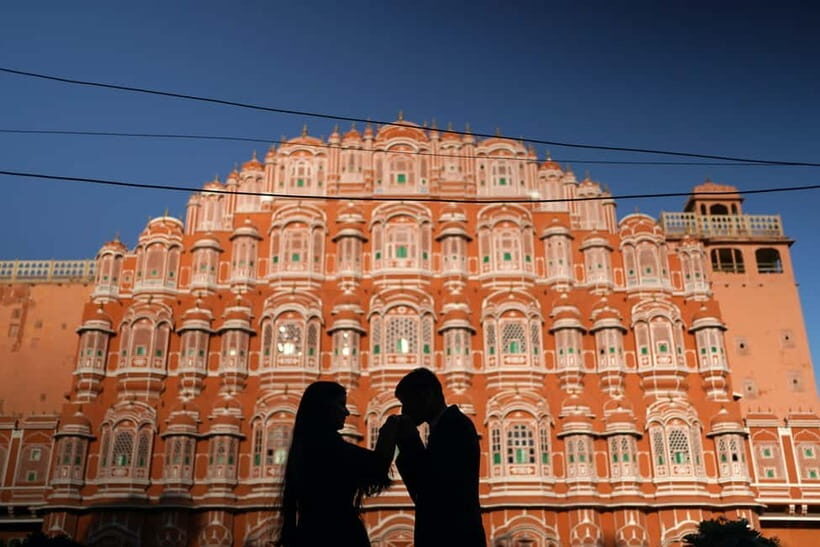
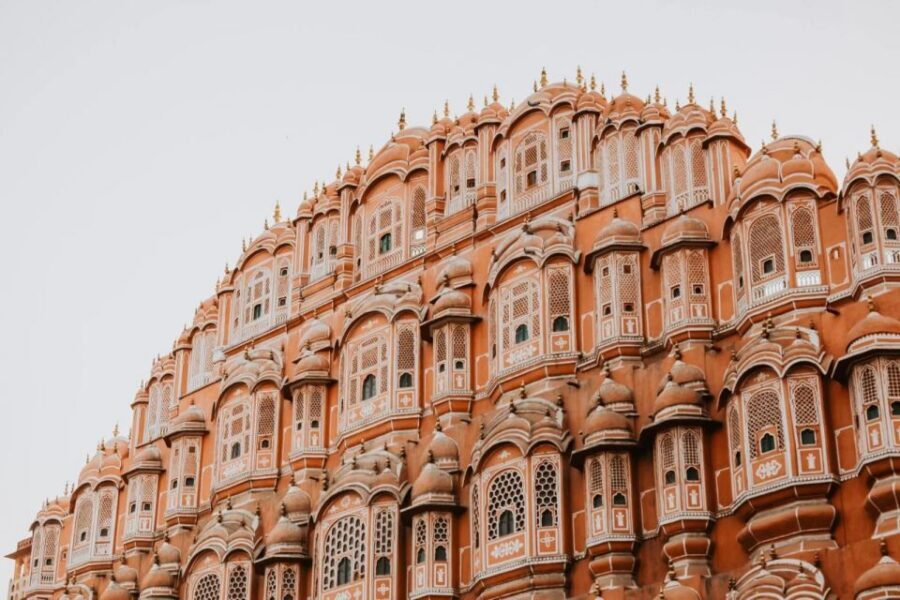
No Jaipur day trip feels complete without Hawa Mahal, the Palace of Winds. This is the iconic five-story façade known for its intricate latticework and 953 small windows.
Your guided time is about 45 minutes, and that’s enough to appreciate why it was built the way it was. The guide’s job here is crucial. Without context, you might just see repeating windows. With context, you understand how those openings helped royal women observe street life and festivities without being seen.
Photo tip: the façade reads differently from different angles, so don’t just snap from the first spot. Ask your guide where the best viewing points are for the angle you want. The stop is short, so quick decisions pay off.
Galta Ji (Monkey Temple): when you have time for a quieter spiritual stop
If timing allows, you’ll visit Galta Ji Temple, also known as the Monkey Temple. It’s a holy Hindu pilgrimage site with ancient temples, water tanks, and bathing ghats tucked into a natural hillside setting.
This stop feels different from the palaces and forts because it’s more about atmosphere and reverence than royal architecture. If you want one moment in the day that feels less “monument checklist,” this is it.
A practical note: this is still a temple area. You’ll want to dress respectfully and keep your steps careful. If you’re sensitive to crowds, go with a calmer expectation and follow your guide’s lead.
Panna Meena Ka Kund stepwell: patterned stairs worth factoring in
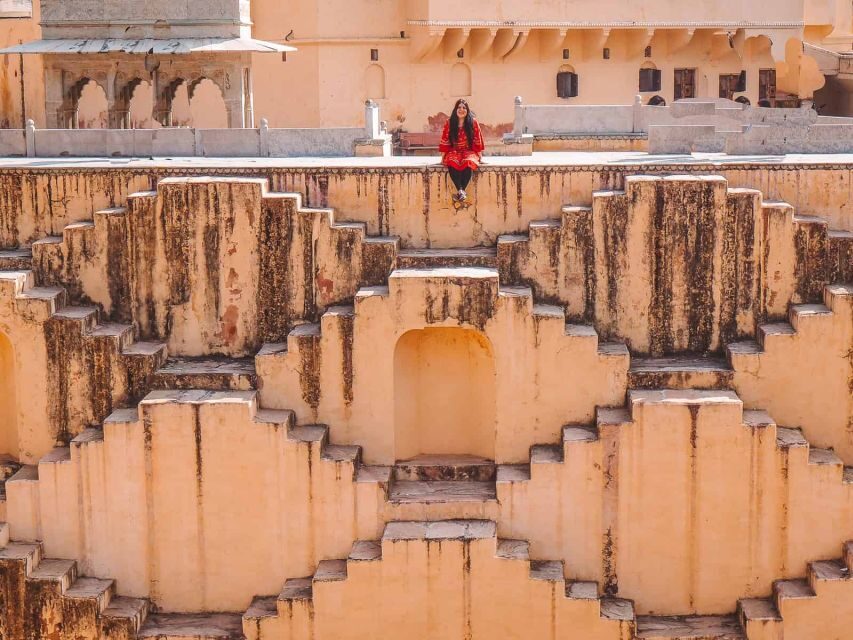
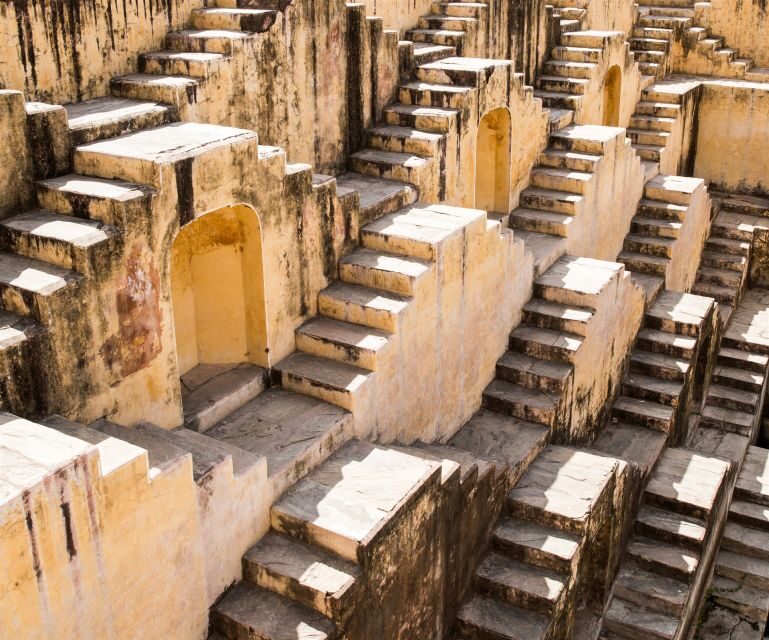
Your tour highlights include the patterned stairs at Panna Meena Ka Kund, the stepwell known for its striking geometric look. The itinerary you’ll follow centers on Amber Fort, Jal Mahal, Jantar Mantar, City Palace, Hawa Mahal, and often Galta Ji—so Panna Meena Ka Kund may be handled as a focused photo or short segment depending on how the day’s timing flows.
If it’s part of your day, treat it like a camera moment: the stair patterns are the point, and the best shots depend on light and angles. Even if it’s brief, it can add a unique Rajasthan texture to the day that you don’t get from palaces and observatories.
Guides, languages, and why names matter on a trip like this
A day trip can turn into chaos fast if nobody explains what you’re looking at. The best part here is the live tour guide at the sights. Your guide can speak multiple languages, including English, Spanish, French, Russian, German, Japanese, Italian, Portuguese, Hindi, Arabic, and more.
Some of the names tied to excellent experiences include Yusuf, Soni, Rajentha, Hitesh, and driver Mehar Singh. The pattern across these examples is consistent: clear explanations, a friendly tone, and help navigating timing so you don’t fall behind.
If you want to maximize value, arrive with questions in mind. Ask about why an instrument works, what a courtyard was used for, or why Hawa Mahal’s windows matter. In a schedule this tight, those questions turn the day from sightseeing into understanding.
What you pay ($27) and what makes the value real
The listed price is $27 per person, which is unusually low for a private, all-day structure that includes transport, guides, and monument admission when you select the ticket option. The reason it can be good value is that the tour combines two expensive pieces for tourists: long-distance movement and guided interpretation.
Here’s what’s included:
- Hotel or station pickup and drop-off
- Private air-conditioned car with driver for the sightseeing portion
- Round-trip train coach fare if you choose the train option
- Live tour guide services at each location
- Monument entry tickets at all places if that option is booked
- Water bottles, plus tolls/parking/taxes
Not included:
- Meals and drinks
- Personal expenses
That “meals not included” detail matters. You’ll have lunch breaks, but you’ll be choosing where to eat. If you’re traveling with dietary restrictions, plan to communicate those preferences clearly. This is one place where your own decisions still shape the day.
Also, remember the tour gives you skip-the-ticket-line help, which saves time. On a day trip, time is the currency.
Comfort tips that make this day trip feel easier
This trip is doable, but it’s not “sit and watch.” You’ll be walking, climbing stairs at forts, and moving quickly between sites.
- Wear comfortable shoes you’ve already broken in.
- Bring sunscreen and sunglasses. The sun can make short stops feel longer.
- Bring an ID (passport or ID card). Your pickup and guide flow are tied to it.
- If you’re doing the train option, keep small essentials in one easy pocket. You’ll be moving from car to station to platform.
And for car transfers, the plan notes that you can request the driver for toilet breaks as needed. That’s a small detail, but it can save stress on a long ride.
Who this tour suits best (and who should skip it)
This works best if you want the highlights of Jaipur with real guidance and you don’t want to handle train schedules, station navigation, and sightseeing timing on your own. It’s also a solid option if you’re traveling in a small group and want private transport rather than a large group bus.
Choose car transfer if you hate station logistics. Choose train transfer if you prefer less road time and want the ride to happen on schedule.
It’s noted as not suitable for pregnant women. If you’re traveling with mobility concerns, ask your operator about how the day’s walking and steps will be managed, since the route includes places like fort sites and temple complexes.
Should you book the Delhi to Jaipur day trip?
If you want Jaipur’s biggest hits in one day with clear guidance, this is a strong booking. The combination of pickup/drop, live explanations at each stop, and either train + private car sightseeing or round-trip private car gives you structure without forcing you to travel alone.
I’d book it if:
- You like having a guide explain what you’re seeing
- You’re comfortable with a long day starting around 5 AM
- You want a cost-friendly way to cover Amber Fort, Jal Mahal, Jantar Mantar, City Palace, and Hawa Mahal
I’d think twice if:
- You hate tight schedules and long travel days
- You’re expecting lots of free time between monuments
- You’re sensitive to heat and stair-heavy sites
FAQ
What time does pickup happen from Delhi for the train option?
Pickup is at about 5:00 AM from your hotel, and the train leaves Delhi at 6:10 AM.
How long does the round trip take for the train and car options?
The tour duration is about 15–16 hours overall. The train option ends in Delhi around 10:50 PM, while the car option typically ends between 8:00–9:00 PM.
What are the main Jaipur sights included?
You’ll visit Amber Fort, Jal Mahal (from outside), Jantar Mantar, City Palace, Hawa Mahal, and Galta Ji Temple if time allows.
Are monument entry tickets included?
Monument entry tickets are included at all places only if you book the option that includes tickets.
Which languages are available for the live tour guide?
English, Spanish, French, Russian, German, Japanese, Italian, Portuguese, Hindi, and Arabic are listed.
Do I need an ID for the trip?
Yes. You should bring a passport or ID card, along with comfortable shoes, sunglasses, and sunscreen.