REVIEW · 4-DAY EXPERIENCES
4 Days Guided Jaipur, Ranthambore Tigers & Udaipur Tour With Safari & Hotels
Book on Viator →Operated by Unseen Tours and Travels · Bookable on Viator
Your Rajasthan route has real variety. You’ll start in Jaipur with major forts and monuments, switch to a Ranthambore tiger safari day, then end in mellow, lakeside Udaipur. The big win is simple: AC comfort between sights plus an English guide for the Jaipur and Udaipur days.
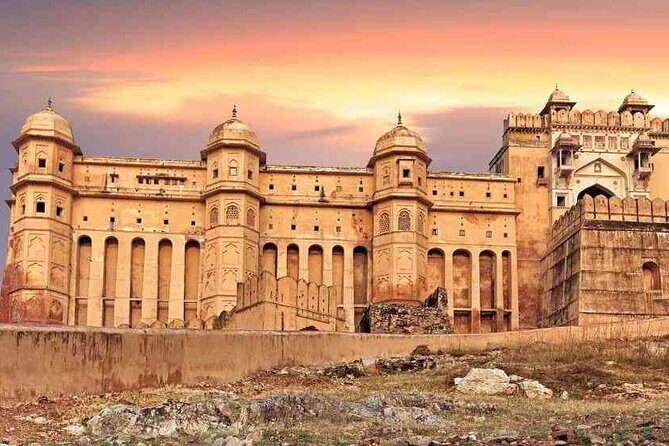
I like how the plan keeps you moving without feeling rushed. In Jaipur, the focus is a smart “get your bearings fast” mix—Amber Fort, Jal Mahal, City Palace, Jantar Mantar, and Hawa Mahal—so you understand the city’s layout and royal story. And in the driver department, the experience runs on solid hands: I’ve seen this tour praised for dependable driving, with RamNiwas named in one standout review and an English guide called Singh for Jaipur.
One drawback to plan around: several key places are not included in the price. Monument entry fees are listed as extra ($100 per person), and lunch isn’t included unless you opt for it (listed as $60 per person). Add that budget and you’ll have a smoother trip.
In This Review
- Key things that matter most on this 4-day Rajasthan tour
- How the 4-day pace works across Jaipur, Ranthambore, and Udaipur
- Jaipur essentials in AC comfort: Amber Fort, Jal Mahal, City Palace, Jantar Mantar, and Hawa Mahal
- Amber Fort: 1.5 hours of fort life
- Jal Mahal (Water Palace): the palace in the lake
- City Palace: royal power in the center
- Jantar Mantar: 19 astronomical instruments
- Hawa Mahal: the facade built for the Zenana
- Getting your bearings with an English guide in Jaipur (Singh is named)
- Ranthambore tiger safari day: one sharing safari and what to expect
- Udaipur by the lake: Lake Pichola sets the mood for the royal city
- City Palace, Jagdish Temple, and Saheliyon-ki-Bari: classic Mewar highlights
- City Palace of Udaipur: a palace complex built over centuries
- Jagdish Temple: continuous worship since 1651
- Saheliyon-ki-Bari: fountains, lotus pool, and marble elephants
- Hotels, meals, and what $288 really buys you
- Price and logistics: entry fees you must budget for
- Who this tour is best for
- Should you book this 4-day Jaipur–Ranthambore–Udaipur tour?
- FAQ
- What cities does this 4-day tour cover?
- How long is the tour?
- What’s included in the tour price?
- Are monument entry fees included?
- Is lunch included?
- What safari setup do I get in Ranthambore?
- Does the tour include hotel accommodation?
- What’s the cancellation policy for a full refund?
Key things that matter most on this 4-day Rajasthan tour
- AC car and driver for the long in-between stretches of Jaipur and Udaipur
- English guide in Jaipur and Udaipur to make the history click (Singh is specifically mentioned for Jaipur)
- Ranthambore with one sharing safari, designed for most visitors without complicated logistics
- Meals built around your hotel stay, with breakfast and dinners included if you choose hotel options
- Classic sight mix: Amber Fort, Jal Mahal (Man Sagar Lake), Jantar Mantar, Hawa Mahal, Lake Pichola, City Palace, Jagdish Temple, Saheliyon-ki-Bari
How the 4-day pace works across Jaipur, Ranthambore, and Udaipur
This tour is built for first-time Rajasthan visitors who want the main highlights without piecing together separate day trips. You get two guided sightseeing days in the “Pink City” and the “City of Lakes,” plus one wildlife-focused day in between.
The schedule also makes practical sense. Jaipur’s top sights are scattered, so air-conditioned transport helps you stay comfortable while you hop between places like Amber Fort and the monuments around the City Palace area. Then Ranthambore shifts gears from crowds and stonework to the open safari day where timing and patience matter more than ticking boxes.
The final day in Udaipur slows down a notch. A quick stop at Lake Pichola sets the mood, then you move into palace and temple spaces and finish with gardens that let you breathe after museum-heavy spots.
You can also read our reviews of more guided tours in Jaipur



Jaipur essentials in AC comfort: Amber Fort, Jal Mahal, City Palace, Jantar Mantar, and Hawa Mahal
Jaipur day is the heart of the “how this city works” story. Instead of dumping random landmarks on you, the sequence follows how royals shaped the city—forts above, palaces in the middle, and monuments designed for very specific power and daily life.
Amber Fort: 1.5 hours of fort life
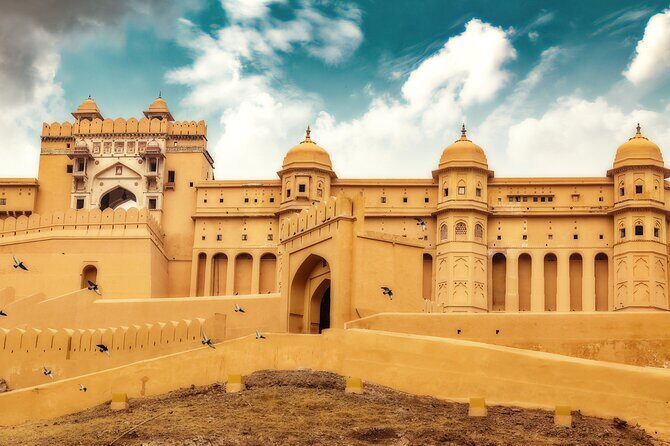
You’ll spend about 1 hour 30 minutes at Amber Fort. It’s a big, visually dominant place, so this length is realistic: enough time to see the main areas without feeling like you’re only photographing the gates. Just plan for the fact that it’s a fort setting—comfort footwear helps.
Jal Mahal (Water Palace): the palace in the lake
Next comes Jal Mahal, the palace in the middle of the Man Sagar Lake. It was originally constructed in 1699, and it’s one of those sights that reads best when you notice the contrast: royal architecture sitting on water like it belongs there. The stop is short, but it’s a memorable “Jaipur isn’t only forts” moment.
City Palace: royal power in the center
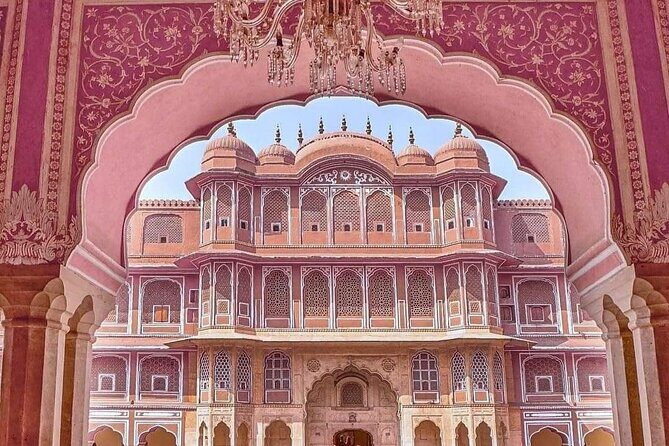
You’ll also visit the City Palace of Jaipur, timed at about 40 minutes. This matters because City Palace ties multiple royal eras together. It was established when Maharaja Sawai Jai Singh II moved his court to Jaipur in 1727, which helps you connect the dots between the city’s design and the fort.
You can also read our reviews of more tours and experiences in Jaipur





Jantar Mantar: 19 astronomical instruments
Jantar Mantar is where Jaipur gets scientific and surprisingly human. You’ll have around 40 minutes here, and the site is a collection of 19 astronomical instruments built by Sawai Jai Singh II, completed in 1734. If you like understanding how history worked with daily observation—sun, shadow, measurement—this is one of the stops that makes the whole trip feel smarter.
Hawa Mahal: the facade built for the Zenana
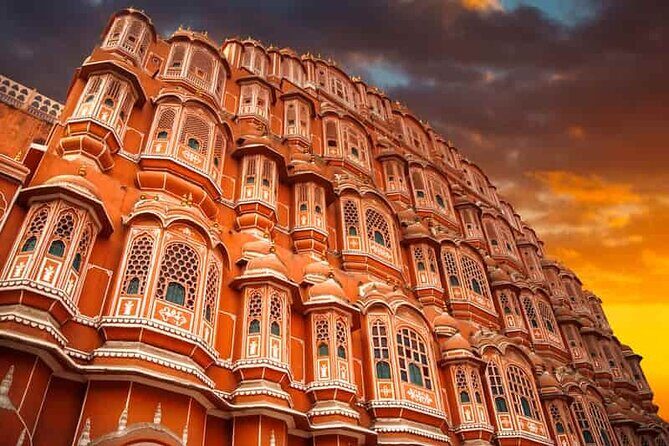
Finally, you’ll see Hawa Mahal. It’s built from red and pink sandstone and sits at the edge of the City Palace, extending to the Zenana (women’s chambers). That connection helps you read the building as functional, not just pretty. The architecture gives you a quick “aha” about how the city’s royals lived and watched.
Practical note: most monument entries are listed as not included, so budget for onsite ticketing to avoid surprise.
Getting your bearings with an English guide in Jaipur (Singh is named)
A guide is what turns “I saw buildings” into “I understand the city.” This tour includes an English guide in Jaipur, and one review specifically mentions Singh. That’s a big deal on a first trip because Jaipur’s symbols—royal space, measurement science, and women’s quarters—can feel random if you’re walking without context.
Even the travel method supports this. You move between sights in an AC car, which means you’re less worn out when the guide starts explaining what you’re looking at. In hot months, that simple comfort changes how well you’ll actually enjoy the monuments instead of feeling like a sweaty tourist sprinting between gates.
If you’re the kind of traveler who wants photos and meaning, this is the right style of tour for you. It doesn’t try to teach you everything—just enough to make your time make sense.
Ranthambore tiger safari day: one sharing safari and what to expect
Day two shifts from Jaipur’s royal architecture to Ranthambore’s wildlife world. You’ll spend about 3 hours at Ranthambore National Park, which is described as a former royal hunting ground and a home for tigers, leopards, and marsh crocodiles.
The safari setup is listed as one sharing safari. “Sharing” matters because it affects expectations: you won’t have a private vehicle, and your viewing experience depends on vehicle positioning and where wildlife is active. Still, this is a common and workable arrangement for visitors who want a real safari without the hassle of hunting down multiple bookings.
One more thing that helps planning: the tour lists the Ranthambore park admission as free for the activity window shown. Even so, always keep an eye on what’s included versus what’s paid separately at the park level, since tours don’t always bundle everything the same way.
My advice for safari day is to pack for patience. The best wildlife moments aren’t on your timetable. If you treat the safari as a wildlife-watching experience (not a guarantee of a tiger sighting), you’ll get much more out of it.
Udaipur by the lake: Lake Pichola sets the mood for the royal city
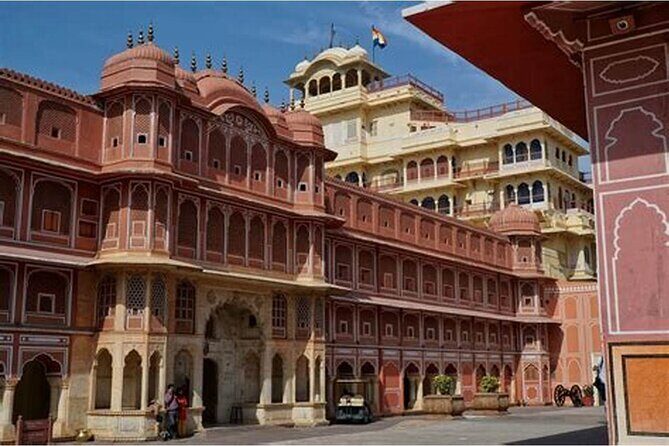
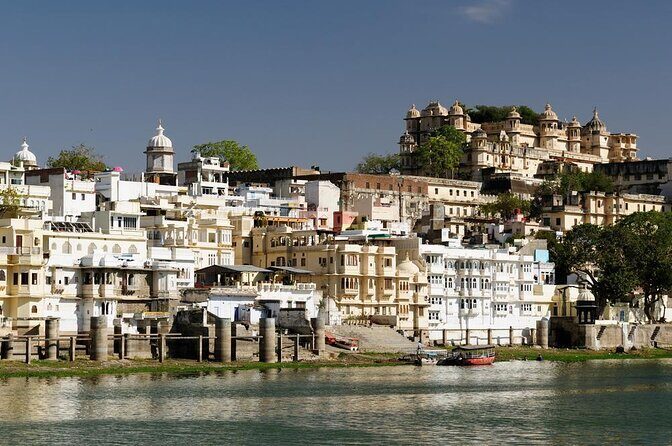
After Ranthambore, Udaipur feels like a reset button. Your schedule includes Lake Pichola for about 20 minutes, and it’s described as an artificial fresh water lake created in 1362 and named after the nearby Picholi village. It’s also noted as one of several contiguous lakes.
That short stop is useful because it gives you atmosphere early. You’re not straight into temples or ticket lines. You get a visual pause so the next royal sites land better, and you start understanding why Udaipur attracts travelers who like calm views as much as they like history.
If you prefer photos that look like postcards but still feel grounded in place, this is the moment to slow down and pay attention.
City Palace, Jagdish Temple, and Saheliyon-ki-Bari: classic Mewar highlights

Udaipur’s final day is a concentrated Mewar story—palace, worship space, then gardens built for leisure.
City Palace of Udaipur: a palace complex built over centuries
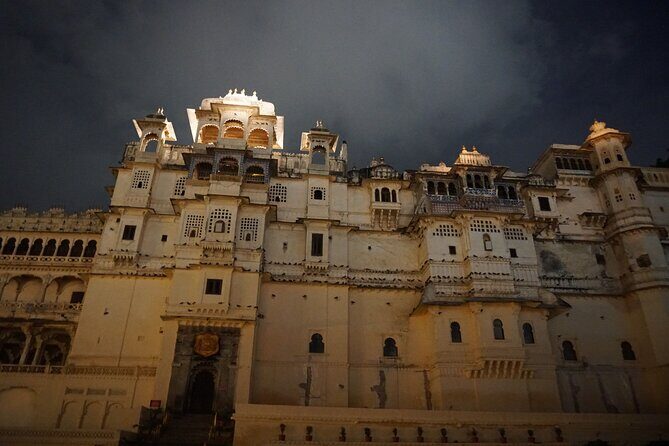
You’ll spend about 1 hour 30 minutes at the City Palace. The complex was built over nearly 400 years, with contributions from rulers of the Mewar dynasty. That long timeline is why the palace feels layered. You’re not just walking through one era—you’re moving through additions and shifts in style.
Jagdish Temple: continuous worship since 1651
Next is Jagdish Temple, timed at about 30 minutes. It’s a large Hindu temple near the royal palace and has been in continuous worship since 1651. That’s the kind of detail that changes how you see it: it’s not only a sightseeing stop; it’s a living religious space.
Saheliyon-ki-Bari: fountains, lotus pool, and marble elephants
Finally, you’ll visit Saheliyon-ki-Bari, also called Saheliyon ki bari. It’s a major garden area with fountains and kiosks, a lotus pool, and marble elephants. This stop is a breather after palaces and temple architecture, and it adds variety to the overall trip.
If you enjoy gardens and leisure spaces, this is a strong finish. It’s also a good moment to cool down—shade, water features, and open air.
Hotels, meals, and what $288 really buys you
The price is listed at $288 per person, and the value depends on which hotel option you choose. The tour includes breakfast and dinner “with hotel options only,” plus accommodation in 4 or 5 star hotels if you select that option.
So the best way to read the cost is like this: you’re paying for transportation, guided sightseeing (in Jaipur and Udaipur), and the wildlife day bundled with hotel-based meals and lodging (if selected). That can be good value compared with booking each piece separately.
The tour also includes a dedicated AC car and driver, which is a big deal in Rajasthan. Long drives between attractions can drain energy fast. When that part is handled for you, your main job becomes showing up and enjoying the sights instead of coordinating routes and timing.
Meals are included in a clear way: Breakfast (3) and Dinner (2) are listed. Lunch isn’t included unless specified, and there’s a noted option amount of $60 per person.
One practical advantage from the reviews: the driver experience is often praised for safety and good navigation. That means less stress for you, especially when roads, timing, and getting back to hotels all stack up in one day.
Price and logistics: entry fees you must budget for
This is the main money gotcha. The tour lists monument entry fees as $100 per person and marks them as not included. That likely covers a chunk of the palace and monument admission costs across Jaipur and Udaipur.
Also watch the meal gap. Lunch or dinner isn’t included unless specified at the listed $60 per person option. Dinner is included twice if you choose the hotel options, but lunch is still your responsibility.
On the plus side, you do get helpful “tour friction reducers” like pickup offered, group discounts, and a mobile ticket. You won’t be scrambling for printed vouchers, and the pickup reduces the first-day chaos.
Who this tour is best for
This one fits travelers who want a guided introduction across Rajasthan without splitting planning into multiple bookings. It’s also ideal if you care about comfort on the road and want a guide to explain what you’re seeing in Jaipur and Udaipur.
You’ll likely enjoy it most if you:
- Want a balanced mix of forts, palaces, science monuments, and wildlife
- Prefer English interpretation for the historical stops
- Like having transport handled, especially with AC comfort
- Are okay with a safari that’s sharing, not private
If you’re an ultra-independent traveler who hates paying entry fees separately and prefers fully self-guided days, you might find the ticket budgeting annoying. But if you budget for the listed extra costs, the structure works.
Should you book this 4-day Jaipur–Ranthambore–Udaipur tour?
I’d book it if you want a straightforward, guided Rajasthan sampler with comfort built in. The combination of Jaipur orientation, a genuine tiger safari day, and a relaxed Udaipur finishing loop is a smart use of four days.
Do book it with eyes open: set aside budget for monument entry fees ($100 per person) and plan for lunch being extra unless you choose that option. If those two points don’t bother you, you’ll likely come away with a solid understanding of why Jaipur and Udaipur feel so different, and why Ranthambore is the wildlife reason people remember this region.
FAQ
What cities does this 4-day tour cover?
It covers Jaipur and Udaipur for sightseeing, plus Ranthambore National Park for a tiger safari day.
How long is the tour?
The duration is listed as 4 days (approx.).
What’s included in the tour price?
Included features list pickup offered, dedicated AC car and driver, English guide in Jaipur & Udaipur for a day, hotel breakfast and dinner (with hotel options), accommodation in 4 or 5 star hotels if selected, and one sharing safari in Ranthambore.
Are monument entry fees included?
No. Monument entry fees are not included, and they’re listed as $100 per person.
Is lunch included?
Lunch is listed as not included unless specified. There’s an option noted as $60.00 per person for lunch or dinner unless specified.
What safari setup do I get in Ranthambore?
You get one sharing safari in Ranthambore National Park.
Does the tour include hotel accommodation?
Accommodation is included if you select the hotel option. It’s listed as 4 or 5 star hotels depending on what you choose.
What’s the cancellation policy for a full refund?
You can cancel up to 6 days in advance for a full refund (it must be at least 6 full days before the experience’s start time). Between 2–6 days, the refund is 50%, and within 2 days there is no refund.
—
If you tell me your travel month and whether you’re choosing 4-star or 5-star hotels, I can help you sanity-check the total budget with the $100 entry fees and lunch option.