REVIEW · 3-DAY EXPERIENCES
3 Days: Private Guided Tour Of Jaipur & Agra With Drop At Delhi
Book on Viator →Operated by Unseen Tours and Travels · Bookable on Viator
Fort-and-mausoleum days, with real comfort. I like how this private route links Jaipur, Fatehpur Sikri, and Agra in three days without feeling like you’re sprinting from one photo spot to the next. I especially appreciate the two included hotel nights plus the traditional family dinner in Jaipur, which turns the trip into something more personal than a checklist.
The main drawback to plan for is cost creep: monument entry fees are extra at several stops, so budget for tickets on top of the tour price.
In This Review
- Key things I’d circle before you go
- Jaipur to Agra in 3 days: the value of a private route
- Day 1 in Jaipur: Amer Fort, City Palace, and the main skyline icons
- Amer Palace (Amer Fort): the hillside landmark
- Jal Mahal: the lake palace you can’t ignore
- City Palace: royal power that still feels active
- Jantar Mantar: measuring time in stone
- Hawa Mahal: the Palace of Wind, built for viewing
- Day 2 in Agra’s orbit: Chand Baori, Fatehpur Sikri, and the Taj Mahal
- Chand Baori step well: an architectural scratch-your-head moment
- Fatehpur Sikri: the red-sandstone Mughal city
- Taj Mahal: what you’re actually looking at
- Day 3 in Agra: the quieter Taj cousin and Agra Fort
- Itmad-ud-Daula: the so-called Bachcha Taj
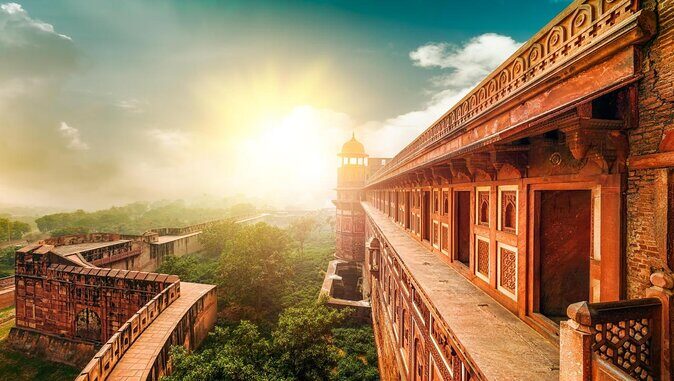
- Agra Fort: the Mughal residence and strategic centerpiece
- How transport and guides make this trip easier
- Food, included meals, and what you’ll still need to pay for
- Price breakdown: what you’re paying for and what you still need to budget
- Who should book this Jaipur–Agra private tour
- Should you book it? My practical take
- FAQ
- FAQ
- How long is the private tour from Jaipur to Agra with drop in Delhi?
- Is accommodation included in the price?
- What meals are included?
- Do I need to pay monument entry fees separately?
- Do you provide pickup and drop-off?
- Is this tour private or shared?
- Is the transport air-conditioned?
- What ticket format do I get?
- What is the cancellation window for a full refund?
- Is there any minimum age for alcohol?
Key things I’d circle before you go
- Private door-to-door flow with hotel pickup and a drop in Delhi (hotel of your choice or the airport).
- Two nights of accommodation included, with options in the 3-star, 4-star, or 5-star range.
- Local guides in Jaipur, Fatehpur Sikri, and Agra, so you’re not stuck translating signs alone.
- Air-conditioned transport all day, plus bottled water.
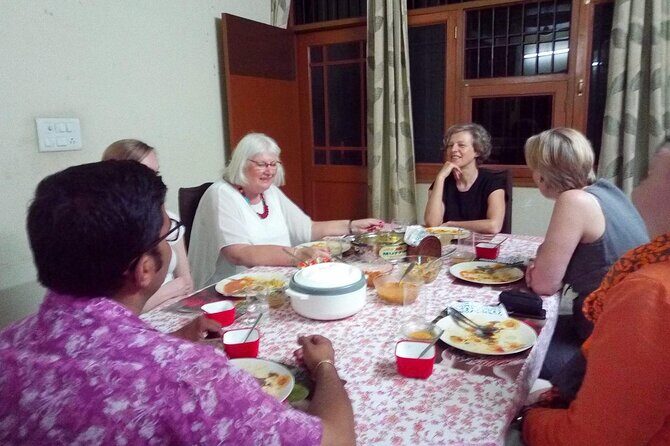
- A traditional dinner with an Indian family in Jaipur, adding local flavor beyond sightseeing.
Jaipur to Agra in 3 days: the value of a private route
If you’ve got limited time and you want the big hitters—Amer Fort, the Taj Mahal, and Agra Fort—this kind of private, guided format is hard to beat. You’re not sharing guides or waiting around for strangers. Your driver and guides can match the pace to your group and adjust when roads get slow.
Price-wise, the tour lands at $187 per person, and what makes it feel reasonable is that it includes two nights’ accommodation, breakfast (2), an AC vehicle, bottled water, and local guides for multiple towns. That’s a lot bundled in for a multi-city trip. The one thing that can change your final total is that monument entry fees are not included, and some of the headline sites do charge.
This is also structured as a true 3-day experience: you start in Jaipur, head to Agra with a major stop in Fatehpur Sikri, and then finish in Delhi with drop-off. If you’re flying out of Delhi or continuing your trip there, it’s a clean end point.
You can also read our reviews of more guided tours in Jaipur



Day 1 in Jaipur: Amer Fort, City Palace, and the main skyline icons
Jaipur is where you start to understand Rajasthan’s blend of fortifications and royal showmanship. Day 1 is built around the essentials, with stops you can “read” together as a story: strength first (Amer), power and administration next (City Palace), then the famous visual signature of Jaipur’s architecture (Jantar Mantar and Hawa Mahal).
Amer Palace (Amer Fort): the hillside landmark
Amer Palace sits on a hill about 11 km from Jaipur. This is the day’s big fort moment, and it’s scheduled for around 1 hour 30 minutes. You’ll get a guided look at the fort’s layout and key areas, but the real magic is the setting—this is a fortress with presence.
Practical tip: wear comfortable shoes. Fort entrances and courtyards can mean a fair bit of walking, and Jaipur sun can be intense depending on the season.
Jal Mahal: the lake palace you can’t ignore
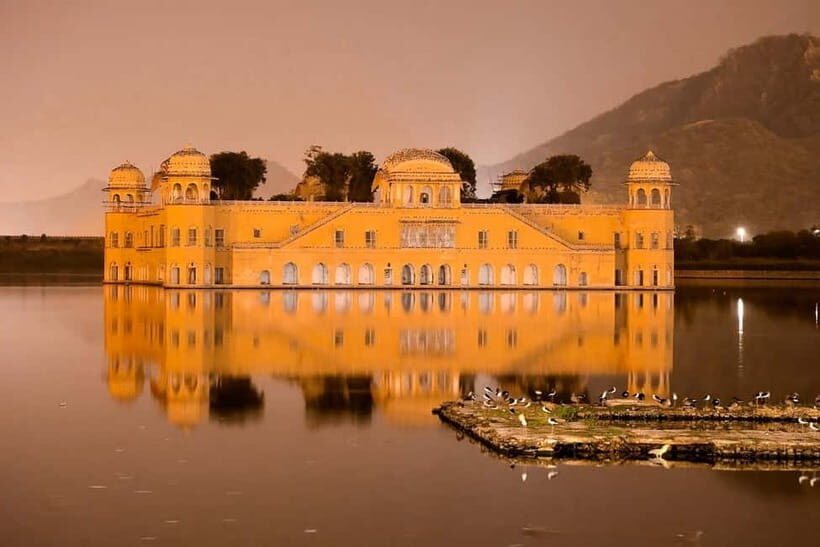
Jal Mahal is the “wait, what is that doing in the water?” stop. It’s a palace in the middle of Man Sagar Lake, and the structure and lake renovations tie it to the era of Maharaja Jai Singh II. The visit is short (about 15 minutes), which is perfect for a quick pause and some photos from nearby viewpoints.
Don’t over-plan your expectations here. Jal Mahal is more about the sight and setting than a long museum-style visit.
City Palace: royal power that still feels active
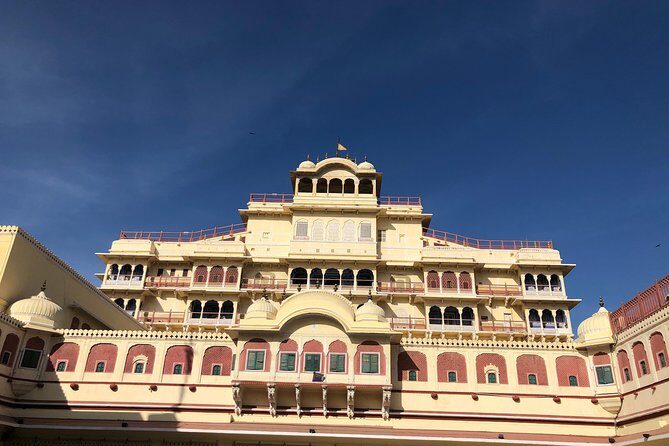
The City Palace was established when Jaipur was founded, after Maharaja Sawai Jai Singh II moved his court from Amber to Jaipur in 1727. You’re given about 1 hour here, which is enough time to understand how the palace complex fits into the city’s life.
This stop is where your guide really helps. With context, the buildings stop looking random and start looking intentional—like a capital designed for governance, spectacle, and family legacy.
You can also read our reviews of more private tours in Jaipur






Jantar Mantar: measuring time in stone
Next is Jantar Mantar, the UNESCO site of nineteen astronomical instruments. It’s most famous for the world’s largest stone sundial, built under Sawai Jai Singh II’s direction and completed in 1734.
You’ll likely spend about 40 minutes. The trick is not to treat it like just another “cool old thing.” It’s a working science display from an era before electronics. Your guide’s explanations make it click fast—one of those stops where you walk out thinking, Okay, that’s smart.
Hawa Mahal: the Palace of Wind, built for viewing
Hawa Mahal is a quick hit (about 15 minutes), but it’s one of Jaipur’s most recognizable silhouettes. Built in 1799, it’s associated with women’s chambers and sits along the edge of the City Palace complex.
If you’re doing Jaipur landmarks back-to-back, this is a nice visual reset—angular, pink-and-red sandstone details, lots of windows, and a façade that feels designed for a purpose.
Day 2 in Agra’s orbit: Chand Baori, Fatehpur Sikri, and the Taj Mahal
Day 2 is the hinge between Rajasthan and the Mughal world of Agra. It starts with a stepwell detour that feels surprising, then switches to Fatehpur Sikri’s red-sandstone empire scale, and ends with the Taj Mahal’s white marble impact.
Chand Baori step well: an architectural scratch-your-head moment
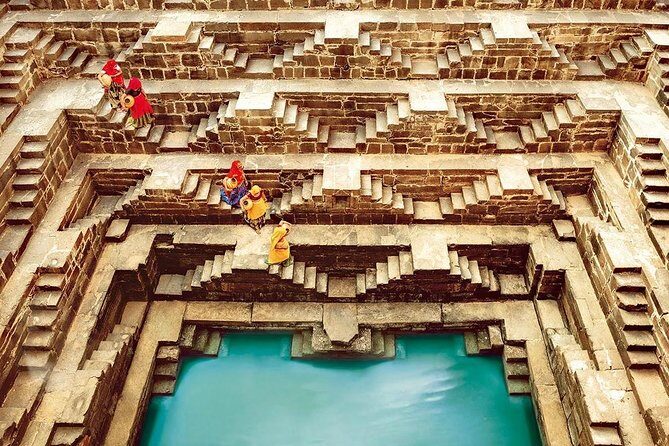
You’ll stop at Chand Baori (the step well) in Abhaneri. The visit is brief (about 15 minutes), but step wells make a huge impression because of the geometry—hundreds of steps dropping down like a man-made canyon.
This is one of those stops that’s best for photos and quick orientation rather than deep exploration, which is exactly why it works in a packed schedule.
Fatehpur Sikri: the red-sandstone Mughal city
Then you head to Fatehpur Sikri, a UNESCO-listed-feeling kind of place even in a casual half-day rhythm. You get about 1 hour 30 minutes, and the tour notes admission is free for this stop.
Fatehpur Sikri is a “whole city in miniature” moment: red sandstone buildings clustered around a central area, with major highlights like:
- Buland Darwaza, the entrance gate to the Jama Masjid mosque area
- The Tomb of Salim Chishti (marble shrine)
- Diwan-E-Khas, including a carved central pillar
- Jodha Bai’s Palace, mixing Hindu and Mughal styles
- The Panch Mahal, with tiered structure and views over the complex
The best part is how quickly your brain starts connecting the dots. You’re not just looking at one monument—you’re seeing how religious power, court politics, and architecture blended.
Taj Mahal: what you’re actually looking at
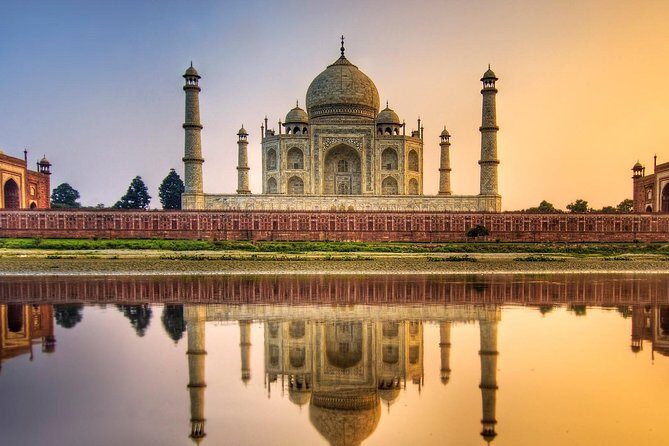
Finally, you arrive for the Taj Mahal, guided for about 1 hour 30 minutes. This is the most important stop on the route, even if you’re not usually a “marble-and-memorial” person.
You’ll see the ivory-white marble mausoleum commissioned in 1632 by Shah Jahan, built to house the tomb of Mumtaz Mahal (and later Shah Jahan himself). The point isn’t only the building—it’s the symmetry, the layout, and the way the monument controls the viewing experience.
Plan to be patient with crowds and lines. The visit length is decent, but the Taj Mahal is always popular, so you’ll want to keep your expectations realistic about time inside and around the complex.
Day 3 in Agra: the quieter Taj cousin and Agra Fort
If Day 2 is the spotlight, Day 3 is the supporting cast that makes your trip feel complete. Itmad-ud-Daula gives you the refined, jewel-box mood, and Agra Fort shows you Mughal power in a more fortress-and-fate kind of way.
Itmad-ud-Daula: the so-called Bachcha Taj
You’ll visit Itmad-ud-Daula (often compared to a “jewel box,” and sometimes called the Bachcha Taj). The guided visit is about 40 minutes, and it’s a classic palate cleanser after the Taj Mahal’s scale.
This mausoleum is smaller in feeling, but that’s the point. You get more time to appreciate details—how the marble work and proportions create beauty without needing to be gigantic.
Agra Fort: the Mughal residence and strategic centerpiece
Next comes Agra Fort, about 30 minutes on the plan. It served as the main residence of Mughal emperors until 1638, when the capital shifted from Agra to Delhi. Your guide will also point out how control of the fort evolved after the Mughals, including mention of the Marathas before British capture.
This is where you “feel” the logic of the Mughal empire. Forts are functional first. Even when they’re ornate, they’re built to protect power, not just display it. If you liked Amer Fort on Day 1, Agra Fort makes a satisfying comparison.
How transport and guides make this trip easier
One of the real advantages here is AC transport with a driver, plus local guides at Jaipur, Fatehpur Sikri, and Agra. That means you’re not just riding between places—you’re getting context on the ground, in the towns where the sites sit.
Door-to-door matters too. You get hotel pickup and drop-off, and by Day 3 you’re finished with drop in Delhi at your hotel of your choice or the airport. That can save you a pile of hassle if you’re trying to catch a flight, or if you’re continuing elsewhere in the city.
Also, your group is private. It’s just your group—no mixing into a larger crowd tour. The practical benefit: you can ask questions, pause for a viewpoint, and keep the day under control.
And yes, timing can be affected by real-world traffic and public disruptions. The tour’s transfer times are approximate and depend on the day. The good sign here is that you’re not self-navigating. You’ve got a driver handling roads while you focus on the sites.
Food, included meals, and what you’ll still need to pay for
This tour includes:
- Breakfast for two mornings
- One traditional dinner with an Indian family in Jaipur
- Bottled water
Everything else—other food and drinks—depends on your choices unless specified. That’s a normal setup for tours, but it’s good to know so you don’t get surprised mid-trip.
The dinner with an Indian family is the standout “not just sightseeing” moment. Jaipur can be full of tourist meals, but this kind of experience typically gives you more than a menu. It gives you a sense of everyday life and local hospitality.
One more practical note: monument tickets aren’t included, so if you’re trying to keep costs down, you’ll want to budget for entry fees in advance, then keep meals flexible.
Price breakdown: what you’re paying for and what you still need to budget
At $187 per person, you’re paying for a bundle:
- Two nights’ accommodation (3-star/4-star/5-star option)
- AC vehicle + driver
- Local guides across multiple locations
- Breakfast (2)
- Bottled water
- Hotel pickup and drop
- Traditional dinner in Jaipur
- Mobile ticket
What you may still pay for:
- Monument entry tickets, which are noted as extra at many stops (Amber Palace, City Palace, Jantar Mantar, Hawa Mahal, Taj Mahal, Itmad-ud-Daula, Agra Fort, and more)
- Lunches and drinks during the day
So the “real value” question becomes: are you comfortable covering entry fees and handling your own lunch? If yes, this is a solid deal because you’re not paying separately for guides and multi-city logistics.
Who should book this Jaipur–Agra private tour
This tour fits best if you:
- Want big-name sights with guided context
- Prefer private pacing over joining a larger group
- Like the idea of staying two nights included rather than planning hotels yourself
- Are traveling with friends or family and want a driver to handle logistics
It’s also a good match if you’re ending in Delhi and want a smooth handoff to your next hotel or flight.
If you’re the type who loves long, slow exploration (hours per site), you might feel the schedule is tight. But if you want a strong overview across three major destinations in a compact time, this hits the sweet spot.
Should you book it? My practical take
I’d book this tour if you want the main sights with real guidance and you value comfort. The combination of AC transport, local guides, two nights of accommodation, and that traditional family dinner makes it feel like more than transport between famous places.
I’d hesitate only if you already know you hate paying extra for tickets or you want a more flexible, slow-travel pace. Since entry fees are extra at multiple stops, you’ll want to budget for them so the trip stays predictable.
If your dates are busy or traffic gets weird, having a driver and a prepared plan also takes stress off your shoulders.
FAQ
FAQ
How long is the private tour from Jaipur to Agra with drop in Delhi?
It runs for about 3 days, with the transfer times noted as approximate and depending on traffic and the time of day.
Is accommodation included in the price?
Yes. Two nights of accommodation are included, and the hotel level follows the option you select (3-star, 4-star, or 5-star).
What meals are included?
Breakfast is included for 2 days, and there is one traditional dinner with an Indian family in Jaipur. Food and drinks beyond that are not included unless specified.
Do I need to pay monument entry fees separately?
Yes. Monument entry fees are listed as extra and payable directly. Some sites are marked as free for the stop noted, but many others are not included.
Do you provide pickup and drop-off?
Yes. There is hotel pickup, and on the final day you’ll be dropped at a hotel of your choice in Delhi or at the airport.
Is this tour private or shared?
This is a private tour/activity. Only your group will participate.
Is the transport air-conditioned?
Yes. All transport is in an air-conditioned vehicle, and bottled water is included.
What ticket format do I get?
A mobile ticket is included.
What is the cancellation window for a full refund?
You can cancel up to 3 days in advance of the experience for a full refund.
Is there any minimum age for alcohol?
Yes. The minimum drinking age is 18 years.