REVIEW · 2-DAY EXPERIENCES
2 Days Jaipur: Amber Fort, Hawa Mahal Tuk-Tuk Tour
Book on GetYourGuide →Operated by Nahargarh Travels · Bookable on GetYourGuide
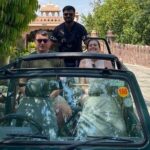
Jaipur’s forts feel bigger from a tuk-tuk. This 8:30 AM–5:30 PM sightseeing run is a very practical way to see major sights without wrestling for seats or figuring out routes, and I like how the day mixes major monuments with off-the-main-path stops like Panna Meena ka Kund. You also get a true “local streets” ride through market areas, plus a driver who acts like a guide (including multilingual support). One thing to keep in mind: the day is long and involves walking and uneven ground, and there’s a real-world risk of vehicle delays if a tuk-tuk has mechanical trouble.
What makes it especially interesting is the route logic. You start high and work your way through Jaipur’s signature royal sites, including the wind-brick façade of Hawa Mahal and the UNESCO listed Jantar Mantar observatory, then you finish with museums and religious stops like Albert Hall Museum and Birla Mandir. I can’t ignore the other side of the coin: I’ve seen accounts linked to Nahargarh Travels where the tuk-tuk situation caused major waiting (including a breakdown), so I’d plan with a little flexibility in mind.
In This Review
- Key Takeaways Before You Go
- Tuk-Tuk Morning: What the 8:30–17:30 Day Really Means
- Amber Fort and the Hill-Fort Trio: Amber, Jaigarh, Nahargarh
- Step-Well and Floating Palace Photos: Panna Meena ka Kund and Jal Mahal
- Royal Jaipur Center: City Palace, Hawa Mahal, and Jantar Mantar
- City Palace: royal spaces you can actually walk through
- Hawa Mahal: the honeycomb façade
- Jantar Mantar: UNESCO observatory, not just rocks
- Cenotaphs, Museums, and Birla Mandir: The Late-Day Shift
- Lunch, Market Time, and How to Spend Your 2 Hours Wisely
- Price and Value: What $7 Really Buys You
- Driver Quality and Tuk-Tuk Reliability: How to Reduce Risk
- What to Bring (and What to Skip) for Jaipur Comfort
- Who This Tour Suits Best
- Should You Book This Tuk-Tuk Jaipur Day?
- FAQ
- What’s the price for this Jaipur tuk-tuk tour?
- How long is the experience?
- What sights are included in the tour?
- Are entry fees included?
- Is lunch included?
- What should I bring for the day?
- Can I take photos inside monuments?
- Is pickup and drop-off included?
- What languages does the driver/guide speak?
- Is the tour wheelchair accessible?
Key Takeaways Before You Go
- A full-day 8:30–17:30 route that packs forts, palaces, and observatories into one continuous plan
- Amber Fort plus the hill forts (Jaigarh and Nahargarh) for big views and strong photo angles
- Panna Meena ka Kund is short on time but long on atmosphere, a step-well people often skip
- Hawa Mahal and Jantar Mantar give you both landmark architecture and UNESCO science history
- Market time and lunch/shop break help you keep the day from feeling like a nonstop museum sprint
- Vehicle condition can matter: one mechanical issue can add serious waiting
Tuk-Tuk Morning: What the 8:30–17:30 Day Really Means
This tour is built around one long sightseeing day, starting with pickup from your hotel. You’re on the road early, and that’s good news in Jaipur, because the heat can get intense later in the day. The tuk-tuk ride also changes your experience: you feel the city speed, you see the street-level life, and you’re not trapped in a bus window while places slide by.
The pace is “active but efficient.” Expect guided stops that range from about 25 minutes to 1.5 hours at major sights. Between stops you’ll be moving, so comfortable shoes aren’t a suggestion. Also, the day includes a lunch and shopping break in central Jaipur, which is where you can reset your legs and decide how much you want to browse.
One practical note: photography is allowed, but flash is not permitted inside monuments. That rule affects how you shoot inside City Palace areas or other ticketed interiors. If you care about photos, bring a camera you can handle in low light without relying on flash.
You can also read our reviews of more tours and experiences in Jaipur


Amber Fort and the Hill-Fort Trio: Amber, Jaigarh, Nahargarh
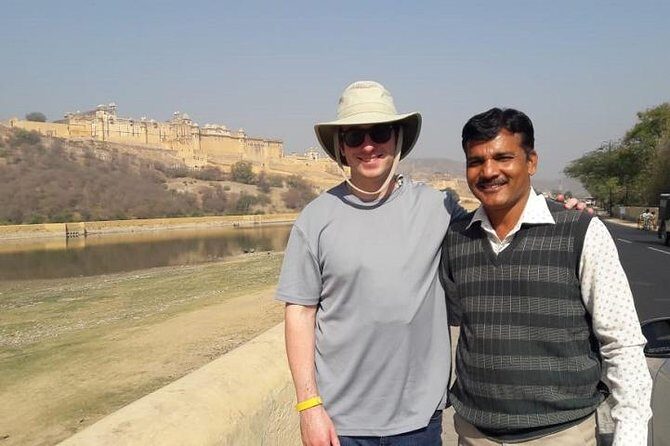
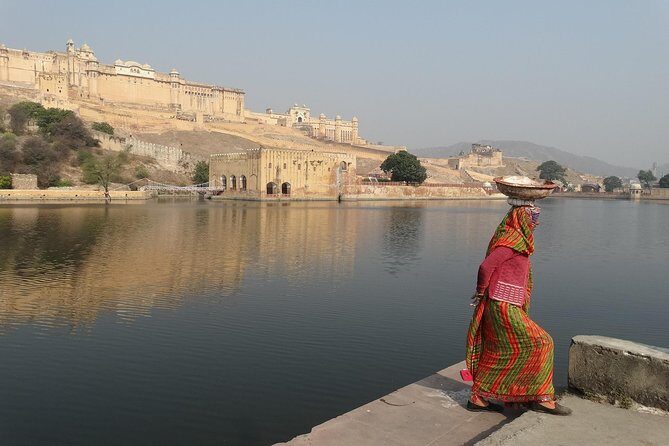
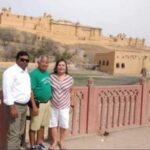
If you’re coming to Jaipur for the big “fort on a hill” moment, you get it here—first with Amber Fort. The stop is about 1.5 hours with a guided visit, and it’s one of those places where your guide matters. Even without getting lost in details, you’ll notice how the complex works: courtyards, decorative design, and the panoramic overlook that makes the whole region feel more understandable.
Then the route turns toward the next layers of fort life: Jaigarh Fort and Nahargarh Fort. Each gets about 1.5 hours, with photo stops plus guided time. These aren’t just “more walls.” They give you a different angle on how Jaipur’s defenses and royal presence were organized across the hills. You’ll also get a strong photo rhythm—every turn of the road can change the view.
Here’s the consideration you should actually plan for: the fort circuit is not gentle. You’ll likely deal with steps and uneven surfaces, plus some uphill walking depending on where the group stops. If you have back problems, this is one of those itineraries where “I’ll be fine” can turn into “why did I do this.” In the same way, the tour lists wheelchair accessibility in one place, but it also says it’s not suitable for wheelchair users—so assume there’s a lot of walking and uneven terrain.
Step-Well and Floating Palace Photos: Panna Meena ka Kund and Jal Mahal
After the hill-fort stretch, you get a nice change of pace: Panna Meena ka Kund, an ancient step-well stop that runs about 25 minutes. Short, yes, but memorable because it’s built to be seen from close range. A step-well isn’t just a photo; it’s a window into how people managed water, movement, and community space long before modern systems.
Next up is Jal Mahal, the palace that looks like it’s sitting right on the water. You get a 25-minute photo stop and guided time, and the point here is timing and perspective. If the light is good, you’ll get that classic “floating” look, and it’s a great break from the more vertical fort scenery.
If you’re traveling with a tight schedule inside the day, these two stops work well because they don’t ask for long monument endurance. You get variety without losing the momentum of the full-day plan.
Royal Jaipur Center: City Palace, Hawa Mahal, and Jantar Mantar
Jaipur’s royal core hits hard here because the stops are close enough together that you feel like you’re moving through one “story zone.”
City Palace: royal spaces you can actually walk through
City Palace is visited for about 1.5 hours, with guided time. You’ll see multiple sections named on the itinerary—Mubarak Mahal, Chandra Mahal, Diwan-I-Khas, and the Maharani Palace areas. Even if you don’t read every plaque, the guide helps you connect what you’re seeing: a royal residence that became part museum, part symbolic center.
This is also where planning matters for your energy. If you’ve already done two fort stops, City Palace is more controlled walking, but still a lot of “stand, look, move” activity.





Hawa Mahal: the honeycomb façade
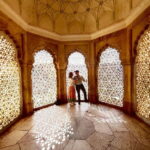
Hawa Mahal takes about 30 minutes including photo stop and guided time. This is the Palace of Winds, known for its honeycomb design and 953 carved windows. The windows are the whole point: you’ll notice how the façade creates patterns rather than just a decorative front. You’ll also understand why this site is so photographed—there are many angles, but the main wall reads best from the right vantage point.
Jantar Mantar: UNESCO observatory, not just rocks
Then you shift to Jantar Mantar, listed as UNESCO. You get about 45 minutes with photo stop and guided time. This isn’t a “quick look and leave” stop if you enjoy history that feels scientific. The observatory is famous for astronomical instruments, and your guide can help you connect how measurement worked before computers and GPS.
If you’re a first-time visitor, Jantar Mantar is a strong payoff: it balances the architectural drama of the palaces with something built for calculation and observation.
Cenotaphs, Museums, and Birla Mandir: The Late-Day Shift
Toward the end of the day, the itinerary moves into sights that slow you down a bit.
Gaitor Ki Chhatriyan comes first, with about 25 minutes of photo stop and guided time. It’s a quieter stop compared to the big palace areas. These royal cenotaphs offer a different kind of atmosphere—more contemplative, less “grand entrance.”
Then you’ll visit Albert Hall Museum for about 1 hour. It’s a great midpoint between palace-culture and city-style artifacts. If you like museums but don’t want to spend your whole trip in one building, this timing works well.
Finally there’s Birla Mandir, about 30 minutes. This stop gives you a spiritual end note, and it often feels like a better closing moment than another fort because it shifts your sensory focus.
Lunch, Market Time, and How to Spend Your 2 Hours Wisely
One of the smartest parts of this plan is the break built into the day: you get around 2 hours for lunch and shopping in Jaipur.
Meals are not included, so you’ll need to choose your own lunch. That’s a good thing if you have dietary needs, but it also means you should treat this as part of your planning. If you want a sit-down meal, pick a spot quickly when the break starts. If you want street food, be choosy and keep an eye on hygiene.
For shopping, the itinerary notes markets and traditional goods. You’ll have time to browse textiles, handicrafts, and jewelry-type souvenirs. In a day this packed, I’d use this break for two things:
- one or two souvenir targets you already know you want
- a refresh for water and snacks (even though bottled water is provided)
And yes—you’ll also spend time riding through local market streets by tuk-tuk, which helps shopping feel like part of the city, not just a stop you rush through.
Price and Value: What $7 Really Buys You
A price around $7 per person is genuinely low for a full-day route with pickup, a tuk-tuk, parking charges, fuel, and taxes included. The value is strongest if you want convenience: hotel pickup/drop-off plus a driver who guides you through multiple major attractions.
Here’s what’s important though: entry fees are not included for Amber Fort, City Palace, Hawa Mahal, Jantar Mantar, Albert Hall Museum, and more. That means your final total will depend on how many ticketed interiors you enter and how the provider manages the exact ticketing for each site.
If you budget entry tickets in advance, the trip can be a bargain. If you show up without a plan, the costs can surprise you. This is the one place where cheap tours can feel expensive at the end—so check ticket prices for each attraction you’re most excited about.
Driver Quality and Tuk-Tuk Reliability: How to Reduce Risk
I’ll be straight with you: one bad day can happen.
There’s an account connected to Nahargarh Travels where the tuk-tuk wasn’t in usable condition, and the schedule slipped by waiting—first around 45 minutes, then additional time after the vehicle broke down on the way to sightseeing. The issue wasn’t just delay; it was also the feeling that the provider couldn’t quickly solve it.
You can’t eliminate risk entirely, but you can reduce it:
- Start your day early so added waiting doesn’t ruin your entire schedule
- Keep your phone ready and charged in case you need to coordinate quickly
- Ask (politely) what condition the tuk-tuk is in before you leave
- If you’re on a tight itinerary, avoid booking this on a day where you must catch something at a specific time
On the flip side, there’s also an experience where the driver, Raja from Rajasthan, was described as experienced and safe, bringing people to monuments and spots smoothly. That’s the kind of day you’re hoping for—so the best you can do is be ready for both outcomes.
What to Bring (and What to Skip) for Jaipur Comfort
This is a sun-and-steps day. Bring:
- comfortable shoes for walking
- a hat and sunscreen
- water (bottled water is included, but bring a little extra if you run hot)
- a camera for the major photo moments like Hawa Mahal and Jal Mahal
Rules to note:
- no smoking, and no alcohol or drugs
- flash photography isn’t allowed inside monuments
Also, plan your clothing for heat. Light layers and something you can handle on uneven surfaces will help you move faster through the forts and city stops.
Who This Tour Suits Best
This kind of day fits best if you:
- want a first-time Jaipur outline with minimal transport stress
- like mixing big-name sights with a couple of more unusual stops (like the step-well)
- don’t mind a packed schedule and some walking
It’s not ideal if you:
- have back issues due to uneven ground and fort terrain
- need wheelchair-friendly routes, since the day includes walking and the notes around wheelchair suitability conflict
One more bonus: the driver’s language options can help you feel more comfortable. You may get English, Hindi, French, Spanish, Japanese, Dutch, or German support depending on who’s assigned.
Should You Book This Tuk-Tuk Jaipur Day?
If your main goal is efficiency—seeing Amber Fort, City Palace, Hawa Mahal, Jantar Mantar, plus fort viewpoints and photo stops—and you’re okay paying separate entry fees, this tour can be a great value. The tuk-tuk format is also a fun fit for Jaipur’s street layout.
I’d personally book it only if you can handle a long day and you’re traveling with flexible time. If your schedule is extremely tight, treat the mechanical-delay risk as real. If you can, also ask what tuk-tuk condition you’ll be using for the day.
Bottom line: great choice for explorers who like structure, photos, and city motion—just don’t treat it as a guaranteed “zero-wait” day.
FAQ
What’s the price for this Jaipur tuk-tuk tour?
The tour is listed at about $7 per person.
How long is the experience?
It’s described as a 2-day option, and the sightseeing day schedule runs from 8:30 AM to 5:30 PM.
What sights are included in the tour?
You’ll visit Amber Fort, Jaigarh Fort, Nahargarh Fort, Panna Meena ka Kund, Jal Mahal, City Palace, Hawa Mahal, Jantar Mantar, Gaitor Ki Chhatriyan, Albert Hall Museum, and Birla Mandir.
Are entry fees included?
No. Entry fees for Amber Fort, City Palace, Hawa Mahal, Jantar Mantar, Albert Hall Museum, and other monuments are not included.
Is lunch included?
Meals and beverages are not included, but there is a break for lunch during the day.
What should I bring for the day?
Bring comfortable shoes, a hat, a camera, sunscreen, and water.
Can I take photos inside monuments?
Photography is allowed, but flash photography is not permitted inside the monuments.
Is pickup and drop-off included?
Yes. Pickup and drop-off from the hotel (and other listed locations) are included.
What languages does the driver/guide speak?
The driver/guide may speak English, Hindi, French, Spanish, Japanese, Dutch, or German.
Is the tour wheelchair accessible?
It lists wheelchair accessibility, but it also states it’s not suitable for wheelchair users. Since the day includes walking and fort terrain, you should confirm suitability with the provider before booking.