REVIEW · 2-DAY EXPERIENCES
2 Day Jaipur Tour for First-Time Visitors
Book on Viator →Operated by Jaipur Taxi Cab · Bookable on Viator
Jaipur in two days can still feel personal. This private, AC car tour with an English-speaking driver is built for first-timers who want the main sights with room to adjust your pace and photo stops. You get hotel (or airport) pickup and drop-off, plus a day-by-day plan that hits both the classic Pink City highlights and the fort views outside town.
I especially like how the schedule groups the big monuments with smart timing. You’ll move from City Palace to Hawa Mahal to Jantar Mantar on Day 1, then shift to the forts and viewpoints around Jaipur on Day 2, including Amer and Nahargarh. I also like that the tour isn’t only temples and stone—there’s hands-on cultural work like Jaipur block printing and a look at silver jewelry and ornaments craftsmanship.
One thing to consider: some monument entry fees aren’t included unless you choose that option, and there are planned craft/factory stops. If you’re the type who wants every minute to be pure sightseeing, you’ll want to set expectations so the day feels like your trip, not a sales tour.
In This Review
- Key things that make this Jaipur tour work well
- Private AC car + English-speaking driver: the real value in Jaipur
- Day 1 in Jaipur’s Pink City: City Palace to Patrika Gate
- City Palace (about 2 hours)
- Hawa Mahal, Palace of Breeze (about 45 minutes)
- Jantar Mantar (about 45 minutes)
- Jaipur block printing (about 30 minutes, admission free)
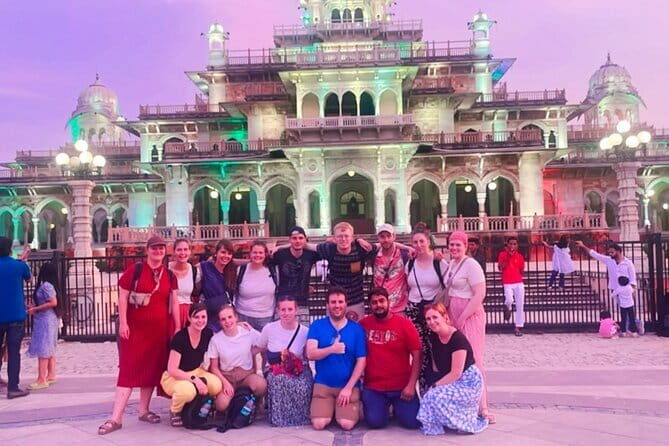
- Albert Hall Museum (about 1 hour)
- Birla Mandir Temple (about 30 minutes, admission free)
- Patrika Gate at Jawahar Circle (about 30 minutes, admission free)
- Day 2 outside the center: Amer, forts, and Jal Mahal moments
- Amer (about 2 hours, admission free)
- Jaigarh Fort (about 1 hour, admission not included)
- Nahargarh Fort (about 2 hours, admission not included)
- Royal Gaitor Tumbas (about 45 minutes, admission not included)
- Jal Mahal (about 15 minutes, admission free)
- Monkey Temple / Galta Ji area (about 1 hour, admission not included)
- Ramgarhmode silver jewelry and ornaments factory (about 30 minutes, admission free)
- Price and what you actually get for $27.97 per person
- Shopping stops, craft time, and how to protect your schedule
- What the best guide/driver teams add to your experience
- How to make a two-day Jaipur plan feel un-rushed
- Should you book this 2-day Jaipur private car tour?
Key things that make this Jaipur tour work well

- Private, air-conditioned transport with pickup and drop-off keeps you comfortable while Jaipur traffic does its thing
- A tight 2-day route covers the headline sights without turning every stop into a detour
- Big photo moments are built in—Hawa Mahal windows, Patrika Gate arches, and Jal Mahal on the lake
- Craft stops add real context through Jaipur block printing and a silver ornaments factory visit
- Forts on Day 2 give you perspective with Amer, Jaigarh, Nahargarh, and Royal Gaitor together
- Clear English-friendly guidance is a recurring highlight when you get a strong driver/guide team (names like Asif, Chirag, Hansraj, and Jai come up)
Private AC car + English-speaking driver: the real value in Jaipur
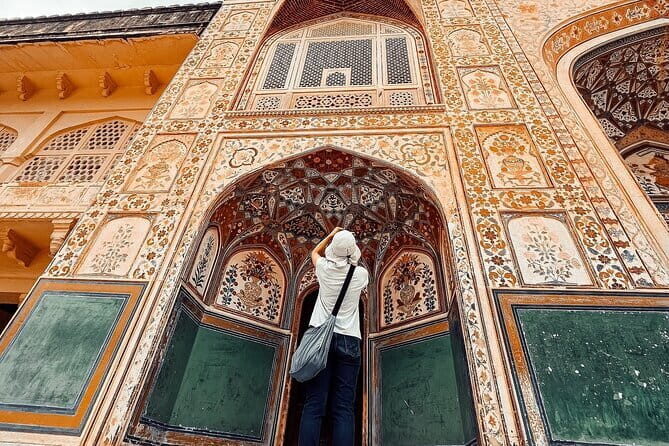
Jaipur is the kind of city where “seeing a lot” can be exhausting if you’re doing it on buses or with constant re-planning. Having a private AC car and an English-speaking driver changes the feel fast—you’re not negotiating, sprinting, or losing time figuring out routes.
This tour is also set up for convenience. Your day includes hotel/airport pickup and drop-off, and you’re given bottled water during the trip. That sounds small, but on a two-day timeline it helps you keep momentum.
The other big win is flexibility. The plan is suggested and designed to be adjustable, which matters because your energy level might not match the clock. After a long day at major monuments, you may want to slow down, swap a stop, or simply take more time on the spots you care about.
You can also read our reviews of more tours and experiences in Jaipur

Day 1 in Jaipur’s Pink City: City Palace to Patrika Gate
Day 1 is built like a classic first-timer route: royal architecture, iconic views, then hands-on culture, then a museum, then lighter stops for atmosphere and photos. It also keeps your time spread out, with a mix of longer and shorter visits so the day doesn’t turn into one long rush.
City Palace (about 2 hours)
City Palace is a major start. It’s described as an 18th-century complex built by Maharaja Sawai Jai Singh II, and it blends Rajasthani and Mughal architecture. You’ll get time to wander courtyards and take in the scale before you move on to smaller-but-iconic structures.
Why I like this as a first stop: it gives you a mental map of Jaipur’s royal world. After you’ve seen the palace complex, Hawa Mahal and the observatory feel less like random landmarks and more like pieces of the same story.
Possible drawback: 2 hours is enough to see a lot, but it’s not a full deep dive. If you’re the kind of traveler who could spend a half-day inside major heritage sites, you may want to go a bit slower here.
Hawa Mahal, Palace of Breeze (about 45 minutes)
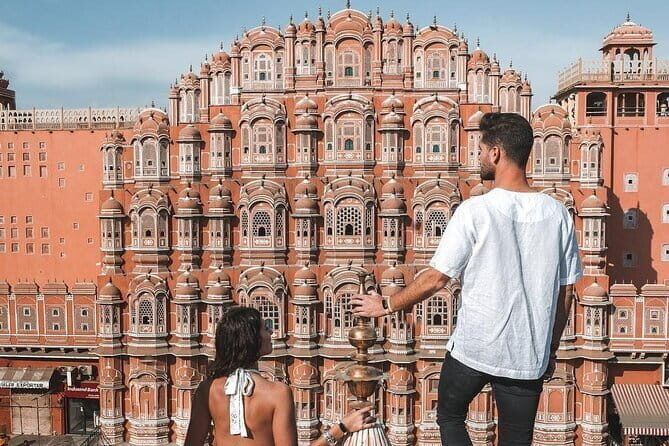
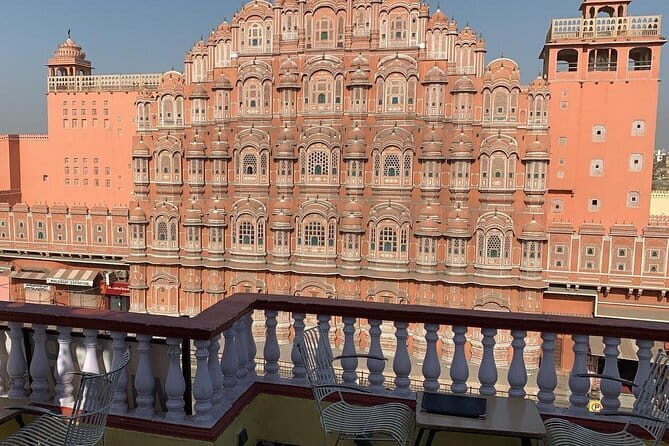
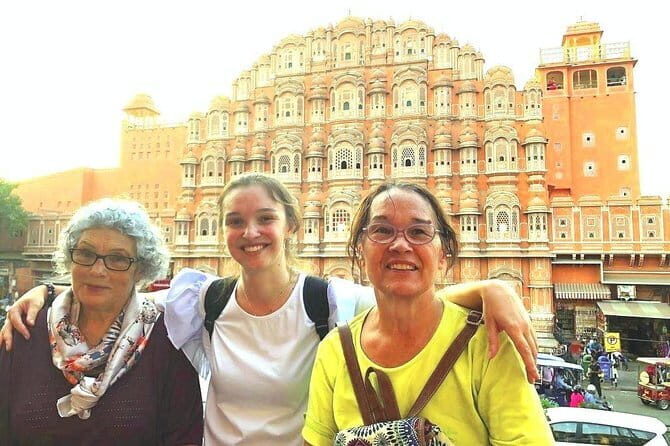
Hawa Mahal is the Pink City postcard. It’s a five-story pink sandstone structure built in 1799 by Maharaja Sawai Pratap Singh, famous for its 953 small windows (jharokhas). You don’t need hours here to appreciate why it’s iconic, especially if your priority is photos and understanding the design.
In practical terms, plan for tight timing and strong photo focus. A 45-minute window is short enough that you’ll want to choose your best angles quickly.
Jantar Mantar (about 45 minutes)
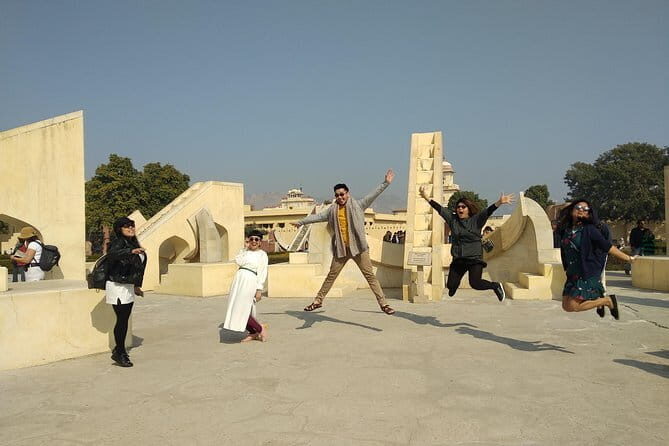
Jantar Mantar is your switch from architecture to science. It’s described as an ancient astronomical observatory built by Maharaja Sawai Jai Singh II in 1734, with large instruments created to measure time, predict eclipses, and more. This is a great stop if you like when a city has a “how did they think about the world back then?” moment.
Why it works on Day 1: after royal buildings and the window façade, you get a different angle on Jaipur’s old precision.




Jaipur block printing (about 30 minutes, admission free)
This is one of the most valuable parts of Day 1 for many people. You get first-hand experience with traditional block printing, learning the techniques and craftsmanship behind the art.
The time here is brief, but the payoff is usually bigger than another quick monument stop. You’ll walk away with a better sense of how Jaipur’s crafts connect to everyday objects, not just souvenirs.
Albert Hall Museum (about 1 hour)
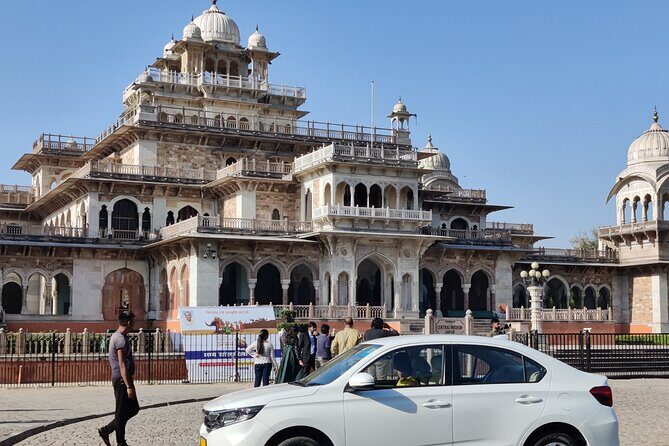
Albert Hall Museum is a helpful change of pace. It’s described as the oldest museum in Rajasthan, completed in 1887, with an Indo-Saracenic style and collections including ancient sculptures, pottery, and more.
One hour is a realistic museum window. If you’re hoping for a slow, detailed museum day, you may want extra time later on your own—but for a two-day highlights plan, this slot makes sense.
Birla Mandir Temple (about 30 minutes, admission free)
Birla Mandir (Laxmi Narayan Temple) is a modern Hindu temple built with pure white marble. It’s dedicated to Lord Vishnu and Goddess Laxmi, and the stop is short by design.
I like this as a pause. After courtyards and forts, a calm temple stop can reset your energy and give you a different kind of Jaipur view—clean lines, quiet detail, and a simpler pace.
Patrika Gate at Jawahar Circle (about 30 minutes, admission free)
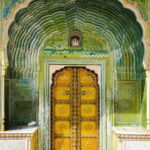
Patrika Gate is an easy win for first-timers who care about photos and design. It’s described as a vibrant, ornate gateway with hand-painted arches representing Rajasthan’s culture, history, and heritage.
This is also a good ending for Day 1 because it’s lighter and more open to wandering. If you’re tired, you can still enjoy it without having to “finish” every detail.
Day 2 outside the center: Amer, forts, and Jal Mahal moments
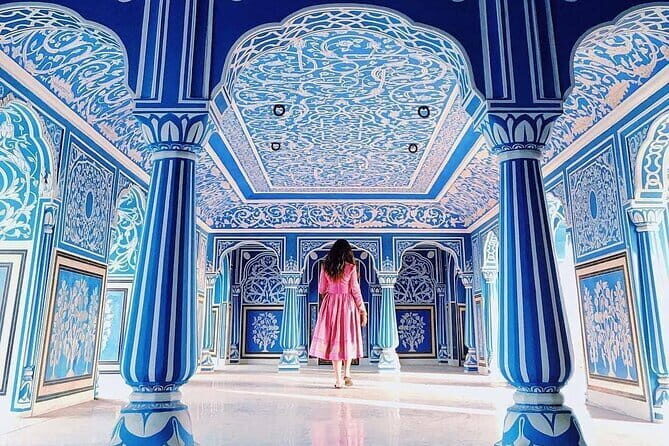
Day 2 is where Jaipur turns scenic. You’ll leave the immediate Pink City core and head into the hills and historic fort areas, with views that make the city feel spread out instead of boxed in.
It’s also the day where good driving matters most. Getting around fort areas takes time and roads can be slow, so an organized schedule is a big deal when you only have two days.
Amer (about 2 hours, admission free)
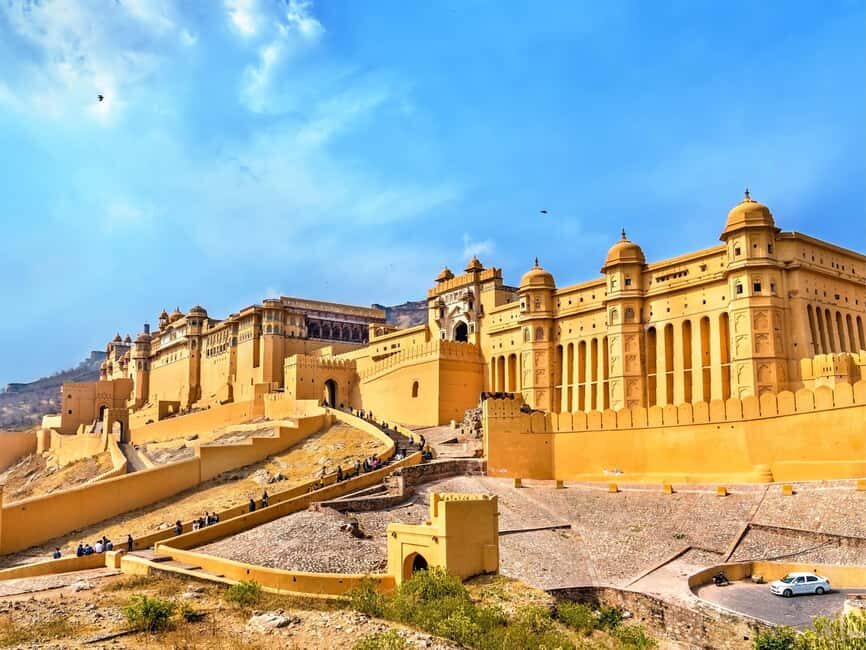
Amer is your long stop and a must for the classic Jaipur experience. It’s described as a historic town on the outskirts known for magnificent historical buildings. Two hours here gives you time to see it as a place, not a quick photo stop.
Because admission is listed as free, this is also a low-cost way to get major scenery time. Just remember that free doesn’t mean quick—Amer is worth using your full window.
Jaigarh Fort (about 1 hour, admission not included)
Next up is Jaigarh Fort, built in 1726 by Maharaja Jai Singh II and perched near Jaipur on the Aravalli hills. It’s known for housing the Jaivana Cannon, described as the world’s largest on wheels.
This is a great stop if you like fort engineering and the big, physical scale of historic military tools. One hour is enough to understand the fort’s purpose and get a few strong views.
Nahargarh Fort (about 2 hours, admission not included)
Nahargarh Fort is described as a majestic structure built in 1734 by Maharaja Sawai Jai Singh II, with intricate architecture and scenic views over Jaipur. Two hours here is a solid chunk, especially if you want to linger for photos.
This stop tends to work best if you like viewpoints. Even if you’re not a “museum person,” you’ll likely enjoy seeing Jaipur from a different angle.
Royal Gaitor Tumbas (about 45 minutes, admission not included)
At the foothills of Nahargarh, you’ll visit Royal Gaitor Tumbas, featuring intricately carved cenotaphs. The highlight called out is the ornate tomb of Maharaja Sa… (the text trails off, but the focus is clearly on carved royal tombs).
Why this stop is worth fitting in: it connects the hillfort views to royal commemoration, so Day 2 doesn’t feel like one viewpoint after another.
Jal Mahal (about 15 minutes, admission free)
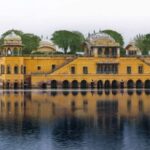
Jal Mahal is the quick payoff on the lake. It’s described as the Water Palace, located in the middle of Man Sagar Lake, built in the 18th century by Maharaja Sawai Jai Singh II. The visit is brief—about 15 minutes—and listed as admission free.
This is a classic “see it, appreciate it, move on” stop. Don’t plan to do a lot of wandering here. Instead, treat it like your photo and atmosphere moment before you head to the next site.
Monkey Temple / Galta Ji area (about 1 hour, admission not included)
The Monkey Temple stop is part of the Galta Ji complex. It’s described as a revered Hindu pilgrimage site with sacred water tanks (kunds) and intricate temples.
It’s listed as about an hour, which is a good fit for a complex that feels both spiritual and scenic. If you like temple details more than big views, this can be a satisfying shift.
Ramgarhmode silver jewelry and ornaments factory (about 30 minutes, admission free)
You end with Ramgarhmode, described as a silver jewelry and ornaments factory where you can see craftsmanship up close. This wraps Day 2 with a different kind of cultural experience—less about heritage buildings and more about how items are made.
This is also the part where you should stay alert. Craft factories can be great when they’re educational, but they can also turn into a sales-heavy stop if you’re not paying attention. If you dislike shopping pressure, tell the driver your preference early so the time feels respectful, not forced.
Price and what you actually get for $27.97 per person
At $27.97 per person, this tour has the right ingredients for value: private AC transport, hotel/airport pickup and drop-off, bottled water, and fuel/parking/taxes included. For a two-day plan that covers a long list of major sights, the price can feel like a bargain if you’re trying to avoid self-organizing.
The main price “gotcha” is admission. The tour notes that Monuments Entry Ticket is included only if you select that option. Several stops are clearly marked as admission not included, so it’s worth deciding what you want to handle in advance versus on-site.
Also note what’s not included: lunch or dinner and hotel accommodation. That means you’re free to choose meal timing, which can be good if you want local food at your own pace. It also means you should plan your day with meals in mind rather than assuming everything is bundled.
Shopping stops, craft time, and how to protect your schedule
This tour includes planned craft or showroom-style visits: Jaipur block printing and the silver jewelry/ornaments factory. These can be excellent because you see skills being used, not just finished products on shelves.
Still, you should treat them like time commitments, not “quick detours.” If you truly want monuments only, ask your driver to keep the crafts tightly timed and skip any extra add-ons.
One more practical tip: if you’re budgeting, check whether the monuments entry option is selected before you go. That one choice can decide whether your trip stays simple or becomes a series of small payments throughout the day.
What the best guide/driver teams add to your experience
A two-day city tour rises or falls on the team behind the wheel. In the trip notes, certain names come up with consistent praise for clear explanations and safe, careful driving through Jaipur traffic.
You might see guides such as Asif, Chirag, or Hansraj, with drivers named like Jameel and Mukesh. The common theme is engagement—staying helpful in English (and sometimes English and Hindi) and keeping things understandable rather than just reciting facts.
Even if you don’t care about “tour guide personality,” a solid guide helps with two big things: managing time and preventing wasted effort. When the team is sharp, you spend more minutes at the sites you chose and less time at confusion.
How to make a two-day Jaipur plan feel un-rushed
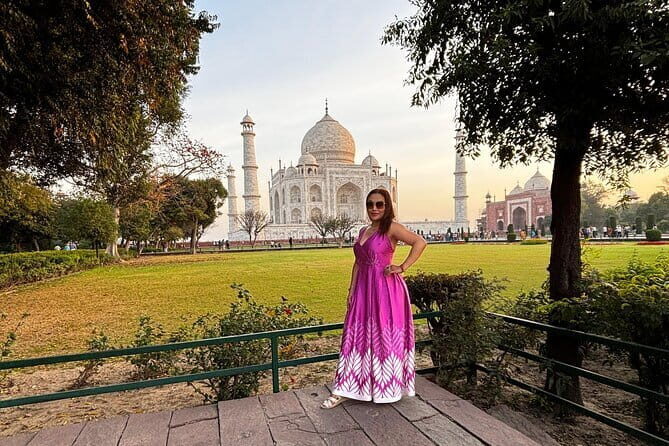
Two days is tight in a big city, so your job is to travel with priorities. I recommend picking two “must-have” categories: one set of monuments and one set of experiences that teach you something (like printing or craft).
Then, use the planned stop durations as your anchor. 45 minutes at Hawa Mahal and Jantar Mantar is enough for a good first look, while 2 hours at City Palace and Amer gives you room to slow down a bit.
Also, keep your expectations realistic about what fits in 2 days. You’ll see the headline sights and learn the core context, but you won’t have time for every corner of every site. The tour’s value is in coverage without total chaos.
Should you book this 2-day Jaipur private car tour?
If you’re a first-time visitor and you want a simple way to hit Jaipur highlights in two days, I think this is a smart choice. The combination of private AC transport, hotel pickup and drop-off, and a route that includes both Pink City icons and fort viewpoints saves you energy and planning stress.
I’d book it especially if you like one or two hands-on or craftsmanship stops and you’re okay with monument entry fees being optional depending on the option you choose. It’s also a good fit for anyone who wants a team that can handle traffic calmly and keep the day running.
Skip or adjust if you only want monuments and hate craft/factory stops, or if you’re very sensitive to extra shopping time. In that case, message your priorities before you start so the schedule stays aligned with what you actually want to do.