REVIEW · CITY PALACE TOURS
Jaipur Rickshaw Tour Jantar Mantar City Palace
Book on Viator →Operated by City Palace Jaipur Guide · Bookable on Viator
Jaipur’s royal sights fit into one smart ride. This private, guided circuit mixes City Palace courtyards, Hawa Mahal’s famous lattice windows, and Jantar Mantar’s astronomy in a way that’s easy to plan and fun to photograph. I like that you’re not just looking at buildings—you’re getting story-led context from a guide who can answer your questions as you go. One catch: monument entry isn’t included, so you’ll budget extra for admission.
What I especially liked is the stop-by-stop pace. Each of the three main sights is given about an hour, which keeps you moving while still letting you actually notice details like window patterns and the way the observatory is laid out. You’ll want to be aware that the tour depends on good weather, since plans can change if conditions are poor.
In This Review
- Key things that make this Jaipur circuit worth it
- City Palace: Courtyards, royal rooms, and costume-linked history
- Hawa Mahal: 953 jharokhas and the idea of watching from behind
- Jantar Mantar: Shadows, instruments, and time told with stone
- The private guide and the value of asking questions
- Price and tickets: what you’re paying for, and what to budget
- How long it takes and how to plan your day
- Where the tour meets (and why it affects your stress level)
- Who this tour is best for
- Should you book this Jaipur City Palace–Hawa Mahal–Jantar Mantar tour?
- FAQ
- What monuments are included in the tour?
- Is the tour private?
- What is the tour price?
- Are entrance tickets included?
- Does the tour include pickup and drop-off?
- What languages are available for the private guided tour?
- How long does the tour last?
- What are the opening hours for the activity?
- Is transportation and parking included?
- What happens if the weather is poor?
Key things that make this Jaipur circuit worth it
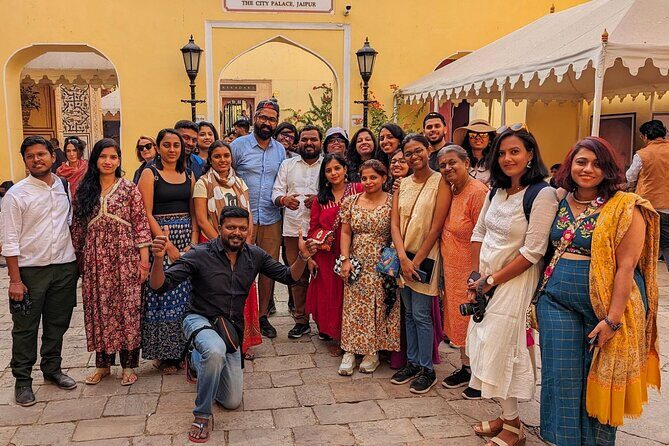
- City Palace walkthrough with a focus on royal rooms and costumes, not just a quick photo stop
- Hawa Mahal’s 953 jharokhas explained so the facade makes sense beyond looks
- Guided time-and-shadow lessons at Jantar Mantar, where science and culture meet
- Private format for your group, so you can ask questions and set your own pace
- Pickup and drop-off in an air-conditioned vehicle, plus parking fees covered
City Palace: Courtyards, royal rooms, and costume-linked history
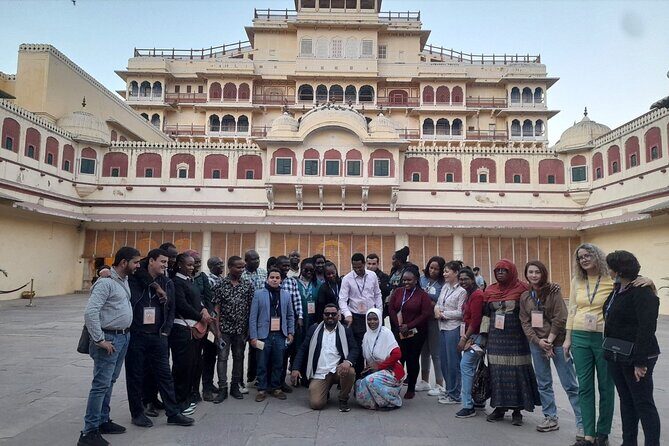
City Palace is the kind of place where you feel the scale early. You walk through grand gateways into open courtyards and palace areas, with a guide helping you connect the dots between the building layout and the people who lived and ruled there. For me, this stop works best when you slow down for a few minutes and let the visuals and layout sink in—this isn’t a museum you sprint through.
You’ll get an overview-style guided route that includes notable sections such as Mubarak Mahal, described in the tour plan as being tied to royal costumes and displays. Even if you’re not a “costume person” (I’m not always), it’s a useful reminder that these palaces weren’t only about power. They were also about everyday court life, ceremony, and identity.
A practical consideration: City Palace entry is separate from the tour price. The good news is the experience includes optional entry-ticket assistance, so you’re less likely to get stuck figuring out counters and timing on your own.
You can also read our reviews of more city tours in Jaipur


Hawa Mahal: 953 jharokhas and the idea of watching from behind
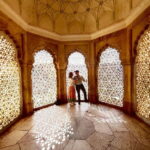
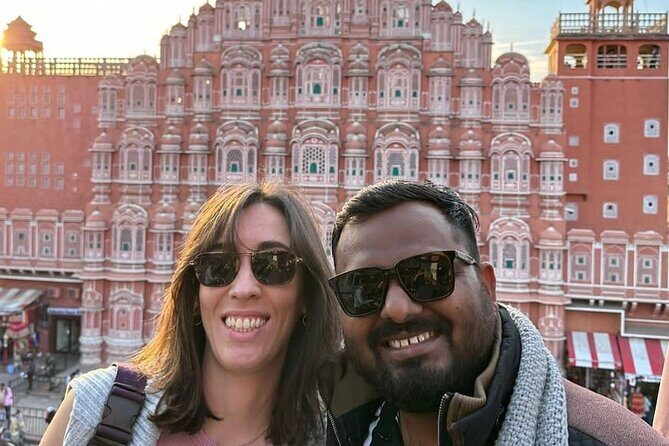
Hawa Mahal is famous for one thing at first glance: the facade. Up close, though, it’s the logic behind the design that’s most interesting. With 953 jharokhas (lattice windows), the building is visually busy, but the guide’s job is to make that busyness meaningful rather than just decorative.
The tour frames it around the concept that Hawa Mahal was designed for royal ladies to observe street life discreetly. That changes how you look at the windows. Instead of thinking only about a pretty exterior, you start thinking about sightlines, privacy, and the clever ways architecture can serve social rules.
In terms of what to expect, this stop is less about interior wandering and more about learning what you’re seeing on the outside and how to “read” the facade. If you’re into photography, come with a little patience. The angles matter, and lattice details turn into sharper images when you take a moment to reposition and check light.
Like City Palace, admission isn’t included in the base fee. Plan to handle entry as part of your overall budget, and you’ll avoid that last-minute “wait, what’s the ticket for?” moment.
Jantar Mantar: Shadows, instruments, and time told with stone
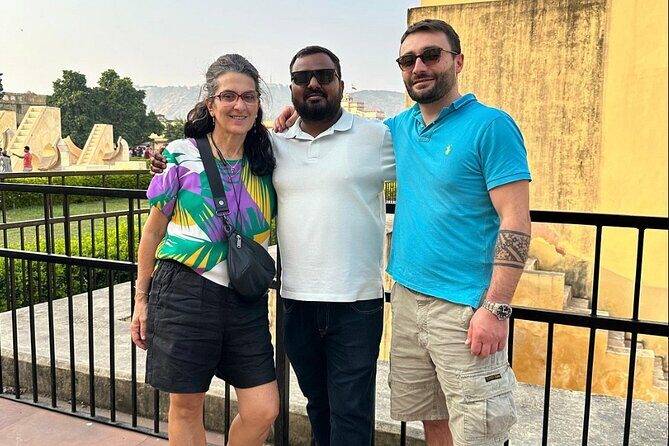
Jantar Mantar is where the tour gets interesting fast. It’s listed as a UNESCO World Heritage Site, and the guided experience centers on astronomy instruments built from stone—plus the idea that time can be measured using shadows. This is one of those places where a guide makes a real difference. Without context, the instruments look like an odd mix of angles and bowls. With context, they turn into a system you can actually understand.
The tour plan also calls it the world’s largest stone observatory. I found the “science meets spirituality” angle useful because it keeps you from treating the site like a modern classroom only. The experience is guided, so you’re not left guessing what each structure is meant to do.
What you can do here (and what helps): pay attention to the way the area is laid out so you understand how the instrument readings relate to the space around you. Even when clouds move in, the guide’s explanations help you make sense of the purpose behind the design.
Just remember the weather factor. The experience notes that it requires good weather, and if it gets canceled due to poor conditions, you’ll be offered another date or a full refund. For this stop in particular, that’s a big deal because shadows and light are part of the point.
The private guide and the value of asking questions
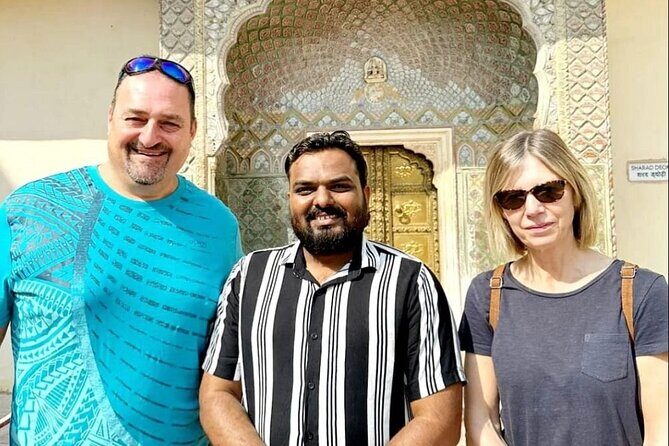
This is a private tour, meaning it’s just your group and not a big scramble with strangers. That matters more than you might think. With a private guide, you can ask follow-up questions when something sparks your interest—whether it’s the role of window design at Hawa Mahal or how the observatory measures time.
The tour also includes pickup and drop-off in an air-conditioned vehicle, which is a real quality-of-life upgrade in Jaipur. You’re not stuck negotiating transport between three major monuments while managing heat, traffic, and time windows. Plus, parking fees are included, so you’re not wondering if the vehicle portion will become an extra cost later.
One more small but important detail: confirmation happens at booking, and there’s a mobile ticket. That keeps things simpler on arrival—less paperwork, fewer unknowns.
If you like a guide who checks in ahead of time and is on schedule once you meet, this experience matches that vibe. Clear communication before you start is the kind of thing that makes the day feel smoother from minute one.
Price and tickets: what you’re paying for, and what to budget
Let’s talk money in plain terms.
- The tour price is $20.00 per person.
- Entrance is listed separately as $20.00 per booking.
- The tour itself includes private transportation and parking fees.
- Meals are not included.
So you should think of the $20 as covering the guided private experience and logistics. Then you add the entrance cost for the monuments. It’s not unusual in India for the base tour to exclude entry, but it’s still worth planning for so you don’t get surprised when you reach the gates.
Also note: the tour description says entry-ticket assistance is optional. That’s valuable if you’d rather not deal with ticketing desks and language barriers while also keeping your group moving. If you prefer independence, you can still handle entry your own way—just know that you may be doing more of the logistics yourself.
If you’re splitting costs with a friend or partner, this can be a very cost-effective way to see all three icons without the hassle of piecing together separate guide services.






How long it takes and how to plan your day

The experience lists a duration of about 3 to 20 hours. In practice, you can expect the main sightseeing blocks to be roughly an hour per stop, since the plan calls out about an hour for each of the three monuments. The longer range likely accounts for time spent at each site, pickup windows, and your pace.
The opening hours listed for the activity are 9:30 AM to 5:00 PM, Monday through Sunday. That means you’ll want to start within the daylight window and aim for a schedule that stays inside those hours. If you show up late in the day, you can end up losing time where you actually want it—inside courtyards and around observatory areas.
Bring this mindset: you’re not trying to conquer Jaipur in one afternoon. You’re trying to see three meaningful landmarks in a guided way. That works best when you keep your expectations realistic and give yourself enough time to ask questions.
What to wear: comfort matters. You’ll be outside for most of the day’s key moments, and Jaipur’s heat and sun can feel intense. Lightweight layers and sun protection will save you from that end-of-tour fatigue that makes photos look better than you feel.
Where the tour meets (and why it affects your stress level)
Your start point is at the City Palace area near Gangori Bazaar in Jaipur, and the experience ends back at the meeting point. Because the tour includes pickup by air-conditioned vehicle, you’ll typically be handed a clear rendezvous spot so the vehicle can find you easily.
The meeting point is listed at Gangori Bazaar, J.D.A. Market, Kanwar Nagar, Jaipur, Rajasthan 302002. It’s also near public transportation, which is helpful if you’re arranging your own way to get there.
Mobile ticketing helps here too: once you’re at the area, you’re not chasing down printed confirmations. Just keep your phone charged.
Who this tour is best for

This one fits best if you want a guided, efficient overview of Jaipur’s major icons without building a complicated itinerary.
It’s a strong match for:
- History and architecture lovers who want meaning behind the design
- Photographers who appreciate learning the building features and best ways to look
- People who want a private experience where you can move at your group’s pace
It also suits most travelers since the description doesn’t list special participation limits. The bigger factor is comfort with weather—since the tour requires good weather, plan for the fact that the day can shift if conditions aren’t ideal.
Should you book this Jaipur City Palace–Hawa Mahal–Jantar Mantar tour?
Book it if you want three iconic Jaipur sights handled in one private, guided flow, with pickup and drop-off that reduces transport stress. The value comes from the guide-led explanations—especially at Jantar Mantar, where understanding how shadows and instruments work makes the visit far more than a quick walk-through. I also like that Hawa Mahal isn’t treated as only a facade selfie stop; the design purpose is explained as part of the experience.
Skip or rethink it if you’re trying to minimize add-on costs, since monument entry is extra on top of the tour price. Also consider whether your schedule can handle a potential weather-related change; the experience is sensitive to conditions.
If your goal is to get the key royal-and-astronomy story of Jaipur in one day, this is one of the more sensible ways to do it—without turning your trip into a logistics puzzle.
FAQ
What monuments are included in the tour?
The guided stops are City Palace, Hawa Mahal, and Jantar Mantar.
Is the tour private?
Yes. It’s a private tour/activity, and only your group participates.
What is the tour price?
The price is $20.00 per person.
Are entrance tickets included?
No. Entrance is listed separately as $20.00 per booking, and the plan says entrance tickets are not included.
Does the tour include pickup and drop-off?
Yes. The experience includes hotel pickup and drop-off using an air-conditioned vehicle.
What languages are available for the private guided tour?
The tour is available in English, Spanish, or Hindi.
How long does the tour last?
Duration is listed as 3 to 20 hours (approx.).
What are the opening hours for the activity?
Opening hours are 9:30 AM to 5:00 PM, Monday through Sunday.
Is transportation and parking included?
Yes. Private transportation and parking fees are included.
What happens if the weather is poor?
The experience requires good weather. If it’s canceled due to poor weather, you’ll be offered a different date or a full refund.