REVIEW · CITY TOURS
Jaipur Private City Tour: Customize your own
Book on Viator →Operated by INDIA TAJ TOURS · Bookable on Viator
Pink Jaipur feels personal fast. This private tour lets you roam the royal pink city with a live guide and an AC driver, picking your own pace and what you want to see. You also get a flexible start window between 8 and 11 AM, plus pick-up from either your hotel or the railway station.
Two things I like a lot. First, you’re not stuck on a rigid checklist; you choose which 3–4 sites fit your day, and you can spend as long as you want at each one. Second, the tour is built for comfort: a private air-conditioned car, bottled water, and even umbrellas are included so you can focus on the sights (not your logistics).
One thing to consider: entrances to monuments are not included, so you’ll want to budget extra if you’re doing several major stops like Amber Palace, Jantar Mantar, or Hawa Mahal.
In This Review
- Key things to know before you go
- Choosing your start time: 8 to 11 AM changes the whole day
- Private AC transport and a guide who can actually steer your day
- Stop-by-stop Jaipur: build your 3–4 site route
- Amber Palace: the ornate start that sets the tone
- Jaigarh Fort: fort views and a sibling feel to Amber
- Jagat Shiromani Ji Temple: a 600-year-old Krishna site
- Jal Mahal (Water Palace): the palace that reads like a mirage
- Khole Ke Hanuman Ji Temple: patterned gardens and a Tuesday rhythm
- Jantar Mantar: the science of sightlines and the biggest sundial
- Hawa Mahal (Palace of Breeze): royal privacy turned into a landmark
- Albert Hall Museum: an old museum in the center of Rajasthan’s story
- Birla Mandir Temple: modern devotional elegance
- Moti Dungari Temple: a stop for Ganesha devotees
- Govind Devji Temple: Krishna devotion with a big tourist pull
- Galtaji Temple: seven holy water springs in the Aravalli hills
- Price and value: what $28.20 buys you, and what it doesn’t
- How to get the most out of a 6-hour private tour
- Should you book this Jaipur Private City Tour?
- FAQ
- FAQ
- How much does the Jaipur private city tour cost?
- How long is the tour?
- What time can I start the tour?
- Where can the guide pick me up?
- Is the tour private or shared?
- Are meals included in the price?
- Are monument entrance tickets included?
- Does the price include the air-conditioned car and guide?
- Is there free cancellation?
Key things to know before you go
- Flexible route, fixed time: in about 6 hours, plan on 3–4 stops and choose your own mix.
- Easy pick-up options: get collected from your hotel or the railway station, with a start time between 8–11 AM.
- Comfort perks included: AC car with chauffeur, water bottles, and umbrellas.
- Private guide support: you get a live guide to connect art, architecture, and stories as you go.
- Admission tickets are extra: sightseeing time is covered, but monument entry fees are not.
- Small-group feel: it’s private for your group, and there are mentions of group discounts depending on your party size.
Choosing your start time: 8 to 11 AM changes the whole day
This tour is designed around one simple idea: let you start when your schedule makes sense. You can request pick-up any time between 8:00 AM and 11:00 AM, which is handy if you’re arriving by train, sleeping in a bit, or trying to avoid the rush hours.
That flexibility matters because Jaipur’s main sites can eat time fast. With a 6-hour window, you’ll be happier if you start early enough to avoid cramming, but not so early that you’re rushing your breakfast. If your day includes shopping or another activity later, the morning start gives you a clean line back into the city.
The other advantage of this timing is that it helps you choose the right “type” of Jaipur visit. Early hours are great for big visual landmarks like Amber Palace and Hawa Mahal. If you’d rather lean more spiritual, you can also build a temple-heavy route without feeling like you’re sprinting.
You can also read our reviews of more city tours in Jaipur

Private AC transport and a guide who can actually steer your day

The included ride is not just a car ride. It’s a private air-conditioned vehicle with a chauffeur, plus a private live tour guide. That combination is what turns Jaipur from a list of famous names into a route that makes sense.
Why does this matter? Because Jaipur is one of those cities where the distance between stops is real. Going from forts and palaces to temples and museums takes time, and having the chauffeur handle driving plus parking makes your schedule feel calmer. You don’t need to worry about hailing transport between sites.
Also, a guide helps you read what you’re looking at. Places like Amber Palace and Jantar Mantar can feel like “pretty things” if you don’t know what they represent. With a guide, you’re better able to notice the architectural styles, the purpose of each structure, and what people came to see there—then you can decide how long you want to stay.
And yes, good guides make a difference. In the feedback I saw from other visitors, guides like Yogi and Deepak were praised for being friendly, flexible with time, and willing to take photos and adjust the plan to your interests.
Stop-by-stop Jaipur: build your 3–4 site route
You’ll typically fit 3–4 major stops into the ~6-hour timeframe. Below is what each possible stop gives you, so you can mix and match based on your mood—forts, temples, royal architecture, science, or museums.
Amber Palace: the ornate start that sets the tone
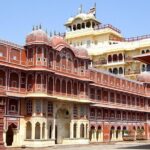
Amber Palace (in Amer) is where Jaipur’s royal architecture really grabs you. It’s known for amazing artistic Hindu-style architecture and the strong visual impact of marble elements.
Going here first is smart because Amber Palace is a flagship: it’s not only famous, it’s packed with details that reward a slow look. You’ll want time for photos and for taking in the look of the palace from different angles. If you’re choosing only one “big palace” stop, make it this one.
The only caution is practical: this is an admission-based monument, so entrances are extra. If you want to minimize costs, you can still enjoy the surrounding area and pick the time wisely—but for the full experience, plan on paying entry.
Jaigarh Fort: fort views and a sibling feel to Amber
Jaigarh Fort is up on a hill (the “hill of Eagles”), and it has a fort vibe that feels similar in style to Amber Fort—though it’s its own place. It’s also known as the Victory Fort, and it’s the kind of stop that appeals if you like defensive architecture and panoramic viewpoints.
If Amber Palace is the showpiece, Jaigarh Fort is the power-and-position complement. It’s a good choice for a second stop when you want more than one “royal” experience but still stay in the same geographic area.
Like Amber, it’s an admission stop, so entrance fees apply separately. But if you enjoy strong shapes, walls, and views, Jaigarh is one of the best uses of limited time.
You can also read our reviews of more private tours in Jaipur






Jagat Shiromani Ji Temple: a 600-year-old Krishna site
This temple is dedicated to Lord Krishna and is described as being around 600 years old. It’s located in Amber town, which makes it an easy add-on if you’re already doing Amber.
What makes it worth considering is the age and the spiritual focus. If your route leans beyond palaces into places with living religious meaning, this is a solid fit. It’s also a good change of pace from forts and big-ticket landmarks.
As with other monuments on the list, entrance is not included in the tour price, so budget for that if you want full access.
Jal Mahal (Water Palace): the palace that reads like a mirage
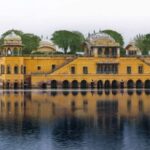
Jal Mahal is built in the 18th century in Rajput style architecture and is commonly called the Water Palace. The appeal here is visual: the palace is famous for how it appears connected to water.
Jal Mahal works well if you like architecture with a “where is it?” effect—something that looks different depending on your angle and the surrounding views. It’s also a nice mid-route pause if you want a break between temples and forts.
It’s still an admission-based stop on the broader menu, so entrances are extra. For many people, it’s less about long time inside and more about getting the right views and photos.
Khole Ke Hanuman Ji Temple: patterned gardens and a Tuesday rhythm
Khole Ke Hanuman Ji Temple is one of Jaipur’s famous Hindu temples, and it’s especially known as a festive place on Tuesdays. The setting is also described as having beautifully patterned gardens and architecture, which makes it feel like an experience rather than a quick stop.
If you love temples but want something more scenic than just a courtyard, this one checks that box. It also makes sense as a “softer” stop in the middle of a day, because the gardens and detailed layout can keep you busy without it feeling like a museum sprint.
Entrance is extra, but the value here is in the atmosphere and the visual design.
Jantar Mantar: the science of sightlines and the biggest sundial
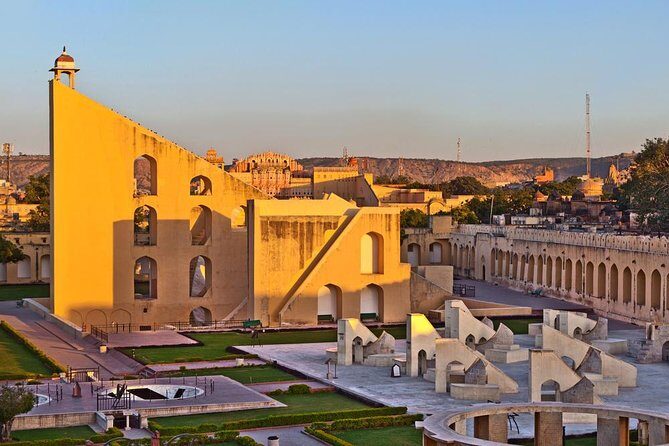
Jantar Mantar is early 18th-century architecture and part of a small set of similar sites across India, with Jaipur hosting the largest. It’s known for its vastness and massiveness, and it includes the biggest sundial.
This stop is ideal if you want Jaipur beyond fort and palace visuals. Jantar Mantar has an “aha” quality: you start seeing the city as a place where math, astronomy, and engineering were built into public spaces.
You’ll likely want a bit of time to walk around and understand what each structure is for. Admission is not included, so plan for the extra ticket price.
Hawa Mahal (Palace of Breeze): royal privacy turned into a landmark
Hawa Mahal is also called the Palace of Winds and was built for royal ladies to enjoy the streets without being noticed. That purpose makes it more interesting than it sounds at first—this isn’t only a pretty façade. It’s a design built around privacy, visibility, and daily life.
If you like iconic architecture, you’ll want to place Hawa Mahal in your route for that unmistakable look. It’s also a great stop if you’ll be doing shopping or wandering in nearby areas afterward.
Entrance is extra like the other monuments. Still, even if you’re not staying forever, it’s one of the most memorable Jaipur stops for first-time visitors.
Albert Hall Museum: an old museum in the center of Rajasthan’s story
Albert Hall Museum is described as the oldest museum and it functions as the state museum of Rajasthan. If you want a break from open-air walking and forts, this is a strong option.
Museums can be hit or miss when you’re short on time, but Albert Hall has a built-in advantage: it’s a major institution, and it connects to the broader story of Rajasthan. It’s also a calmer stop if you want something indoor while your day is still moving.
Admission tickets apply separately.
Birla Mandir Temple: modern devotional elegance
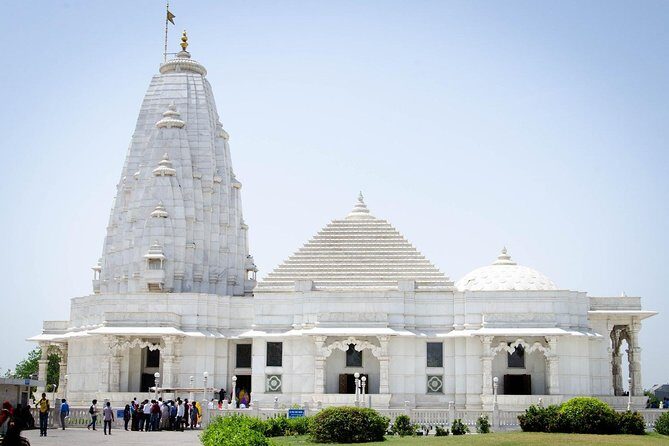
Birla Mandir Temple is also referred to as the Laxminarayan Temple and was built by the Birla Group, a major business tycoon company in India. That detail makes it a different kind of temple stop—more linked to modern patronage than ancient ruins.
If you’re building a route that mixes old and newer Jaipur, this balances the day well. It’s also a good option if you’re in the “I want one spiritual stop but not another hill climb” mindset.
As always on this tour’s list, entrance isn’t included.
Moti Dungari Temple: a stop for Ganesha devotees
Moti Dungari Temple is surrounded by a fort area, and it has a Lord Ganesha figure believed to be 500 years old. If you like pilgrimage-style sites and short, focused worship stops, this is worth considering.
It’s also a convenient add if you’re clustering temples in a part of the city so you don’t waste time driving. Since you only have about 3–4 sites in total, Moti Dungari fits best as a “small stop with meaning,” not as your only Jaipur experience.
Entrance fees still apply separately.
Govind Devji Temple: Krishna devotion with a big tourist pull
Govind Devji Temple is dedicated to Lord Krishna and later developed into one of the most visited spiritual places. This matters because it suggests the site isn’t just historically important—it’s still very active in devotion.
If you want your day to feel more like a real religious stop (not only a photo-op), this one is a strong candidate. It also works well for a mid-afternoon slot when you want to shift gears from forts and palaces.
Entrance is extra.
Galtaji Temple: seven holy water springs in the Aravalli hills
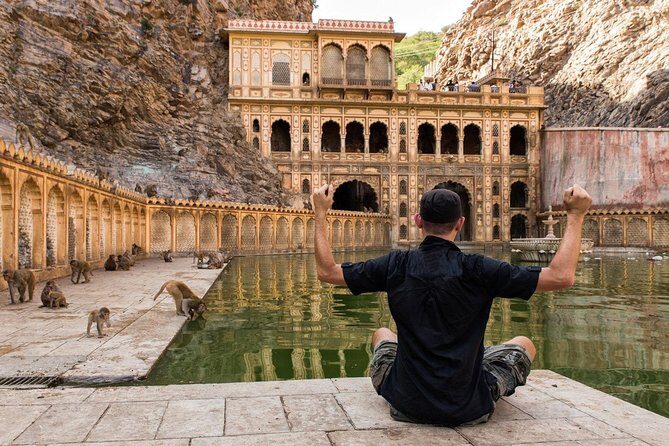
Galtaji Temple is described as a prehistoric Hindu pilgrimage made up of seven holy water springs. It’s in the Aravalli Hills, about 10 km east of Jaipur, and it’s built within a mountain pass.
This stop is the one that feels most like you’re stepping out of the city center. If you like temples, geology, or pilgrimage places, Galtaji can add a different dimension to your Jaipur day. It also offers a longer, more “walk-around” feel than some of the others.
Because it involves driving out to the hills, it’s best when you already have the right energy for one outdoor-focused stop. Entrance is not included.
Price and value: what $28.20 buys you, and what it doesn’t

At $28.20 per person, this tour is positioned as good value for a private, guided, AC-driven day. What you get included is the part that usually costs real money in India: pick-up and drop-off, a private live tour guide, an air-conditioned car with chauffeur, and also parking fees, tolls, fuel, and taxes.
On top of that, you get complimentary water bottles and umbrellas, plus a mobile ticket. Those small inclusions add up when you’re doing multiple sites in one day.
What’s not included is just as important: monument entrances and meals are extra. So if you’re picking 3–4 major admission stops, your total day cost will be higher than the base price. Still, you’re paying for the guide and the private logistics, not for the entry fees themselves. That’s often the difference between a cheap day and a comfortable, well-timed day.
How to get the most out of a 6-hour private tour
Here’s the smart way to plan so you don’t feel rushed: choose a theme, then pick the best match stops.
A palace-and-views theme might look like:
- Amber Palace
- Jaigarh Fort
- Hawa Mahal
- One optional switch depending on your interests (museum or Jantar Mantar)
A science and architecture theme could be:
- Jantar Mantar
- Hawa Mahal
- Albert Hall Museum
- Jal Mahal for the “Water Palace” effect
A spirituality and city feel theme:
- Jagat Shiromani Ji Temple
- Khole Ke Hanuman Ji Temple
- Moti Dungari Temple
- One Krishna devotion site like Govind Devji Temple or Birla Mandir
Because you can spend as long as you want at each place, don’t over-pack. If you love photos, keep buffer time. If you’d rather learn, let the guide slow you down. Either way, you’ll get more Jaipur for your time.
Should you book this Jaipur Private City Tour?
Book it if you want comfort, flexibility, and a route that’s shaped around your interests. The private AC car and live guide make a big difference when you’re short on time and want real context at each stop. The adjustable start time between 8 and 11 AM is also a practical win.
Skip it or rethink it if you know you only want one quick landmark and you’re comfortable arranging everything yourself. With entrances not included, you’ll still pay monument fees for any major stops you choose, so keep that budget in mind.
If you’re visiting Jaipur for the first time and want the highlights without turning your day into a stamp-collecting exercise, this is a strong fit.
FAQ
FAQ
How much does the Jaipur private city tour cost?
The tour price is $28.20 per person.
How long is the tour?
The duration is approximately 6 hours.
What time can I start the tour?
You can choose a starting time between 8:00 AM and 11:00 AM.
Where can the guide pick me up?
Pick-up can be arranged from your hotel or from the railway station.
Is the tour private or shared?
This is a private tour/activity, so only your group participates.
Are meals included in the price?
No, meals are not included.
Are monument entrance tickets included?
No, entrances to the monuments are not included.
Does the price include the air-conditioned car and guide?
Yes. The tour includes pick-up and drop-off, a private live tour guide, sightseeing in a private air-conditioned car with a chauffeur, and parking/tolls/fuel/taxes.
Is there free cancellation?
Yes. You can cancel up to 24 hours in advance for a full refund.