REVIEW · JAIPUR CITY SIGHTSEEING TOURS
Jaipur: Full Day Sightseeing Tour By Car & Local Tour Guide
Book on GetYourGuide →Operated by Jaipur Pinkcity Tours · Bookable on GetYourGuide
Jaipur is best seen from the right route. This full-day tour strings together the big sights of the Pink City with a private air-conditioned car and a local tour guide who explains what you’re seeing as you go. Two things I especially like: the guided time at major monuments like Amber Fort and City Palace, and the fact that the schedule leaves room for questions, photos, and a slower pace when needed.
One catch: entry tickets and meals aren’t included, so you’ll want to budget a bit extra for those on the day. Also, plan on some walking and stairs at forts and tombs, and this isn’t suitable for wheelchair users or pregnant women.
A final plus is the people. Guides such as Akram (and others you’ll likely be paired with) come across as patient and flexible—useful if your group includes elders or kids who don’t do well on strict timing.
In This Review
- Key points to know before you go
- Price and what you actually get for $8
- Getting from stop to stop without Jaipur stress
- Hawa Mahal: those famous windows, explained
- Panna Meena ka Kund and Amber Fort: water + power
- Jal Mahal over Man Sagar Lake: postcard views with context
- Lunch plus a shopping window that can be more useful than it sounds
- Royal Gaitor Tombs: calmer, slower, and more reflective
- City Palace: where royal power still shows up
- Jantar Mantar: Jaipur’s science corner in plain sight
- Who this tour suits best (and who should think twice)
- Should you book this Jaipur full-day sightseeing tour?
- FAQ
- How long is the Jaipur full-day sightseeing tour?
- What’s included in the price?
- What’s not included?
- Which major attractions are visited?
- Is this tour private or shared?
- What languages are available for the guide?
- What should I bring, and are there restrictions on bags?
Key points to know before you go
- A/C private car keeps the day comfortable in Jaipur heat and traffic.
- Skip-the-ticket-line support helps you spend more time looking and less time waiting.
- Amber Fort + Panna Meena ka Kund cover two different sides of Jaipur’s fort-and-water story.
- Jal Mahal and Hawa Mahal give you iconic views without needing to rent anything yourself.
- City Palace + Jantar Mantar show why Jaipur wasn’t just about kings—it was also about science.
Price and what you actually get for $8
At about $8 per person for an 8-hour private day, the value is the big headline. You get hotel pickup and drop-off, an air-conditioned sedan or SUV, parking, fuel, bottled water, and a professional authorized guide. That’s a lot of on-the-ground help for a price that’s hard to beat.
The only real money add-ons are practical ones: entry tickets and meals aren’t included. The upside is that you’ll still be guided smoothly between sites, and you also get skip-the-ticket-line support. Translation: you’re not stuck standing around while everyone else decides where to go next.
If you’re traveling solo, a couple, or with mixed ages, the private format matters. You can keep things moving without feeling like you’re trapped in a loud group rhythm.
You can also read our reviews of more guided tours in Jaipur


Getting from stop to stop without Jaipur stress
Jaipur’s sights aren’t all next door. What makes this tour work is the “transport + guide” combo: you travel together in a car while your guide does the heavy lifting on context. In hot weather, that difference is more than comfort—it’s time.
Expect a steady flow through the day, starting with pickup in Jaipur and then moving to major landmarks one after another. Many guides also use the car time well, talking about local life and explaining what to notice on the buildings as you pass. If you’re the type who likes to understand the why, that can turn quick viewpoints into real learning moments.
And yes, the driving experience is part of the value. In past tours with this provider, drivers like Shakir have been praised for being careful and attentive, and for being on time. One traveler even noted strong coordination the day before—so you’re not guessing where to meet.
Hawa Mahal: those famous windows, explained
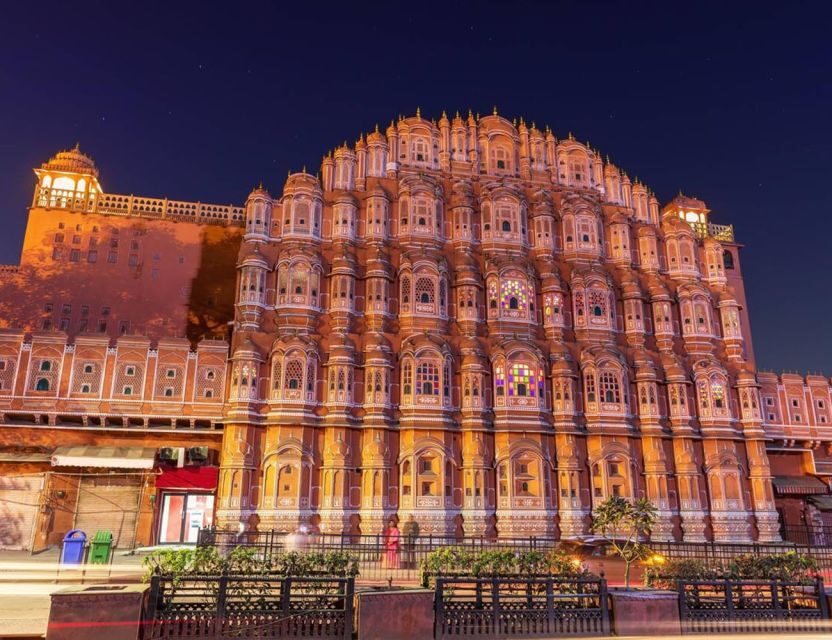
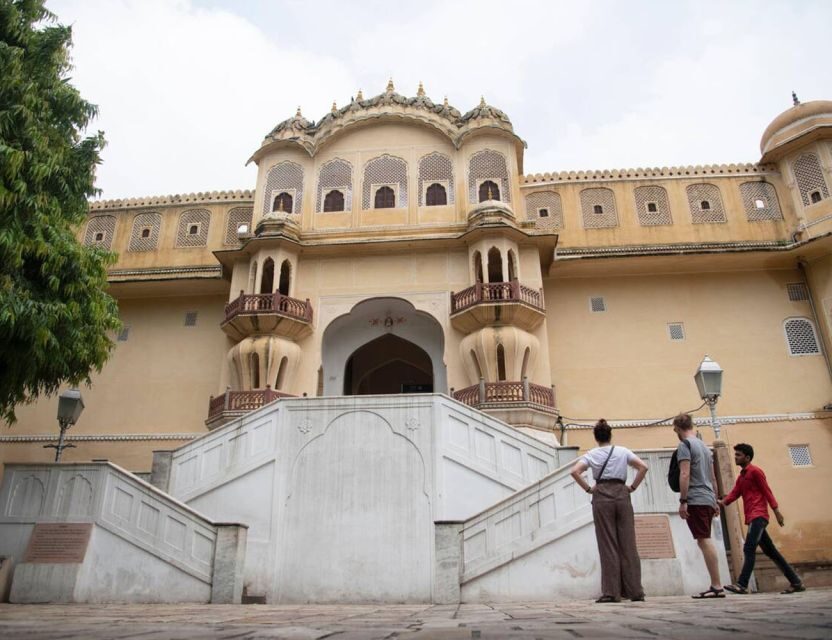
You start with Hawa Mahal, the Palace of Winds, built under Maharaja Sawai Pratap Singh. It’s five stories of honeycombed windows, designed so royal women could watch street life while staying discreet. Even if you don’t spend ages inside, the façade alone is the kind of architecture you can stare at for a long time.
You’ll get a guided stop here, with time to look closely and take photos. Practical tip: go in prepared for heat and sun. This is one of those places where the details are great, but your skin can’t pretend it’s in shade all day.
A good guide helps you connect the windows to the social purpose, not just the look. That turns a quick photo into something you actually remember.
Panna Meena ka Kund and Amber Fort: water + power
Next comes Panna Meena ka Kund, a 16th-century stepwell near Amber Fort. It’s famous for its symmetrical, tiered stairs—built as a water conservation solution long before modern infrastructure. If you’re used to dry sightseeing, this one changes the mood. You’re not just staring at kings’ walls; you’re looking at survival engineering.
The stepwell stop is short, but it’s worth slowing down. Stand where you can see the symmetry and imagine people using it as a daily system—cooler air, access to water, and a whole lot of planning. The guide can usually connect what you’re seeing to how stepwells worked across Rajasthan.
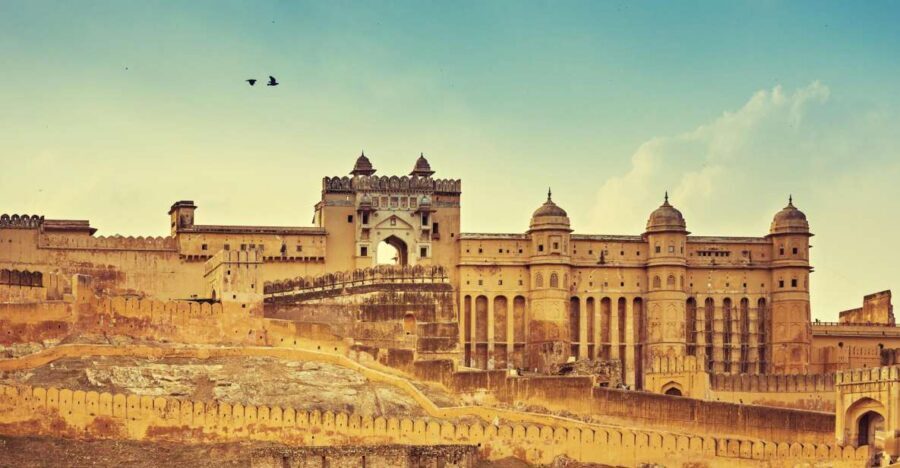
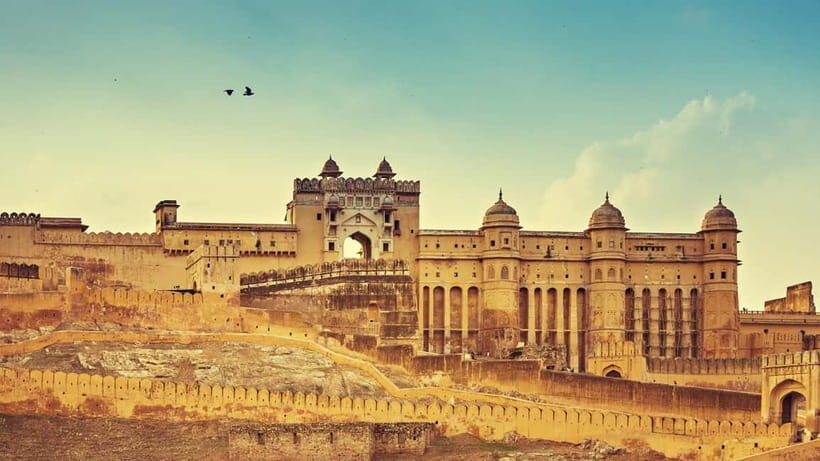
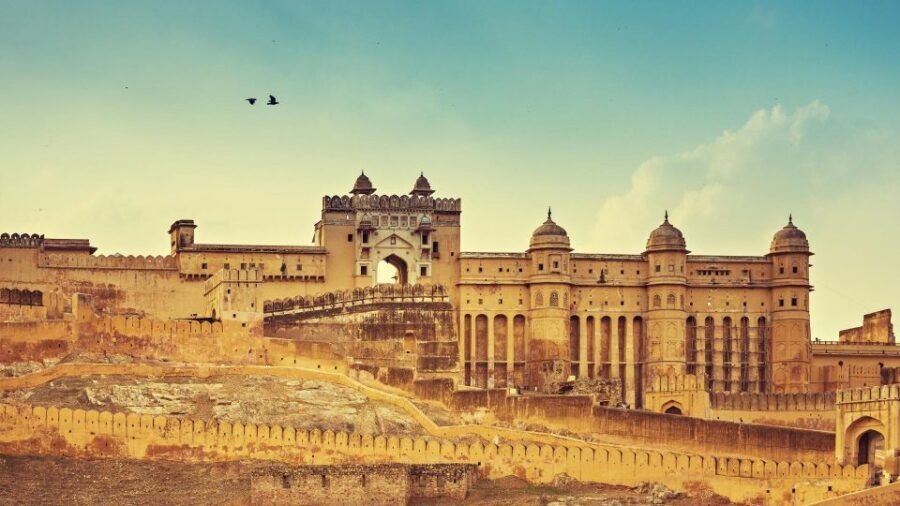
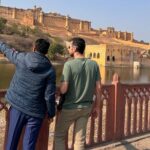
Then you move to Amber Fort, a big highlight. It sits on the Aravalli hills just outside Jaipur, and the architecture is a blend of Hindu and Mughal styles. Expect red sandstone and white marble, plus a fort layout that rewards wandering at your own pace. You’ll have guided time here (about 1.5 hours), which is ideal: long enough to feel the place, not so long that you burn out.
Potential drawback: forts can mean stairs and uneven steps. If you’re traveling with someone who tires easily, the private guide format helps—many guides are comfortable adjusting pace so the group doesn’t become a sprint.
Jal Mahal over Man Sagar Lake: postcard views with context
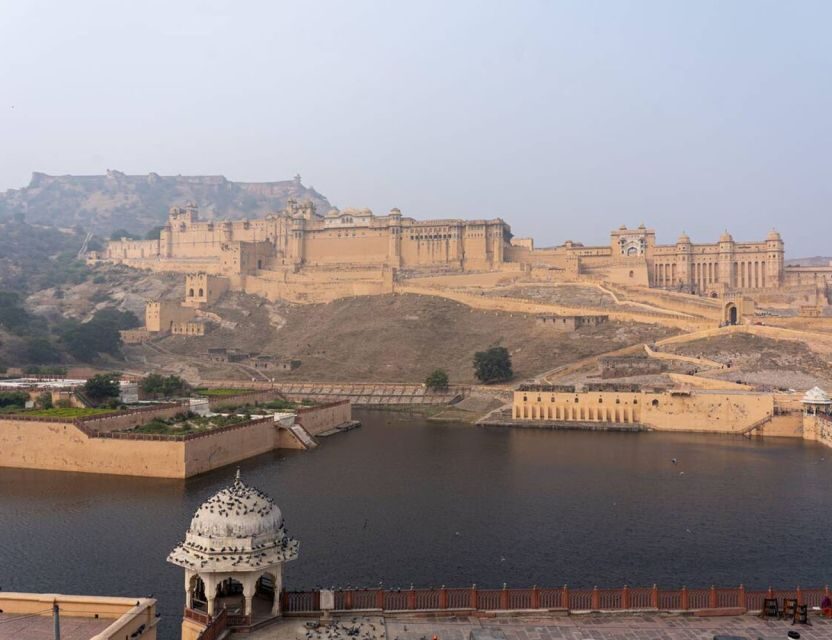
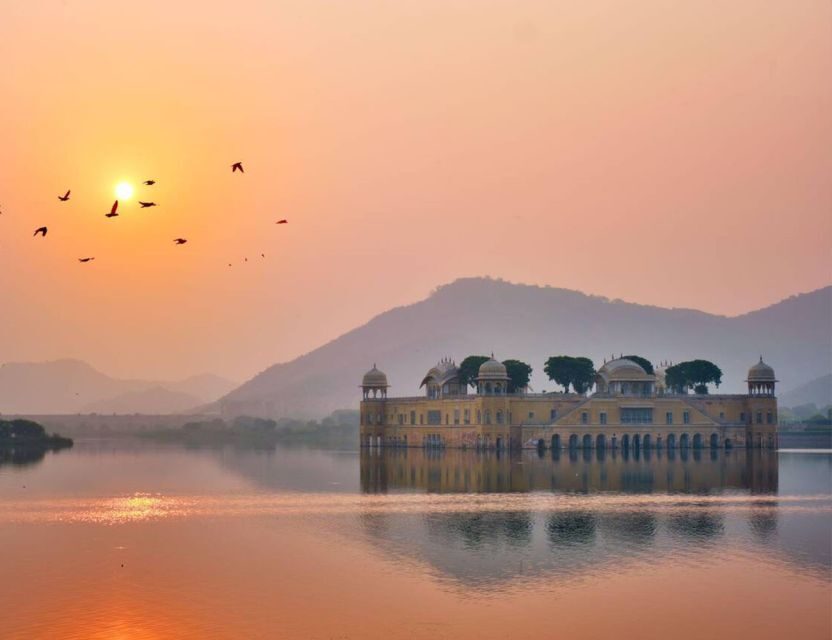
Jal Mahal, the Water Palace, is the “pause for a view” stop. The palace looks like it’s floating on Man Sagar Lake, and it was built in the 18th century with striking red sandstone. Even from a short stop, it’s a good reminder that Jaipur’s royal storytelling isn’t only about walls and gates—it’s also about how power shaped landscapes.
This is mostly about perspective and photos. You’ll get a guided visit and time to take it in, but don’t expect this to be an all-day deep exploration. Still, the setting is peaceful compared to the fort energy.
If you care about photo angles, ask your guide when to step out for the best sightline. A guide who knows the rhythm of the day can help you avoid the exact moments when crowds (or glare) are at their worst.
You can also read our reviews of more tours and experiences in Jaipur




Lunch plus a shopping window that can be more useful than it sounds
After the morning monuments, the schedule includes lunch (about an hour) and then shopping (also about an hour). Meals aren’t included, so you’ll be relying on the guide’s suggestions or your own preferences.
This is a good time to recharge water and sunscreen, especially if you started with forts earlier. Jaipur can feel sunny even when you think you’re already hydrated.
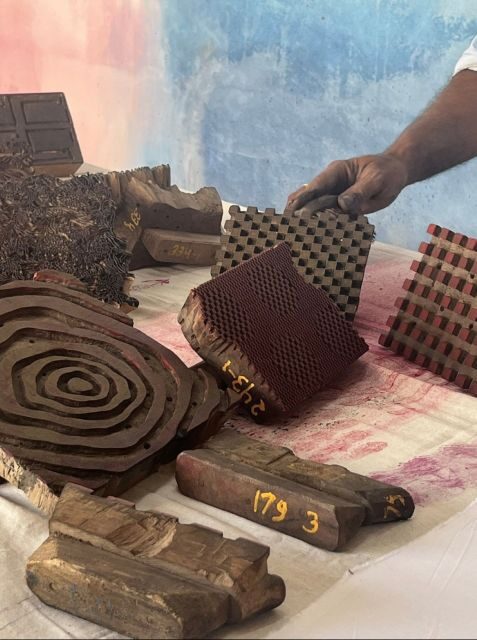
The shopping stop can be surprisingly useful if you approach it with a plan. Some guides have been known to take people to shops that are easier to navigate than tourist-heavy storefronts—places that focus on jewelry and textiles. One traveler even described a textile factory and cottage-industry style stop during the day. That kind of add-on usually fits within the shopping hour, so it’s worth asking your guide what’s realistic.
A simple strategy: pick one category you care about (scarves, textiles, jewelry, or small souvenirs), set a budget, and move on. One hour goes fast.
Royal Gaitor Tombs: calmer, slower, and more reflective
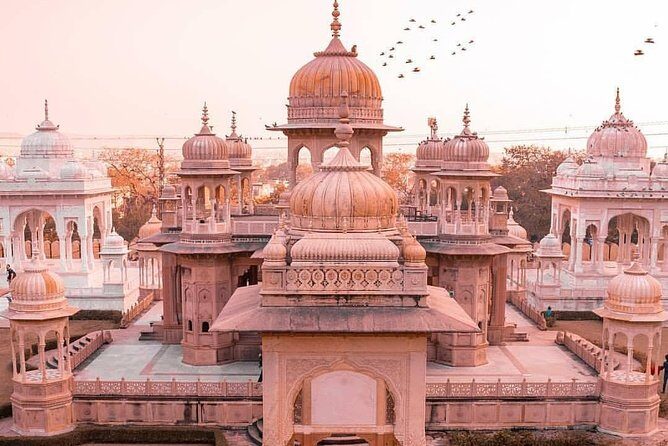
Then you shift to Gaitor Ki Chhatriyan (also referred to as the Royal Gaitor Tombs). These are 18th-century burial tombs for Jaipur’s royals, decorated with delicate carvings and domed pavilions. This stop is different from the more famous “front-of-house” monuments because it tends to feel quieter and more contemplative.
You’ll have guided time and a chance to walk and take photos. If you’re the kind of traveler who likes a breather before the final big sights, this is a good moment in the day to reset.
Like many historical sites in India, it’s also a place where a guide can help you notice details—what the carvings mean, how the domes and layout create a specific spiritual mood.
City Palace: where royal power still shows up
Next is City Palace, built under Maharaja Jai Singh II. It’s a complex of courtyards and museums, and it was also tied to the former royal family’s residence. The style is a mix of Rajasthani and Mughal architecture, so it feels layered rather than one-style.
This stop is guided (about 1.5 hours), which is a smart length. City Palace is the sort of place where it’s easy to wander without direction. With a guide, you get landmarks and meaning instead of just hallways.
If you like architecture, pay attention to how spaces transition—courtyard to corridor to display areas. That movement is part of the palace story.
Jantar Mantar: Jaipur’s science corner in plain sight
Finally, you end at Jantar Mantar, Jaipur’s astronomical observatory commissioned by Maharaja Sawai Jai Singh II. This UNESCO World Heritage site includes the world’s largest stone sundial and other instruments used to study celestial bodies. It’s a reminder that Jaipur wasn’t only royal spectacle; it was also math and measurement.
The time here is about an hour with guidance. That’s long enough to understand the main instruments and how they were used, without turning it into a lecture you forgot five minutes later. A good guide helps you connect what you see—shadow positions, angles, and scale—to how people tracked time and the sky before modern clocks.
Practical note: bring sunglasses. Light can be intense around open observatories.
Who this tour suits best (and who should think twice)
This is a strong choice if you want a full-day overview with an expert guide, and you prefer not to coordinate multiple cars, tuk-tuks, or ticket queues yourself. It’s especially good for first-time Jaipur visitors who want a logical route: Hawa Mahal to fort and water works, then palace and astronomy.
It may be less comfortable if you’re dealing with mobility limits, since it isn’t suitable for wheelchair users and involves walking at sites like Amber Fort and Gaitor. Also, if you travel with lots of luggage, note that large bags aren’t allowed. Bring what fits your day—passport/ID, sunscreen, sunglasses, and comfortable shoes.
Should you book this Jaipur full-day sightseeing tour?
If your goal is to see the key Jaipur landmarks in one day, this tour makes a lot of sense—especially because you’re paying for more than transport. You’re paying for guided context, careful routing, and an air-conditioned car that helps you stay functional through the heat.
I’d book it if:
- You want Amber Fort + City Palace + Jantar Mantar in the same day.
- You like learning as you go, not just collecting photos.
- You value a calm, private pace where the guide can adjust when someone needs extra time.
I’d think twice if:
- You want meals included (you’ll need to pay for lunch).
- You have mobility challenges or need wheelchair-friendly access (this tour isn’t set up for that).
- You plan to bring large luggage (it’s not allowed).
If you do book, one smart move is to ask your guide what you should prioritize among the stops—because the best days tend to be the ones where you get the sights you care about most, at a pace that still feels easy.
FAQ
How long is the Jaipur full-day sightseeing tour?
The tour duration is about 8 hours.
What’s included in the price?
It includes hotel pickup and drop-off, transportation in an air-conditioned sedan/SUV, a professional authorized guide, parking fees, fuel, and bottled water.
What’s not included?
Entry tickets and meals are not included.
Which major attractions are visited?
You’ll visit Hawa Mahal, Panna Meena ka Kund, Amber Fort, Jal Mahal, City Palace, Jantar Mantar, and the Royal Gaitor Tombs area.
Is this tour private or shared?
It’s a private group tour.
What languages are available for the guide?
Guides may be available in English, French, German, Hindi, Italian, Japanese, Portuguese, Russian, or Spanish.
What should I bring, and are there restrictions on bags?
Bring your passport or ID card, sunglasses, sunscreen, and sports shoes. Large bags or luggage aren’t allowed.