REVIEW · CITY PALACE TOURS
Jaipur City Palace, Hawa Mahal & Jantar Mantar Private Tour
Book on Viator →Operated by Keeper Landwey · Bookable on Viator
You can see Jaipur’s core in one tidy loop. I love the Jantar Mantar UNESCO observatory for its mind-bending science, and I also love Hawa Mahal for its lacework facade and dramatic city views. One thing to keep in mind: it’s a half-day format, so you’ll want to move with the group and skip extra wandering if you want more time for photos.
You get a true private setup with a live guide and round-trip comfort in an air-conditioned car, with pickup in the 8:00 AM to 12:00 PM window. That early start helps you pack in a lot without turning the day into a frantic checklist, and the tour includes bottled water and an umbrella—small extras that make a noticeable difference in Jaipur.
In This Review
- Key highlights I’d plan around
- Why this half-day private loop works in Jaipur
- Jantar Mantar: spotting the world’s biggest stone sundial
- Patrika Gate at Jawahar Circle: your quick photo stop
- Hawa Mahal: the Palace of Winds and its women’s-chamber design
- City Palace of Jaipur: power, prestige, and the court that moved
- Price and logistics: what you really get for $39
- Comfort details that make the day easier (and better photos)
- Who this tour suits best
- Should you book this Jaipur private tour?
- FAQ
- How long is the Jaipur City Palace, Hawa Mahal & Jantar Mantar private tour?
- What is the pickup window?
- What’s included in the tour price?
- Are monument entrance tickets included?
- Is this tour private or shared?
- What is the cancellation policy?
Key highlights I’d plan around
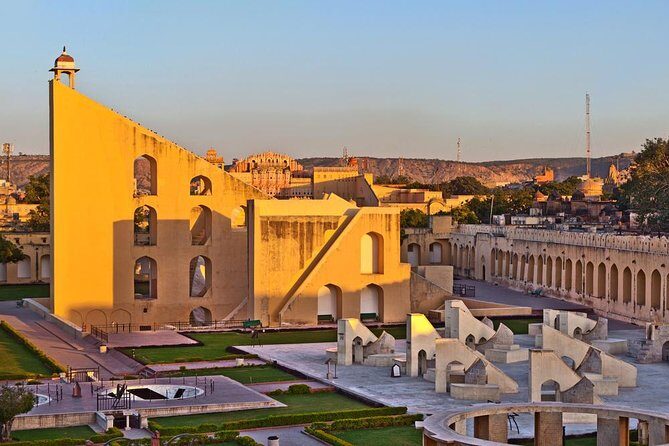
- Jantar Mantar’s 19 instruments and the world’s largest stone sundial, completed in 1734
- Patrika Gate at Jawahar Circle for a quick, photogenic break
- Hawa Mahal (1799) in red and pink sandstone, designed along the women’s chambers
- City Palace (since 1727), tied to the court shift from Amber to Jaipur
- Private guide + A/C car + pickup/drop-off anywhere in Jaipur for low-stress sightseeing
Why this half-day private loop works in Jaipur
Jaipur can be a lot if you’re trying to do it on your own. This kind of private half-day tour is built for getting your bearings fast, then focusing on the monuments that most people come for.
The big win is the flow. You start with Jantar Mantar (science and scale), then stop for a fun photo moment at Patrika Gate, then shift into architecture with Hawa Mahal and finish with the political heart of the city at City Palace. In about 5 hours, you get both the “wow” factor and the context for what you’re looking at.
The private format matters. You’re not waiting on strangers, and your guide can adjust the pacing—especially helpful if you care more about photos, details, or just getting the best viewpoints at each stop.
You can also read our reviews of more city tours in Jaipur

Jantar Mantar: spotting the world’s biggest stone sundial
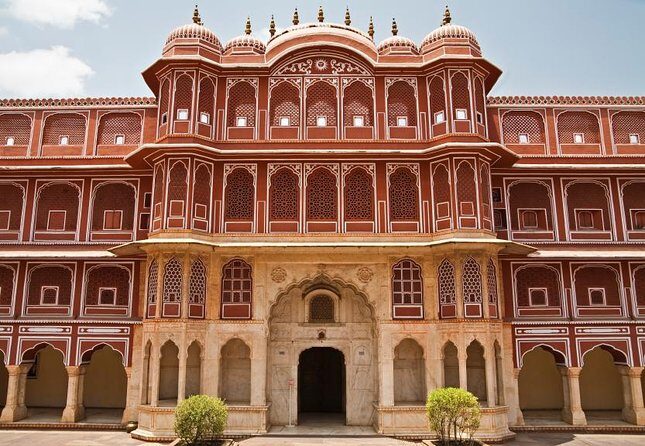
Your morning (or late-morning) begins at Jantar Mantar, the UNESCO-listed observatory made up of nineteen astronomical instruments. It was built under Rajput king Sawai Jai Singh II, with the complex completed in 1734.
Here’s what makes this place click: it isn’t just a monument. It’s a working-style concept—stone shapes designed to track time, angles, and the sky. One standout is the world’s largest stone sundial, which gives you a very physical way to understand how people once measured the movement of the sun.
You’ll spend about 30 minutes here, and that’s a realistic slot. It’s long enough for your guide to point out the main instruments, but short enough that you won’t feel stuck reading every inscription and losing the rest of your day. If you’re the type who wants extra time, ask your guide right at the start—because adding 15 more minutes can change the whole feel of Jantar Mantar.
Practical note: the monument sits near major sights, so it fits nicely into a compact plan. That’s exactly what you want in Jaipur when heat, traffic, and sun glare can all start stacking up.
Patrika Gate at Jawahar Circle: your quick photo stop
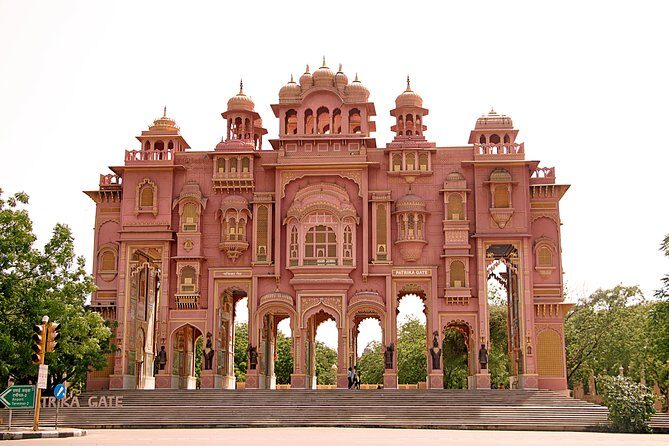
Next comes Patrika Gate, a set of showy, storybook gates at the entrance of Jawahar Circle. This is the sort of stop that’s short on planning effort but strong on payoff because it’s built for photos.
You’ll have about 30 minutes, which works well for two reasons. First, you’re not rushing through a crowded museum-style site. Second, you can take your time choosing angles—wide shots, close-ups, and anything that plays with the gate’s textures and layers.
The key thing I like about this stop is the pacing break. After Jantar Mantar’s stone instruments, Patrika Gate gives you a softer, more playful visual. It’s a good “reset” before you walk into the bigger architecture.
Tip: if you care about photos, tell your guide you want a couple of specific angles right away. You’ll get better results when you don’t wait until the last minute.
Hawa Mahal: the Palace of Winds and its women’s-chamber design
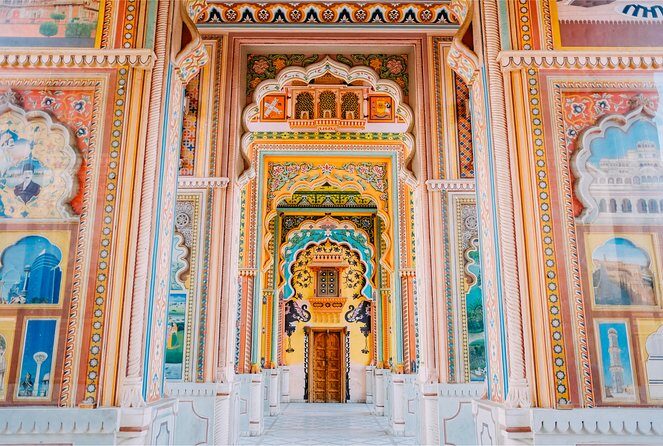
Then it’s on to Hawa Mahal, also known as the Palace of Winds. This is one of those Jaipur sights where the facade is the main event, and it does not disappoint.
Hawa Mahal is made of red and pink sandstone and was built in 1799 by Maharaja Sawai Pratap Singh. It sits along the edge of the City Palace and extends toward the zenana, the women’s chambers. That design detail is important because it explains why the building looks the way it does: lots of openings, lots of layered views, a facade that feels almost patterned.
You’ll spend about 1 hour here. That’s a solid amount of time for seeing the exterior clearly, understanding the layout conceptually, and taking photos without feeling like you’re sprinting from one platform to another.
What to watch for: the facade’s “honeycomb” look. Up close, you’ll start seeing how the repeated openings shape light and sightlines. Your guide can help connect this architecture to daily life in the palace complex, which makes the building more than a postcard.
Also, keep your expectations realistic. Hawa Mahal is more about what you see from the outside and from the designed viewpoints than about touring a single long corridor. If you go in knowing it’s a facade-first stop, you’ll enjoy it more.
City Palace of Jaipur: power, prestige, and the court that moved
You’ll finish at City Palace, and this is where the tour gives you meaning. Hawa Mahal is a dramatic presentation; City Palace explains the system behind it.
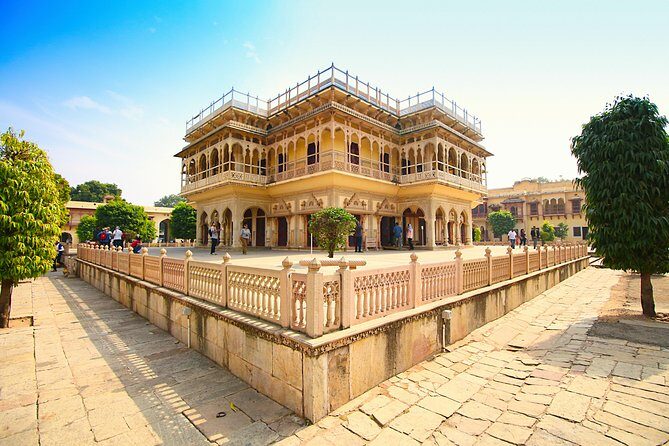
City Palace was established in the same era as the city of Jaipur, starting with Maharaja Sawai Jai Singh II. He moved his court to Jaipur from Amber in 1727, and City Palace served as the ceremonial and administrative seat of the Maharaja until 1949.
Plan for about 2 hours here. That time is about right for a guided walk through the main areas without pushing you through the entire palace experience like a race.
What I like about City Palace on a half-day plan is that it pulls everything together. Once you’ve seen the observatory and the palace facade, City Palace helps you understand the bigger story: Jaipur wasn’t just built for beauty. It was built to run a kingdom and display authority.
If you’re the type who likes details, ask your guide to point out the links between the palace complex and the city’s founding plan. Those connections make the architecture feel less random and more intentional.
You can also read our reviews of more private tours in Jaipur






Price and logistics: what you really get for $39
At $39 per person for a half-day private tour, this stands out for what it includes, not just what it costs. You’re not just buying admission to sights. You’re paying for:
- a private live guide
- a private air-conditioned car
- pickup and drop-off anywhere in Jaipur
- parking, fuel, tolls, and taxes
- bottled water and an umbrella
That means you save time and stress. You don’t have to coordinate transport between distant stops, and you don’t have to figure out where to stand for the best views.
One key consideration: entrance fees can be listed separately depending on the ticket option you choose. The tour information shows these adult rates:
- Hawa Mahal entrance fee: INR 200
- Jantar Mantar entrance fee: INR 200
- City Palace entrance fee: INR 700
Children under 7 are listed as free. So before you lock it in, check what your exact booking option includes for tickets. If the tour price already includes entry, great. If not, you’ll want to budget those monument fees so you’re not surprised at the gate.
Also, it helps that the tour uses a mobile ticket, which is usually a simple way to keep everything together.
Finally, the booking pace matters. This is commonly reserved about 18 days in advance on average. If your dates are tight, booking earlier gives you more options and less last-minute scrambling.
Comfort details that make the day easier (and better photos)
Small inclusions can turn a good tour into a smooth one. Here, you get:
- a uniform driver
- an air-conditioned car
- bottled water
- an umbrella
- guide-led timing so you’re not guessing at each stop
The private guide is the real quality driver. In situations like Jaipur, where names, dates, and architecture can blur together, a good guide helps you pick out what’s most important.
You’ll also get help with photos. One of the most consistent compliments about this kind of Jaipur experience is that the guide doesn’t just talk—he helps you capture the key shots at the right moment.
If you want that to happen for you, do one thing: tell your guide early that you want pictures at each major stop. It’s an easy request, and it helps the day stay intentional rather than accidental.
Who this tour suits best
This tour is a strong match if you:
- want the main Jaipur highlights in about 5 hours
- prefer a private format over shared groups
- like guided explanations that connect monuments to the city’s story
- need pickup and transport so you can spend your time looking, not routing
It’s also a practical choice if you’re not trying to “tour all day.” You’ll leave with a complete taste of Jaipur’s big landmarks—Jantar Mantar’s science, Hawa Mahal’s facade design, and City Palace’s historical center.
If you’re the type who dreams of slow museum time, long courtyard wandering, and lots of extra stops, this may feel a bit tight. But that’s not a failure of the tour. It’s a half-day format doing exactly what it’s meant to do.
Should you book this Jaipur private tour?
I’d book it if you want a structured, low-stress introduction to Jaipur’s biggest sights, with a guide who can explain what you’re seeing and keep the day moving.
Skip or reconsider if:
- you specifically want a slower pace with lots of unplanned detours
- you’re not interested in guided context (and plan to mostly take photos with no explanations)
One more thing to watch: confirm how the monument tickets are handled in your booking option, since the listed entrance fees can be separate. Once you’ve verified that, you’re set for a very efficient half-day.
FAQ
How long is the Jaipur City Palace, Hawa Mahal & Jantar Mantar private tour?
It runs for about 5 hours (approx.).
What is the pickup window?
Pickup is offered from Jaipur between 8:00 AM and 12:00 PM.
What’s included in the tour price?
Included features are pickup and drop-off to anywhere in Jaipur, a private live tour guide, a private air-conditioned car with a uniform driver, parking fees, fuel, tolls and taxes, plus complimentary water bottles and an umbrella.
Are monument entrance tickets included?
The details provided list entrance fees for Hawa Mahal, Jantar Mantar, and City Palace, so ticket inclusion can depend on the option you choose. Check your booking selection for whether tickets are included or paid separately.
Is this tour private or shared?
This is a private tour/activity, and only your group participates.
What is the cancellation policy?
You can cancel for a full refund up to 24 hours before the experience’s start time. If you cancel less than 24 hours before, the amount paid is not refunded.