REVIEW · BLOCK PRINTING WORKSHOPS
Hands-on Block Printing Workshop
Book on GetYourGuide →Operated by Creatis · Bookable on GetYourGuide
Block printing turns patience into wearable art. This hands-on workshop in Rajasthan teaches the basics of block printing in a way that feels practical, artistic, and calming, and you’ll leave with a Pico stitch scarf or sarong you designed.
I like that the class is built around real technique, not just watching. You learn the named design components—Gad, Rekh, and Datte—then put them to work through printing, layering, and color mixing. One possible drawback: block printing is fiddly by nature, so expect a bit of trial-and-error, even with support from the team.
In This Review
- Key things to know before you go
- Why this Rajasthan block printing class feels special
- Gad, Rekh, and Datte: the pattern parts you’ll learn
- What the hands-on printing part actually looks like
- Color mixing and layering: where your scarf starts to feel like yours
- Picking a design: Sanganeri inspiration and your finished wearable
- Meet the team and the workshop vibe at Creatis
- Price and value: is $24 a fair trade?
- What to bring (and what to expect from your comfort level)
- Who should book this workshop, and who might skip it
- Should you book? My quick decision guide
- FAQ
- How long is the block printing workshop?
- What is the price per person?
- What will I make during the class?
- Is the workshop limited to small groups?
- What languages are used by the instructor?
- Do I need to bring any materials or tools?
Key things to know before you go
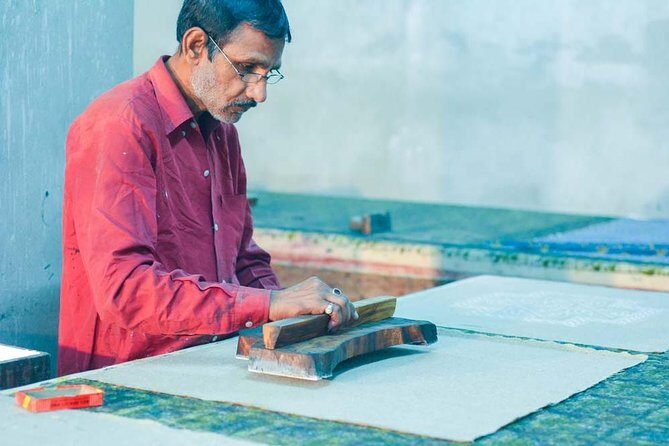
- Gad, Rekh, and Datte: you learn what ground, outlines, and fillers do in the pattern
- Water-based pigments + layering: you build a motive or an all-over look one step at a time
- Sanganeri-inspired designs: you choose from intricate patterns that translate beautifully to fabric
- A studio right by a small factory: you can watch pros work alongside your class
- Small group energy (up to 10): and you get help in English or Hindi, including from Mohit, Vivek, and Aftab
Why this Rajasthan block printing class feels special
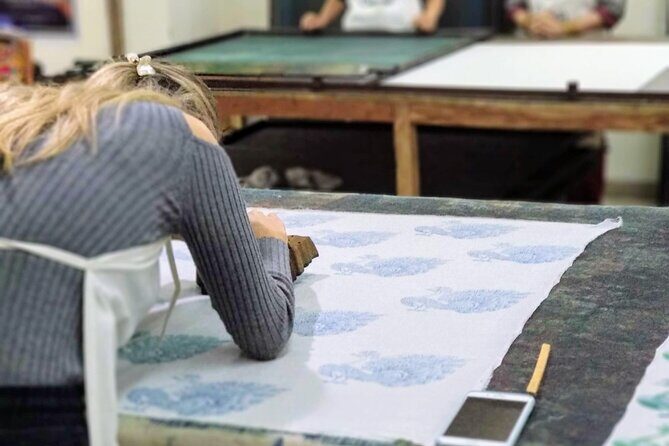
If you like crafts, you already know the problem: many classes stop at making something pretty. This one goes further. You learn how the method works—how a carved pattern becomes inked marks, then becomes a finished textile.
Rajasthan is a great place for this because block printing isn’t treated like a one-off hobby. It’s part of a long cultural workflow, where patterns, repetition, and color rules matter. Even in a short 2-hour workshop, you get a sense of that rhythm.
And you get a real object at the end. Not a postcard-sized sample, not a quick practice swatch that gets forgotten later. You’ll print onto a Pico stitch scarf or sarong, so the results actually fit into daily life—wear it, gift it, or use it as a conversation starter.
You can also read our reviews of more tours and experiences in Jaipur
Gad, Rekh, and Datte: the pattern parts you’ll learn
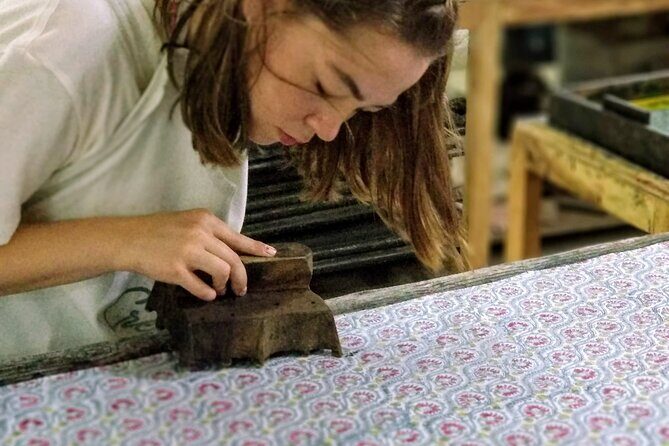
The biggest “aha” moment is learning the pattern logic behind block printing. Your class walks you through three basic block styles: Gad (Ground), Rekh (Outline), and Datte (Filler).
Here’s the plain meaning. Gad is the base field that sets the overall background feeling. Rekh is the line work that gives structure, like the skeleton of the design. Datte fills space and adds texture—little bursts of detail that make the whole thing look intentional, not random.
Knowing these roles matters because it helps you plan your colors and placement. Instead of copying a design blindly, you understand what each stamp layer is supposed to do. That makes your choices feel more confident, even if you’ve never printed before.
What the hands-on printing part actually looks like
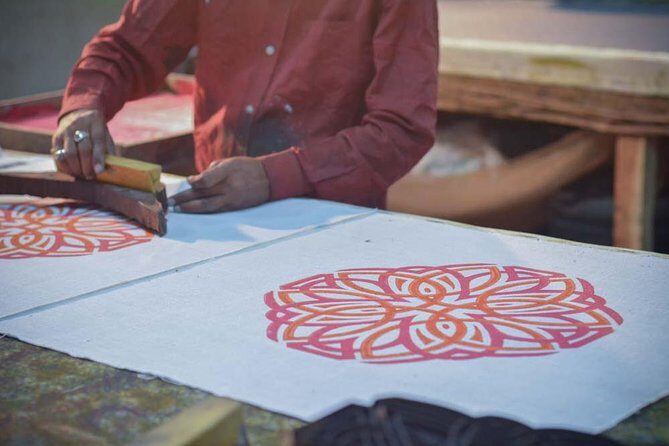
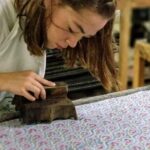
After the intro, you get into printing. The workshop is designed so you practice using wooden blocks, working with water-based pigments, and building color step by step.
You’ll work through two kinds of pattern approaches. One is a motive design, where a main motif anchors the composition and you repeat it. The other is an all-over design, where the fabric becomes one continuous pattern. Either way, the process is the same at its core: align, stamp, repeat, then layer.
You also learn how layering changes the final look. A printed outline can be the difference between a design that looks flat and one that looks crisp. A ground layer can make everything feel more balanced. And filler layers often look small on their own—but they’re the pieces that make the pattern feel complete when you step back and see the whole scarf.
One detail I really like: you aren’t rushed into complexity. The teaching is paced to let you try, learn, and keep going.
Color mixing and layering: where your scarf starts to feel like yours
This workshop doesn’t just hand you a design and say good luck. You get to experiment with color combinations and learn how to mix and match pigments so your pattern feels dynamic.
In block printing, color isn’t only about taste. Color is also structure. If you choose one scheme that’s too similar, the outlines may get lost. If you choose contrast carefully, each block role shows up clearly—ground feels like ground, outlines pop, and fillers add sparkle.
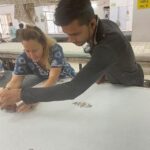
You also get guidance on layering your motive or all-over pattern. That’s important because misalignment or wrong layering order can blur the look. The good news is that support is part of the experience. In particular, Aftab is called out for being patient and for helping fix mistakes, so you’re not stuck if your first attempts don’t look perfect.
This part is also where the workshop shifts from “craft lesson” to something more like a focus session. Multiple people describe the repetitive stamping as satisfying. I’d treat it as your chance to slow down for a couple hours and let your hands learn the rhythm.
Picking a design: Sanganeri inspiration and your finished wearable
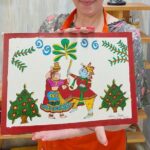
Your finished piece is the payoff, so design choice matters. You’ll choose from intricate designs inspired by Sanganeri prints, then work through your colors and layering on fabric.
Sanganeri-style patterns have a particular look: intricate, often with repeating motifs that feel dense without looking chaotic. That translates well to scarves and sarongs, because a wearer can see the pattern from different angles and distances.
Once you select your design, you move toward the actual output. You’ll apply your motive and/or your all-over pattern to create your one-of-a-kind textile, and you take home the Pico stitch scarf or sarong that’s included in the price.
Also, there’s mention of accessing designs from a signature fabric collection (listed as available with Elevate). You don’t need to care about the label—just know that the workshop’s design library is not limited to one basic template set.




Meet the team and the workshop vibe at Creatis
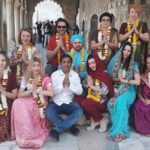
The workshop is run by Creatis, and the teaching style is friendly and practical. The best sign is that the guidance doesn’t just exist on paper. People specifically note clear support during the printing activity and help when mistakes happen.
You’ll work in a small group of up to 10 participants, which is a big deal for hands-on crafts. Larger groups can turn into a waiting game. Here, you get coaching while you’re working, so your design doesn’t stall while you wait your turn.
Language support is also clear. The instructor team offers instruction in English and Hindi, so you won’t feel stranded if your Hindi is still on the way.
One extra bonus: the studio setting can include a view into nearby work. One participant describes being right next to a small factory to watch pros at work. Even if you’re only catching glimpses, that context helps you appreciate what goes into the final quality of block printed textiles.
Price and value: is $24 a fair trade?
At $24 per person for 2 hours, this is priced like a real workshop, not a tourist “see and do” stop.
Here’s what you’re actually getting for the money:
- instruction with hands-on printing practice
- all necessary materials, including wooden blocks, pigments, and fabric
- a finished included product: the Pico stitch scarf or sarong
In places where you only watch a demonstration, you pay for spectacle. Here, you pay for participation and a take-home result. Even if you never become a block printing expert, you’re leaving with something you can wear, not just something you can photograph.
If you’re watching your travel budget, this is also a smart choice because it replaces a longer shopping impulse. Instead of buying a scarf you don’t feel connected to, you create your own design.
What to bring (and what to expect from your comfort level)
This is a hands-on class, so dress for real work. You’ll want comfortable clothing that can handle pigments and time at a printing station.
You don’t need special art tools. The workshop provides the materials. What you do need is patience for small adjustments. Block printing is an activity where attention to alignment and layering matters, and your first few prints might not look like the final goal.
The good side is that support is there. If you mess up, you can often correct it with help, and the team is described as encouraging and supportive. Aftab is specifically noted for helping fix mistakes, which is exactly the sort of safety net you want in a beginner-friendly craft session.
Who should book this workshop, and who might skip it
This workshop is great for you if you want:
- a creative activity that doesn’t feel like busywork
- a short class that produces a usable wearable item
- a calmer, repetitive craft with room for personal choices
It’s also a solid match for solo travelers. One review highlights that it works especially well for people traveling alone, likely because the group stays small and the activity makes it easy to talk while you work.
You might consider skipping if you only want to browse or watch. This one is built for doing, stamping, mixing, and layering. If you’re hoping for a mostly passive experience, it may feel too hands-on.
And if you’re in a rush for an hour-by-hour schedule, keep in mind it’s a full two-hour focus session. You’ll want your time to be uninterrupted enough to actually enjoy the process.
Should you book? My quick decision guide
Book this workshop if you want a meaningful souvenir and a technique you can explain. The blend of learning (Gad, Rekh, Datte), doing (stamping and layering), and leaving with something wearable makes the $24 feel like good value rather than just a ticket to an activity.
Don’t book it only if you hate anything messy, repetitive, or detail-oriented. Block printing rewards steady hands and a willingness to adjust as you go. If that sounds like you, you’re in the right place.
If you’re pairing Rajasthan travel with other art stops, treat this as the hands-on one. The nearby factory glimpses and the named instructors like Mohit, Vivek, and Aftab add extra confidence that you’re learning from people who care about the craft.
FAQ
How long is the block printing workshop?
The workshop lasts 2 hours.
What is the price per person?
The price is $24 per person.
What will I make during the class?
You’ll make a Pico stitch scarf or sarong using your chosen design and printed layers.
Is the workshop limited to small groups?
Yes. It is a small group with a limit of 10 participants.
What languages are used by the instructor?
Instruction is offered in English and Hindi.
Do I need to bring any materials or tools?
No. All necessary materials are provided, including wooden blocks, pigments, and fabric. You should bring comfortable clothing suitable for hands-on work.