REVIEW · GOLDEN TRIANGLE TOURS
Golden Triangle Tours
Book on Viator →Operated by Raj India Tours · Bookable on Viator
One drive through Delhi can change how you see India. This Golden Triangle style trip strings together the big-ticket landmarks in a smart order, with time built in for the monuments that matter most. I like that you get private touring for your group, not a chaotic shuffle, and you also have the operator Raj KUMAR GUPTA (yes, name as written) adjusting to your needs and pace.
Two things I really like: the trip includes pickup so you aren’t hunting down meeting points all day, and the itinerary mixes iconic sights with lighter breaks like the Lotus Temple and Jal Mahal. One thing to think about first: some major entries are marked admission ticket not included, so you’ll want to budget for tickets on top of the tour price.
In This Review
- Golden Triangle Tours: the “big sights” plan that stays flexible
- Quick highlights you can plan around
- Day 1 in New Delhi: settle in before the monument sprint
- Delhi on Day 2: Qutub Minar to Jama Masjid in one focused loop
- Agra Day 3: Taj Mahal and the fort-and-garden trio
- Fatehpur Sikri and Chand Baori on Day 4: a break from the main cities
- Jaipur Day 5: Amber Fort, City Palace, and the science of Jantar Mantar
- Getting around: private touring, pickup, and time that doesn’t get wasted
- Price and value: what $343 covers, and what you should plan for
- Who this Golden Triangle tour fits best
- Should you book this Golden Triangle tour with Raj India Tours?
- FAQ
- How long is the Golden Triangle tour?
- Where does the tour take place?
- Is pickup offered?
- Does the tour use a mobile ticket?
- Is this a private tour?
- Is there a minimum number of people required to book?
- Are admission tickets included?
- Is an English-speaking guide included?
- Is the tour suitable for travelers with heart problems?
- Can I cancel and get a full refund?
Golden Triangle Tours: the “big sights” plan that stays flexible
This is a private, group-only experience built around Delhi, Agra, and Jaipur, with a side trip day to Fatehpur Sikri and the stepwell at Chand Baori. It’s not a slow vacation. It’s more like a well-run route where you spend your time where it counts, and you don’t lose hours figuring out logistics.
I also like that the operation is staffed and responsive. In the past, English-speaking guidance names that show up include Nikhileshh, and drivers such as Sunda, Jitendra, Arvind, and Himmat. That matters because Golden Triangle days can get intense, and having people who can communicate clearly helps you actually enjoy what you’re seeing.
Still, keep expectations realistic. This kind of route means a lot of moving, and the offer also notes it is not recommended for travelers with heart problems—so if you’re sensitive to walking or heat, take that seriously.
Quick highlights you can plan around
- Private group touring means less waiting and fewer people slowing you down.
- Pickup included helps you start each day without stress.
- Mix of Mughal-era landmarks and Rajput-era Jaipur sights keeps days from feeling repetitive.
- English-speaking guide on key Delhi segments makes the “why it matters” part easier.
- Multiple free-entry stops (like Lotus Temple and Jal Mahal) can help control add-on costs.
You can also read our reviews of more tours and experiences in Jaipur.



Day 1 in New Delhi: settle in before the monument sprint
Your first day is basically a landing day in New Delhi, with about 12 hours listed and a hotel stay. There’s no frantic sightseeing block here, which I think is the right move. You’ll want sleep, water, and a fresh start because Delhi days can stack up fast once the tours begin.
Practically, this structure gives you a chance to recover from travel time and get your bearings. If you’re arriving in India from far away, that first quiet day is a gift. You’re not wasting the first hours standing in lines while jet-lag does its thing.
The only drawback is psychological: it’s easier to feel like you’re not doing much on day one, even though the rest of the trip depends on you being ready. Treat day one like your reset button.
Delhi on Day 2: Qutub Minar to Jama Masjid in one focused loop
Day 2 is a classic Delhi route with several landmark stops grouped tightly. You start with Qutub Minar, and the listing notes you’ll meet the English speaking guide who takes you to the tour. That’s helpful. When you can ask questions and understand context, you stop seeing buildings as just photos and start noticing how they connect.
From there, you move through Mughal-era and major city sites:
- Humayun’s Tomb: described as the final resting place of Mughal Emperor Humayun and noted as the first garden tomb in the Indian subcontinent. Even if you only spend a short time, garden layouts are easier to appreciate when you know what you’re looking at.
- Red Fort (Lal Qila): described as a historic fort that served as the main residence of the Mughal Emperor. It’s a strong visual anchor for the day.
- Lotus Temple: listed with admission ticket free and described as a Bahá’í House of Worship, dedicated in December 1986, with a flowerlike shape. This is a good contrast stop when you need a breather from fort-and-tomb heaviness.
- Jama Masjid: also listed as admission ticket free. The listing includes details about it being one of the largest mosques in Delhi, built by Shah Jahan between 1650 and 1656, and inaugurated by the first Imam Syed Abdul Ghafoor Shah Bukhari.
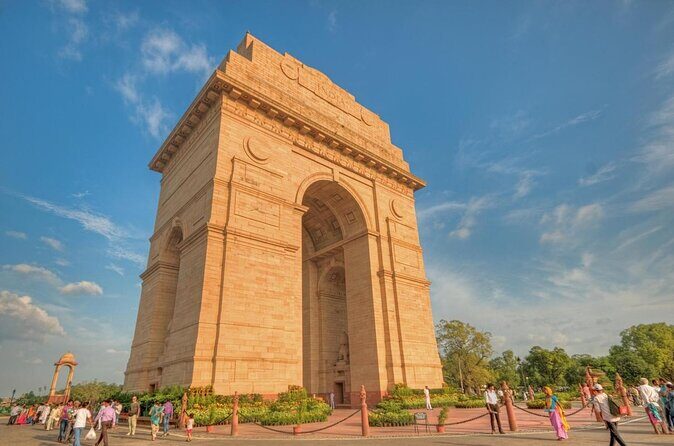
You also pass India Gate along Rajpath (the listing calls it the All India War Memorial). It’s a good pause-and-look moment because you get a sense of Delhi’s major ceremonial axis without adding a lot of time.
Time-wise, the listed durations are short on purpose (often around 30 to 45 minutes). That can feel rushed if you’re the type who needs long photo breaks. But it can also be efficient if you’re willing to move with the group and focus on what you want most.
Cost-wise, notice the pattern: some entries are listed as not included, while Lotus Temple and Jama Masjid are marked free. That mix is common on this kind of itinerary, and it’s one reason you should plan for extra ticket spending even if part of the day feels “included.”
Agra Day 3: Taj Mahal and the fort-and-garden trio
Day 3 is the Agra day, built around three named stops:
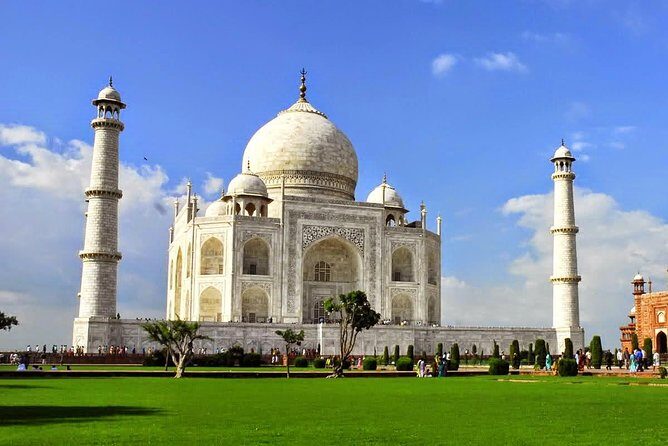
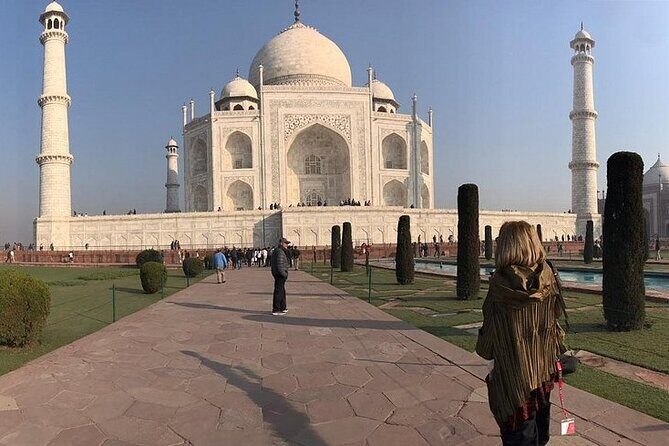
- Taj Mahal (about 2 hours)
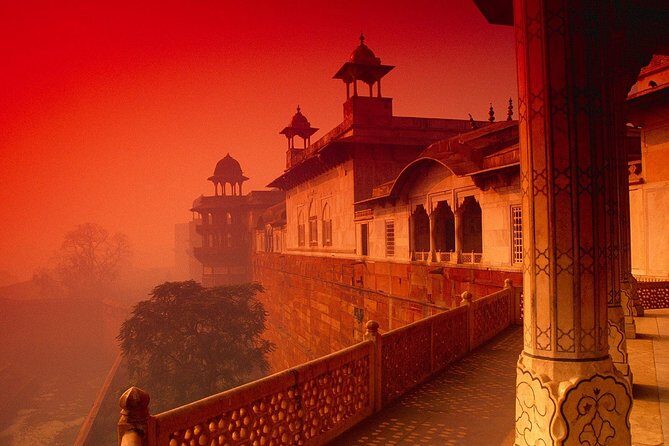
- Agra Fort (about 1 hour)
- Mehtab Bagh (about 30 minutes)
The listing frames this day as a guided pickup from the hotel and city tour by your guide, with admission tickets not included. I like the structure here. Having a longer block at Taj Mahal usually helps because it’s the emotional centerpiece for many people, and you’ll want more than just a quick walkthrough.
Agra Fort and Mehtab Bagh are shorter, which can actually be a good thing. If you’ve already had a lot of visual impact from Delhi, a shorter second and third stop keeps you from overloading your senses. You also get an easy rhythm: one major anchor, then two supporting acts.
A practical consideration: admission tickets aren’t included for these stops. So even though the guide and pickup are built in, you should expect spending at the gates. If you hate surprises, decide ahead of time what you’re willing to pay for entry fees and bring a little extra buffer.
Also, Taj Mahal-style landmarks often come with crowds. Even without claiming crowd levels, you should expect the possibility of lines and slow moving. The fix is simple: keep your expectations flexible, and use the time to watch details, not just chase the perfect photo.
Fatehpur Sikri and Chand Baori on Day 4: a break from the main cities
Day 4 changes the rhythm. You leave the Delhi–Agra–Jaipur straight line and head to Fatehpur Sikri, then to Rajasthan’s stepwell wonder at Chand Baori.
Fatehpur Sikri is described as a small city west of Agra, founded by a 16th-century Mughal emperor, with red sandstone buildings clustered at its center. The listing also calls out Buland Darwaza as the entrance to Jama Masjid mosque. Admission ticket is marked free in the listing, which is a nice win when you want big sights without paying for everything.
Then you go to Chand Baori, a stepwell in the village of Abhaneri in Rajasthan. The listing highlights that it extends about 30 meters into the ground and is one of the deepest and largest stepwells in India. Admission is marked not included, so tickets may add cost.
What I like about this day is the variety. You’re not just ticking off the headline names in Delhi, Agra, and Jaipur. You’re seeing a different type of site: a whole settlement complex in Fatehpur Sikri, then a geometry-and-shadows structure at Chand Baori. It’s the kind of contrast that prevents the trip from feeling like a copy-paste list.
Potential drawback: this is still a full day of travel and sightseeing. Stepwells can mean stairs and uneven footing. If you have mobility issues, be honest with yourself and take it slow on the descent.






Jaipur Day 5: Amber Fort, City Palace, and the science of Jantar Mantar
By Day 5, you’re in the heart of Rajasthan sightseeing. The listing’s Jaipur sequence is packed, but it includes small resets that help you keep energy up.
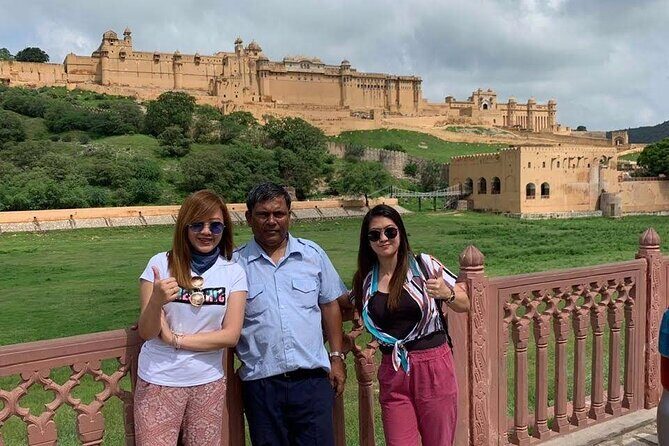
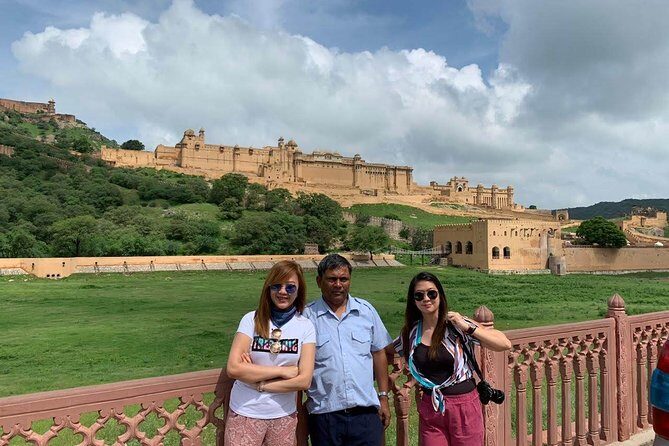
Start with Amber Fort (Amer Fort) for about 1 hour 30 minutes. The listing notes Amer is about 11 km from Jaipur, and that the fort is located there. Entry is not included in the listing.
Next is Jal Mahal, the palace in the middle of Man Sagar Lake. It’s marked with admission ticket free and a short stop time (about 10 minutes). Even a brief visit can be satisfying because it’s a visual pause in the middle of a fort-and-palace day.
Then you move to City Palace of Jaipur (about 1 hour 30 minutes). The listing explains it was established when Maharaja Sawai Jai Singh II moved his court to Jaipur from Amber in 1727. Admission is not included.
After that, you hit Jantar Mantar (Jaipur) for about 30 minutes. The listing says it’s a collection of 19 astronomical instruments built by Sawai Jai Singh II and completed in 1734. It also mentions the world’s largest stone sundial. Admission is not included.
The listing also includes Hawa Mahal, described as built from red and pink sandstone and extending to the Zenana, or women’s chambers, with a placement near the City Palace. The listing doesn’t give a separate time block for it, so you’ll likely see it as part of the day’s walkaround flow.
This day’s biggest advantage is balance: forts, palaces, and a science-meets-stone section. If you’re the type who likes facts and explanations, having a guide can help you understand why these structures were made, not just what they look like.
The drawback is time pressure. The blocks are meaningful, but they’re not long. If you want to shop or linger for lunch without guilt, you’ll need to be proactive and communicate your pace early.
Getting around: private touring, pickup, and time that doesn’t get wasted
This is labeled a private tour/activity, meaning only your group participates. That matters more than people think on the Golden Triangle route. When you’re not sharing the day with strangers, you can keep a smoother pace, ask questions when you actually have them, and adjust if someone in your group needs a break.
Pickup is offered, and the listing also says you’ll receive a confirmation at booking and use a mobile ticket. In real-world terms, that reduces the chance of last-minute confusion.
The operator’s communication style also shows up in the way the trip is described: Raj KUMAR GUPTA mentions being a driver and working in Northern India and Rajasthan tourism for more than 20 years. Past trips tied to the same operation include drivers and guides who are consistently described as punctual and safe in car movement—names like Sunda, Jitendra, Arvind, and Himmat show up along with an English-speaking guide such as Nikhileshh.
One consideration: the listing says it is near public transportation, but since it’s private, you’re mostly relying on the hired vehicle. In Delhi and other traffic-heavy cities, “close to transit” is less helpful than having a driver who handles routes smoothly.
Price and value: what $343 covers, and what you should plan for
The listed price is $343 for about 6 days. For a private Delhi–Agra–Jaipur route with several stops and pickup, that’s positioned as reasonable value—especially because you’re not paying for the kind of ticket-heavy extras at every site. Still, you should treat it as a base cost and plan for entry fees at stops marked not included.
Here’s the pattern I’d budget around:
- Some stops are admission ticket free, including Lotus Temple, Jama Masjid, Fatehpur Sikri, and Jal Mahal (as listed).
- Other major sites are listed with admission ticket not included, including Qutub Minar, Humayun’s Tomb, Red Fort, Taj Mahal, Agra Fort, Mehtab Bagh, Chand Baori, Amber Fort, City Palace, and Jantar Mantar.
So the value question isn’t just the sticker price. It’s how many of those paid-entry sites you end up using. If you’re strict about only sites you can see without paying extra, your experience becomes more limited than the itinerary list suggests.
Also check whether your version of the trip includes hotel costs. The listing itself mentions hotel stay on Day 1, but other details aren’t spelled out here. Some prior bookings linked to the same operation mention comfortable higher-end stays. If you want a specific hotel tier, confirm what’s included before you go.
Who this Golden Triangle tour fits best
This tour suits you if:
- You want a private, efficient route through Delhi, Agra, and Jaipur.
- You like having a guide and schedule but still want room for communication (the operator emphasizes adapting to interests, budget, and time).
- You’re okay with a mix of short stops and longer anchor moments like Taj Mahal.
It may not be the best fit if:
- You need a low-walking, slow pace. The itinerary includes multiple major monument visits and likely requires navigating stairways and uneven surfaces at places like stepwells.
- You have heart-related concerns. The listing says it’s not recommended for travelers with heart problems.
Should you book this Golden Triangle tour with Raj India Tours?
If you want the best of Delhi, Agra, and Jaipur without the headache of organizing drivers, guides, and tight routing, I’d say this is a strong option. The private format, pickup support, and mix of landmark stops (plus free-entry wins like Lotus Temple and Jal Mahal) make it feel built for people who want to see a lot and stay sane.
Here’s how to make the booking decision confidently:
- Ask what your ticket-admission budget should be based on the sites marked not included.
- Tell the operator your must-see priorities (if Taj Mahal is your one big goal, say so).
- Be upfront about mobility and comfort needs, especially given the note about heart problems.
FAQ
How long is the Golden Triangle tour?
The duration is listed as approximately 6 days.
Where does the tour take place?
It is in the Golden Triangle route covering New Delhi, Agra, and Jaipur, India.
Is pickup offered?
Yes. Pickup is offered, and on some days the guide picks you up from the hotel.
Does the tour use a mobile ticket?
Yes. Mobile ticket is listed.
Is this a private tour?
Yes. It is a private tour/activity, and only your group participates.
Is there a minimum number of people required to book?
Yes. At least 2 people are required to book.
Are admission tickets included?
It varies by stop. Some stops are listed as admission ticket free (like Lotus Temple, Jama Masjid, Fatehpur Sikri, and Jal Mahal), while others are listed as admission ticket not included (like Qutub Minar, Humayun’s Tomb, Taj Mahal, and others).
Is an English-speaking guide included?
The itinerary notes that on Day 2 you meet the English speaking guide for the Qutub Minar tour.
Is the tour suitable for travelers with heart problems?
No. It is not recommended for travelers with heart problem.
Can I cancel and get a full refund?
You can cancel up to 3 days in advance for a full refund, and the cutoff is based on the experience’s local time.