REVIEW · JAIPUR CITY SIGHTSEEING TOURS
Full-Day Jaipur Sightseeing Tour by Car and Guide
Book on Viator →Operated by Alia Private Tours · Bookable on Viator
Jaipur in one day, by car and guide. This full-day route is a smart way to see the Pink City’s biggest icons without wrestling with timing, parking, or multiple rides. You’ll move from Hawa Mahal’s sandstone facade to City Palace and on to the science-stuffed Jantar Mantar site.
What I really like is the hotel pickup and drop-off, plus a private mid-size sedan or SUV with an experienced driver for an easy flow. Add in bottled water and tea or coffee during the day, and you’ll arrive at each stop feeling human, not fried.
One thing to plan for: the tour price covers transport, but several monuments charge separate entrance fees (like City Palace, Hawa Mahal, Jantar Mantar, and Albert Hall), so your total will be higher than the headline rate.
In This Review
- Key things that make this Jaipur tour work well
- How the 8-hour Jaipur car route stays efficient
- Hawa Mahal: that famous honeycomb facade with a real purpose
- City Palace courtyards: where royal life was actually arranged
- Jantar Mantar: the astronomy site you can’t fake with photos
- Royal Gaitor Tumbas: royal architecture away from the main crowd
- Jal Mahal at Man Sagar Lake: quick, free, and photogenic
- Amer Fort (Jaipur Fort): the grand climb and the royal scale
- Panna Meena ka Kund: 1,800 steps of geometry and shade
- Albert Hall Museum: a calm ending to the monument run
- Price and what you’re really paying for (your best value math)
- What to expect on the ground (timing, walking, and comfort)
- Who this tour suits best
- Should you book this Jaipur full-day car and guide tour?
- FAQ
- How long is the Jaipur sightseeing tour?
- Is hotel pickup and drop-off included?
- Is the tour private?
- What’s included in the price?
- Are entrance fees included?
- Are meals included?
- What monuments are visited during the day?
- What happens if there’s poor weather or not enough travelers?
- Is free cancellation available?
Key things that make this Jaipur tour work well
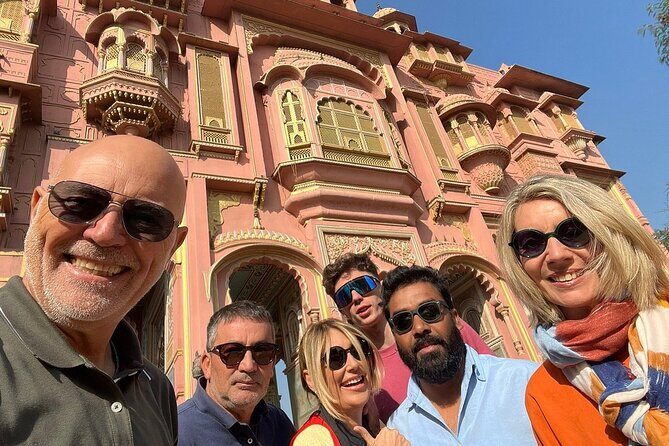
- Private car (up to 2 people per booking) keeps the day calmer and more flexible than shared shuttles.
- City highlights in a sensible order means you’re not zig-zagging across town all day.
- Entrance fees are mostly separate, so you should budget for key sites.
- Hawa Mahal + City Palace give you both the famous exterior look and the old royal complex in depth.
- Jantar Mantar and the stepwell add contrast: astronomy instruments in one place, geometry and stairs in another.
- Bottled water and tea/coffee included for long stretches outdoors.
How the 8-hour Jaipur car route stays efficient
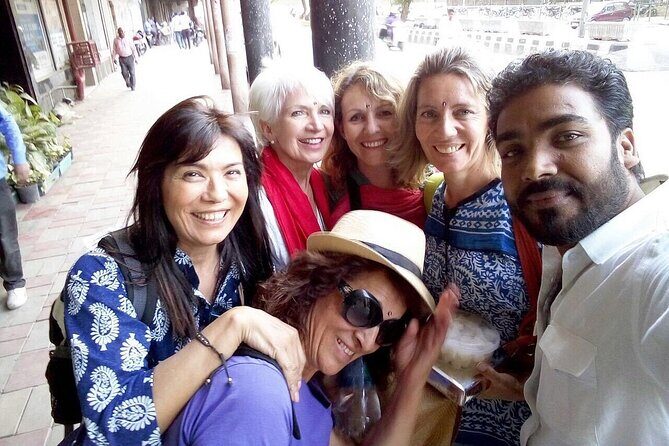
This is a private full-day sightseeing experience in Jaipur with an approximately 8-hour schedule. You get hotel pickup and drop-off, and you’ll travel by air-conditioned mid-size sedan or SUV, which matters in Jaipur where heat can turn small delays into big misery.
The stop order is built for “high impact first,” with major monuments like Hawa Mahal, City Palace, and Jantar Mantar early in the day. Then the itinerary spreads out with Royal Gaitor Tumbas, Jal Mahal, Amer Fort, Panna Meena ka Kund, and finally Albert Hall Museum.
The biggest value for me here is simple: you’re not stuck coordinating rides between far-flung sights. You’re also not trying to solve navigation while your time is running. If you choose a professional tour guide, you’ll also have someone to help you understand what you’re seeing and where to spend your attention.
You can also read our reviews of more guided tours in Jaipur


Hawa Mahal: that famous honeycomb facade with a real purpose

Your first big stop is Hawa Mahal (Palace of Wind), a classic Jaipur postcard—built from red and pink sandstone and designed along the edge of the City Palace. The structure stretches toward the Zenana, or women’s chambers, which is a key detail that makes the building feel more than just decorative.
Plan about 45 minutes here. The exterior is the headline: those rows of small openings are what give the facade its look and its airflow concept. Even if you’re not going deep into architectural history, the building’s size and how it hugs the palace complex are impressive.
Entrance fee note: Hawa Mahal entrance is not included (listed as ₹250 per person). If you want photos without rushing, this is one of the stops where arriving ready matters.
City Palace courtyards: where royal life was actually arranged
Next is the City Palace of Jaipur, right in the center of the Old City. This is one of those places where the “palace” word can mislead. You’re not just looking at a single building—you’re moving through a complex of courtyards, gardens, and palace structures.
You’ll get about 2 hours, which is a decent amount of time to see multiple sections without feeling like a speed-run. The outer wall is credited to Jai Singh II, while the palace inside was enlarged and adapted over time, so there’s a layered feel to what you see.
Entrance fee note: City Palace entrance is not included (listed as ₹700 per person). If you’re budgeting, this and Hawa Mahal are usually the two early costs that add up fastest.
Jantar Mantar: the astronomy site you can’t fake with photos
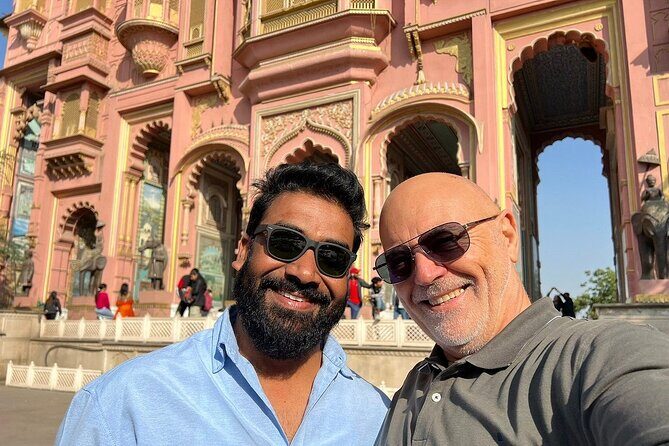
Then you’ll hit Jantar Mantar – Jaipur, a collection of nineteen architectural astronomical instruments built by the Rajput king Sawai Jai Singh II. The monument was completed in 1734, which gives you instant context: this wasn’t a modern “science park” concept. It’s old-school observation turned into stone-and-shape.
Plan around 45 minutes. What makes this stop worth your time is the way the instruments are laid out and how you can connect them to the idea of measuring the sky with fixed structures. Even if you don’t have a technical background, it helps to have a guide explain what each instrument is for—or at least tell you what to look for first.
Entrance fee note: Jantar Mantar entrance is not included (listed as ₹200 per person).
Royal Gaitor Tumbas: royal architecture away from the main crowd

After the big names, the itinerary includes Royal Gaitor Tumbas (often referred to as Gaitore Ki Chhatriyan in Hindi). This is one of those stops that feels quieter and more architectural than “checklist tourism.”
You’ll spend about 45 minutes. The key detail is that Royal Gaitore is known for spectacular architectural brilliance, and it’s described as one of Jaipur’s lesser-explored attractions. If you’re the kind of traveler who likes monuments that aren’t instantly swarmed, this is a nice balance to the more famous sites.
Entrance fee note: Royal Gaitor entrance is not included (listed as ₹50 per person).
You can also read our reviews of more tours and experiences in Jaipur





Jal Mahal at Man Sagar Lake: quick, free, and photogenic
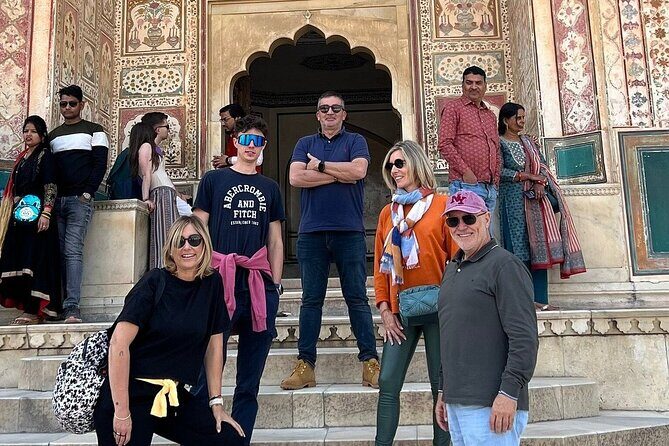
Next is Jal Mahal, the palace in the middle of the Man Sagar Lake. You’ll only have about 15 minutes here, so don’t plan to “linger and explore.” Instead, treat it as a visual palate cleanser—classic Jaipur looks with a strong water-and-stone contrast.
This palace and surrounding lake area were renovated and enlarged in the 18th century by Maharaja Jai Singh II, which helps explain why it looks like it belongs to the broader royal story of Jaipur.
The good news: Jal Mahal entrance is listed as free in the tour details, so this is a low-cost moment in your day.
Amer Fort (Jaipur Fort): the grand climb and the royal scale
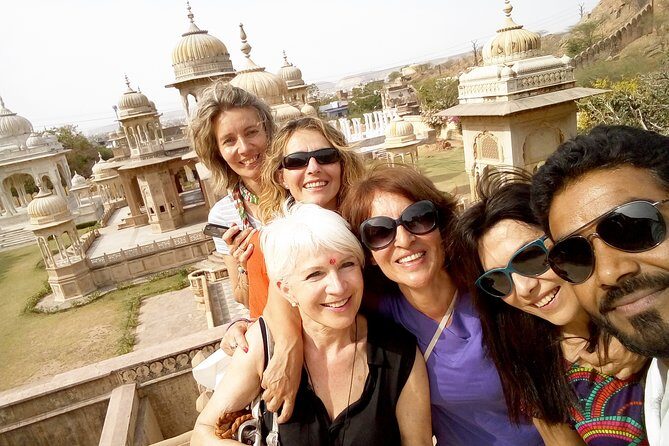
One of Jaipur’s top experiences is Amer (Amer Palace Fort), a huge fort sitting atop a small hill. It’s about 11 km from the main city, which is exactly why a car tour earns its keep—this is not something you’d want to piece together on public transport if you’re trying to maximize your day.
You’ll have about 2 hours. The Amer Fort complex is described as extensive, and the scale really shows once you’re inside the grounds. This is where Jaipur turns from “pretty buildings” into “royal infrastructure”—space for power, defense, ceremonies, and daily operation.
Entrance fee note: the tour fee list includes Jaipur Fort entrance ₹500 per person. The itinerary lists Amer as the fort stop, so you may see this charge associated with your fort visit.
Tip: Amer is a fort on a hill. Wear comfortable shoes and expect walking.
Panna Meena ka Kund: 1,800 steps of geometry and shade
Then you’ll visit Panna Meena ka Kund, an eight-story stepwell that’s described as about 200 feet deep with 1,800 symmetrical steps. That “symmetrical” detail is important: this isn’t just a random staircase into the ground. The design is meant to feel ordered and planned.
You’ll have around 30 minutes. This is ideal for photos and for soaking in how the space changes from the street level to the deeper structure. It’s also a good stop for anyone who wants a break from palaces and forts and prefers something more unusual.
Entrance fee note: Panna Meena ka Kund entrance is listed as free in the tour details.
Albert Hall Museum: a calm ending to the monument run
To wrap the day, you’ll visit Albert Hall Museum for about 1 hour. If your legs are tired, this is a helpful pivot: you shift from outdoor monument viewing to an indoor museum format.
The museum is described as a must-visit for Rajasthan culture, with artifacts, sculptures, paintings, and more. You won’t feel rushed here if you keep your expectations realistic: one hour is enough to see the museum’s core highlights, not to read every label.
Entrance fee note: Albert Hall entrance is not included (listed as ₹250 per person).
Price and what you’re really paying for (your best value math)
The listed price is $27.23 per group (up to 2) for the full day. That can look like a bargain if you only consider the itinerary on paper.
Here’s the value logic: you’re paying for air-conditioned private transport, hotel pickup and drop-off, fuel/parking/taxes handled, plus bottled water and tea or coffee during the day. That’s a lot of “logistics cost” you don’t have to manage yourself.
Where costs can creep up is entrances. Based on the tour’s stated fees, you could add:
- City Palace: ₹700 per person
- Hawa Mahal: ₹250 per person
- Jantar Mantar: ₹200 per person
- Royal Gaitor: ₹50 per person
- Albert Hall Museum: ₹250 per person
- Jaipur Fort (linked to the fort visit): ₹500 per person
Jal Mahal and Panna Meena ka Kund are listed as free.
So, your final spend depends on what you book for entrances and how many people are in your group. But the big picture is this: even with entrance fees, the transport + time efficiency can still be good value—especially if you’d otherwise need multiple taxis or spend energy on finding your way.
Also: if you select a professional tour guide, that adds interpretive value. You’ll likely get more out of places like Jantar Mantar when someone explains what you’re looking at.
What to expect on the ground (timing, walking, and comfort)
This is a full-day itinerary with multiple monument stops. Most stops are between 15 and 2 hours, so you’ll be alternating between cars and outdoor or semi-outdoor sites.
Some stops involve physical movement:
- Panna Meena ka Kund includes a set of stairs (1,800 steps are part of the site concept).
- Amer Fort sits on a hill, and forts generally involve uneven walking and pathways.
You’ll be provided bottled water and tea/coffee, which helps on long sightseeing days. The car being air-conditioned is a real plus when you need recovery time between stops.
Who this tour suits best
This tour is ideal if you:
- Want a private day with pickup and drop-off instead of building your own route.
- Have limited time in Jaipur and want the major icons plus a couple of more distinctive stops.
- Like having a guide option for interpretation, especially at places like Jantar Mantar and City Palace.
It may not be ideal if you:
- Want a mostly walkable, slow-paced day with lots of unplanned wandering. This itinerary is structured and packed.
- Are trying to avoid entrance fees at paid sites. A number of key attractions are explicitly listed as not included.
Should you book this Jaipur full-day car and guide tour?
If you’re looking for a practical, efficient way to see Jaipur’s headline monuments in one day, I think this is a strong choice—especially for couples or small groups. You get private transport, comfortable transfer timing, and built-in breaks like water/tea during the day.
My recommendation hinges on your budgeting for entrances. If you’re okay planning for separate fees at City Palace, Hawa Mahal, Jantar Mantar, Albert Hall, and the fort, you’ll get a day that covers the main story of Jaipur without feeling chaotic.
One more note: the provider’s driver-tour manager name Ayub Khan shows up in the feedback as being patient and helpful, including at unusual times like late-night airport pickup. That kind of reliability matters on sightseeing days, because smooth logistics make the monuments more enjoyable.
FAQ
How long is the Jaipur sightseeing tour?
It’s listed as approximately 8 hours.
Is hotel pickup and drop-off included?
Yes. Hotel pickup and drop-off are included.
Is the tour private?
Yes. It’s described as a private tour/activity, with only your group participating.
What’s included in the price?
Transport by air-conditioned mid-size sedan or SUV, hotel pickup and drop-off, fuel surcharge, parking fees, taxes, bottled water and tea or coffee, and a professional tour guide if selected.
Are entrance fees included?
No. Entrance fees are not included for sites like City Palace, Hawa Mahal, Jantar Mantar, Albert Hall Museum, and the fort. Some stops are listed as free, like Jal Mahal and Panna Meena ka Kund.
Are meals included?
No. Meals are not included.
What monuments are visited during the day?
The stops listed are Hawa Mahal, City Palace of Jaipur, Jantar Mantar, Royal Gaitor Tumbas, Jal Mahal, Amer Fort, Panna Meena ka Kund, and Albert Hall Museum.
What happens if there’s poor weather or not enough travelers?
The experience requires good weather. If it’s canceled due to poor weather, you’ll be offered a different date or a full refund. It also requires a minimum number of travelers; if that minimum isn’t met, you’ll be offered a different date/experience or a full refund.
Is free cancellation available?
Yes. Free cancellation is available up to 24 hours in advance for a full refund.