REVIEW · 7-DAY EXPERIENCES
7-Day Golden Triangle Jodhpur Udaipur Tour from Delhi
Book on GetYourGuide →Operated by Taj Voyages Tour - TVT India · Bookable on GetYourGuide
Delhi to Udaipur in one trip means nonstop wow. I like the private air-conditioned car for comfort and the sunrise Taj Mahal timing for better photos and fewer crowds. The one thing to weigh is the shopping stops—if you hate being steered toward sales, you’ll want to set your expectations early.
This is the classic Golden Triangle (Delhi–Agra–Jaipur) plus Jodhpur and Udaipur, so you get Mughal icons and then swap to forts and lakes. With daily breakfast and guides in each city, you’re not stuck translating your way through Rajasthan. It’s a private group, so the pace can feel busy, but it’s designed for maximum sightseeing.
One more practical note: the route starts with a lively Old Delhi day, then ramps into early mornings and long drives. If you’re picky about quiet time, plan to take a breather between major monuments.
In This Review
- Key things to know before you go
- Why this Golden Triangle plus Jodhpur and Udaipur route feels complete
- Day 1 in Delhi: Old Delhi morning, Jama Masjid, and a Chandni Chowk rickshaw ride
- Day 2 in Agra: sunrise Taj Mahal plus Agra Fort after breakfast
- Road to Jaipur with Fatehpur Sikri: a Mughal stop that breaks up the drive
- Jaipur sightseeing day: Amer Fort, Jantar Mantar, City Palace, and key photo spots
- Jodhpur: Mehrangarh Fort and the marble stops that make the Blue City feel real
- To Udaipur via Ranakpur Jain Temple: switching gears from forts to lakes
- Udaipur local sightseeing: City Palace, Lake Pichola, Jagdish Temple, and Saheliyon ki bari
- Price and logistics: what the tour rate covers, and the real cost math
- Guides, car comfort, and the shopping stops you should plan for
- Practical tips: shoes, pace, and how to avoid feeling rushed
- Who should book this tour (and who should skip it)
- Should you book this 7-day Golden Triangle Jodhpur Udaipur tour?
- FAQ
- What cities are included in this 7-day tour?
- How do I get picked up on day 1?
- Is transportation included between cities?
- Are hotel nights included?
- Is breakfast included?
- Are monument fees included?
- Are lunch and dinner included?
- Will I have a tour guide?
- Does the Taj Mahal visit include sunrise timing?
- What should I bring and what should I avoid?
Key things to know before you go
- Sunrise Taj Mahal with a guided start (and ticket-line help), which makes the whole Agra day feel more relaxed.
- Private local guides by city, with English-language support and examples like Jaswant in Jodhpur, plus guides named Sikhat, Abdul, Mukesh, and Bhu.
- Fort-heavy Rajasthan days, including Amber/Fort area views and Jodhpur’s Mehrangarh sites like Moti Mahal and Phool Mahal.
- Udaipur’s lake circuit on the last full sightseeing day, including Lake Pichola, Saheliyon ki bari, and the City Palace area.
- Monument fees and meals aren’t included, so budget for tickets and lunch/dinner on top of the tour rate.
- Shopping stops can feel pushy for some people, because spice/textile/jewelry visits are built into the flow.
Why this Golden Triangle plus Jodhpur and Udaipur route feels complete
This tour keeps the headline sights you came for—Delhi’s major landmarks, the Taj Mahal, and Jaipur’s royal icons. Then it adds two Rajasthan favorites that many “just Golden Triangle” trips skip: Jodhpur for its fort views and blue-city mood, and Udaipur for lakes, palaces, and slower scenery.
The best part is how the scenery changes without you having to plan it yourself. You move from the chaos of Old Delhi to early-morning marble in Agra, then trade that for hill forts in Jaipur and Jodhpur, and finish with Udaipur’s water-and-palace vibe.
If you want photos, this route is tuned for them: sunrise timing for the Taj, and multiple fort and palace stops across Rajasthan. If you want lots of free time to wander alone for hours, you’ll probably feel the schedule is tight—but it’s still a smart way to see a lot without feeling lost.
You can also read our reviews of more tours and experiences in Jaipur

Day 1 in Delhi: Old Delhi morning, Jama Masjid, and a Chandni Chowk rickshaw ride
Delhi day one is about sensory overload—in a good way. You start with pickup from your hotel/airport/train station area, then head into Old Delhi for Jama Masjid. It’s a strong first landmark because it sets the tone: this is a city of movement, noise, and texture.
After that comes a rickshaw ride through Chandni Chowk. It’s short, but it’s the fastest way to get your bearings and feel the local rhythm—vendors, street life, and the tight lanes that make Delhi feel like Delhi.
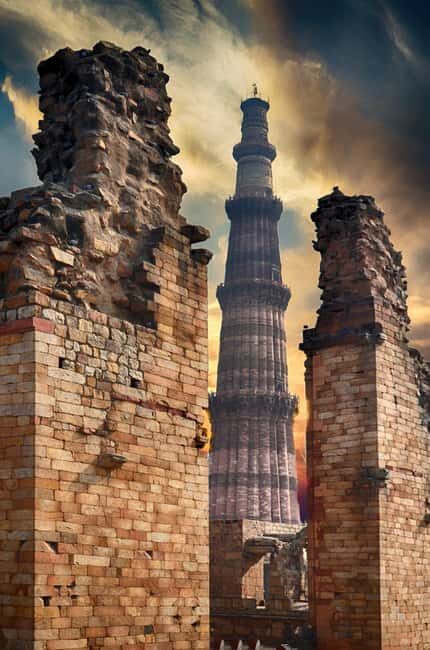
Then you transition into New Delhi for some classic picture stops: you pass the Red Fort, head toward Qutub Minar, and pause for views around Rajghat, plus the big-government stretch including the President’s House, Parliament House, India Gate, and Government Secretariat buildings. You’ll be out and about, but the car stops mean you’re not constantly rushing on foot.
Day 2 in Agra: sunrise Taj Mahal plus Agra Fort after breakfast
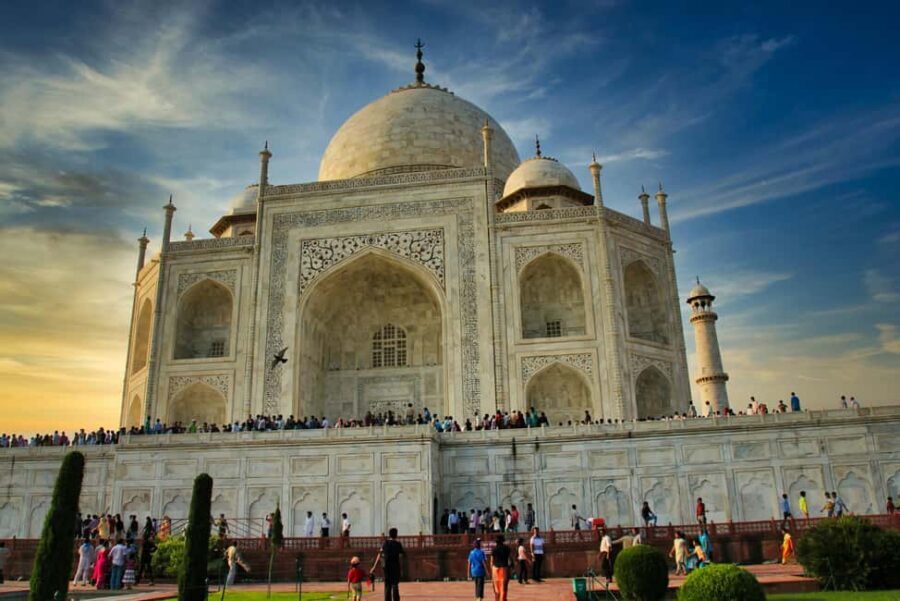
Agra runs on early energy. A guide picks you up around 5:45 AM for a sunrise Taj Mahal visit. This timing matters: the light is softer, the crowds tend to be less intense than later in the day, and your photos look more “marble-real” than yellow streetlight-real.
The Taj visit is guided, and you also get skip-the-ticket-line help, which saves time when you want that early start to actually feel early.
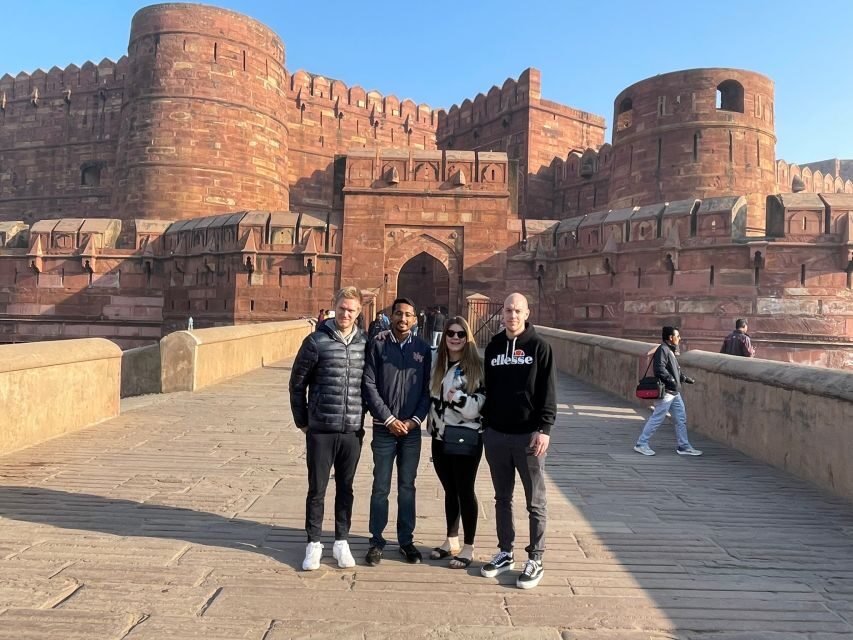
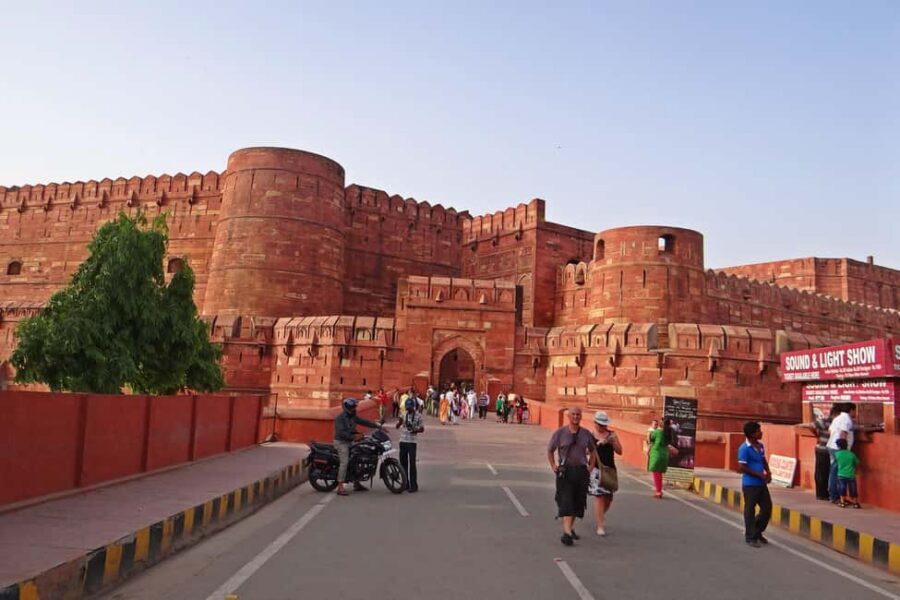
After sunrise viewing, you return for breakfast and then check out Agra Fort, a UNESCO World Heritage Site. This part gives you the other side of Mughal power: not just the monument you’ve seen in books, but the fortress world it came from.
If you’re the kind of traveler who likes context, Agra Fort is a solid counterweight to the Taj’s perfect postcard image.
Road to Jaipur with Fatehpur Sikri: a Mughal stop that breaks up the drive
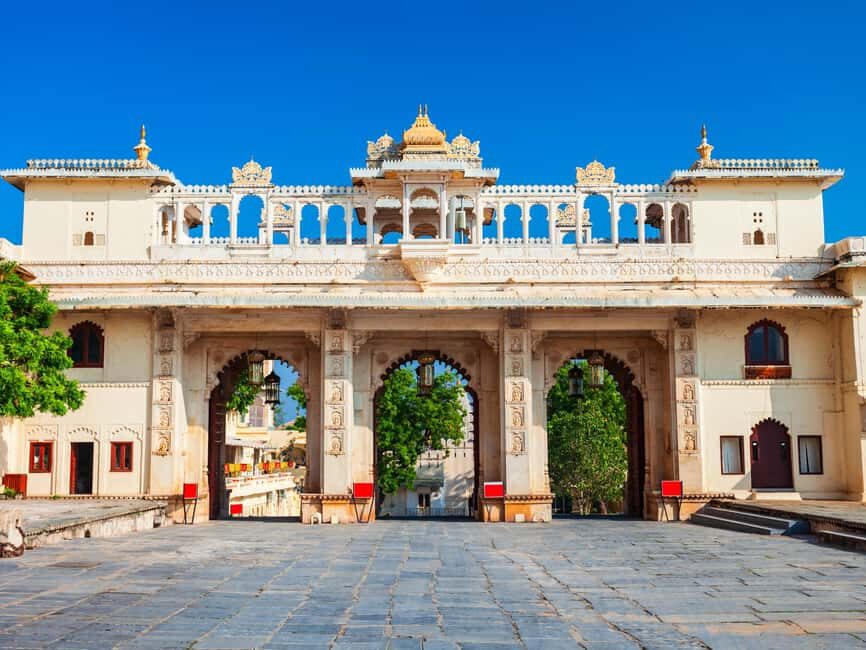
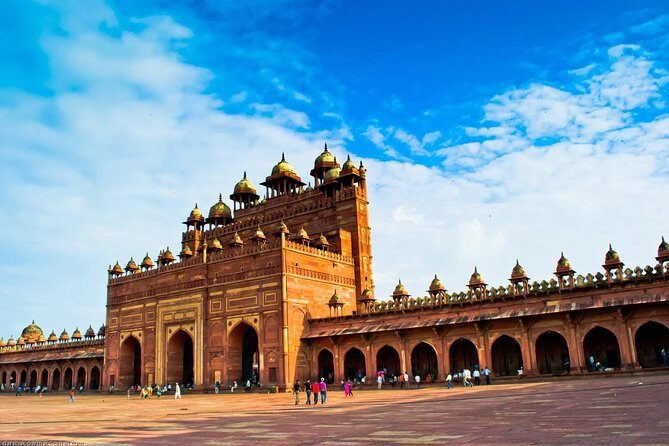
Once you leave Agra, the tour adds Fatehpur Sikri as a stop on the way to Jaipur. It’s not one of those “quick photo stops” you forget five minutes later. As the former Mughal capital, it helps explain why this entire region is so packed with monumental architecture.
From there you continue into Jaipur and check in. This part of the itinerary is built to prevent a long, empty travel day. You get a historical site early enough that you still feel “in travel mode,” not just “in transit mode.”
Then Jaipur becomes your base for a full sightseeing day, so you’re not constantly packing and unpacking during the middle of the trip.
Jaipur sightseeing day: Amer Fort, Jantar Mantar, City Palace, and key photo spots
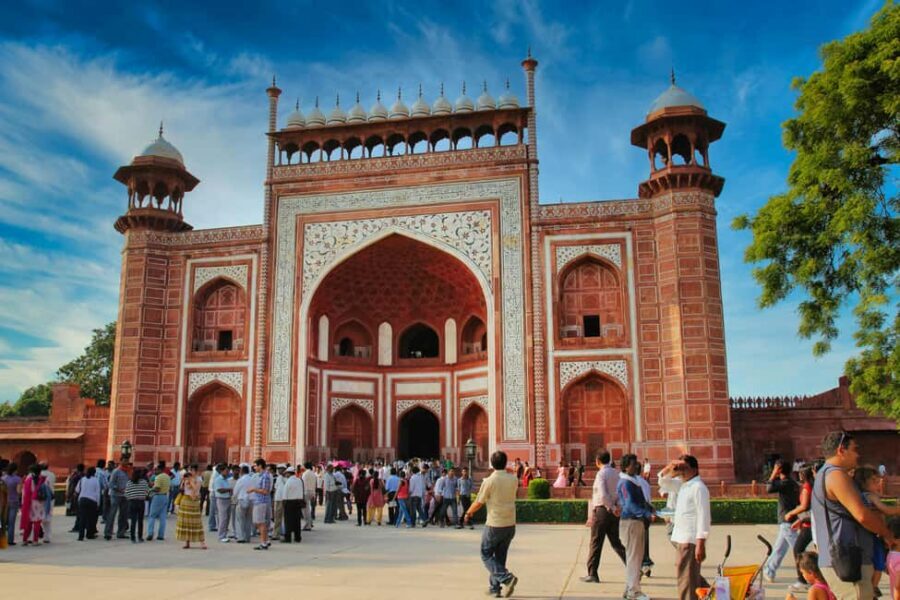
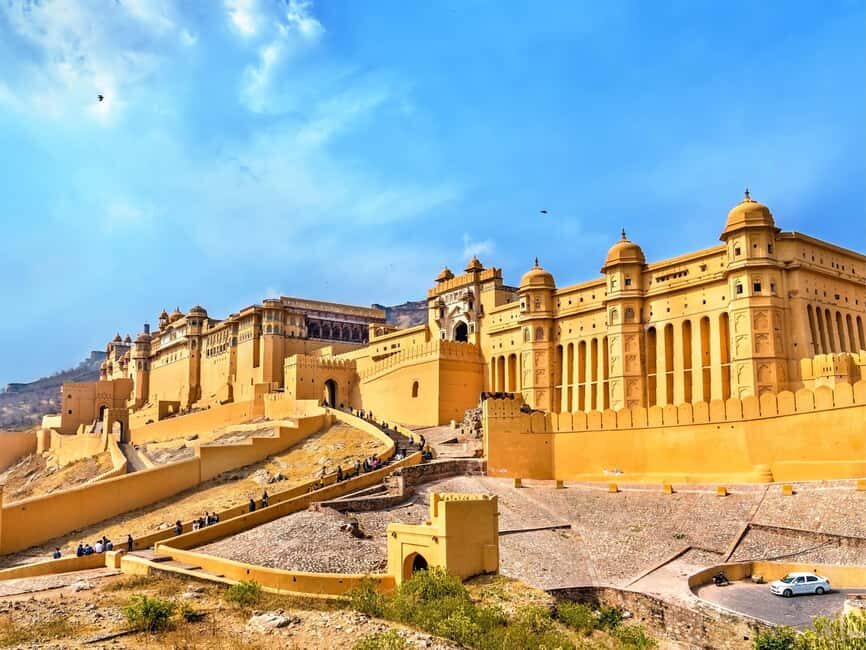
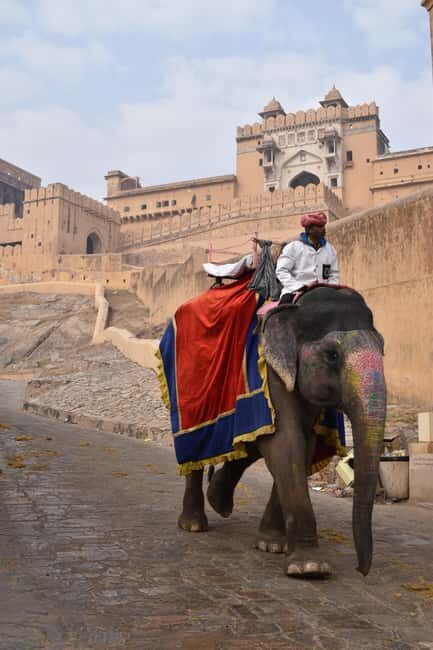
Jaipur is a full-day show, and the tour keeps you moving from one iconic site to the next. You start with a climb toward Amer Fort (sometimes spelled as Amer/Amber Fort area depending on maps). The fort approach alone gives you those hill-and-wall views that make Jaipur feel dramatic.
Next up is Jantar Mantar, the stone observatory. It’s a clever stop because it shows you the science side of royal planning, not only the palace side. If you enjoy watching how people solve problems with architecture, you’ll likely find it interesting.
Then you’ll see Maharaja City residence (described as a seven-story regal residence) as part of the City Palace area. It’s the kind of place where details matter—courtyards, walls, and the way the complex is laid out.
Two big-name photo moments happen next:
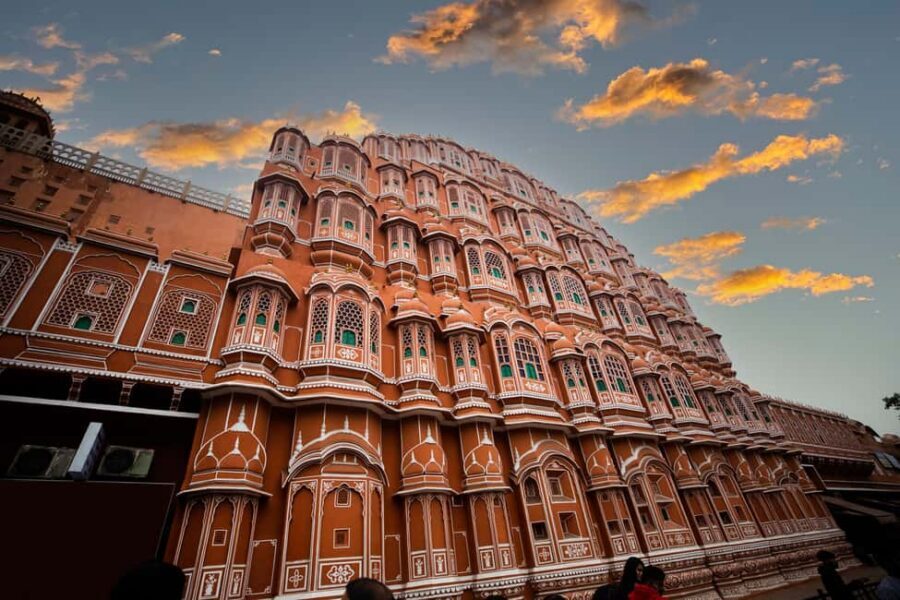
- Hawa Mahal (Wind Palace) for that famous façade
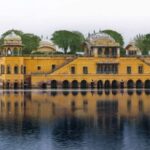
- Jal Mahal (Water Palace) as a photo stop
These are designed for quick wins: you get the recognizable Jaipur images without spending your whole day hunting viewpoints.
A note for practical travelers: your legs will get work here. Wear comfortable shoes and expect uneven ground around fort approaches and palace areas.






Jodhpur: Mehrangarh Fort and the marble stops that make the Blue City feel real
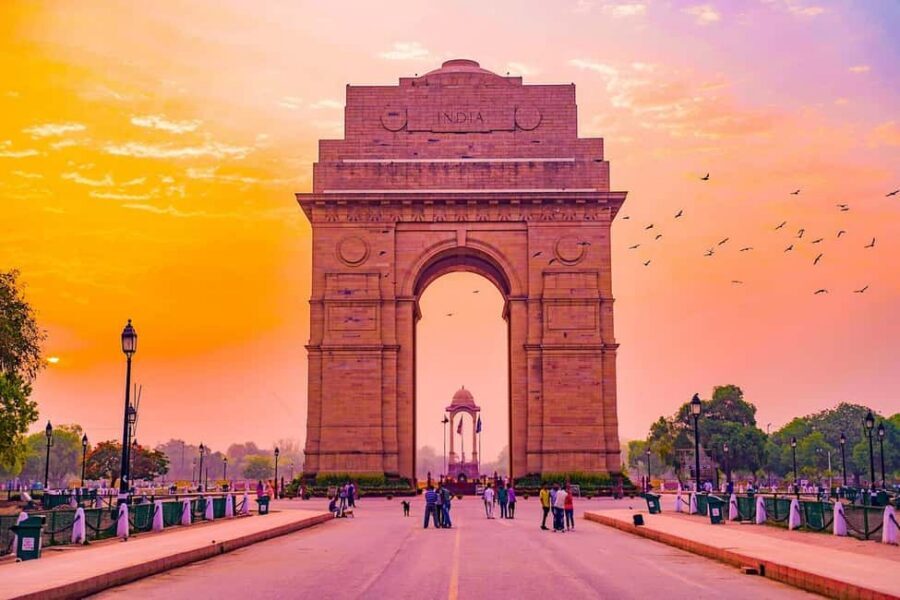
After breakfast, you head to Jodhpur and check in. The city is often called the Blue City, but the real reason it sticks is the skyline. Once you’re near the fort zone, the city feels layered—rooftops, walls, and hill views all at once.
In Mehrangarh Fort & Museum, you’ll focus on sites like Moti Mahal and Phool Mahal. These stops add structure to your visit; you’re not just wandering inside a huge complex.
Then comes Jaswant Thada, a marble cenotaph that’s memorable for how it changes the mood from military to reflective. After that, you visit Umaid Bhawan Palace.
This day is less about crowds and more about “how the city was built to defend itself.” If you love forts, Jodhpur is a highlight. If you prefer lighter sightseeing, build in time to slow down at Jaswant Thada and take in the views without rushing.
Also, a small but useful detail from real-world experiences: some groups have had an excellent Jodhpur guide named Jaswant, and that kind of local explaining can make the fort stops feel much more meaningful than just reading signs.
To Udaipur via Ranakpur Jain Temple: switching gears from forts to lakes
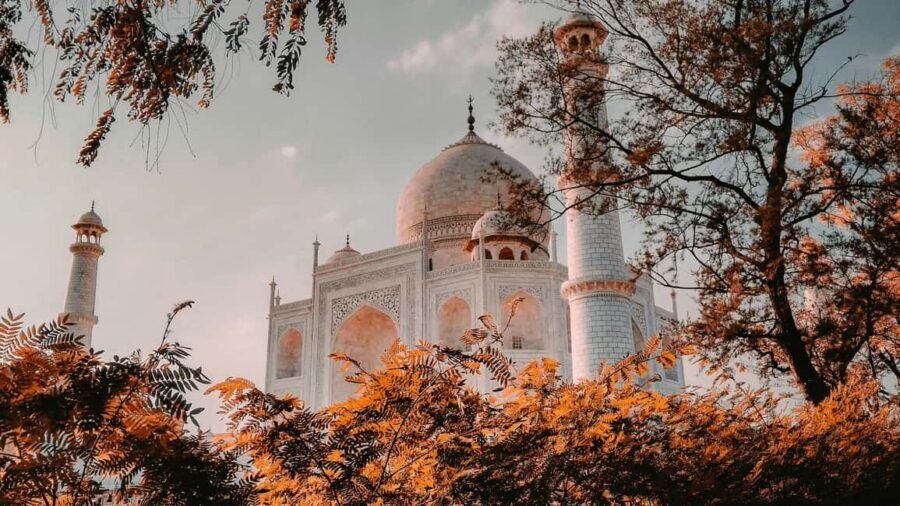
The next travel day heads from Jodhpur to Udaipur by car. On the way, there’s a stop at the Ranakpur Jain Temple. It’s a good change of pace because it’s calmer and more contemplative than fort circuits.
Once you arrive in Udaipur, you check in and then visit Fatehsagar Lake. This is a smart warm-up. You get the water-and-city relationship early, so later palace and lake sightseeing makes more sense.
Udaipur is known as the City of Lakes and the Venice of the East. That’s marketing language, sure, but the geography supports it. The water shapes the feel of the streets and viewpoints, and you’ll notice it as you move through the next day’s sightseeing.
Udaipur local sightseeing: City Palace, Lake Pichola, Jagdish Temple, and Saheliyon ki bari
Udaipur’s full sightseeing day is laid out like a scenic circuit: palaces, temples, gardens, and lakes.
You’ll see Saheliyon ki bari (Garden of Companions), which brings a gentler pace after the Rajasthan fort intensity. Then it’s Lake Pichola, the big-picture centerpiece where your photos suddenly look like they belong in a travel brochure.
Next comes Jagdish Temple. A temple stop is a good balance because it gives you a working religious site feel, not just an architectural museum vibe.
Finally, you visit the City Palace. Even if you’ve seen palace exteriors in photos, the palace complex in Udaipur tends to feel more lived-in and layered, with multiple spaces and sight lines.
If you want a last-day highlight, this is it. You finish with the feeling that Rajasthan isn’t only about stone monuments—it also has water scenery and calm garden time.
Price and logistics: what the tour rate covers, and the real cost math
The tour is listed at $43 per person for 7 days, which sounds like a steal. Here’s the catch: monument fees aren’t included, and lunch/dinner aren’t included either. So your real per-day spend will include those extras, plus any personal shopping or snacks.
What you do get for the base price is substantial:
- Daily breakfast
- 6 nights in a 3/4-star hotel on twin sharing
- Private, air-conditioned car for sightseeing
- Expert guides by city
- A water bottle every day
- Pickup and drop based on your requirement
For many people, this setup is where the value really shows. You’re paying for coordination and trained interpretation, not just transportation.
If you’re the type who likes to buy your own tickets and wander freely, you might find the schedule limiting. But if you want guided, efficient movement between far-flung cities, this is exactly the model that works.
Guides, car comfort, and the shopping stops you should plan for
One of the strongest parts of this tour is the guide coverage. Your itinerary includes an English-language live guide option (and also Spanish, German, French, and Italian). In real-world experiences, guides named Sikhat, Abdul, Mukesh, and Bhu have been praised for explanations and fluent English.
Car comfort also matters on this route. You’re doing real driving days, and having an air-conditioned car helps you stay functional for the next monument.
Now for the potential drawback: the flow sometimes includes shopping visits after major landmarks, including stops that resemble a spice market, textiles, and jewelry. Some people love these stops for browsing and local color. Others feel the pressure to buy and lose sightseeing time.
My advice: treat shopping stops like a short detour, not the main event. If you don’t want sales pressure, keep your budget small and your goals clear—photos, quick browsing, and then back on schedule.
Also, language quality can vary by driver. One real-world account mentioned a driver who didn’t speak English well, which became a communication handicap. The fix is simple: plan to rely on the city guide where possible, and keep key questions written or ready in your chosen language.
Practical tips: shoes, pace, and how to avoid feeling rushed
You’ll want comfortable shoes. Fort areas and palace complexes can involve uneven surfaces, stairs, and long walks between viewpoints.
Pace is another consideration. This is not a “sleep late and linger” tour. The best moments—like the Taj Mahal at sunrise—come from early starts, so evening downtime is mostly about resting, not sightseeing.
If you can handle a full day of monuments, you’ll enjoy the structure. If you can’t, you might feel like the trip is constantly moving. The good news is the car and hotel base take some stress off you.
Also, this tour isn’t suitable for pregnant women, so check alternatives if that applies.
Finally, you’ll travel with a private group. That can help with flexibility, but the schedule is still built around specific sightseeing windows.
Who should book this tour (and who should skip it)
This tour is a great match if you:
- Want big, famous sights plus strong Rajasthan stops like Jodhpur and Udaipur
- Appreciate guided context at monuments
- Prefer private car comfort over public transport logistics
- Like early mornings if the payoff is worth it (hello sunrise Taj)
It’s less ideal if you:
- Hate shopping stops or sales pressure
- Want lots of free time to roam without structure
- Need a very relaxed pace every day
If you’re thinking about culture-heavy travel with a fort-and-lake payoff, this is one of the better ways to make it happen in just 7 days.
Should you book this 7-day Golden Triangle Jodhpur Udaipur tour?
I’d book it if you want a well-structured circuit that hits Delhi, Agra, and Jaipur hard—and then adds Jodhpur and Udaipur for a richer Rajasthan feel. The combination of sunrise Taj Mahal, fort days, and Udaipur lake-palace sightseeing gives you variety without changing hotels every single day.
Hold off or adjust expectations if shopping detours would annoy you, or if you’re very sensitive to early starts and long driving days. Also, budget for monument fees and meals since those aren’t included.
If you pick this one, go in ready for a full itinerary and use the guides—especially the strong ones—to turn landmark visits into stories you’ll remember.
FAQ
What cities are included in this 7-day tour?
The tour covers Delhi, Agra, Jaipur, Jodhpur, and Udaipur.
How do I get picked up on day 1?
You can get picked up from your Delhi hotel, airport, or train station, based on your selected time and requirement.
Is transportation included between cities?
Yes. All sightseeing is done by a private, air-conditioned car.
Are hotel nights included?
Yes. You get 6 nights in a 3/4-star hotel on twin sharing.
Is breakfast included?
Yes. Daily breakfast is included.
Are monument fees included?
No. Monument fees are not included.
Are lunch and dinner included?
No. Lunch and dinner are not included.
Will I have a tour guide?
Yes. You’ll have a live tour guide, and the guide languages offered include English, Spanish, German, French, and Italian.
Does the Taj Mahal visit include sunrise timing?
Yes. The Taj Mahal is scheduled for sunrise with a guided tour.
What should I bring and what should I avoid?
Bring comfortable shoes. Alcohol and drugs are not allowed, and the tour is not suitable for pregnant women.