REVIEW · 1-DAY TOURS
From New Delhi: Jaipur Day Trip by Train or Car
Book on GetYourGuide →Operated by Best Golden Triangle Tour · Bookable on GetYourGuide
Jaipur in one day feels like a plot twist. This private excursion is a practical way to soak up the big hitters of Jaipur—from the hilltop drama of Amber Fort to the window-lace magic of Hawa Mahal—without getting stuck planning transport and timing. I especially like that you get a guided flow that hits the main sights in a sensible order, then gives you photo moments you can actually use.
The trade-off is a long day. It can run 6 to 13 hours, and you’ll cover a lot on foot at forts and viewpoints, with monument rules like no flash photography. Also, it’s not suited for everyone, including pregnant travelers and people with back problems, so you’ll want comfortable shoes and a realistic pace.
In This Review
- Key Points That Make This Day Trip Work
- A Fast Route From New Delhi to Jaipur: Train or Private Car
- Starting in Delhi: Pickup, Station Timing, and the Pace of the Day
- Amber Fort: The Hilltop Icon You’ll Feel in Your Legs
- Jal Mahal and Man Sagar Lake: Photo Time With a Real View
- Jantar Mantar: UNESCO Astronomy That’s Surprisingly Human
- City Palace and Chandra Mahal: Where the Story Changes From Views to Rooms
- Hawa Mahal: 953 Windows and the Meaning Behind the Lattice
- Galta Ji (Monkey Temple) If Time Permits: Worth It, but Go in With Realistic Expectations
- Skip-the-Line Entry and Monument Rules That Actually Change Your Day
- Guide and Driver Quality: Why Names Like Soni and Vijay Gupta Show Up
- Price and Value for a 6–13 Hour Best-of Jaipur Day
- What to Pack for Jaipur Heat, Steps, and Photo Stops
- Train vs Car: Which Option Fits Your Style?
- Should You Book This Delhi-to-Jaipur Day Trip?
- FAQ
- How long is the Delhi to Jaipur day trip?
- Is transportation included?
- Can I choose between train and car?
- What are the main Jaipur sights included?
- Does the tour include entry tickets?
- Is there a live guide?
- Does the tour skip the line?
- What should I bring?
- What’s not allowed during the visit?
- What’s the cancellation policy?
Key Points That Make This Day Trip Work
- Train or private car from New Delhi: choose the option that fits your schedule and comfort level
- Skip-the-line entry: you use a separate entrance at the monuments to save time
- Amber Fort, Jal Mahal, Jantar Mantar, City Palace, Hawa Mahal: a tight best-of list in one outing
- Optional Galta Ji (Monkey Temple): add it if your timing still feels good
- Guides like Soni and Vijay Gupta: clear explanations and smart photo stops
- Included tickets and local transport: you’re not juggling separate entry costs during the day
A Fast Route From New Delhi to Jaipur: Train or Private Car

This is one of those trips that makes Jaipur feel reachable, even if you’re short on time. You start in New Delhi with hotel pickup, then head to Jaipur either by train or by a private, air-conditioned car. The big practical difference is how you want to spend your day: the train option trades some driving time for a more structured ride, while the car option keeps everything in one vehicle from door to door.
The itinerary is designed for the day—so regardless of your transport choice, your time gets spent where it counts: at monuments, viewpoints, and photo-friendly stops. And because you’re in a private group, you’re not stuck waiting in a long herd while the group slowly negotiates stairs and shade.
If you’re doing this in hotter months, the car option can feel more comfortable simply because you can recover faster between stops. If you like the rhythm of rail travel, the train route also adds a little “journey” flavor to the day.
You can also read our reviews of more tours and experiences in Jaipur


Starting in Delhi: Pickup, Station Timing, and the Pace of the Day
Your day kicks off with pickup in New Delhi. For the train option, you’ll transfer to the railway station, board the train to Jaipur, and meet your guide after arrival. For the car option, your guide meets you on arrival in Jaipur and you start sightseeing right away.
Here’s what matters for your planning: the tour duration is listed as 6 to 13 hours, so the exact length depends on your departure time and the transport schedule. You’ll want to arrive on time at the train station for the departure window if you pick the train option—this isn’t the kind of trip where you can casually stroll in late and expect the day to bend.
Also, you’re not just “visiting.” You’re moving from place to place, sometimes with short photo pauses, sometimes with longer walks. Even with a smooth guide, you’ll feel it by midday.
Amber Fort: The Hilltop Icon You’ll Feel in Your Legs
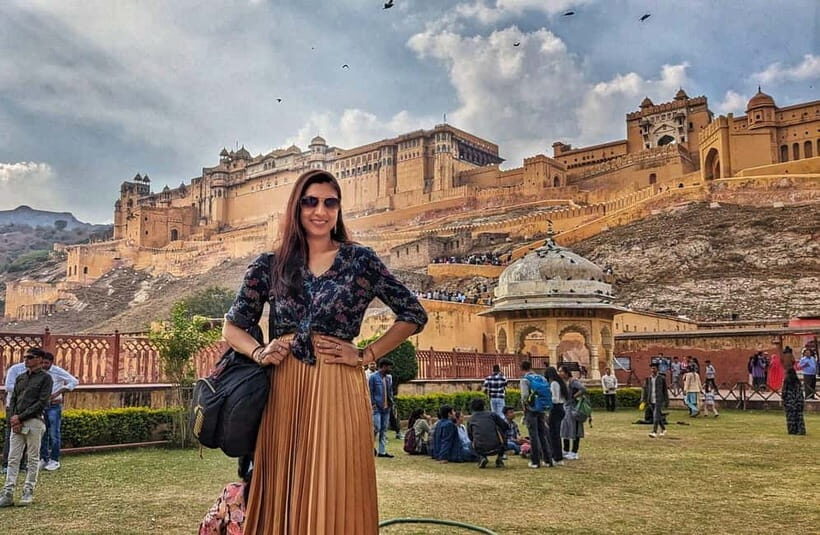
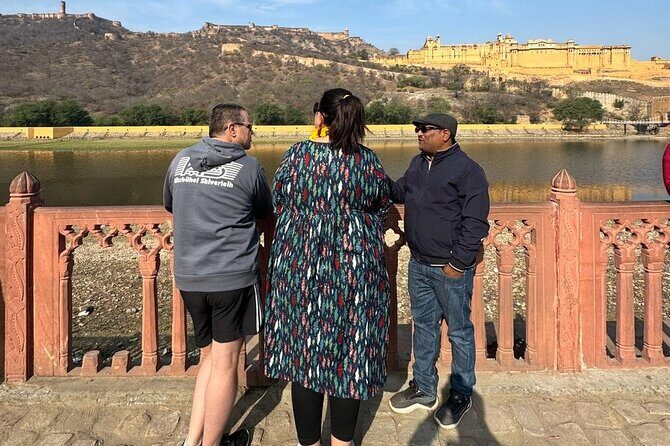
Amber Fort is the headline for many people, and this itinerary doesn’t treat it like a quick pass. You’ll admire the fort’s dramatic setting on a hill and take in the architecture that made Jaipur famous. The view matters here: the fort doesn’t just sit there, it overlooks the city approach in a way that gives your photos depth.
What you should know before you go: expect walking. Fort areas tend to involve uneven ground, steps, and changes in elevation. If you have back issues, the tour explicitly notes it’s not suitable for you, so don’t force it. For everyone else, plan on wearing shoes that won’t punish you.
A nice practical touch is that you’re not doing this blind. A good guide helps you figure out what to look for while you’re there—so you’re not just taking pictures, you’re also understanding what you’re seeing.
Jal Mahal and Man Sagar Lake: Photo Time With a Real View
Next up is Jal Mahal, the palace sitting in the middle of Man Sagar Lake. Even if you don’t spend hours here, this is one of those stops that changes how the whole city looks in your head. Up close, Jaipur can feel like stone and color; this water setting gives the scenery a different mood.
This is mainly a photo-and-pause stop. The timing works well because you’re not stuck in a long queue or dragged through a museum. You just get a chance to appreciate the palace’s unique position, then move on.
One caution: photography rules apply in various monument areas. Also, bring your camera, but follow the guide’s instructions on where you can shoot and what’s restricted.
Jantar Mantar: UNESCO Astronomy That’s Surprisingly Human
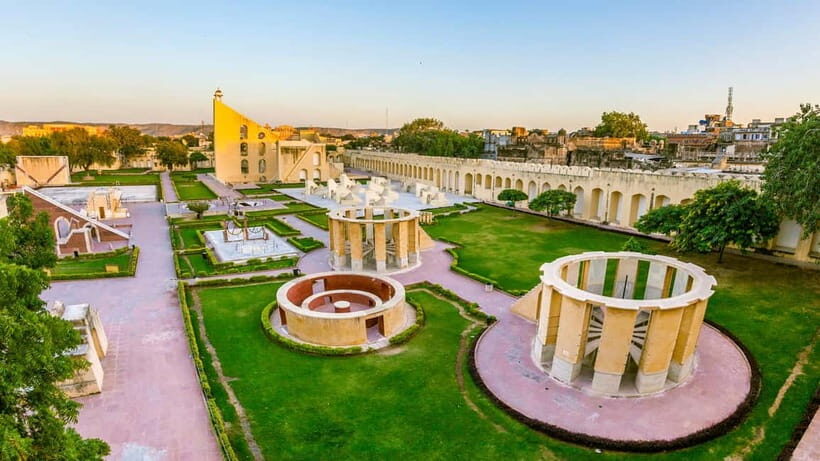
Jantar Mantar is a UNESCO World Heritage Site with astronomical instruments you can actually stand beside. It’s the sort of attraction that’s more interesting once someone points out how the pieces work, because the shapes and angles might look abstract if you’re on your own.
In a day trip like this, the value of a guide becomes clear. You’re not just walking past structures; you’re learning what the instruments were built to measure and why their design is so specific. If you like science, this stop is a pleasant surprise. If you don’t, the guide framing helps you still enjoy it without feeling like you’re taking a class.
Time-wise, this stop fits well between bigger-picture sights. It’s also a good option if your legs are starting to ask questions, because you can manage how long you linger at each instrument.





City Palace and Chandra Mahal: Where the Story Changes From Views to Rooms
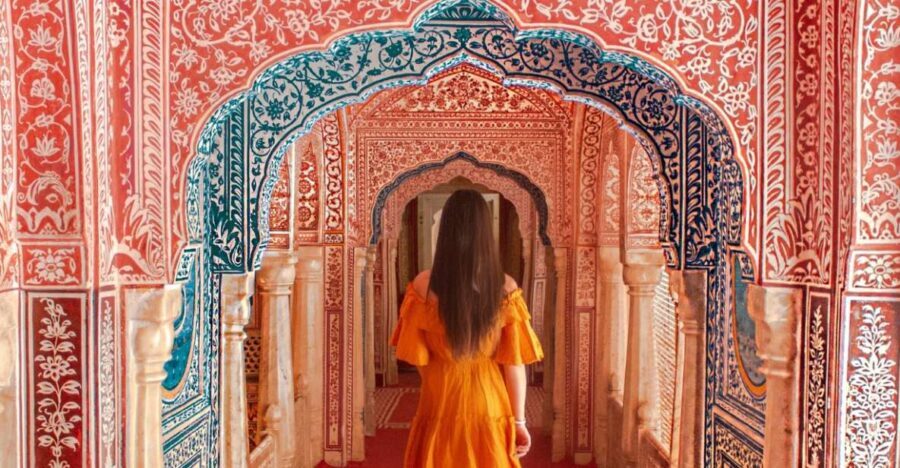
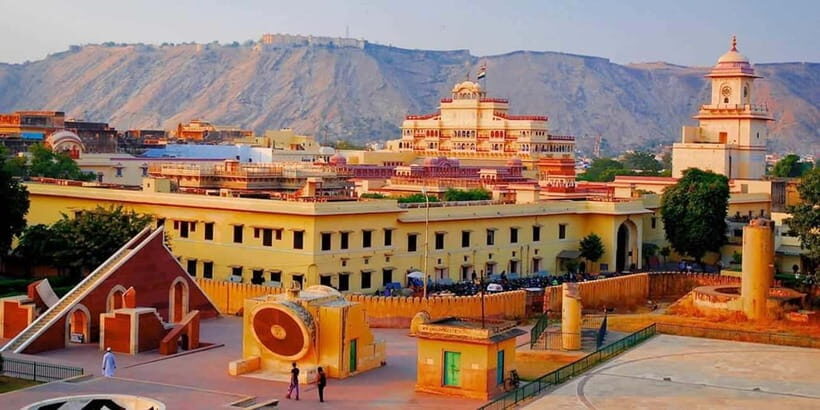
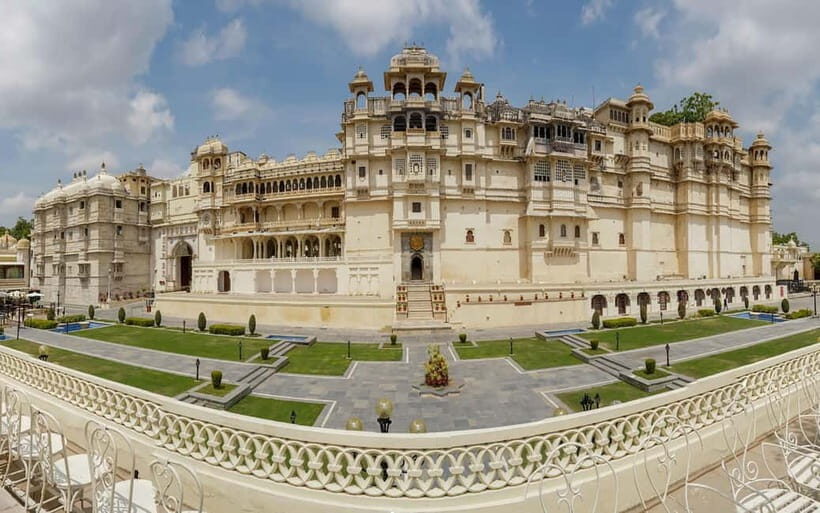
City Palace gives you courtyards, gardens, museums, and the Chandra Mahal complex. This is where Jaipur starts to feel less like postcard scenery and more like a lived-in space shaped by court life.
The thing I like about including City Palace in this format is the variety. You’re not only seeing exterior walls; you’re getting inside spaces that show how power was organized and how daily life connected to ceremony and design. Even if you’re a fast visitor, the palace layout naturally breaks your attention into smaller “moments,” so it doesn’t feel like one long blur.
Drawback: it’s still a monument, so follow the rules. Eating and drinking aren’t allowed inside monuments, and there are restrictions like no flash photography. Build in patience for ticket and entry checks, even though the tour includes skip-the-line access.
Hawa Mahal: 953 Windows and the Meaning Behind the Lattice
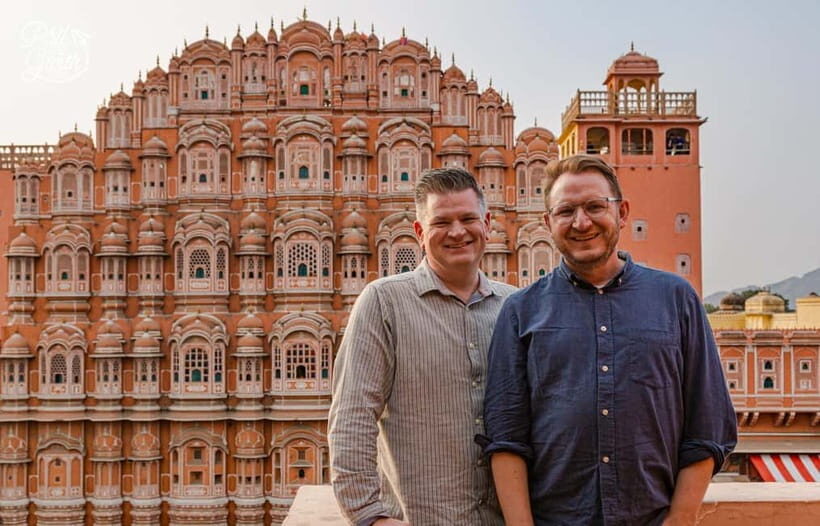
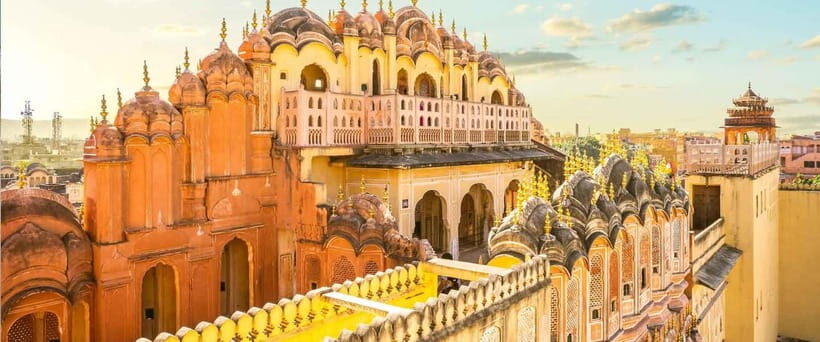
No Jaipur day trip feels complete without Hawa Mahal, the Wind Palace. You’ll admire its famous latticework and the idea behind the many windows—how architecture can create both function and style.
This stop is less about one hallway and more about looking up, slowing down, and realizing how the facade is built. If you love photos, you’ll appreciate that the structure is made for angles and close-ups. If you don’t love photos, you’ll still enjoy the craftsmanship once someone helps you notice the pattern.
Photography matters here: some areas have restrictions, and you’ll want to follow your guide’s direction to avoid getting stopped mid-shoot. It’s also a place where shade can be inconsistent, so a hat and sunscreen aren’t optional extras.
Galta Ji (Monkey Temple) If Time Permits: Worth It, but Go in With Realistic Expectations
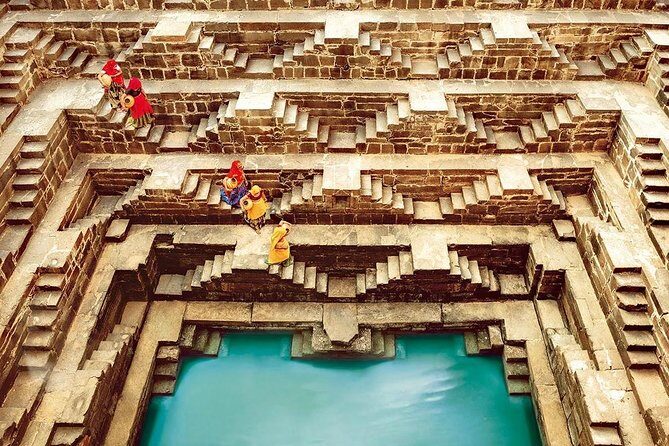
Galta Ji Temple, also known as the Monkey Temple, is optional depending on your timing. If you have time, it adds a different side of Jaipur—less about royal design and more about temples and the water-tank landscape around them.
Here’s the practical note: you’ll be walking through temple areas, so your comfort matters. If you’re already tired from fort steps earlier, decide based on how your body feels. The tour does flag this as optional for a reason.
Also, keep your camera ready but follow monument rules. The guide will help you move at a pace that balances sightlines and comfort.
Skip-the-Line Entry and Monument Rules That Actually Change Your Day
This tour includes monument entry tickets (if you book that option) and skip-the-line access via a separate entrance. In a day trip, saved minutes are the difference between seeing everything and feeling rushed.
You also get clear boundaries to keep the visit smooth:
- No smoking inside monuments
- No flash photography
- No eating or drinking inside monuments
Those rules can feel annoying, but they also keep the experience calmer. More importantly, they help you avoid getting delayed by staff decisions when you’re already on a tight schedule.
Guide and Driver Quality: Why Names Like Soni and Vijay Gupta Show Up
One of the most consistently praised parts of this day trip is the people running it. The guide experience is a big deal because you’re not just collecting sights—you’re learning how to interpret them in context.
I took note of guide names that came up repeatedly, including Soni/Sonny and Vijay Gupta. The theme is clear: explanations in your chosen language, good pacing, and attention to details that matter for photos. One standout tip you can borrow is asking the guide about photo spots while you’re moving, not after you’ve reached the main viewpoint.
The driver also matters for comfort, especially on the car option. When you’re doing a full day, a punctual driver and a clean, comfortable car help you arrive in Jaipur feeling ready, not wrecked.
Price and Value for a 6–13 Hour Best-of Jaipur Day
At $10 per person, this trip is priced in a way that makes the value question unavoidable. The reason it can feel like a bargain is that you’re not only paying for sightseeing—you’re also getting round-trip transportation from Delhi, a live guide, entry tickets (depending on the booking option), and a private vehicle for Jaipur touring.
Now, value isn’t only about low cost. It’s also about how well the itinerary uses your time. This one hits the major anchors—Amber Fort, Jal Mahal, Jantar Mantar, City Palace, and Hawa Mahal—plus the optional Galta Ji. In other words, you’re not paying to wander aimlessly. You’re paying to get the day structured.
The only real “value risk” is pacing. If you’re the type who wants deep museum time or long, slow sits at every stop, a day trip can feel like you’re moving too fast. If you want a guided highlights tour with minimal planning stress, the price-to-sights ratio looks strong.
What to Pack for Jaipur Heat, Steps, and Photo Stops
This tour gives you a simple checklist, and I agree with it. Wear comfortable shoes and bring items for sun and hydration. You’ll be outside, you’ll walk, and you’ll want to stay focused rather than dealing with discomfort.
Practical essentials:
- Comfortable shoes (you’ll thank yourself on fort steps)
- Hat
- Sunscreen
- Camera
- Water bottle (water bottles are included, but bring your habits too)
Also note photography restrictions like no flash in monuments, and follow “no smoking, no eating/drinking inside monuments.” It keeps the day smooth, even if it feels strict at first.
Train vs Car: Which Option Fits Your Style?
Choose the train option if:
- You want a scheduled rail day trip rhythm
- You like meeting your guide after arrival
- You’re comfortable with station timing and transfers
Choose the car option if:
- You prefer door-to-door convenience
- You want to reduce waiting time between sights
- You value air-conditioned comfort during transit
Either way, the sightseeing plan stays similar, and the key stops are the same. Your decision is really about comfort and your tolerance for a longer, more structured travel day.
One more note: the tour lists wheelchair access as a feature, but it also says it’s not suitable for wheelchair users. If mobility is a concern, ask before booking so you’re not guessing about what the day will feel like on the ground.
Should You Book This Delhi-to-Jaipur Day Trip?
If you’re craving classic Jaipur highlights and you want a guided plan that minimizes stress, I’d book this. It’s especially good for people who want Amber Fort, Jantar Mantar, City Palace, and Hawa Mahal in one go—without spending hours on scheduling transport and figuring out ticket lines.
I’d pass or at least reconsider if:
- You struggle with long walking days or have back issues (the tour notes it’s not suitable)
- You need a slower pace and longer time per monument
- You have special mobility needs and want clearer confirmation on accessibility for real-world walking routes
My suggestion for a confident booking: pick the transport style that matches your comfort (train for structure, car for convenience), wear shoes built for steps, and ask your guide where the best photo points are as you go. With that approach, you’ll leave Jaipur with strong images and a much clearer sense of why the city looks the way it does.
FAQ
How long is the Delhi to Jaipur day trip?
The duration is listed as 6 to 13 hours, depending on starting times and the day’s travel schedule.
Is transportation included?
Yes. Round-trip transportation from New Delhi to Jaipur is included by train or by car, depending on the option you choose.
Can I choose between train and car?
Yes. You can do the day trip by round-trip train or round-trip private car.
What are the main Jaipur sights included?
The itinerary includes Amber Fort, Jal Mahal, Jantar Mantar, City Palace, Hawa Mahal, and Galta Ji Temple if time permits.
Does the tour include entry tickets?
Monument entry tickets are included at all places if that option is booked.
Is there a live guide?
Yes. A live tour guide is included, and the guide speaks English, Spanish, French, German, Russian, and Japanese.
Does the tour skip the line?
Yes. You use a separate entrance for skip-the-line access.
What should I bring?
Bring comfortable shoes, a hat, a camera, sunscreen, and water.
What’s not allowed during the visit?
Smoking is not allowed. Flash photography is also not allowed, and eating and drinking are not allowed inside the monuments.
What’s the cancellation policy?
You can cancel up to 24 hours in advance for a full refund.