REVIEW · 1-DAY TOURS
Day Trip to The Taj Mahal and Agra from Jaipur ending in Delhi by Car
Book on Viator →Operated by Hire Taxi India · Bookable on Viator
Taj Mahal, then back on the road. This Jaipur-to-Delhi sightseeing run is interesting because it links two big UNESCO stops—Taj Mahal and Agra Fort—into one smooth day, with a guide to give you the story behind what you’re seeing. I like the door-to-door pickup option (hotel/airport/rail in Jaipur) and the fact you travel in an air-conditioned private vehicle with a professional guide. One drawback to weigh is that it’s a long day starting at 6:00am, and a small number of reviews raise concerns about driver behavior in bad fog, so you’ll want to pick a reputable, communicative operator.
What makes this plan work for real schedules is the structure: timed visits, set drive legs, and an end drop in Delhi around 7:00pm. I also like that the tour includes a golf cart ride to and from the Taj Mahal area, which helps when you’re squeezing in time. The shopping stop in Agra (at a marble and soft-stone inlay place) can feel like a pause you either enjoy or skip mentally, depending on your priorities.
If you want Mughal-era architecture without the hassle of arranging separate transport between cities, this is built for you. Just know that you’re trading a slower, overnight pace for an all-in-one itinerary—great if you have limited time, not ideal if you hate early starts and long car hours.
In This Review
- Key things to know before you go
- Road-trip logistics: Jaipur to Agra, then Agra to Delhi
- Entering the Taj Mahal with time-saving help
- Agra Fort: Akbar’s red-sandstone fortress in your second stop
- The all-inclusive option: entrance fees, lunch, and what you actually get
- Agra shopping stop at Sanskriti’s Imperial Gems
- The guides and drivers: the biggest difference between a good day and a messy one
- Price and value: is $85 a smart deal for this itinerary?
- Who this tour is best for (and who should pass)
- Should you book this Jaipur → Agra → Delhi car day trip?
- FAQ
- What time does the tour start in Jaipur?
- How long does it take to drive from Jaipur to Agra?
- Are entrance fees included?
- Is lunch included?
- Do you get a guide for the sightseeing?
- How much time do you have at the Taj Mahal?
- Is transportation included from Agra to Delhi?
Key things to know before you go

- 6:00am pickup in Jaipur means an early start, but it keeps the Taj visit on track
- Air-conditioned private car handles the 4-hour Jaipur → Agra drive and the 3-hour Agra → Delhi leg
- A live guide adds context to Taj Mahal and Agra Fort, not just photo stops
- Golf cart rides are included to and from the Taj Mahal area to save your feet
- All-inclusive option can bundle monument entrance fees and a buffet lunch
- Agra shopping stop includes time at a marble/softstone inlay workshop style outlet
Road-trip logistics: Jaipur to Agra, then Agra to Delhi
This tour is essentially a long, well-paced transfer with two anchor sights. You start in Jaipur at 6:00am with pickup from your hotel, airport, or railway station, then you drive roughly four hours to Agra. The morning timing is the whole game: leaving early helps you beat traffic and gives you daylight energy for the Taj.
The car part is handled by an air-conditioned private vehicle, which matters more than people think in India’s heat and glare. You also get water bottles throughout, so you aren’t scrambling for drinks during the drive.
Then comes the second leg. After the Taj Mahal and Agra Fort, you drive about three hours on the expressway to Delhi, with a 7:00pm arrival and drop at your Delhi hotel, airport, or railway station. That drop-off flexibility is a real convenience if your Delhi plans are late in the day.
The one thing to consider is fatigue. This is a 13-hour day (approx.), so if you’re the type who likes to linger in places for hours, you’ll feel the time pressure. You’re getting big sights, but you’re not getting a slow stroll.
You can also read our reviews of more tours and experiences in Jaipur



Entering the Taj Mahal with time-saving help
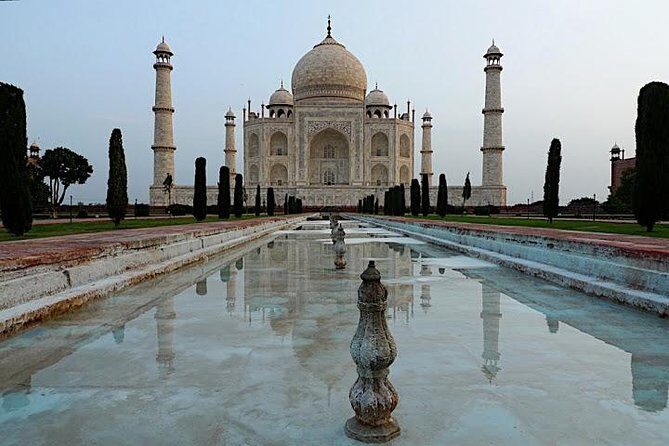
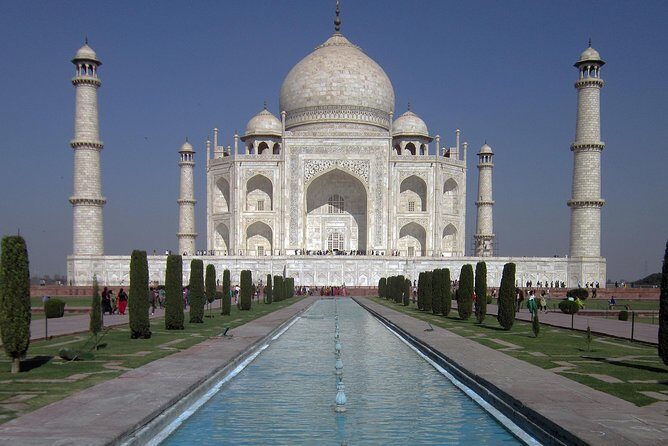
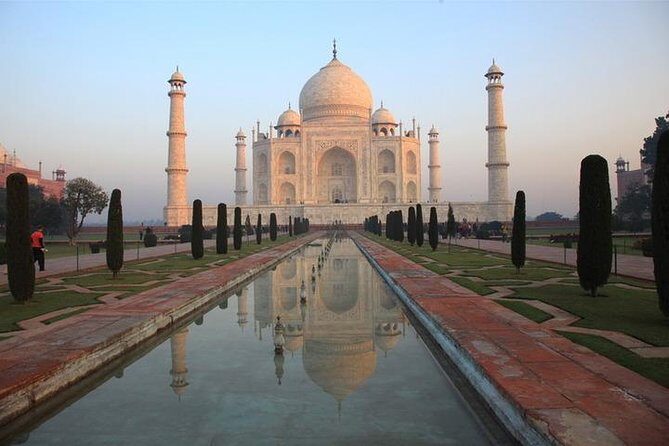
The Taj Mahal visit is timed at about two hours, which is enough to see it properly if you pace yourself. You’ll get entry to a UNESCO World Heritage Site and the guide will explain the Mughal love story tied to Shah Jahan and Mumtaz Mahal—the kind of context that makes the marble details click faster.
One practical upgrade here is the golf cart ride to and from the Taj Mahal. Even if you’re a confident walker, that saves time and energy. It also helps if you’re traveling with stiff knees or you’re simply trying to keep the day moving.
Another time-saver mentioned in a past experience: the guide team helped with moving past the biggest crowds. You can’t assume this will always be identical for every day or every season, but the structure of the tour (private group, guided timing, and set stops) is exactly what makes those “skip the longest waits” moments possible.
How to make your two hours count:
- Arrive with a clear plan for photos vs. details. The Taj’s best moments aren’t just wide shots; they’re the lines, symmetry, and how the building looks different from slightly different angles.
- Save some time for a calm walk even if you’re tempted to rush. Two hours disappears faster than you think once you’re queuing, checking viewpoints, and taking photos.
Possible drawback: two hours is tight if you’re the type who needs lots of time for galleries or if you get easily distracted by every side corridor. If that’s you, you may feel slightly pushed.
Agra Fort: Akbar’s red-sandstone fortress in your second stop
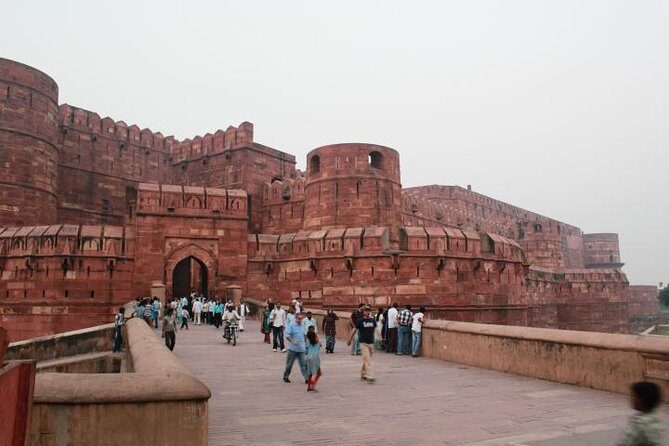
After the Taj, the tour moves to Agra Fort (about one hour). This fort is another UNESCO World Heritage Site and it’s built in 1565 A.D. under Emperor Akbar, with huge red sandstone walls and a maze of courtyards, mosques, and private spaces.
Why this stop is more than a second photo opportunity: the Taj Mahal tells a romantic, end-of-an-era story; Agra Fort shows the functioning power of the Mughal world—how authority lived, moved, and defended itself. With a guide explaining what you’re looking at, the courtyards and buildings don’t blur into one big fortress block.
In a one-hour visit, you’ll want to focus on orientation: pick a route that lets you see the main layout first, then decide if you want to slow down. If you chase every corner, you’ll end up watching the clock more than the architecture.
What can be a downside: one hour is brief. If you’re a fort-nerd who loves reading inscriptions and exploring every chamber, you might wish you had more time. But for most people doing a Jaipur → Delhi run, it’s a strong second anchor.
The all-inclusive option: entrance fees, lunch, and what you actually get
The tour has two different ways it can be priced in practice: a standard version and an all-inclusive option. The key difference is that in the all-inclusive booking, you should expect monument entrance fees and a buffet lunch—and the lunch is described as served in an air-conditioned restaurant.
That air-conditioned detail matters in India’s summer and shoulder months. A forced pause with cold air can reset you for the afternoon drive, and it’s one less thing to plan yourself.
Lunch also tends to feel “good value” on day trips because it saves time and reduces decision fatigue. Instead of hunting for a safe, efficient meal while you’re on someone else’s schedule, you get the meal built into the plan.
What’s included no matter the option:
- Private air-conditioned transfers
- Professional private live tour guide
- Golf cart ride to/from the Taj Mahal area
- Water bottles throughout
- Pickup in Jaipur (hotel/airport/rail)
What’s not included (so budget it):
- Drinks
- Gratuities (tips are recommended)
If you’re deciding between standard vs. all-inclusive, use this simple math: will you want to pay entrance fees and find lunch on your own? If you’d rather avoid that friction and keep the day smooth, the all-inclusive option usually makes the most sense.
Agra shopping stop at Sanskriti’s Imperial Gems
After Agra Fort, there’s a shopping stop called Sanskriti’s Imperial Gems. You’ll get around two hours here, with time to browse marble and softstone inlay work—craft traditions tied to Mughal-era patronage. The guide framing here is also useful: it helps explain why the craft looks the way it does and where the style comes from.
How to handle this stop:
- Treat it as a separate experience, not part of the sightseeing itself. You can enjoy it as craft culture, or you can use it to stretch your legs while you wait for the next transfer leg.
- If you hate shopping, set a personal rule. For example, you might say yes to browsing but no to buying unless you’re already sure what you want.
A gentle warning: a shopping block can be a time sink if you’re looking for bargaining or you lose track of your priorities. Two hours is generous, but it’s also time you could have used resting before the drive to Delhi.






The guides and drivers: the biggest difference between a good day and a messy one
This tour is a private tour/activity, so you’re not sharing the day with random strangers. The guide is professional and live, and that’s usually where the experience either clicks or feels like a checklist.
One named guide you may run into: Adun was specifically noted as informative, and the same experience also highlighted skipping past big lines. That’s exactly the kind of difference a strong guide makes—less time wrestling with queues and more time understanding what you’re seeing.
Now for the part you should take seriously: at least one review mentioned an unsafe-feeling moment due to an unprofessional and erratic driver behavior in thick fog, with very poor visibility. That’s not something to ignore.
How to reduce your risk before you go:
- Book with a provider that clearly communicates driver details ahead of time.
- If fog or severe weather is forecast, ask how they handle it.
- Bring your patience and keep your expectations realistic about road conditions on long drives.
Most days likely run safely and smoothly—this kind of route is common. But because the itinerary depends entirely on the driver, it’s worth paying attention.
Price and value: is $85 a smart deal for this itinerary?
At $85 for roughly 13 hours including transfers, guide service, water, and a visit to two major UNESCO sites, this can be a strong value—especially if you’d otherwise pay for a separate intercity transfer plus entry fees plus guide time.
Where value gets better:
- If you choose the all-inclusive option and it includes entrance fees and buffet lunch, you’re getting multiple “pay-as-you-go” pieces bundled into one rate.
- The golf cart add-on is small but real; it cuts fatigue and keeps you on schedule.
- Door-to-door pickup and drop in Jaipur and Delhi reduces hassle. Time saved is money saved.
Where value can be uneven:
- If you don’t want the shopping stop, you may feel like some scheduled time is “not for you.”
- If you’re sensitive to early starts and long drives, the convenience comes with a cost in comfort.
In short: for the right traveler with limited time, this price looks fair because the logistics are the hard part. For someone who wants a relaxed day with flexible pacing, it may feel rushed.
Who this tour is best for (and who should pass)
This tour fits best if you:
- Have a tight schedule and want Taj Mahal and Agra Fort without planning transport yourself
- Like Mughal architecture and want explanations that make the sights feel connected
- Value door-to-door convenience over a slower itinerary
- Appreciate time-saving extras like golf carts and guided timing
It might not be for you if:
- You hate early mornings and long car hours
- You’re very cautious about road safety and need more reassurance about driver handling in bad weather
- You strongly dislike shopping stops and want a sightseeing-only day
Should you book this Jaipur → Agra → Delhi car day trip?
I’d book it if your priority is maximizing two UNESCO hits in one day with private guide support and minimal logistical stress. The itinerary timing is built for efficiency: early Jaipur pickup, a focused Taj Mahal visit, a quick-but-meaningful Agra Fort stop, then a direct run to Delhi.
I’d hesitate if you’re the type who can’t tolerate uncertainty around road conditions—because this day depends on the driver for comfort and safety. If you do book, ask questions early, confirm what’s included in your option (standard vs. all-inclusive), and be mentally ready for a long day.
If you choose it with clear expectations, it’s a practical way to see the big Mughal landmarks and still make it to Delhi the same evening.
FAQ
What time does the tour start in Jaipur?
Pickup starts at 6:00am from your hotel, airport, or railway station in Jaipur.
How long does it take to drive from Jaipur to Agra?
The transfer from Jaipur to Agra is about four hours, with the exact timing depending on traffic and the time of day.
Are entrance fees included?
Monument entrance fees are included only if you book the all-inclusive option.
Is lunch included?
A buffet lunch is included only if you book the all-inclusive option, and it’s served in an air-conditioned restaurant.
Do you get a guide for the sightseeing?
Yes. The tour includes a professional private live tour guide.
How much time do you have at the Taj Mahal?
The Taj Mahal visit is scheduled for about two hours.
Is transportation included from Agra to Delhi?
Yes. After Agra sightseeing, you drive about three hours to Delhi and arrive around 7pm, with drop-off at your hotel, airport, or railway station.